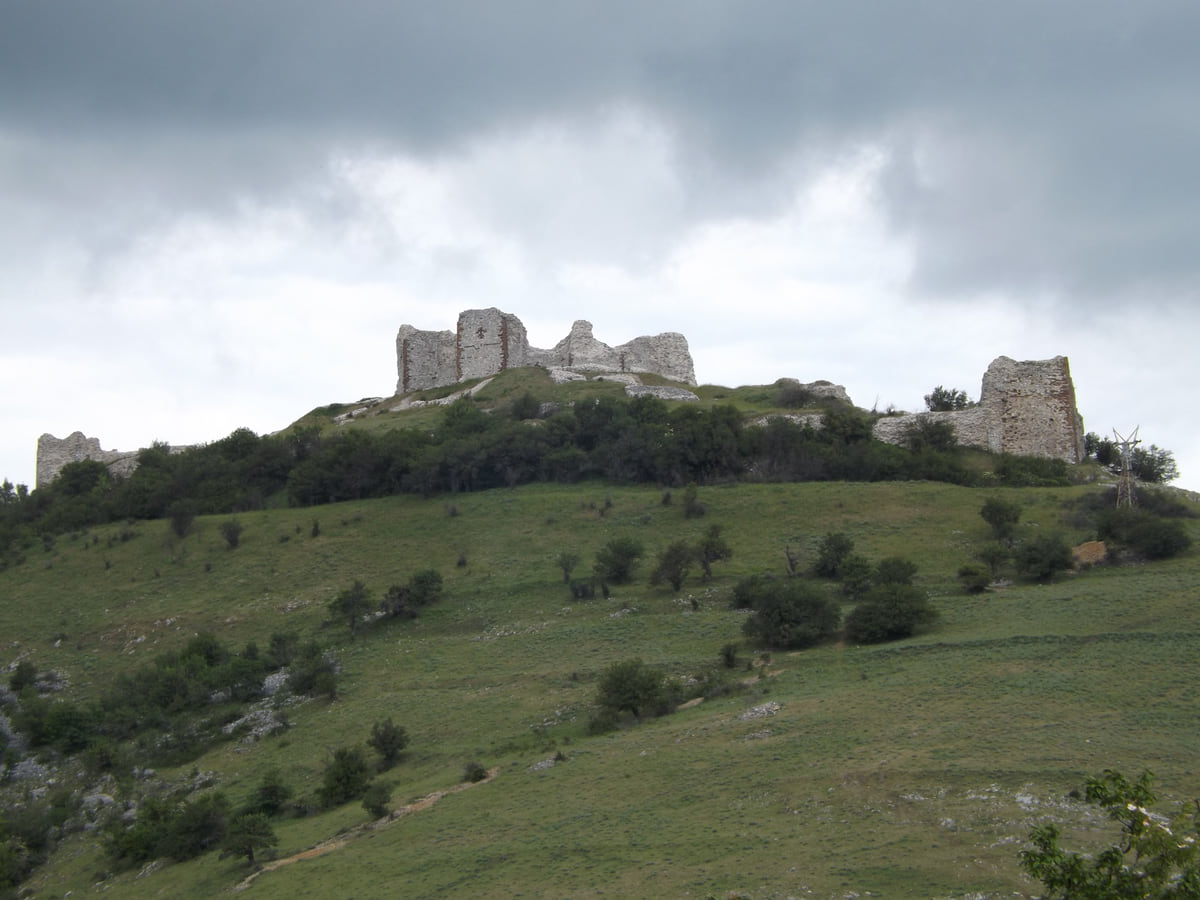
Kalaja, the word you'll see on the signs
Kosovo's castles and fortresses, from prehistory to the Ottomans
Kosovo's Ministry of Culture heritage register lists 17 fortresses and fortified sites, from Eneolithic hilltop settlements to the Ottoman fort at Kaçanik, built in 1586-1590. The two most worth the climb are Prizren's, above the old town, and the medieval town of Novo Brdo, which Law 03/L-039 protects as a Special Protective Zone, as it does Zvečan.
In 30 seconds
Full read: 3 min
- The DTK lists 17 fortresses and fortified sites in Kosovo.
- Prizren and Novo Brdo are the two most worth visiting.
- Novo Brdo and Zvečan have Special Protective Zones under Law 03/L-039.
- No opening times or prices are published by an official source.
If you only climb one, make it Prizren, for the views and because you can walk up from the centre. Novo Brdo is the one I find most compelling as a whole, but it needs a car and half a day. The hilltop sites like Pogragjë are for people who enjoy the landscape as much as the stones.

Before you go
What I would keep in mind
-
01 Most beautiful
Prizren, already named by Procopius
Its official record notes that the earliest mention comes from the Byzantine chronicler Procopius of Caesarea, who calls it Petrizen, the root of Prizren's name.
Prizren Fortress -
02 Most beautiful
Novo Brdo, a silver and gold mining town
The DTK says the area was known for its silver and gold mines, its smithing and its mint, and that the upper fortress had six towers.
Novo Brdo fortress -
03 My tip
Kaçanik, right in the village
Kaçanik's fort is Ottoman, from 1586-1590 according to its record, and sits in the middle of the village by the River Lepenc. Two walls, the gate and a round tower survive.
Kaçanik fortress -
04 Getting there
Pogragjë, Justinian's fort near Gjilan
About 10 km south-east of Gjilan, the DTK describes a 6th-century enclosure of 1.2 hectares with three rings of walls and an 8 by 8 m tower.
Gjilan region -
05 My tip
Kaçanik has a second fort, Llanishtë
Roughly 1 km south of Kaçanik, the DTK records the late antique fort of Llanishtë, 684 m up, with walls about 1.7 m thick.
Kaçanik
My ranking, scored
The fortresses I'd climb, in order
These scores are mine. They weigh what survives according to the official record, the views, how easy it is to get there and whether the site makes sense without a guide. Getting to Zvečan also depends on the FCDO's advice for the north.
0 of 5 seen
-
Prizren Fortress
Three enclosures with ancient, Byzantine, medieval Serbian and Ottoman phases according to the DTK, and the best viewpoint over Prizren, on foot from the centre.
9.4 out of 10
-
Novo Brdo Fortress
A medieval mining town with a six-towered upper fortress, 13th to 14th century according to its record, and a Special Protective Zone under Law 03/L-039.
9.0 out of 10
-
Zvečan Fortress
A medieval fortress protected as a non-religious Special Protective Zone by Law 03/L-039, in the north, with the FCDO's warning about protests.
8.0 out of 10
-
Kaçanik Fortress
Ottoman and in the middle of the village, about 500 m from the railway station on OpenStreetMap; a quick stop if you're on the Hani i Elezit road.
7.4 out of 10
-
Vushtrri Fortress
In the heart of Vushtrri's old town, with an origin the sources quoted by the DTK can't agree on.
7.2 out of 10
In Kosovo, kalaja is the word you’ll keep seeing on signs, and behind it lies everything from citadels lording it over a town to heaps of stone on a hilltop with millennia of history. Here are the ones with an official record, and the ones I’d actually climb.
What the heritage register holds
Kosovo’s state heritage register, the DTK, lists 17 fortresses and fortified sites. Most are hilltop enclosures that the DTK places somewhere between the Eneolithic and Late Antiquity, and only a handful are medieval or Ottoman. Novo Brdo appears twice, under two separate records. Add Zvečan to the list, which has no DTK entry but which Law 03/L-039 protects as a non-religious Special Protective Zone, alongside the medieval town of Novo Brdo.
Prizren, the one to climb
Prizren Fortress crowns a cone-shaped hill on the east side of the old town, its walls following the contours in a rough oval. Its record says the earliest mention comes from the Byzantine chronicler Procopius of Caesarea, who calls it Petrizen, and divides it into three parts, the upper town, the lower town and the southern town, with ancient, Byzantine, medieval Serbian and Ottoman phases. Digs in 1969 and 2004 uncovered part of that story. For me it’s the best view of Prizren, and you walk up from the centre.
If you are staying the night, see the best hotel deals in Prizren for your dates: the well-placed rooms go fast.
Novo Brdo and Zvečan, the medieval pair
Novo Brdo Fortress sits on a hill between Përlepnicë and Krivarekë, about 39 km south-east of Pristina according to its record. The DTK dates it to the 13th and 14th centuries, notes that the name first appears in the early 14th as Nuovo Monte and explains that the area was famous for its silver and gold mines, its forges and its mint. The upper fortress had six towers. It’s my favourite as a site, though it takes a car and half a day.
Zvečan Fortress, in the north, is protected under the Special Protective Zones law. If you plan to go, bear in mind the FCDO’s warning about a risk of protests in the northern municipalities and that conditions can change quickly.
In the middle of town
Two can be seen without leaving the built-up area. Kaçanik Fortress is Ottoman, built by Koca Sinan Pasha between 1586 and 1590 according to its record, and its west and north walls, gate and a round tower survive beside the River Lepenc. Vushtrri Fortress stands in the centre of the old town, and the DTK itself quotes several theories about its origins, from Illyrian to Byzantine. One of the authors it cites mentions old foundations found during restoration in 1981.
So you do not lose the morning at the ticket office, browse tickets and tours in Prizren on GetYourGuide.
The hilltop sites, for walkers
The rest are hilltop enclosures, good for a walk with a view. Pogragjë, near Gjilan, covers 1.2 hectares with an 8 by 8 m tower, and its record places it in the network of Dardanian fortifications from Justinian’s time. Veletin, 970 m up, lies about 5 km south-east of Ulpiana and 1.5 km from Janjevo. The Hisari of Kastërc, about 12 km north-west of Suharekë, was a fortified settlement in the Eneolithic, a fortress under Justinian and a cemetery in the Middle Ages. In Drenas, at Vuçak below Mount Kasmaç, the walls of two late-antique enclosures survive, the Gjyteti i Madh and the Gjyteti i Vogël.
None of them has published opening hours or ticket prices from an official source. I’d wear proper walking shoes for the hilltop ones, go in daylight with water and stay on marked paths, since the FCDO also advises keeping to main routes in some rural border areas.
If you are staying the night, see the best hotel deals in Prizren for your dates: the well-placed rooms go fast.
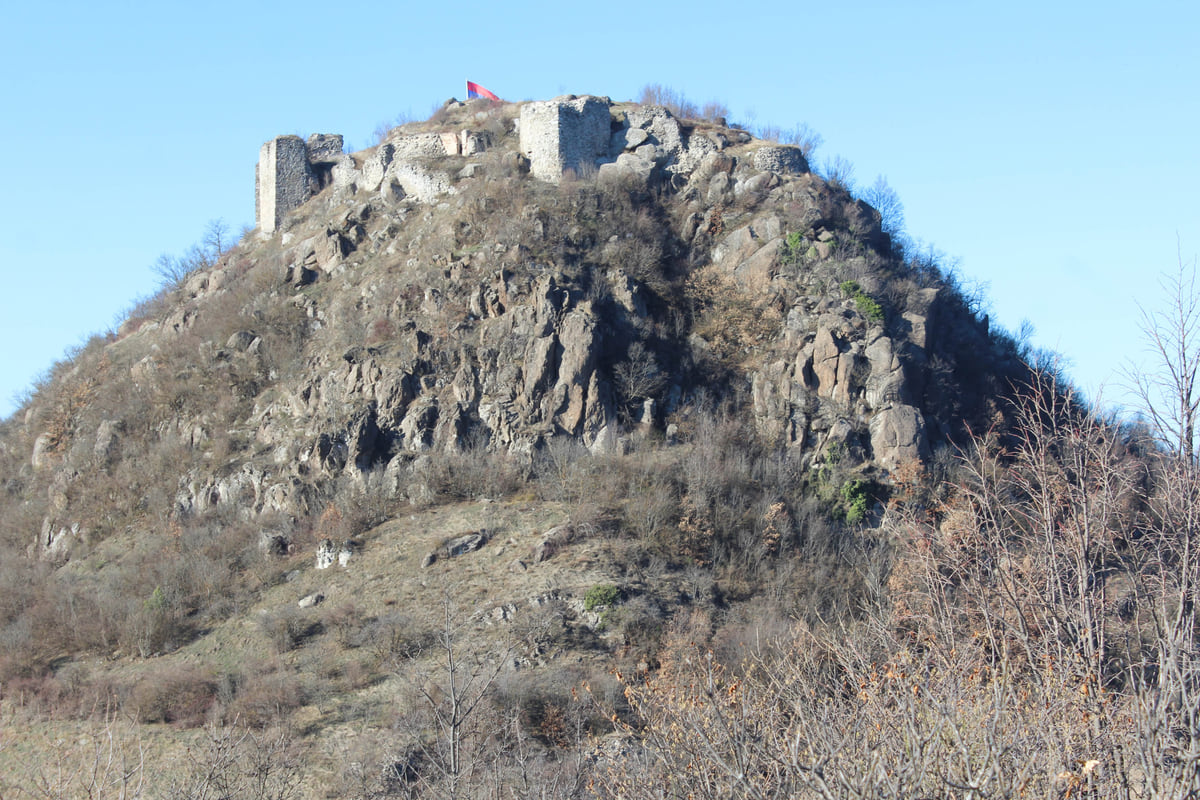
The ruins of Zvečan (Zveçan) fortress on the summit of a steep, rocky hill of volcanic origin
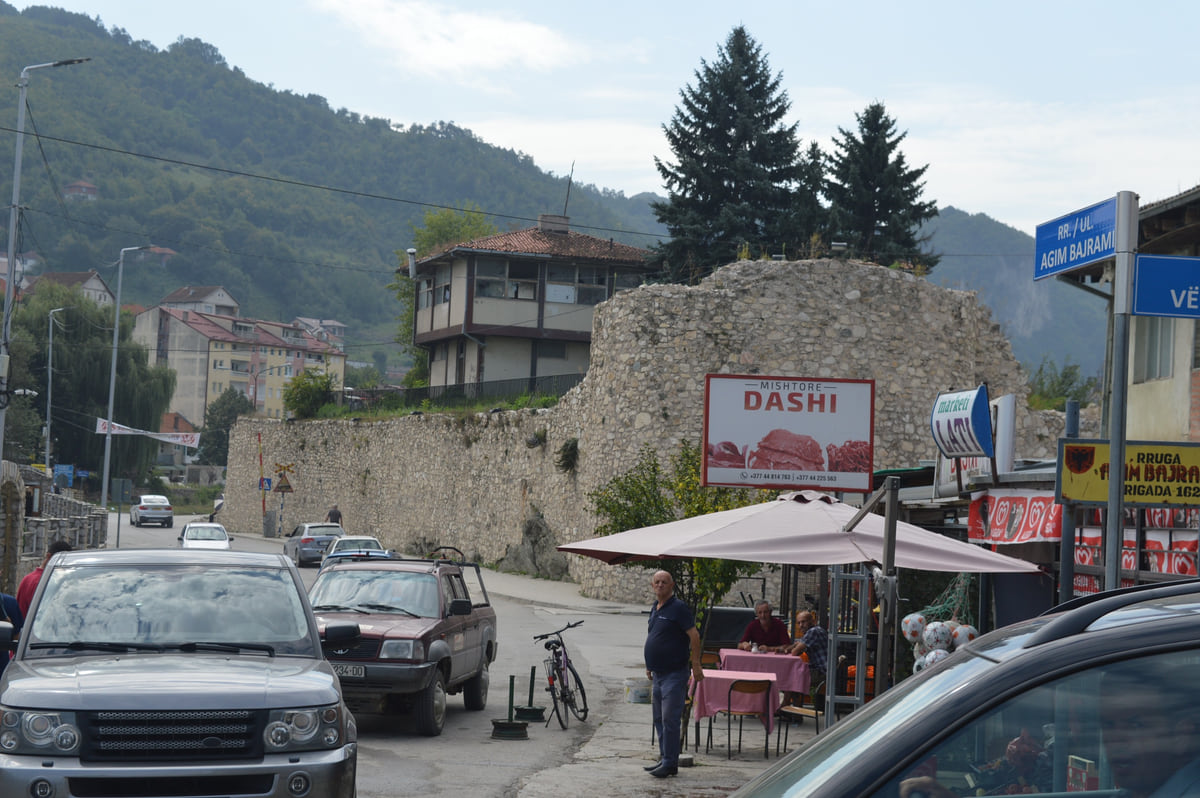
The stone wall of Kaçanik fortress beside a street in the town, with parked cars and wooded hills behind
Fortresses and fortified sites in the DTK
| Fortress | Municipality | Period in the DTK |
|---|---|---|
| Prizren Kalaja | Prizren | 4th century, with later phases |
| Novo Brdo (Artanë) | Novo Brdo | 13th-14th century |
| Vushtrri Kalaja | Vushtrri | 14th century (origin disputed) |
| Kaçanik Kalaja | Kaçanik | 1586-1590 |
| Pogragjë | Gjilan | 6th century |
| Veletin | Prishtinë (Shashkoc) | Eneolithic |
| Hisari of Kastërc | Suharekë | Eneolithic to Justinian's time |
| Ten others | Various | Bronze Age to Late Antiquity |
Source: Ministry of Culture heritage database (DTK). Zvečan has no DTK record; Law 03/L-039 protects it (art. 7.3 b), as it does the medieval town of Novo Brdo (7.3 c). Opening times and prices: no official information as of 11 October 2026.
Test yourself
True or false?
0/3 Pick before you peek.
-
Kaçanik Fortress is Roman.
See the answer
False. According to its record it's Ottoman, built between 1586 and 1590.
-
Novo Brdo was known for its silver and gold mines.
See the answer
True. The DTK describes it as a silver and gold mining area with smithing and coin minting.
-
Zvečan Fortress has a record in the Ministry of Culture heritage database.
See the answer
False. It doesn't; Law 03/L-039 protects it as a Special Protective Zone under Article 7.3 b.
0 of 208 Kosovo guides
Your next stamp
- Prizren Fortress
- Prizren
- Novo Brdo Fortress
- Places to visit
- Kaçanik fortress
- Zvečan Fortress
- 5 days
- Gjakova Grand Bazaar
- Gjeravica
- Pristina region
- Visoki Dečani Monastery
- Bjeshkët e Nemuna National Park
- Hadum Mosque
- Mitrovica Region
- Things to do
- Most beautiful places
- Sheh Danjolli tekke
- Prettiest villages
- Tailors' Bridge
- Rugova Canyon
- UNESCO sites
- Gjakova
- Map
- Where is Kosovo
- Regions
- Municipalities
- Cities
- Gračanica Monastery
- Mitrovica
- Patriarchate of Peć
- Pristina
- Rugova via ferrata
- Fushë Kosovë
- Population
- Vushtrri
- Podujeva
- Radavc Cave
- Size
- Bajrakli Mosque
- Devič Monastery
- Gazimestan
- Ibar Bridge
- Is it a country?
- Istog
- One day in Pristina
- Peja
- Prizren region
- Ulpiana
- Vushtrri Stone Bridge
- Gadime Cave
- Klina
- Name
- Vushtrri Fortress
- Deçan
- Flag
- Isa Boletini Complex
- History
- Junik
- Lake Batllava
- Banjska Monastery
- Ferizaj region
- Languages
- Rahovec
- Ferizaj
- Religion
- Sokolica Monastery
- Currency
- Lake Gazivoda
- Štrpce
- Brezovica
- EU membership
- Entry requirements
- Skiing in Kosovo
- Kaçanik
- Serbian border
- Gračanica
- Guesthouses in Rugova
- Hotels in Peja
- Newborn monument
- North Mitrovica
- One day in Prizren
- Peja bazaar
- Peja region
- Public holidays
- Velika Hoča
- Facts
- Gjakova region
- Hani i Elezit
- Hotels in Gjakova
- National Library
- Obiliq
- Zočište Monastery
- Drenas
- Mother Teresa Cathedral
- Shtime
- Skënderaj
- Lipjan
- Mother Teresa Boulevard
- Zvečan
- Kosovo Museum
- Leposavić
- Novo Brdo
- Emin Gjiku Ethnological Museum
- Janjevo
- Zubin Potok
- Imperial Mosque
- Pristina Clock Tower
- Pristina Old Bazaar
- Great Hammam of Pristina
- Bogë
- Germia Park
- Getting there
- Lake Radoniq
- Bear Sanctuary Prishtina
- Drelaj
- Flights
- Sinan Pasha Mosque
- Hotels in Pristina
- Pristina airport
- Prizren stone bridge
- Buses
- Grand Hotel Pristina
- Our Lady of Ljeviš
- Prizren hammam
- Swiss Diamond Hotel
- Tirana to Pristina
- League of Prizren
- Restaurants in Pristina
- Skopje to Pristina
- Belgrade to Pristina
- Prizren Archaeological Museum
- Balkans itinerary
- St George's Cathedral
- Church of the Holy Saviour
- Getting around
- Holy Archangels Monastery
- Trains
- Car hire
- Day trips
- Marash
- Driving
- Sharr National Park
- Taxis
- Distances
- Prevalla
- Dragash
- Road trip
- Brod
- Prices and budget
- On a budget
- Restelica
- Free things to do
- Mirusha waterfalls
- Malisheva
- Safety
- Mamusha
- Scams
- Healthcare
- National parks in Kosovo
- Nightlife
- Suhareka
- Mobile and roaming
- Mountains in Kosovo
- Mushtisht
- Hiking in Kosovo
- Korisha
- Packing list
- DokuFest
- Peaks of the Balkans
- With kids
- Holidays
- Hotels in Prizren
- Kosovo lakes
- 3 days
- Caves and waterfalls
- Restaurants in Prizren
- One week
- Gjilan region
- Kosovo food
- Sunny Hill Festival
- Gjilan
- Rahovec wine
- Atik Mosque, Gjilan
- Kosovo beer
- Draganac Monastery
- Where to eat in Kosovo
- Kamenica
- Where to stay in Kosovo
- Kllokot
- Weather in Kosovo
- Best time to visit Kosovo
- Partesh
- Kosovo in winter
- Ranillug
- Kosovo in spring
- Viti
- Kosovo in summer
- Letnica
- Binač Monastery
- Kosovo in autumn
- Events in Kosovo
- Independence Day
- Kosovo monasteries
- Mosques in Kosovo
- Kullas in Kosovo
- Museums in Kosovo
- Bazaars in Kosovo
Frequently asked questions
Are there castles in Kosovo?
Yes. The Ministry of Culture's heritage register lists 17 fortresses and fortified sites, and Law 03/L-039 also protects Zvečan. Prizren and Novo Brdo are the two most worth visiting.
Can you walk up to Prizren Fortress?
Yes, it's a walk up from the centre of Prizren. I couldn't find opening times or prices from an official source as of 11 October 2026.
How old is Novo Brdo Castle?
The DTK dates the fortress to the 13th and 14th centuries and notes that Novo Brdo first appears under that name, as Nuovo Monte, in the early 14th century.
What is Kalaja e Vushtrrisë?
Vushtrri's fortress, in the centre of the old town. Its DTK record lists it in the 14th century but quotes several theories about older origins.
Is it safe to visit Zvečan Fortress?
The FCDO warns of a risk of protests in the northern municipalities, Zvečan included, and says conditions can change quickly. I'd check its Kosovo page just before going.
By
Tourism graduate with a master’s in Tourism Management and Planning from the University of Málaga, who has travelled across Europe. He writes every guide from official sources and his own judgement.
Published on . Facts checked on .
Sources
Some links in this guide are affiliate links: if you book through them, the site earns a commission at no extra cost to you. Affiliate disclosure
Photos: Atdheu (CC BY-SA 3.0); Geograf208 (CC BY-SA 4.0); Fjolle Ramadani (CC BY-SA 4.0), via Wikimedia Commons.