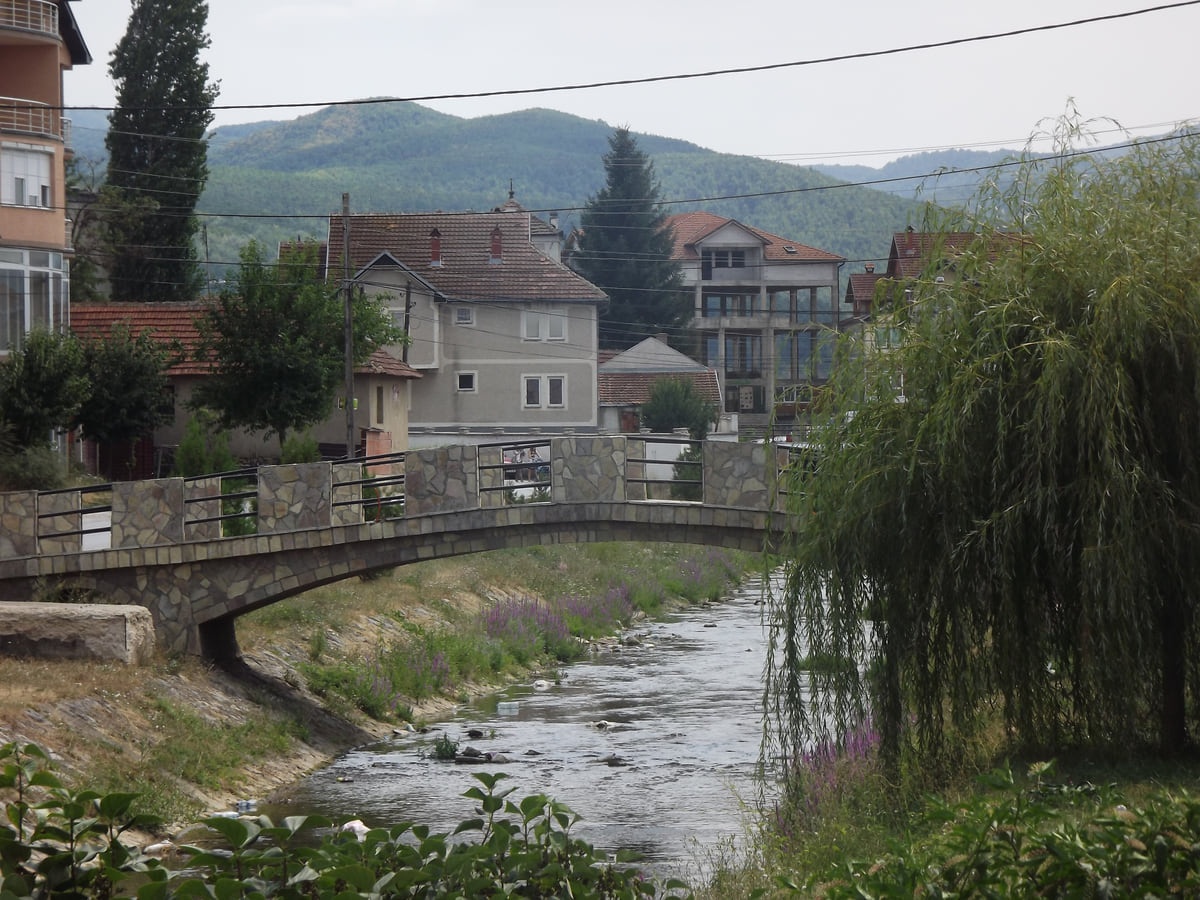
Viti (Vitina), Gjilan region
Viti, the rural Catholic south of the Gjilan region
Viti (in Serbian, Vitina) is a municipality in south-eastern Kosovo with 35,566 people in 2024 and 39 settlements. The heritage register lists nine sites, including St Anthony's Church at Binçë, St George's at Stubëll and the ruins of Binač Monastery. To the south lies Letnica and its shrine.
In 30 seconds
Full read: 2 min
- Viti (Vitina) has 35,566 people in 39 settlements, and the town itself has grown since 2011.
- St Anthony's at Binçë has 1989-1991 murals of saints in Albanian folk dress.
- St George's at Stubëll is described in its record as Kosovo's first Albanian school.
- Binač Monastery, with a Special Protective Zone, now lies in ruins.
After Gjilan itself, Viti is the part of the region I find most interesting, because within a few kilometres it packs in Catholic heritage, a protected Orthodox ruin and traditional houses. I'd give it a day by car, from Binçë to Letnica.

Before you go
What I would keep in mind
-
01 Most beautiful
Saints in folk costume at Binçë
St Anthony's at Binçë, opened in 1972, has 1989-1991 murals by Demir Behluli and Zeqirja Rexhepi showing the saints in Albanian folk dress.
Gjilan region -
02 Most beautiful
Letnica and its shrine
The Diocese of Prizren-Pristina calls Letnica's church a shrine. The village, with 168 residents, is about 8 km east of Viti town.
Letnica -
03 My tip
A 19th-century house built by its owner
At Remnik the heritage register protects Haxhi Ahmeti's house and guest room, 19th century, built by the owner himself, a well-known carpenter.
kullas in Kosovo
Viti strikes me as eastern Kosovo’s best surprise. There’s no single headline monument. What this rural, hilly municipality has instead is a cluster of Catholic churches with a story to tell, an Orthodox ruin with a Special Protective Zone, protected traditional houses and a Catholic shrine.
The municipality
Viti (in Serbian, Vitina) is in south-eastern Kosovo, in what OpenStreetMap treats as the Gjilan region. The municipality had 35,566 people in 2024, well down on the 46,987 of 2011, in 39 settlements. The town itself bucked the trend, growing from 4,924 to 5,780, followed by Pozharan, Smirë, Sllatinë e Epërme, Kabash and Drobesh. By mother tongue the census counts 35,392 Albanian and 123 Serbian speakers.
The picture at the top, sourced from Commons, catches the town by the river, with a stone footbridge, a weeping willow and red-roofed houses backed by green hills.
Catholic heritage
Nine of the Ministry of Culture’s DTK entries fall in Viti, and two are Catholic churches whose stories justify the stop. St Anthony of Padua’s at Binçë was begun in 1968 and opened to worshippers in 1972. It’s an octagonal building with a matching octagonal bell tower set on higher ground, and Monsignor Mark Sopi is buried inside. What makes it special are the murals of 1989 to 1991 by Demir Behluli and Zeqirja Rexhepi, the same artists who restored the paintings in Gjilan’s Atik Mosque. Every saint, Christ included, wears Albanian folk dress from different regions.
The other is St George’s at Stubëll e Epërme, which its record calls the first Albanian school in Kosovo. The DTK says a college of St Luke worked there from 1584, the date 1846 is carved in the apse, regular lessons in Albanian began in 1868 under the teacher Dom Mikel, and Austria-Hungary made it official in 1905. Further east, the village of Letnica has the church the diocese calls a shrine.
If you are staying the night, see the best hotel deals in Gjilan for your dates: the well-placed rooms go fast.
The Binač ruins and the rest
At Buzovik, about 4 km south-east of town on OpenStreetMap, lie the ruins of Binač Monastery, which the DTK records as St Michael’s, from the 14th century. Law 03/L-039 gives it a 100 m Special Protective Zone. The other sites are domestic and rural, such as Haxhi Ahmeti’s 19th-century house and guest room at Remnik, built by the owner himself, the carpenter Nezir Deliu, and two mosques at Gërmovë and Sllatinë e Epërme.
Beside the banja at Kllokot, about 6 km north, the DTK records the 2nd-century Roman site of Vërban, where a bust was found that the record considers Dardanian work. I bring tower houses and traditional homes together in kullas in Kosovo.
Getting around
Opening times, admission and visiting rules aren’t published for any of these places, and buses between the villages didn’t show up in any official source I checked. By car, OpenStreetMap puts Viti about 19 km from Gjilan in a straight line, and Gjilan is where I’d stay. Night driving on rural roads is something the FCDO advises against, given surfaces it calls fair to poor. It also reminds visitors that the GHIC isn’t valid in Kosovo.
So you do not lose the morning at the ticket office, browse tickets and tours in Gjilan on GetYourGuide.
If you are staying the night, see the best hotel deals in Gjilan for your dates: the well-placed rooms go fast.
Viti's largest settlements
| Settlement | 2024 | 2011 |
|---|---|---|
| Viti | 5,780 | 4,924 |
| Pozharan | 3,323 | 4,247 |
| Smirë | 2,344 | 3,872 |
| Sllatinë e Epërme | 1,849 | 2,317 |
| Kabash | 1,783 | 2,324 |
| Drobesh | 1,716 | 1,844 |
Source: ASK, 2024 census by settlement.
Viti on the Ministry of Culture heritage register
| Site | Settlement | Period |
|---|---|---|
| St Anthony's Church | Binçë | 1968-1972 |
| St George's Church and school | Stubëll e Epërme | Ottoman, 19th century |
| St Michael's Monastery (Binač), ruined | Buzovik | 14th century |
| Haxhi Ahmeti's house and guest room | Remnik | 19th century |
| Roman site | Vërban | 2nd century |
| Mosques at Gërmovë and Sllatinë e Epërme | Gërmovë, Sllatinë e Epërme | 19th and 20th centuries |
Source: DTK. A house with a gallery at Budrigë e Epërme is also listed. Visits: no official information.
Test yourself
True or false?
0/3 Pick before you peek.
-
Viti town has lost population since 2011.
See the answer
False. It went from 4,924 to 5,780, even though the municipality as a whole fell from 46,987 to 35,566.
-
St Anthony's at Binçë is a medieval church.
See the answer
False. Work began in 1968 and it opened in 1972, according to the heritage register.
-
The site at Vërban dates from Roman times.
See the answer
True. The DTK lists it as Roman, 2nd century, beside the Kllokot Banja.

What to see
What to see in Viti
0 of 208 Kosovo guides
Your next stamp
- Letnica
- Suhareka
- Binač Monastery
- Religion
- Skënderaj
- Kamenica
- Places to visit
- Gjilan region
- Gjakova Grand Bazaar
- Gjeravica
- Pristina region
- Visoki Dečani Monastery
- Bjeshkët e Nemuna National Park
- Hadum Mosque
- Mitrovica Region
- Things to do
- Most beautiful places
- Sheh Danjolli tekke
- Prettiest villages
- Tailors' Bridge
- Rugova Canyon
- UNESCO sites
- Gjakova
- Map
- Where is Kosovo
- Regions
- Municipalities
- Cities
- Gračanica Monastery
- Mitrovica
- Patriarchate of Peć
- Pristina
- Prizren
- Rugova via ferrata
- Fushë Kosovë
- Population
- Vushtrri
- Podujeva
- Radavc Cave
- Size
- Bajrakli Mosque
- Devič Monastery
- Gazimestan
- Ibar Bridge
- Is it a country?
- Istog
- One day in Pristina
- Peja
- Prizren region
- Ulpiana
- Vushtrri Stone Bridge
- Gadime Cave
- Klina
- Name
- Vushtrri Fortress
- Deçan
- Flag
- Isa Boletini Complex
- Novo Brdo Fortress
- History
- Junik
- Lake Batllava
- Zvečan Fortress
- Banjska Monastery
- Ferizaj region
- Languages
- Rahovec
- Ferizaj
- Sokolica Monastery
- Currency
- Lake Gazivoda
- Štrpce
- Brezovica
- EU membership
- Entry requirements
- Skiing in Kosovo
- Kaçanik
- Serbian border
- Gračanica
- Guesthouses in Rugova
- Hotels in Peja
- Kaçanik fortress
- Newborn monument
- North Mitrovica
- One day in Prizren
- Peja bazaar
- Peja region
- Public holidays
- Velika Hoča
- Facts
- Gjakova region
- Hani i Elezit
- Hotels in Gjakova
- National Library
- Obiliq
- Zočište Monastery
- Drenas
- Mother Teresa Cathedral
- Shtime
- Lipjan
- Mother Teresa Boulevard
- Zvečan
- Kosovo Museum
- Leposavić
- Novo Brdo
- Emin Gjiku Ethnological Museum
- Janjevo
- Zubin Potok
- Imperial Mosque
- Pristina Clock Tower
- Pristina Old Bazaar
- Great Hammam of Pristina
- Bogë
- Germia Park
- Getting there
- Lake Radoniq
- Prizren Fortress
- Bear Sanctuary Prishtina
- Drelaj
- Flights
- Sinan Pasha Mosque
- Hotels in Pristina
- Pristina airport
- Prizren stone bridge
- Buses
- Grand Hotel Pristina
- Our Lady of Ljeviš
- Prizren hammam
- Swiss Diamond Hotel
- Tirana to Pristina
- League of Prizren
- Restaurants in Pristina
- Skopje to Pristina
- Belgrade to Pristina
- Prizren Archaeological Museum
- Balkans itinerary
- St George's Cathedral
- Church of the Holy Saviour
- Getting around
- Holy Archangels Monastery
- Trains
- Car hire
- Day trips
- Marash
- Driving
- Sharr National Park
- Taxis
- Distances
- Prevalla
- Dragash
- Road trip
- Brod
- Prices and budget
- On a budget
- Restelica
- Free things to do
- Mirusha waterfalls
- Malisheva
- Safety
- Mamusha
- Scams
- Healthcare
- National parks in Kosovo
- Nightlife
- Mobile and roaming
- Mountains in Kosovo
- Mushtisht
- Hiking in Kosovo
- Korisha
- Packing list
- DokuFest
- Peaks of the Balkans
- With kids
- Holidays
- Hotels in Prizren
- Kosovo lakes
- 3 days
- Caves and waterfalls
- Restaurants in Prizren
- 5 days
- One week
- Kosovo food
- Sunny Hill Festival
- Gjilan
- Rahovec wine
- Atik Mosque, Gjilan
- Kosovo beer
- Draganac Monastery
- Where to eat in Kosovo
- Where to stay in Kosovo
- Kllokot
- Weather in Kosovo
- Best time to visit Kosovo
- Partesh
- Kosovo in winter
- Ranillug
- Kosovo in spring
- Kosovo in summer
- Kosovo in autumn
- Events in Kosovo
- Independence Day
- Kosovo monasteries
- Mosques in Kosovo
- Kullas in Kosovo
- Castles in Kosovo
- Museums in Kosovo
- Bazaars in Kosovo
Frequently asked questions
Where is Viti in Kosovo?
In the south-east, in the Gjilan region. OpenStreetMap puts the town about 19 km south-west of Gjilan as the crow flies.
What is there to see in Viti?
St Anthony's Church at Binçë, St George's church and school at Stubëll, the ruins of Binač Monastery at Buzovik and, about 8 km away, the Letnica shrine.
What is the population of Viti?
35,566 in ASK's 2024 census, down from 46,987 in 2011. The town itself grew, though, from 4,924 to 5,780.
Are Viti and Vitina the same place?
Yes. Viti is the Albanian form and Vitina the Serbian form of the same municipality.
Why is the Stubëll school famous?
Its record calls it the first Albanian school in Kosovo. It mentions a college there from 1584, the date 1846 carved in the apse and regular lessons from 1868.
By
Tourism graduate with a master’s in Tourism Management and Planning from the University of Málaga, who has travelled across Europe. He writes every guide from official sources and his own judgement.
Published on . Facts checked on .
Sources
Some links in this guide are affiliate links: if you book through them, the site earns a commission at no extra cost to you. Affiliate disclosure
Photos: Quqja (CC BY-SA 3.0), via Wikimedia Commons.