Medieval Monuments in Kosovo, UNESCO
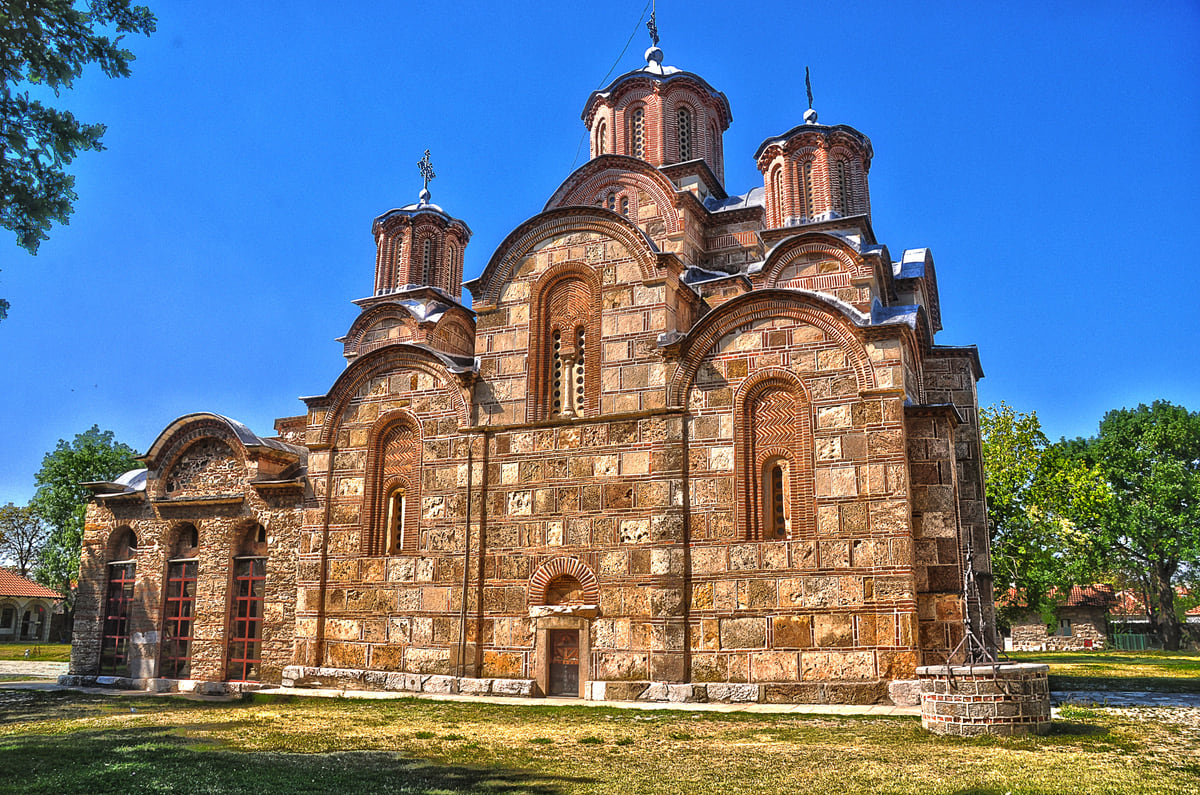
Gračanica Monastery, five domes and the frescoes of 1321
Gračanica Monastery (Manastiri i Graçanicës in Albanian) is a 14th-century church dedicated to the Virgin, about 8 km south of Pristina. Its frescoes were completed around 1321, according to Kosovo's Ministry of Culture, and since 2006 it has been one of the four parts of UNESCO's Medieval Monuments in Kosovo, on the Danger List. It's a working convent of nuns.
In 30 seconds
Full read: 3 min
- Gračanica Monastery is a 14th-century church dedicated to the Virgin, just south of Pristina.
- Its frescoes were finished around 1321 and it has been World Heritage since 2006, on the Danger List.
- It's a working convent of nuns; official sources publish no opening hours or price.
For me it's the first thing to see outside Pristina, and I'd take my time over it, above all the frescoes in the church. I'd go in the morning, dressed modestly, quietly, and aware that you're entering the home of a community of nuns rather than a museum.

Before you go
What I would keep in mind
-
01 Most beautiful
The frescoes of Michael and Eutychios
The painters Michael and Eutychios, from Thessaloniki, completed the church's frescoes around 1321, according to the Ministry of Culture. The best known are the cycle of the Great Feasts, the Passion and the Miracles of Christ.
-
02 My tip
Look up from outside
The four side domes rise on very tall drums that stress the vertical, something unusual for the period according to the Ministry. You appreciate it better from the garden than from inside.
-
03 Getting there
Ulpiana, under a kilometre away
The Roman town of Ulpiana lies less than 1,000 m west of the monastery, 1.8 km by road, according to the Ministry of Culture. Both fit into a morning.
Ulpiana -
04 Watch out
No made-up opening times
Neither UNESCO nor the Ministry of Culture publishes opening hours or a price. Be wary of anyone selling you a ticket outside and ask at the monastery itself.
What I would book
Around Pristina, Gračanica Monastery tops my list. It’s a 14th-century church with five domes, frescoes from 1321 and UNESCO protection, and it’s a short trip from the capital. Here’s what the official sources say about it and how I’d visit, with the respect a lived-in religious house deserves.
A 14th-century church on a 6th-century basilica
Kosovo’s Ministry of Culture places the monastery on the left bank of the Graçanka river, south of Pristina. The church you see is a 14th-century rebuilding of a church dedicated to the Virgin Mary, itself built over a 6th-century early Christian basilica. The Municipality of Pristina’s tourist leaflet adds that slabs with Latin inscriptions are visible in those foundations, a reminder of what stood here before.
The monastery has had a long and eventful life. According to the Ministry, the biggest restoration came at the end of the 16th century, when the openings of the outer narthex were walled up and new frescoes painted. At the end of the 17th century it suffered serious damage, and after the Second World War it was restored by nuns, who have lived here ever since. Today it’s a working convent, so you’re visiting a community’s home as well as a historic monument.
Five domes reaching upwards
The first thing that strikes you is the silhouette. The church follows the Byzantine cross-in-square plan with five domes. The Ministry of Culture highlights its proportions, with arches and domes stepping up in stages and a main facade split into three by arches. The drum of the central dome is original, and the four side domes sit on very tall drums that stress the building’s height, which was unusual for the period.
I’d walk all the way round the outside before going in. That way you see why the Ministry credits it with such a striking harmony and architectural value.
Once your dates are set, check which hotels are still free in Pristina before prices climb.
The frescoes, the reason to come
Inside is the real treasure. The painters Michael and Eutychios, from Thessaloniki, completed the frescoes in the main church around 1321, and the best known are the cycle of the Great Feasts, the Passion and the Miracles of Christ, according to the Ministry of Culture. The outer narthex also holds post-Byzantine frescoes from the 16th century, and the monastery keeps a treasury of later icons, among which the Ministry singles out those of Christ and the Virgin.
UNESCO sums up the value of the group it belongs to. The four monuments reflect the high point of Byzantine-Romanesque church culture, with its own distinct style of wall painting, which took shape in the Balkans over some four hundred years.
World Heritage and Special Protective Zone
The Medieval Monuments in Kosovo were inscribed in 2004 with Visoki Dečani Monastery, and in 2006 UNESCO extended the site with the Patriarchate of Peć, the Church of Our Lady of Ljeviš in Prizren and Gračanica. That same year UNESCO also put them on its danger list, and they’re still there. Gračanica’s component covers 1.2228 hectares. The whole group is explained in UNESCO sites in Kosovo. UNESCO puts the whole property at 2.8802 hectares, with a buffer zone of 115.3879, so Gračanica alone accounts for over two-fifths of the protected core.
On top of that, Law 03/L-039 declared it a Special Protective Zone. Its aim, according to the text, is to ensure these places can function peacefully and to preserve monastic life, so certain building is banned nearby and other activities, such as new bars, restaurants or public events, need the agreement of the Serbian Orthodox Church.
If you would rather have a local show you round, book a guided tour in Gračanica Monastery and choose by the reviews.
How to visit
Neither UNESCO nor the Ministry of Culture publishes opening hours or a price, so I won’t give you any. What I’d do is go in the morning, covered up to the knees and shoulders, speak quietly and check at the entrance what can be seen that day and whether photos are allowed inside. gov.uk notes that terrorist attacks in Kosovo can’t be ruled out and that religious sites can be targets, so stay alert as you would anywhere busy.
The monastery is in the village of Gračanica, about 8 km from central Pristina as the crow flies according to OpenStreetMap. Less than a kilometre to the west is the Roman town of Ulpiana, and further along the Gjilan road, the bear sanctuary. Together they make the best morning among my day trips from Pristina.
Once your dates are set, check which hotels are still free in Pristina before prices climb.
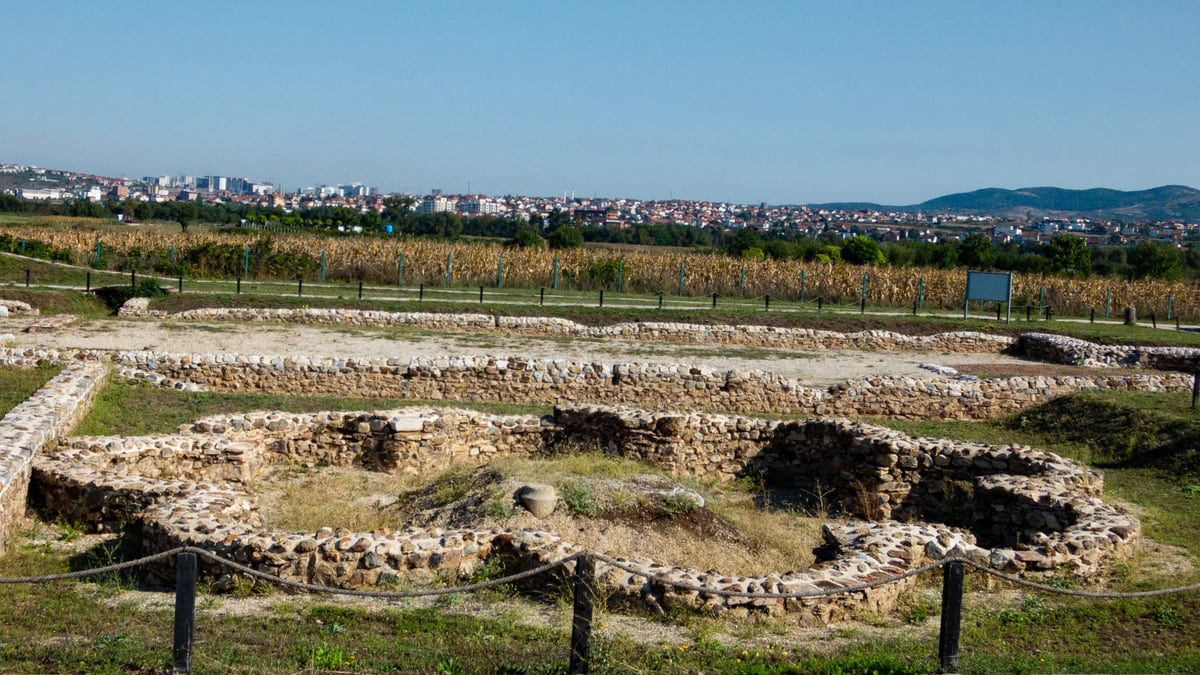
The remains of the Roman baths in the Ulpiana archaeological park, low stone walls set among the grass
Gračanica Monastery at a glance
| Detail | Value | Source |
|---|---|---|
| Dedication | Virgin Mary | Ministry of Culture |
| Built | 14th century, on a 6th-century basilica | Ministry of Culture |
| Church frescoes | Completed around 1321 by Michael and Eutychios | Ministry of Culture |
| Major restoration | Late 16th century, with new frescoes in the outer narthex | Ministry of Culture |
| World Heritage | 2006, extension of the Medieval Monuments in Kosovo (inscribed 2004) | UNESCO |
| Danger List | Since 2006 | UNESCO |
| Criteria | (ii), (iii) and (iv) | UNESCO |
| Component area | 1.2228 ha | UNESCO |
| Protection in Kosovo | Special Protective Zone (Law 03/L-039, art. 7.1 c) | Official Gazette |
UNESCO (whc.unesco.org/en/list/724), Kosovo Ministry of Culture heritage database (record 9199) and Law 03/L-039, checked on 3 and 10 October 2026.
Test yourself
True or false?
0/4 Pick before you peek.
-
Gračanica was the first monument in Kosovo to be inscribed by UNESCO.
See the answer
False. The site was inscribed in 2004 with Dečani monastery. Gračanica was added in the 2006 extension.
-
The church was built over a much older Christian basilica.
See the answer
True. The Ministry of Culture explains it stands on the foundations of an early Christian basilica from the 6th century.
-
The monastery is now a museum with no religious community.
See the answer
False. According to the Ministry of Culture, nuns restored it after the Second World War and it has been their convent ever since.
-
Slabs with Latin inscriptions can be seen in the foundations.
See the answer
True. The Municipality of Pristina's tourist leaflet mentions them, linking them to the 6th-century church it was built over.
- Church frescoes completed
- 1321
- Domes on the church
- 5
- Added to UNESCO's list
- 2006
- Area of the UNESCO component
- 1.2228 ha
Map
Where Gračanica Monastery is
The Bjeshkët e Nemuna mountains close off the west and the Sharr the south; in the middle lies the Pristina plain. Every number opens its guide.

0 of 208 Kosovo guides
Your next stamp
- Gračanica
- Patriarchate of Peć
- UNESCO sites
- Visoki Dečani Monastery
- Our Lady of Ljeviš
- Gjakova Grand Bazaar
- Gjeravica
- Places to visit
- Pristina region
- Bjeshkët e Nemuna National Park
- Hadum Mosque
- Mitrovica Region
- Things to do
- Most beautiful places
- Sheh Danjolli tekke
- Prettiest villages
- Tailors' Bridge
- Rugova Canyon
- Gjakova
- Map
- Where is Kosovo
- Regions
- Municipalities
- Cities
- Mitrovica
- Pristina
- Prizren
- Rugova via ferrata
- Fushë Kosovë
- Population
- Vushtrri
- Podujeva
- Radavc Cave
- Size
- Bajrakli Mosque
- Devič Monastery
- Gazimestan
- Ibar Bridge
- Is it a country?
- Istog
- One day in Pristina
- Peja
- Prizren region
- Ulpiana
- Vushtrri Stone Bridge
- Gadime Cave
- Klina
- Name
- Vushtrri Fortress
- Deçan
- Flag
- Isa Boletini Complex
- Novo Brdo Fortress
- History
- Junik
- Lake Batllava
- Zvečan Fortress
- Banjska Monastery
- Ferizaj region
- Languages
- Rahovec
- Ferizaj
- Religion
- Sokolica Monastery
- Currency
- Lake Gazivoda
- Štrpce
- Brezovica
- EU membership
- Entry requirements
- Skiing in Kosovo
- Kaçanik
- Serbian border
- Guesthouses in Rugova
- Hotels in Peja
- Kaçanik fortress
- Newborn monument
- North Mitrovica
- One day in Prizren
- Peja bazaar
- Peja region
- Public holidays
- Velika Hoča
- Facts
- Gjakova region
- Hani i Elezit
- Hotels in Gjakova
- National Library
- Obiliq
- Zočište Monastery
- Drenas
- Mother Teresa Cathedral
- Shtime
- Skënderaj
- Lipjan
- Mother Teresa Boulevard
- Zvečan
- Kosovo Museum
- Leposavić
- Novo Brdo
- Emin Gjiku Ethnological Museum
- Janjevo
- Zubin Potok
- Imperial Mosque
- Pristina Clock Tower
- Pristina Old Bazaar
- Great Hammam of Pristina
- Bogë
- Germia Park
- Getting there
- Lake Radoniq
- Prizren Fortress
- Bear Sanctuary Prishtina
- Drelaj
- Flights
- Sinan Pasha Mosque
- Hotels in Pristina
- Pristina airport
- Prizren stone bridge
- Buses
- Grand Hotel Pristina
- Prizren hammam
- Swiss Diamond Hotel
- Tirana to Pristina
- League of Prizren
- Restaurants in Pristina
- Skopje to Pristina
- Belgrade to Pristina
- Prizren Archaeological Museum
- Balkans itinerary
- St George's Cathedral
- Church of the Holy Saviour
- Getting around
- Holy Archangels Monastery
- Trains
- Car hire
- Day trips
- Marash
- Driving
- Sharr National Park
- Taxis
- Distances
- Prevalla
- Dragash
- Road trip
- Brod
- Prices and budget
- On a budget
- Restelica
- Free things to do
- Mirusha waterfalls
- Malisheva
- Safety
- Mamusha
- Scams
- Healthcare
- National parks in Kosovo
- Nightlife
- Suhareka
- Mobile and roaming
- Mountains in Kosovo
- Mushtisht
- Hiking in Kosovo
- Korisha
- Packing list
- DokuFest
- Peaks of the Balkans
- With kids
- Holidays
- Hotels in Prizren
- Kosovo lakes
- 3 days
- Caves and waterfalls
- Restaurants in Prizren
- 5 days
- One week
- Gjilan region
- Kosovo food
- Sunny Hill Festival
- Gjilan
- Rahovec wine
- Atik Mosque, Gjilan
- Kosovo beer
- Draganac Monastery
- Where to eat in Kosovo
- Kamenica
- Where to stay in Kosovo
- Kllokot
- Weather in Kosovo
- Best time to visit Kosovo
- Partesh
- Kosovo in winter
- Ranillug
- Kosovo in spring
- Viti
- Kosovo in summer
- Letnica
- Binač Monastery
- Kosovo in autumn
- Events in Kosovo
- Independence Day
- Kosovo monasteries
- Mosques in Kosovo
- Kullas in Kosovo
- Castles in Kosovo
- Museums in Kosovo
- Bazaars in Kosovo
Frequently asked questions
Where is Gračanica monastery?
In the village of Gračanica (Graçanicë), about 8 km south of central Pristina as the crow flies according to OpenStreetMap, on the left bank of the Graçanka river according to the Ministry of Culture.
Why is Gračanica monastery a World Heritage site?
Because in 2006 UNESCO added it to the Medieval Monuments in Kosovo, inscribed in 2004 with Dečani monastery, as an example of the Byzantine-Romanesque wall painting that developed in the Balkans between the 13th and 17th centuries.
How old are the Gračanica frescoes?
Those in the main church were finished around 1321, the work of the painters Michael and Eutychios from Thessaloniki, according to the Ministry of Culture. The outer narthex also has post-Byzantine frescoes from the 16th century.
Can you visit Gračanica monastery?
It's a working convent of nuns. No official source publishes visiting hours or a price, so I'd go in the morning, dressed modestly, and ask at the entrance what can be seen that day.
What does being on the Danger List mean?
That UNESCO placed the Medieval Monuments in Kosovo on its List of World Heritage in Danger in 2006, the same year Gračanica was added to the site, and they remain on it.
What is there to see near Gračanica monastery?
The Roman town of Ulpiana, less than a kilometre to the west, and, further along the Gjilan road, the bear sanctuary at Mramor.
By
Tourism graduate with a master’s in Tourism Management and Planning from the University of Málaga, who has travelled across Europe. He writes every guide from official sources and his own judgement.
Published on . Facts checked on .
Sources
Some links in this guide are affiliate links: if you book through them, the site earns a commission at no extra cost to you. Affiliate disclosure
Photos: Sasa Micic (CC BY-SA 3.0); Julianruizp (CC BY-SA 4.0), via Wikimedia Commons.