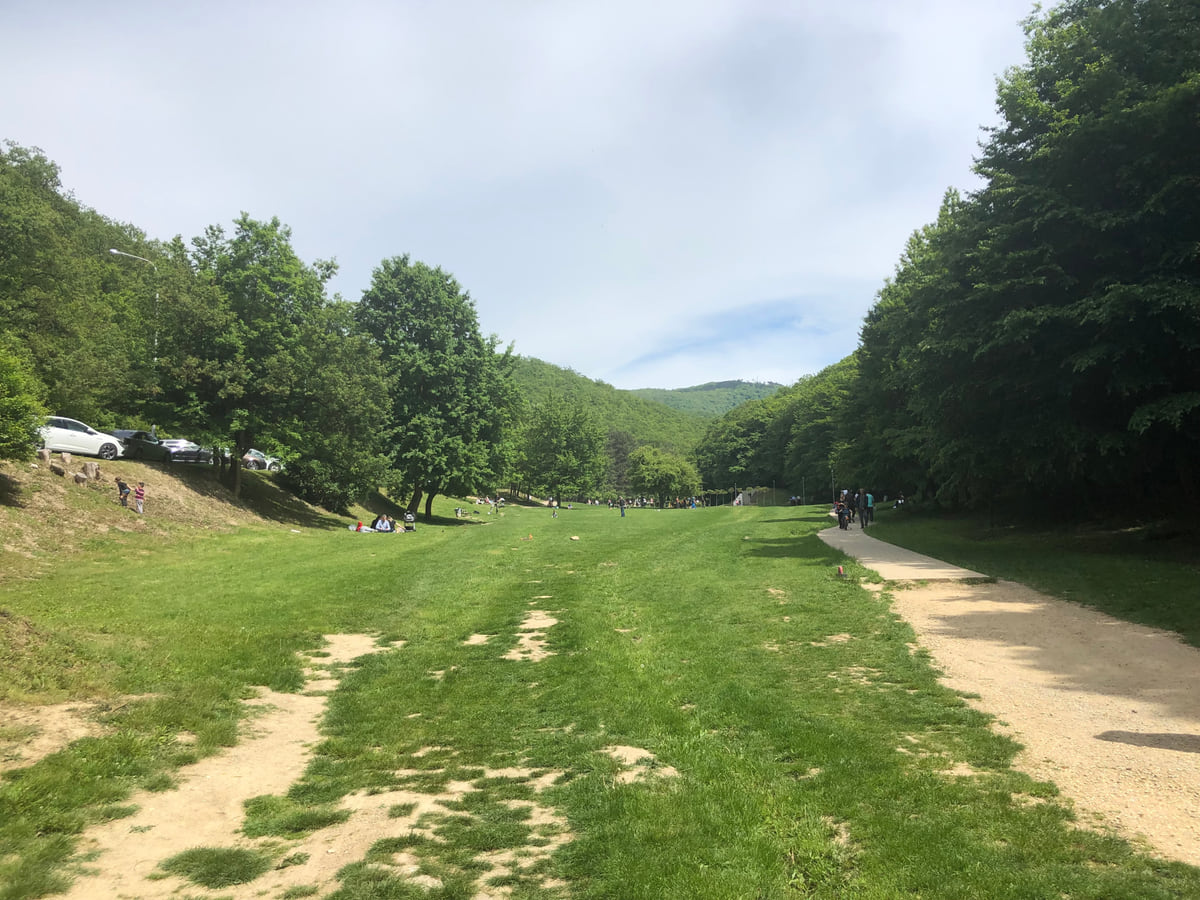
Protected nature park since 1987
Germia, the forest three kilometres from central Pristina
Germia Park (Gërmia) is Pristina's great green space, north-east of the centre. The city protected it in 1987 as a regional nature park covering 1,126 hectares, according to Kosovo's Environmental Protection Agency; over 75% of it is forest and the massif tops out at Butos, 1,050 m. The Municipality reckons on a million visits a year.
In 30 seconds
Full read: 2 min
- Germia is Pristina's big park, north-east of the centre, protected in 1987 over 1,126 hectares.
- More than 75% is oak and beech forest, and the massif peaks at Butos, 1,050 metres.
- It's free, and a 5.6 km trail leads from it to the bear sanctuary at Mramor.
I'd go to Germia on a weekday morning, when the woods are at their quietest, and if your legs are up to it I'd follow the 5.6 km trail to the bear sanctuary. It's the best way to combine a walk in nature with a visit that means something, all without a car.

Before you go
What I would keep in mind
-
01 To save money
The cheapest escape from the centre
Germia is about 3.5 km from the centre as the crow flies, according to OpenStreetMap, and costs nothing to enter. For an afternoon among oaks and beeches you need little more than water and decent shoes.
-
02 Getting there
A trail to the bears
The Four Paws bear sanctuary publishes a walking and cycling route, the Bear Trail, running 5.6 km from Germia to its entrance at Mramor, beside Lake Badovc.
Kosovo bear sanctuary -
03 My tip
Watch the trees change as you climb
The environment agency describes four bands of woodland by altitude, from Hungarian and Turkey oak at 600-700 m to oak and hornbeam around 800 m and beech near 1,000 m. You can see the shift on the way up.
-
04 Most beautiful
The water that reached the bazaar
Germia's springs once fed the marble fountain in Pristina's old bazaar, according to the Ministry of Culture. Today water from several springs in the park is piped into the swimming pool.
Pristina's old bazaar
Pristina isn’t known as a green city, which is why Germia comes as a surprise. A few kilometres from the boulevard a forest of oak and beech begins, one the city has protected for decades and which, according to the Municipality’s tourist leaflet, draws a million visits a year. With more than a day in the capital, I think it’s the best break from the concrete you’ll find.
A 62 km² massif on the city’s edge
Kosovo’s Environmental Protection Agency calls the Germia massif one of the most important natural assets not just for Pristina but for the whole of Kosovo. It spreads over 62 km² north-east of the city in a run of hills and stream valleys, and its highest point is the summit of Butos, 1,050 metres up. That’s where the Vellusha rises, one of the two rivers that ran through town until they were covered over in 1988.
The protected park is only part of it. In 1966 an area of the massif was declared a picnic forest, and in 1987 Pristina’s municipal assembly put the Germia complex under protection as a regional nature park covering 1,126 hectares. The agency’s 2016 list of protected areas puts it at 2,302 hectares in IUCN category V. It’s managed by the public company Hortikultura, with the Institute for Nature Protection keeping a professional eye on it.
What you’ll find
Forest, mostly. Over three-quarters of the park is wooded, 884 hectares by the agency’s count, in four types of woodland stacked by altitude, from oaks lower down to beech near 1,000 metres. The agency lists 610 species of vascular plants, five of them endemic, and 83 fungi. For wildlife, it has recorded 19 mammals, 30 birds, 7 reptiles and 5 amphibians.
For visitors, the practical bit is the 41-hectare recreation zone. It starts at the swimming pool and carries on through meadows, the old children’s holiday camp, the sports pitches and the former Germia hotel up to the foot of the ski lift. That’s the busiest part at weekends. Several springs on the massif dry up in summer, and the water from the rest is piped to the pool.
Once your dates are set, check which hotels are still free in Pristina before prices climb.
Is it worth going?
If you like walking, yes. It isn’t a national park like those in the western mountains, but it’s right there and it’s free. One detail I love is that Germia’s springs used to supply the marble fountain in Pristina’s old bazaar, according to the Ministry of Culture. The city and its forest have always been linked.
The agency itself warns that the massif suffers from logging, erosion and unplanned building, and asks people not to drop litter, not to drive inside the park and not to tamper with the springs. I’d add the obvious, which is to stay on the paths as much as you can.
How to combine it
The neatest way to do it is to follow the 5.6-kilometre trail published by the Pristina bear sanctuary, which leaves from Germia and arrives at its entrance in Mramor, by Lake Badovc. Coming back by taxi or bus fills a whole day nicely. If you’d rather keep things urban, the other options are in day trips from Pristina, and for planning the city itself there’s my guide to Pristina.
If you would rather have a local show you round, book a guided tour in Germia Park and choose by the reviews.
Once your dates are set, check which hotels are still free in Pristina before prices climb.
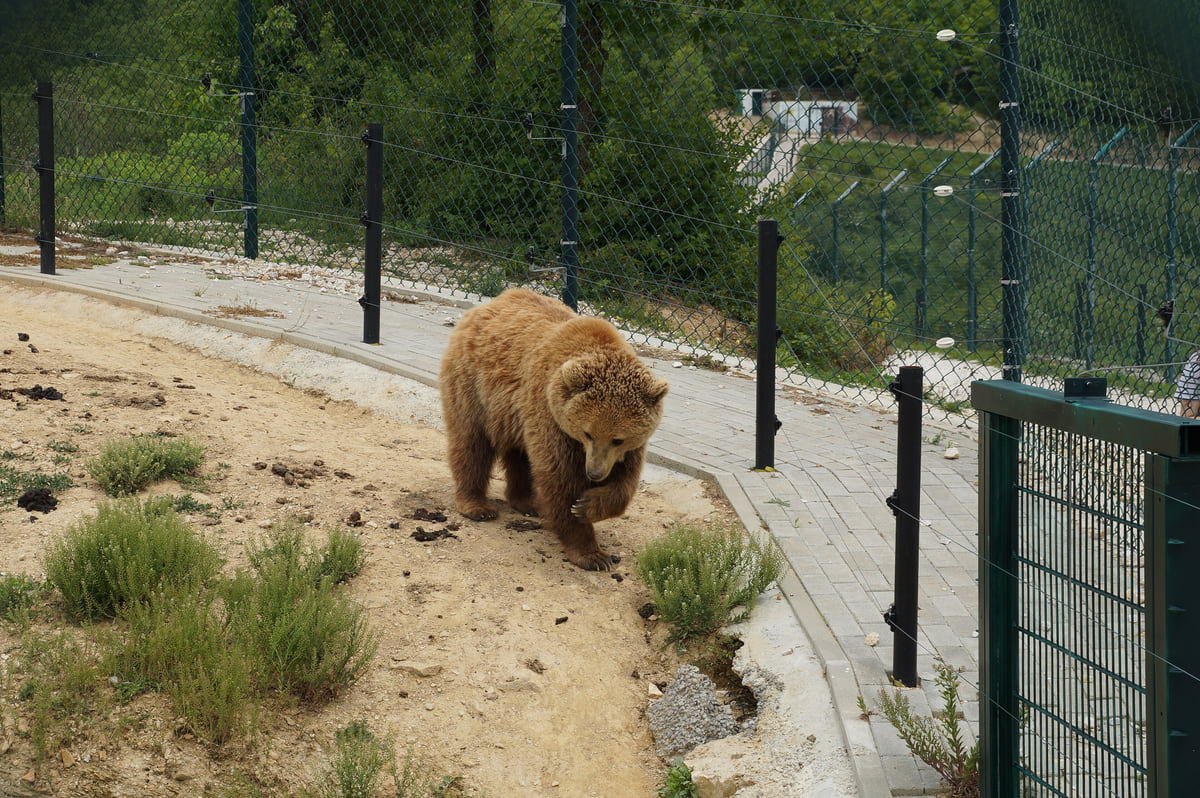
A brown bear walking beside the fence of its enclosure at the Bear Sanctuary Prishtina in Mramor, with trees behind
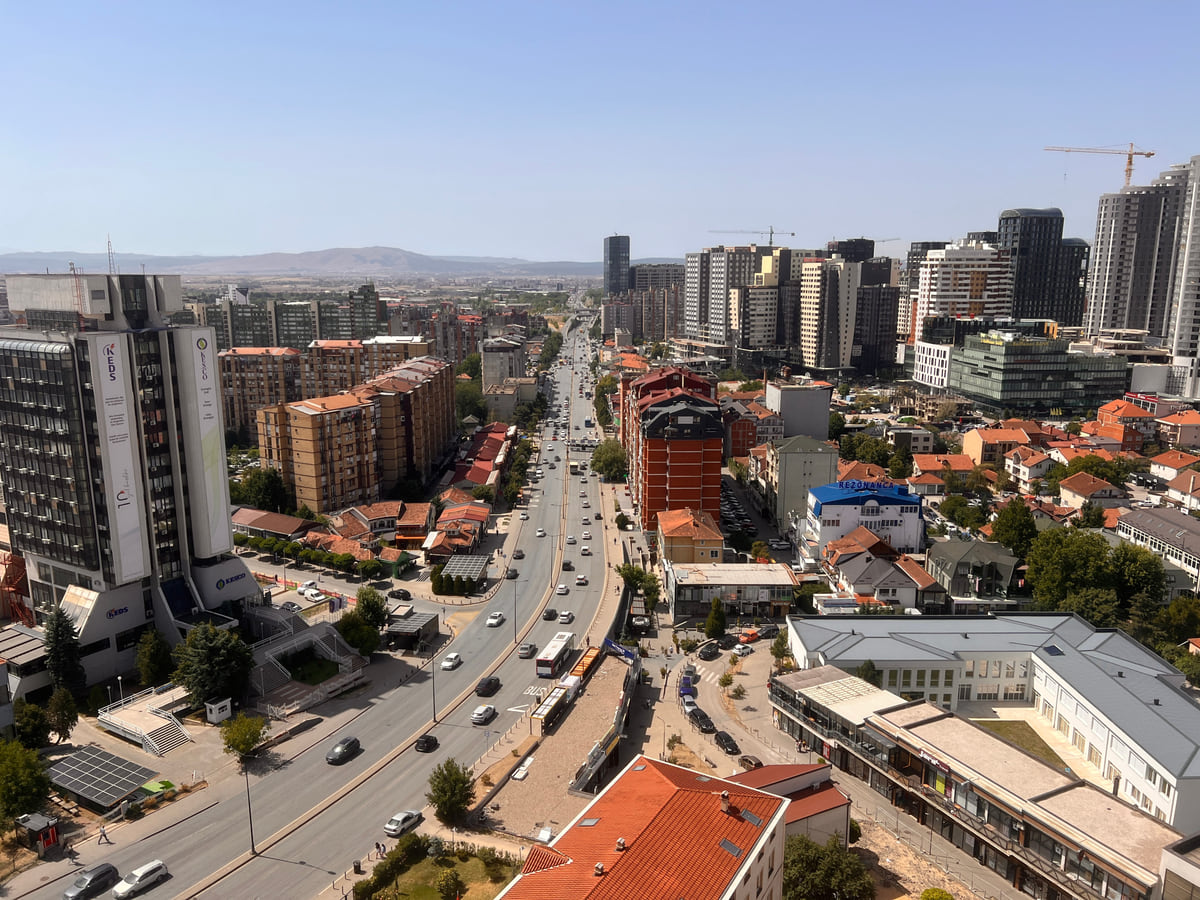
Pristina from the cathedral tower, looking down Bill Clinton Boulevard to tower blocks and green hills beyond
Germia in numbers
| Detail | Value | Source |
|---|---|---|
| Area protected in 1987 | 1,126 ha | AMMK |
| Area in the 2016 protected areas list | 2,302 ha, IUCN category V | AMMK |
| Germia massif | 62 km² | AMMK |
| Butos summit | 1,050 m | AMMK |
| Forest | 884.57 ha | AMMK |
| Recreation zone | 41.4 ha | AMMK |
| Vascular plants | 610 species in 82 families | AMMK |
| Mammals and birds | 19 and 30 species | AMMK |
| Visits a year | One million | Municipality of Pristina |
Kosovo Environmental Protection Agency (AMMK), “Parku i Natyrës Gërmia, krenaria e kryeqytetit” and the 2016 protected areas list; Municipality of Pristina tourist map. Checked on 10 October 2026.
Test yourself
True or false?
0/3 Pick before you peek.
-
Germia Park has been protected since the 1980s.
See the answer
True. Pristina's municipal assembly declared it a regional nature park in 1987, says the environment agency. Part of the massif had already been set aside as picnic forest in 1966.
-
Germia is mostly open grassland with few trees.
See the answer
False. Over 75% of the park is forest, with oak, hornbeam and beech, according to the environment agency.
-
You can walk from Germia to the bear sanctuary.
See the answer
True. The sanctuary publishes a walking and cycling route, the Bear Trail, 5.6 km long, starting in Germia Park.
Map
Where Germia Park is
The Bjeshkët e Nemuna mountains close off the west and the Sharr the south; in the middle lies the Pristina plain. Every number opens its guide.
 1Pristina 2Newborn monument 3National Library 4Mother Teresa Cathedral 5Mother Teresa Boulevard 6Kosovo Museum 7Emin Gjiku Ethnological Museum 8Imperial Mosque 9Pristina Clock Tower 10Pristina Old Bazaar 11Great Hammam of Pristina 12Germia Park 13Bear Sanctuary Prishtina 14Restaurants in Pristina
 Map data © OpenStreetMap contributors (ODbL)
- 1PristinaCapital of Kosovo under its Constitution
- 2Newborn monumentTypographic sculpture for 17 February 2008
- 3National LibraryAndrija Mutnjaković, 1974-1981
- 4Mother Teresa CathedralCatholic cathedral with a lookout tower
- 5Mother Teresa BoulevardThe pedestrian heart of central Pristina
- 6Kosovo MuseumA museum since 1949, in this building since 1980
- 7Emin Gjiku Ethnological MuseumThe Kosovo Museum's ethnological branch
- 8Imperial MosqueSultan Mehmed Fatih Mosque, 15th century
- 9Pristina Clock TowerSahat Kulla, late 19th century
- 10Pristina Old BazaarProtected old town, 14th to 19th centuries
- 11Great Hammam of PristinaHamami i Madh, 14th-15th century
- 12Germia ParkProtected nature park since 1987
- 13Bear Sanctuary PrishtinaFour Paws, at Mramor, since 2013
- 14Restaurants in PristinaOver twenty places on the Municipality's map
0 of 208 Kosovo guides
Your next stamp
- Great Hammam of Pristina
- Day trips
- Pristina region
- Pristina
- Gazimestan
- Lake Batllava
- Gjakova Grand Bazaar
- Gjeravica
- Places to visit
- Visoki Dečani Monastery
- Bjeshkët e Nemuna National Park
- Hadum Mosque
- Mitrovica Region
- Things to do
- Most beautiful places
- Sheh Danjolli tekke
- Prettiest villages
- Tailors' Bridge
- Rugova Canyon
- UNESCO sites
- Gjakova
- Map
- Where is Kosovo
- Regions
- Municipalities
- Cities
- Gračanica Monastery
- Mitrovica
- Patriarchate of Peć
- Prizren
- Rugova via ferrata
- Fushë Kosovë
- Population
- Vushtrri
- Podujeva
- Radavc Cave
- Size
- Bajrakli Mosque
- Devič Monastery
- Ibar Bridge
- Is it a country?
- Istog
- One day in Pristina
- Peja
- Prizren region
- Ulpiana
- Vushtrri Stone Bridge
- Gadime Cave
- Klina
- Name
- Vushtrri Fortress
- Deçan
- Flag
- Isa Boletini Complex
- Novo Brdo Fortress
- History
- Junik
- Zvečan Fortress
- Banjska Monastery
- Ferizaj region
- Languages
- Rahovec
- Ferizaj
- Religion
- Sokolica Monastery
- Currency
- Lake Gazivoda
- Štrpce
- Brezovica
- EU membership
- Entry requirements
- Skiing in Kosovo
- Kaçanik
- Serbian border
- Gračanica
- Guesthouses in Rugova
- Hotels in Peja
- Kaçanik fortress
- Newborn monument
- North Mitrovica
- One day in Prizren
- Peja bazaar
- Peja region
- Public holidays
- Velika Hoča
- Facts
- Gjakova region
- Hani i Elezit
- Hotels in Gjakova
- National Library
- Obiliq
- Zočište Monastery
- Drenas
- Mother Teresa Cathedral
- Shtime
- Skënderaj
- Lipjan
- Mother Teresa Boulevard
- Zvečan
- Kosovo Museum
- Leposavić
- Novo Brdo
- Emin Gjiku Ethnological Museum
- Janjevo
- Zubin Potok
- Imperial Mosque
- Pristina Clock Tower
- Pristina Old Bazaar
- Bogë
- Getting there
- Lake Radoniq
- Prizren Fortress
- Bear Sanctuary Prishtina
- Drelaj
- Flights
- Sinan Pasha Mosque
- Hotels in Pristina
- Pristina airport
- Prizren stone bridge
- Buses
- Grand Hotel Pristina
- Our Lady of Ljeviš
- Prizren hammam
- Swiss Diamond Hotel
- Tirana to Pristina
- League of Prizren
- Restaurants in Pristina
- Skopje to Pristina
- Belgrade to Pristina
- Prizren Archaeological Museum
- Balkans itinerary
- St George's Cathedral
- Church of the Holy Saviour
- Getting around
- Holy Archangels Monastery
- Trains
- Car hire
- Marash
- Driving
- Sharr National Park
- Taxis
- Distances
- Prevalla
- Dragash
- Road trip
- Brod
- Prices and budget
- On a budget
- Restelica
- Free things to do
- Mirusha waterfalls
- Malisheva
- Safety
- Mamusha
- Scams
- Healthcare
- National parks in Kosovo
- Nightlife
- Suhareka
- Mobile and roaming
- Mountains in Kosovo
- Mushtisht
- Hiking in Kosovo
- Korisha
- Packing list
- DokuFest
- Peaks of the Balkans
- With kids
- Holidays
- Hotels in Prizren
- Kosovo lakes
- 3 days
- Caves and waterfalls
- Restaurants in Prizren
- 5 days
- One week
- Gjilan region
- Kosovo food
- Sunny Hill Festival
- Gjilan
- Rahovec wine
- Atik Mosque, Gjilan
- Kosovo beer
- Draganac Monastery
- Where to eat in Kosovo
- Kamenica
- Where to stay in Kosovo
- Kllokot
- Weather in Kosovo
- Best time to visit Kosovo
- Partesh
- Kosovo in winter
- Ranillug
- Kosovo in spring
- Viti
- Kosovo in summer
- Letnica
- Binač Monastery
- Kosovo in autumn
- Events in Kosovo
- Independence Day
- Kosovo monasteries
- Mosques in Kosovo
- Kullas in Kosovo
- Castles in Kosovo
- Museums in Kosovo
- Bazaars in Kosovo
Frequently asked questions
Where is Germia Park?
North-east of central Pristina, about 3.5 km away as the crow flies according to OpenStreetMap. The Germia massif covers 62 km² between the city, the Graçanica river valley and the village of Mramor, says the environment agency.
How big is Germia Park?
The 1987 municipal decision protected 1,126 hectares as a regional nature park. The environment agency's 2016 list of protected areas gives it 2,302 hectares in IUCN category V.
Do you pay to get into Germia?
No, it's an open park. The environment agency says it's run by the public company Hortikultura and overseen by Kosovo's Institute for Nature Protection.
What is there to do in Germia Park?
Walk in the forest, use the 41-hectare recreation zone that starts at the swimming pool, with meadows and sports pitches, and walk or cycle the 5.6 km trail to the bear sanctuary that Four Paws publishes.
What wildlife lives in Germia?
The environment agency has recorded 5 amphibian species, 7 reptiles, 19 mammals and 30 birds, plus a great many insects. It also warns that several species are in decline.
By
Tourism graduate with a master’s in Tourism Management and Planning from the University of Málaga, who has travelled across Europe. He writes every guide from official sources and his own judgement.
Published on . Facts checked on .
Sources
Some links in this guide are affiliate links: if you book through them, the site earns a commission at no extra cost to you. Affiliate disclosure
Photos: albinfo (CC0); albinfo (CC0); Bdx (CC0), via Wikimedia Commons.