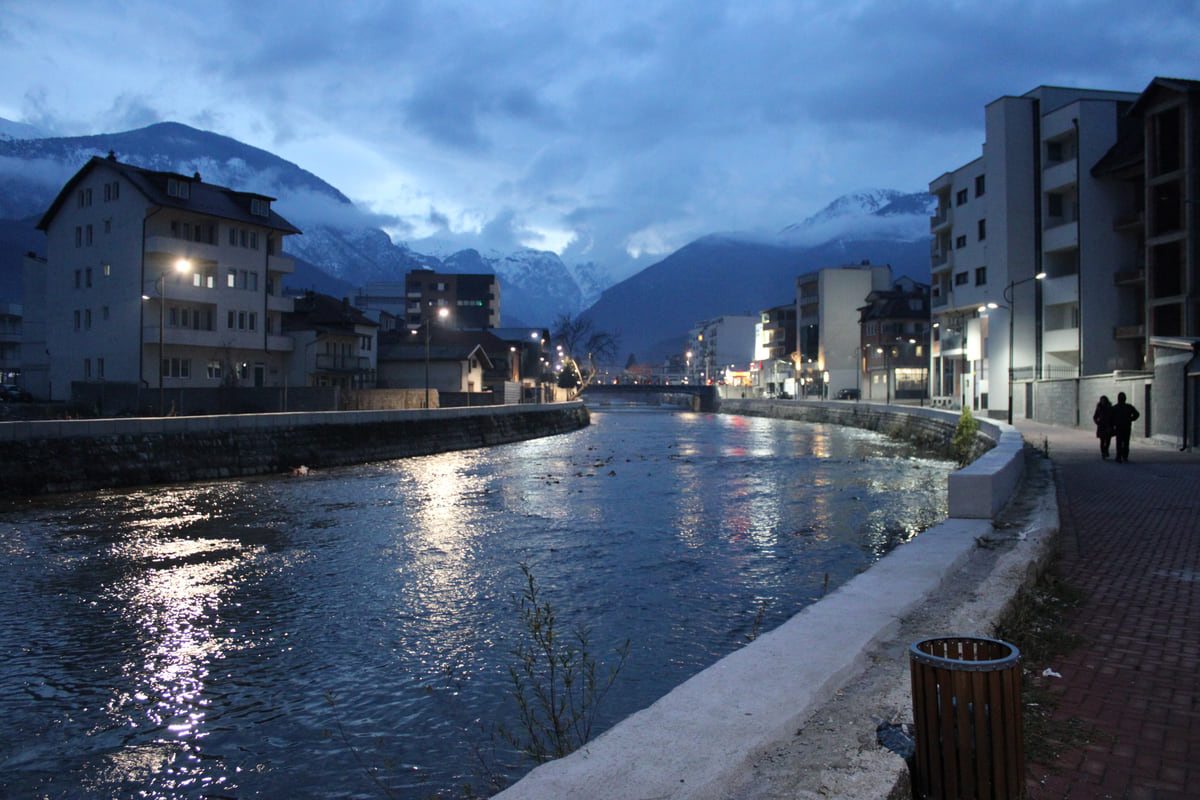
Town in the Peja region
Peja, the Kosovan town with mountains at the end of the street
Peja (Pejë in Albanian, Peć in Serbian) is the main town of western Kosovo, with 41,171 people at the 2024 census. On its outskirts is the Patriarchate of Peć, part of the UNESCO Medieval Monuments in Kosovo; in the centre, an old bazaar and the 16th-century Bajrakli Mosque; and a few kilometres west, the Rugova Canyon.
In 30 seconds
Full read: 3 min
- Peja is the main town of western Kosovo, with 41,171 people in 2024.
- Its Serbian name is Peć, and the UNESCO monastery outside town is the Patriarchate of Peć.
- The old centre has a bazaar and the Bajrakli Mosque, dated to the 16th century by the DTK.
- The Rugova Canyon begins a few kilometres west and leads into the national park.
For anyone coming to Kosovo for the outdoors, Peja is the base I'd choose. Give it at least two nights, an afternoon for the bazaar and the Patriarchate, and a full day up the Rugova valley.

Before you go
What I would keep in mind
-
01 Most beautiful
The Patriarchate, a short hop from the centre
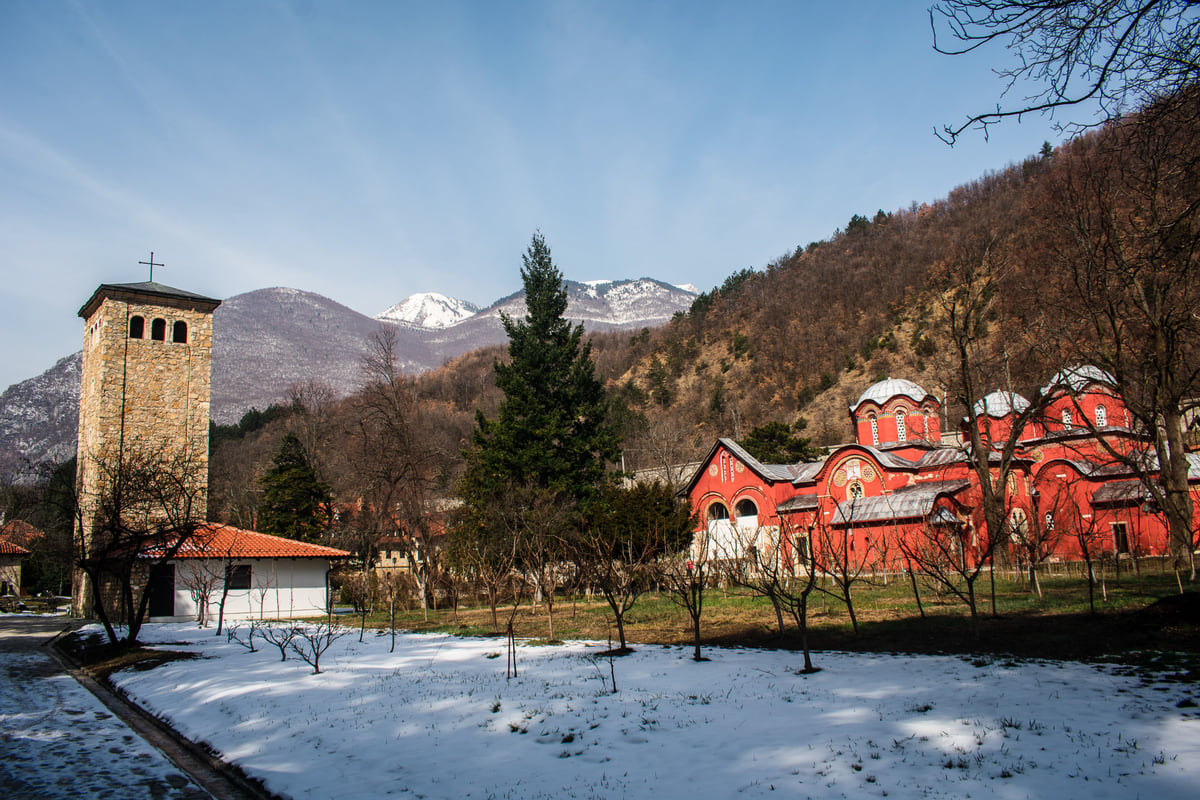
The four churches of the Patriarchate of Peć stand on the edge of town by the mouth of the canyon, the easiest UNESCO component to pair with an afternoon in town.
Patriarchate of Peć -
02 Worth the splurge
Clipping in above the Lumbardhi
Peja's tourism website lists five via ferrata routes in the Rugova Canyon. If you have never tried one, this is the place in Kosovo to start, with a local guide.
via ferrata in the Rugova Canyon -
03 My tip
The White Drin rises nearby
At Radavc, north of town, you find the cave and, according to Peja's tourism website, the spring of the White Drin. With a car it is an easy half-morning.
Radavc Cave -
04 To save money
Sleep in town, go up by day
Most of the region's beds are in town. On a tight budget, stay down in Peja and drive up to Rugova just for the day out.
hotels in Peja
What I would book
My ranking, scored
What I would see in Peja, in order
My own marks out of 10, weighing what the official sources say about each place and how easily it fits into a stay in town.
0 of 5 seen
-
Patriarchate of Peć
Part of the UNESCO site and a Special Zone under Kosovo law. Four domed churches with frescoes on the edge of town.
9.4 out of 10
-
Rugova Canyon
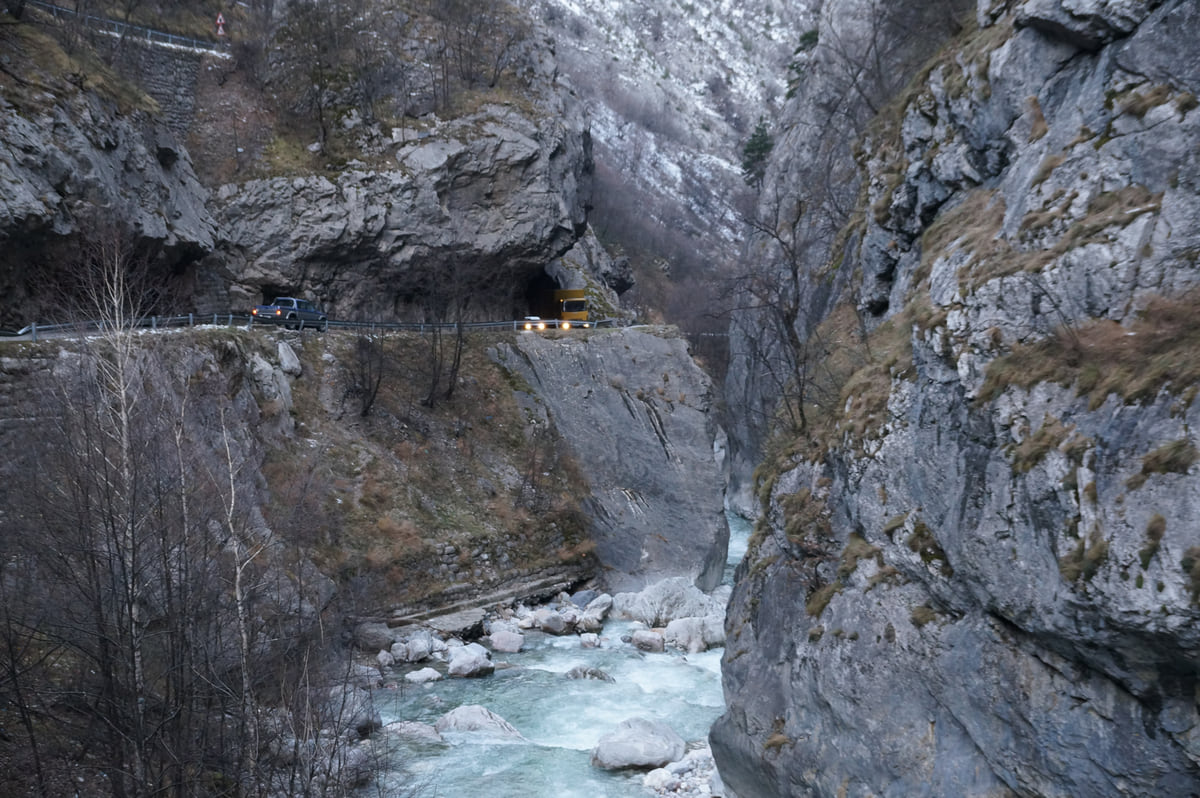
Starts almost in town and leads into Bjeshkët e Nemuna National Park. Road, river and limestone walls.
9.2 out of 10
-
Bazaar and Bajrakli Mosque
The Ottoman heart of Peja. The heritage database dates the mosque to the 16th century, under temporary protection.
8.3 out of 10
-
Radavc cave and spring
The heritage database lists the cave as a Palaeolithic site; Peja's tourism website puts the source of the White Drin there.
8.0 out of 10
-
Haxhi Zeka's mill
A 19th-century mill complex with permanent protection in the Culture Ministry's database. You pass it in the centre.
7.0 out of 10
Peja (Pejë in Albanian, Peć in Serbian) is a mid-sized town that never takes its eyes off the mountains. The peaks of the Bjeshkët e Nemuna show up at the end of most streets, the Lumbardhi river runs through the middle, and the moment you head west the road dives into the Rugova Canyon. It is Kosovo’s unofficial capital of mountain tourism, and the town I would use as a base for the whole west.
How big is Peja?
The Kosovo Agency of Statistics (ASK) counted 41,171 people in the town at the 2024 census and 82,745 in the municipality, spread over 79 settlements. It is the main town of the Peja region and sits at 520 to 530 m, according to the government’s tourism portal, which is offline for rebuilding and which I read in its 2021 archive.org copy. The same portal puts Pristina Airport about 70 km away and the Kulla border crossing into Montenegro about 30 km.
It is a walking town. The centre, the bazaar and the riverside fit into an unhurried morning; what makes Peja special lies around it rather than inside it. The ring of peaks you see from the square is the reason most visitors come, and the town has grown used to serving walkers, climbers and families heading for the hills.
The Patriarchate of Peć
On the outskirts, at the mouth of the canyon, stands the Patriarchate of Peć. UNESCO added it in 2006 to the serial site of the Medieval Monuments in Kosovo, on the In Danger list since that same year, and describes it as four domed churches with wall paintings. Law 03/L-039 protects it as a Special Zone. It is a working Orthodox monastery, so I’d dress as for any church in daily use and ask before taking photographs inside. Opening times and admission are not published by any official source.
Once your dates are set, check which hotels are still free in Peja before prices climb.
What is there to do in the centre?
The Ottoman core centres on the Peja bazaar, the old shopping street lined with low shopfronts, and the Bajrakli Mosque, which the Culture Ministry’s heritage database (DTK) dates to the 16th century. The same database lists two more 16th-century mosques, the Hamam Mosque and the Taftali, the 17th-century Xhylfahatun Mosque and the tomb of Halil Bey by the Kushumli Mosque.
The civic buildings are worth the detour too. The DTK protects the 19th-century kulla and konak of Jashar Pasha, the konak of Tahir Bey, which Peja’s tourism website says now houses the town museum, and the mill complex of Haxhi Zeka, one of the few buildings in Peja with permanent protection. Haxhi Zeka also gives his name to the main square, which fills with café tables in the evening.
Rugova and Radavc, two trips not to miss
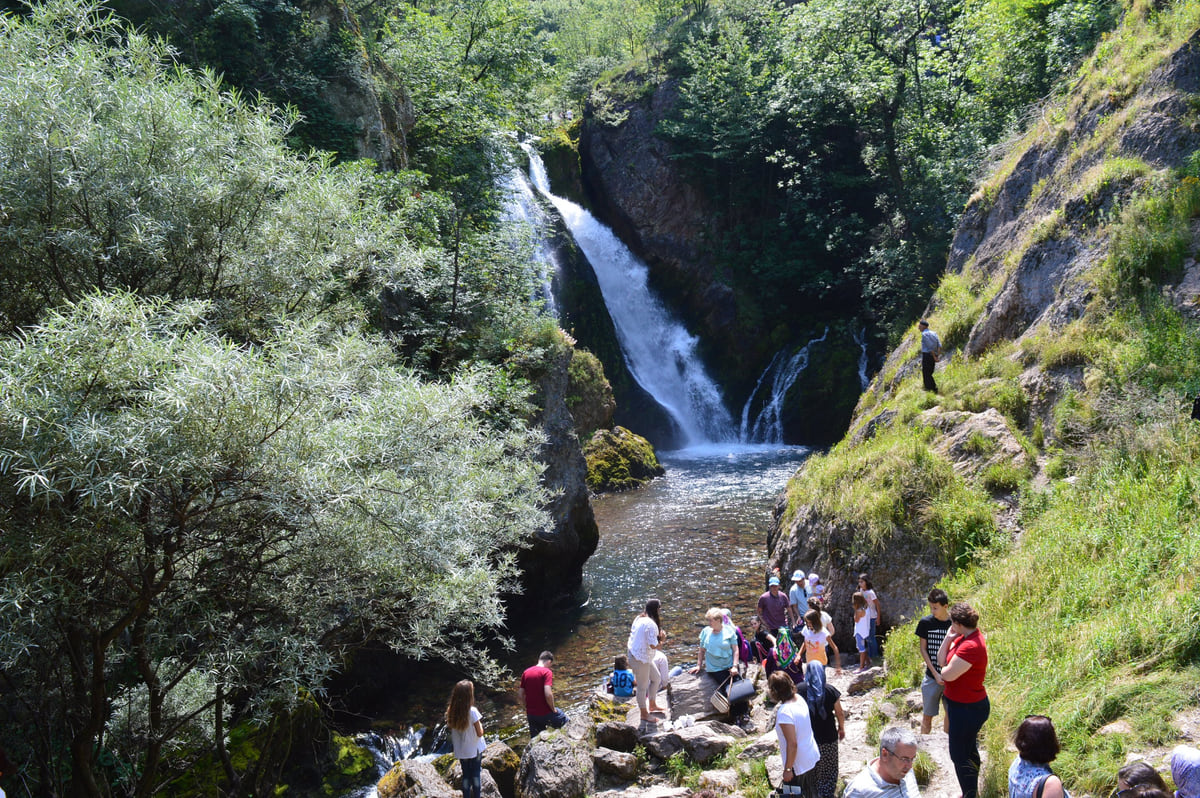
The Rugova Canyon begins a couple of kilometres from the centre, according to Peja’s tourism website, and climbs towards Bjeshkët e Nemuna National Park. The Lumbardhi, 56 km long inside Kosovo by ASK’s count, comes down it. There are via ferrata routes, caves, and guesthouse villages higher up at Bogë and Drelaj.
North of town, at Radavc, are the Palaeolithic cave listed by the DTK and, according to Peja’s tourism website, the spring of the White Drin. Peja’s tourism website adds that the town’s beer is brewed with water from that spring, the same Peja beer with the canyon bridge on its label.
Once your dates are set, check which hotels are still free in Peja before prices climb.
Getting there and getting about
From Pristina you come by car or by bus from the main bus station. Trainkos runs a train line to Peja, but its website does not show timetables in readable form, so I won’t quote frequencies I could not check. If you hire a car for Rugova, remember what the FCDO says. Your green card is not valid, you buy local insurance at the border, and mountain roads are best avoided after dark. Traffic drives on the right.
How long to stay
One night covers the town and the Patriarchate but leaves out Rugova, which is the best part. I’d book two or three nights and, if you like walking, spend one of them up in a mountain guesthouse. Peja also works as a base for day trips to Visoki Dečani monastery or Gjakova, both easy outings by car with time to be back for dinner in the centre.
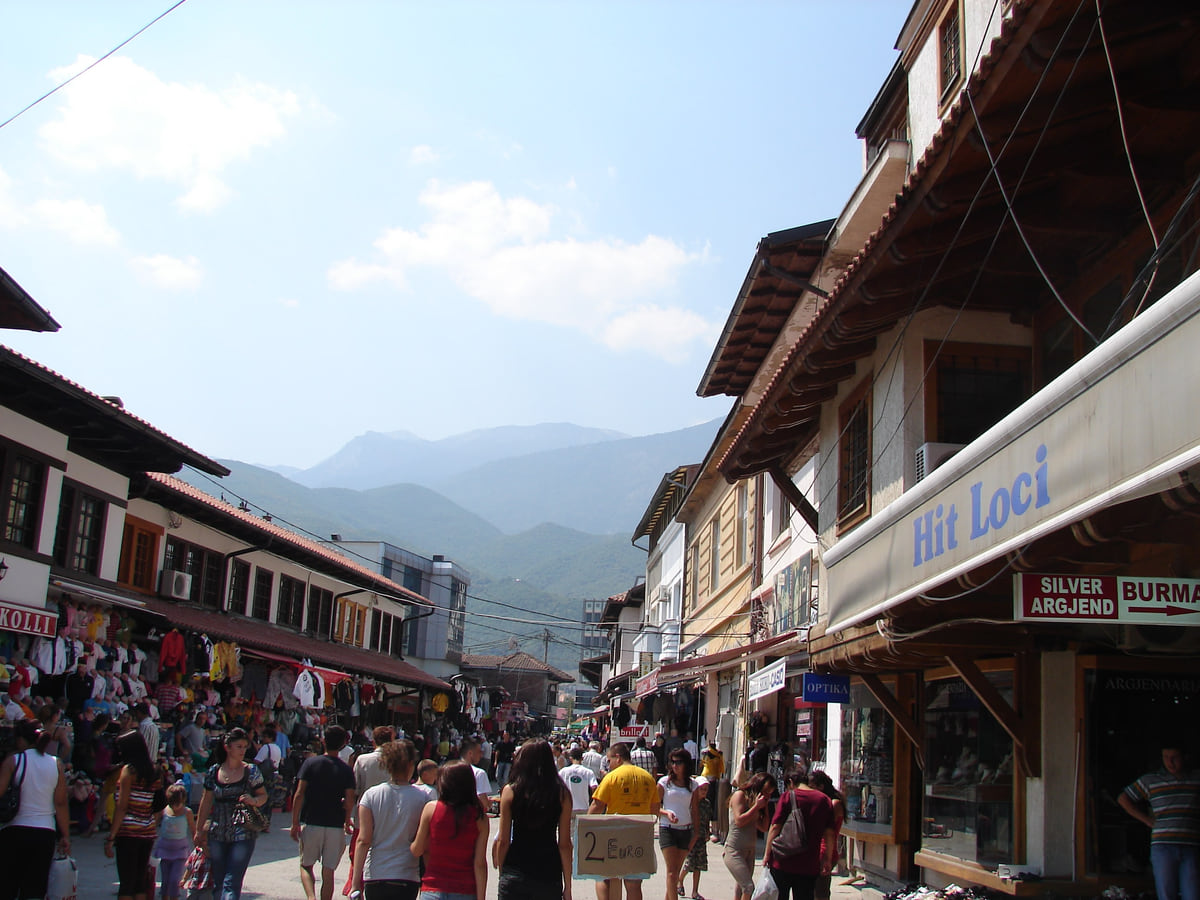
The bazaar street in Peja lined with wooden shopfronts on both sides, people strolling and mountains beyond
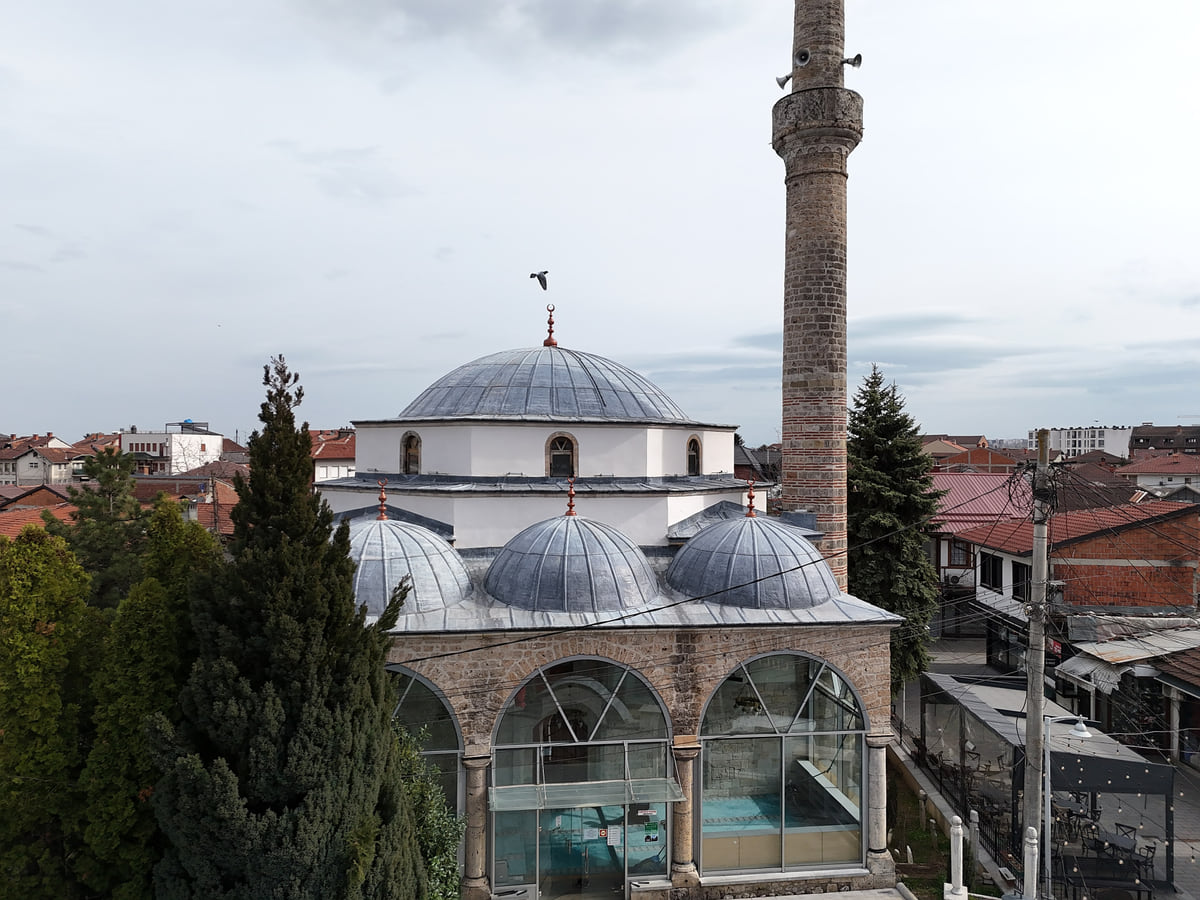
The Bajrakli Mosque in Peja with its grey lead domes and white minaret, rising among the rooftops of the centre
Peja in figures
| Figure | Value | Source |
|---|---|---|
| Town population (2024) | 41,171 | ASK |
| Municipality population (2024) | 82,745 | ASK |
| Municipality population (2011) | 96,450 | ASK |
| Settlements in the municipality | 79 | ASK |
| Length of the Lumbardhi inside Kosovo | 56 km | ASK |
ASK is the Kosovo Agency of Statistics. 2024 census, enumerated population.
Heritage in the centre listed by the DTK
| Building | Century | Protection |
|---|---|---|
| Bajrakli Mosque | 16th | Temporary |
| Hamam Mosque | 16th | Temporary |
| Taftali Mosque | 16th | Temporary |
| Xhylfahatun Mosque | 17th | Temporary |
| Haxhi Zeka's mill complex | 19th | Permanent |
| Jashar Pasha's kulla and konak | 19th | Temporary |
Kosovo Cultural Heritage Database (DTK), Ministry of Culture, consulted 3 October 2026.
Test yourself
True or false?
0/3 Pick before you peek.
-
Peja is bigger than Pristina.
See the answer
False. The 2024 census gives Peja town 41,171 people and Pristina 143,469, according to the Kosovo Agency of Statistics.
-
The river through Peja is the Lumbardhi.
See the answer
True. The Lumbardhi of Peja runs 56 km inside Kosovo, according to ASK, and flows down the Rugova Canyon into town.
-
Peja's Bajrakli Mosque dates from the 19th century.
See the answer
False. The Culture Ministry's heritage database (DTK) dates it to the 16th century, in the Ottoman period.
- Town population in 2024
- 41,171
- Municipality population
- 82,745
- Of the Lumbardhi river inside Kosovo
- 56 km
- Patriarchate added to the UNESCO site
- 2006
Map
Where Peja is
The Bjeshkët e Nemuna mountains close off the west and the Sharr the south; in the middle lies the Pristina plain. Every number opens its guide.
 1Bjeshkët e Nemuna National Park 2Istog 3Peja 4Klina 5Peja region
 Map data © OpenStreetMap contributors (ODbL)
What to see
What to see in Peja
0 of 208 Kosovo guides
Your next stamp
- Peja region
- Patriarchate of Peć
- Rugova Canyon
- Bajrakli Mosque
- Hotels in Peja
- Rugova via ferrata
- 5 days
- Places to visit
- Gjakova Grand Bazaar
- Gjeravica
- Pristina region
- Visoki Dečani Monastery
- Bjeshkët e Nemuna National Park
- Hadum Mosque
- Mitrovica Region
- Things to do
- Most beautiful places
- Sheh Danjolli tekke
- Prettiest villages
- Tailors' Bridge
- UNESCO sites
- Gjakova
- Map
- Where is Kosovo
- Regions
- Municipalities
- Cities
- Gračanica Monastery
- Mitrovica
- Pristina
- Prizren
- Fushë Kosovë
- Population
- Vushtrri
- Podujeva
- Radavc Cave
- Size
- Devič Monastery
- Gazimestan
- Ibar Bridge
- Is it a country?
- Istog
- One day in Pristina
- Prizren region
- Ulpiana
- Vushtrri Stone Bridge
- Gadime Cave
- Klina
- Name
- Vushtrri Fortress
- Deçan
- Flag
- Isa Boletini Complex
- Novo Brdo Fortress
- History
- Junik
- Lake Batllava
- Zvečan Fortress
- Banjska Monastery
- Ferizaj region
- Languages
- Rahovec
- Ferizaj
- Religion
- Sokolica Monastery
- Currency
- Lake Gazivoda
- Štrpce
- Brezovica
- EU membership
- Entry requirements
- Skiing in Kosovo
- Kaçanik
- Serbian border
- Gračanica
- Guesthouses in Rugova
- Kaçanik fortress
- Newborn monument
- North Mitrovica
- One day in Prizren
- Peja bazaar
- Public holidays
- Velika Hoča
- Facts
- Gjakova region
- Hani i Elezit
- Hotels in Gjakova
- National Library
- Obiliq
- Zočište Monastery
- Drenas
- Mother Teresa Cathedral
- Shtime
- Skënderaj
- Lipjan
- Mother Teresa Boulevard
- Zvečan
- Kosovo Museum
- Leposavić
- Novo Brdo
- Emin Gjiku Ethnological Museum
- Janjevo
- Zubin Potok
- Imperial Mosque
- Pristina Clock Tower
- Pristina Old Bazaar
- Great Hammam of Pristina
- Bogë
- Germia Park
- Getting there
- Lake Radoniq
- Prizren Fortress
- Bear Sanctuary Prishtina
- Drelaj
- Flights
- Sinan Pasha Mosque
- Hotels in Pristina
- Pristina airport
- Prizren stone bridge
- Buses
- Grand Hotel Pristina
- Our Lady of Ljeviš
- Prizren hammam
- Swiss Diamond Hotel
- Tirana to Pristina
- League of Prizren
- Restaurants in Pristina
- Skopje to Pristina
- Belgrade to Pristina
- Prizren Archaeological Museum
- Balkans itinerary
- St George's Cathedral
- Church of the Holy Saviour
- Getting around
- Holy Archangels Monastery
- Trains
- Car hire
- Day trips
- Marash
- Driving
- Sharr National Park
- Taxis
- Distances
- Prevalla
- Dragash
- Road trip
- Brod
- Prices and budget
- On a budget
- Restelica
- Free things to do
- Mirusha waterfalls
- Malisheva
- Safety
- Mamusha
- Scams
- Healthcare
- National parks in Kosovo
- Nightlife
- Suhareka
- Mobile and roaming
- Mountains in Kosovo
- Mushtisht
- Hiking in Kosovo
- Korisha
- Packing list
- DokuFest
- Peaks of the Balkans
- With kids
- Holidays
- Hotels in Prizren
- Kosovo lakes
- 3 days
- Caves and waterfalls
- Restaurants in Prizren
- One week
- Gjilan region
- Kosovo food
- Sunny Hill Festival
- Gjilan
- Rahovec wine
- Atik Mosque, Gjilan
- Kosovo beer
- Draganac Monastery
- Where to eat in Kosovo
- Kamenica
- Where to stay in Kosovo
- Kllokot
- Weather in Kosovo
- Best time to visit Kosovo
- Partesh
- Kosovo in winter
- Ranillug
- Kosovo in spring
- Viti
- Kosovo in summer
- Letnica
- Binač Monastery
- Kosovo in autumn
- Events in Kosovo
- Independence Day
- Kosovo monasteries
- Mosques in Kosovo
- Kullas in Kosovo
- Castles in Kosovo
- Museums in Kosovo
- Bazaars in Kosovo
Frequently asked questions
Where is Peja in Kosovo?
In the far west, at the foot of the Bjeshkët e Nemuna mountains. The government tourism portal, in its archived 2021 version, puts it about 70 km from Pristina Airport and about 30 km from the Kulla crossing into Montenegro.
Are Peja and Peć the same place?
Yes. Pejë is the Albanian name and Peć the Serbian one; English usually says Peja for the town. The Orthodox monastery keeps its UNESCO name, the Patriarchate of Peć.
What are the best things to do in Peja, Kosovo?
Walk the old bazaar and see the Bajrakli Mosque, visit the Patriarchate of Peć, then head up the Rugova Canyon for the via ferrata or a hike. With a car, add the cave and spring at Radavc.
How do I get from Pristina to Peja?
By car, or by bus from Pristina's main bus station. Trainkos runs a line to Peja, but its website does not show timetables in readable form, so check before relying on the train.
How many people live in Peja?
41,171 in the town and 82,745 in the municipality, according to the 2024 census by the Kosovo Agency of Statistics. In 2011 the municipality had 96,450.
Is Peja worth staying in?
For me it is the best base in western Kosovo. ASK counted 118 establishments and 4,380 beds in the Peja region in 2025, and from town you reach Rugova, Radavc and Visoki Dečani without moving hotels.
By
Tourism graduate with a master’s in Tourism Management and Planning from the University of Málaga, who has travelled across Europe. He writes every guide from official sources and his own judgement.
Published on . Facts checked on .
Sources
Some links in this guide are affiliate links: if you book through them, the site earns a commission at no extra cost to you. Affiliate disclosure
Photos: Uniacademic (CC BY-SA 4.0); a.dombrowski (CC BY-SA 2.0); Arianit (CC BY-SA 4.0), via Wikimedia Commons.