Names, demonyms and place names
Kosovo or Kosova, Kosovan or Kosovar
In British official usage the adjective is Kosovan: gov.uk talks about the Kosovan Embassy in the UK. In Albanian the territory is Kosova or Kosovë, and its laws are headed Republika e Kosovës, Republika Kosova and Republic of Kosovo. Most towns have an Albanian and a Serbian name, which matters more for a traveller than the demonym.
Don't call everyone from Kosovo an Albanian. Most are, but the 2024 census also counted Serbs, Bosniaks, Turks, Ashkali, Egyptians, Gorani and Roma. Kosovan covers all of them.

Before you go
What I would keep in mind
-
01 My tip
Kosovan covers everyone
Gov.uk uses Kosovan for the embassy and the authorities. In the 2024 census 1,454,963 people declared themselves Albanian, but there are seven other communities as well.
Kosovo population -
02 Most beautiful
Every town has two names
Pristina is Prishtinë in Albanian and Priština in Serbian; Peja is Peć; Gjakova is Đakovica. Your booking and your map app may not agree.
Kosovo language -
03 Getting there
The official name, in three languages
Laws and the official holiday calendar are headed «Republika e Kosovës», «Republika Kosova» and «Republic of Kosovo».
is Kosovo a country
“Kosovan” is the single most searched word about Kosovo’s name in the UK, and it’s a fair question, because you’ll see Kosovan, Kosovar, Kosova and Kosovo used almost interchangeably online. Here’s what the official sources say, what the territory is called in its two official languages, and which names actually matter when you’re on the road.
Kosovan, Kosovar and Kosovar Albanian
Gov.uk uses Kosovan. Its travel advice points readers with entry questions to the Kosovan Embassy in the UK, so that’s the word I use in English. You will also see Kosovar, which is the dictionary form in Spanish.
“Kosovar Albanian” is narrower. It means someone from Kosovo who belongs to the Albanian community, which is the large majority, 1,454,963 people in the 2024 census. But Kosovo isn’t only Albanian. The same census counted 36,652 Serbs, 26,841 Bosniaks, 19,419 Turks and smaller Ashkali, Egyptian, Gorani and Roma groups, all broken down in Kosovo population. A Serb from Gračanica is Kosovan, but not a Kosovar Albanian.
Kosovo, Kosova and Republika e Kosovës
In Albanian the territory is Kosova, or Kosovë depending on the grammar, and that’s how the Kosovo Agency of Statistics heads its tables. In Serbian it’s Kosovo, as in English, and the Spanish foreign ministry’s Serbia profile also records “Kosovo and Metohija”, the form Serbia uses.
The name its institutions use appears in three languages at the top of every law and of the official holiday calendar, as “Republika e Kosovës”, “Republika Kosova” and “Republic of Kosovo”. The symbols that go with the name, such as the Kosovo flag, are set out separately in Law No. 03/L-038. What each government and international body says about its status is a separate question, covered in is Kosovo a country.
To sleep close to everything, search places to stay in Pristina on Expedia and filter by area before price.
Writing it and saying it
In English, Kosovo is the form used by gov.uk and the EU. For the capital I use Pristina, without diacritics, as gov.uk does, rather than the Albanian Prishtinë or the Serbian Priština. For comparison, the Spanish Royal Academy’s dictionary lists kosovar as the demonym and albanokosovar for a Kosovar of Albanian origin, a distinction I think is worth keeping in English too.
Two names for almost every town
The practical point is place names. Because Albanian and Serbian are both official under the Constitution, most towns have two forms. Pristina is Prishtinë and Priština; Peja is Pejë and Peć; Gjakova is Đakovica; Mitrovica is Kosovska Mitrovica. If you’re driving, learn to recognise both, because your hire car’s sat nav and your hotel booking may each use a different one. The languages you’ll actually hear, and which to try a greeting in, are covered in Kosovo language.
On this site, each place gets its Albanian and Serbian names on first mention, then the form people search for most. For the Orthodox monasteries I follow UNESCO, with names such as Visoki Dečani and Gračanica, which is what you’ll see on the UNESCO sites in Kosovo page.
If you are short on time, see the best tours in Pristina and pick one that fits your day.
To sleep close to everything, search places to stay in Pristina on Booking.com and filter by area before price.
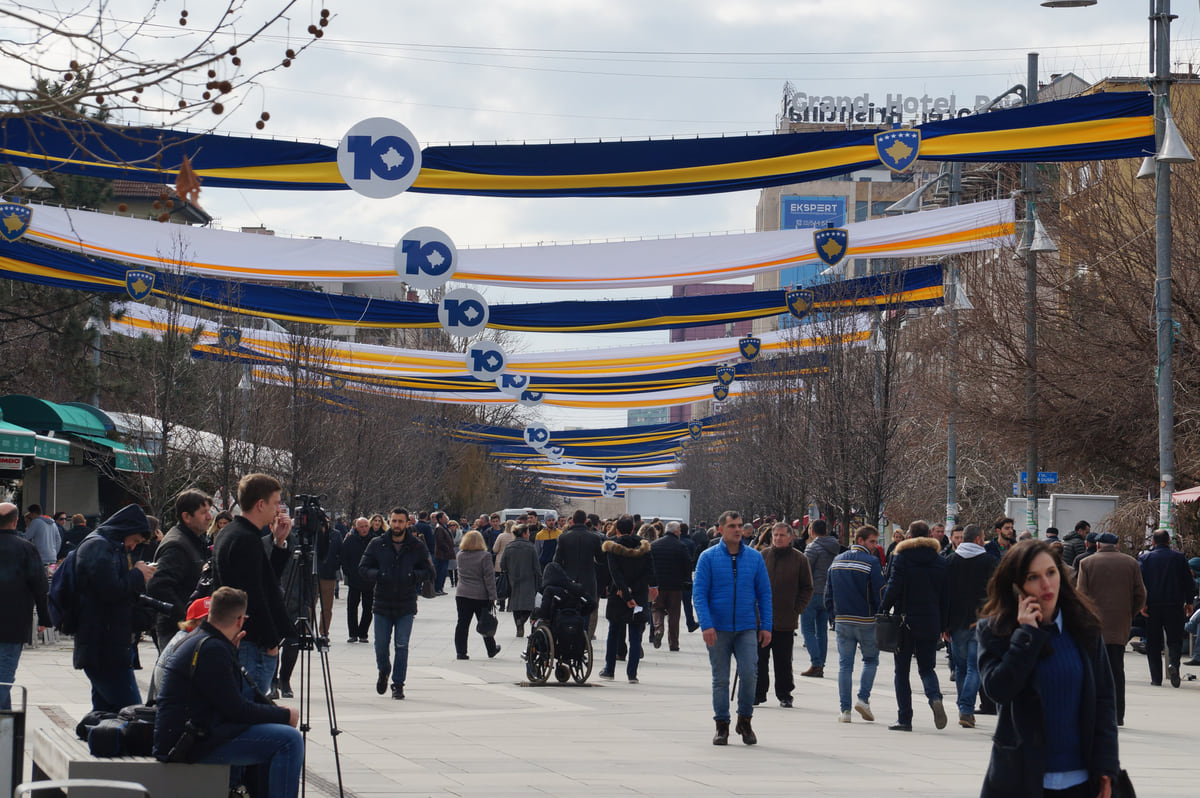
Pristina's pedestrianised Mother Teresa Boulevard busy with walkers, with strings of coloured bunting hung above the street
Town names you'll see most
| On this site | Albanian | Serbian |
|---|---|---|
| Pristina | Prishtinë | Priština |
| Peja | Pejë | Peć |
| Gjakova | Gjakovë | Đakovica |
| Mitrovica | Mitrovicë | Kosovska Mitrovica |
| Ferizaj | Ferizaj | Uroševac |
| Gjilan | Gjilan | Gnjilane |
Forms as used in this guide's country fact sheet, from Kosovo's official sources and UNESCO.
Test yourself
True or false?
0/3 Pick before you peek.
-
Gov.uk refers to the Kosovan Embassy in the UK.
See the answer
True. Its entry requirements page tells British travellers to contact the Kosovan Embassy in the UK if unsure about the rules.
-
Everyone in Kosovo is ethnically Albanian.
See the answer
False. The 2024 census also counted 36,652 Serbs, 26,841 Bosniaks, 19,419 Turks and smaller Ashkali, Egyptian, Gorani and Roma communities.
-
Kosova is the Albanian form of the name.
See the answer
True. The Kosovo Agency of Statistics heads its own tables «KOSOVA»; in English and Serbian it's Kosovo.
0 of 208 Kosovo guides
Your next stamp
- Languages
- Municipalities
- Getting there
- Map
- Is it a country?
- EU membership
- Where is Kosovo
- Flights
- Gjakova Grand Bazaar
- Gjeravica
- Places to visit
- Pristina region
- Visoki Dečani Monastery
- Bjeshkët e Nemuna National Park
- Hadum Mosque
- Mitrovica Region
- Things to do
- Most beautiful places
- Sheh Danjolli tekke
- Prettiest villages
- Tailors' Bridge
- Rugova Canyon
- UNESCO sites
- Gjakova
- Regions
- Cities
- Gračanica Monastery
- Mitrovica
- Patriarchate of Peć
- Pristina
- Prizren
- Rugova via ferrata
- Fushë Kosovë
- Population
- Vushtrri
- Podujeva
- Radavc Cave
- Size
- Bajrakli Mosque
- Devič Monastery
- Gazimestan
- Ibar Bridge
- Istog
- One day in Pristina
- Peja
- Prizren region
- Ulpiana
- Vushtrri Stone Bridge
- Gadime Cave
- Klina
- Vushtrri Fortress
- Deçan
- Flag
- Isa Boletini Complex
- Novo Brdo Fortress
- History
- Junik
- Lake Batllava
- Zvečan Fortress
- Banjska Monastery
- Ferizaj region
- Rahovec
- Ferizaj
- Religion
- Sokolica Monastery
- Currency
- Lake Gazivoda
- Štrpce
- Brezovica
- Entry requirements
- Skiing in Kosovo
- Kaçanik
- Serbian border
- Gračanica
- Guesthouses in Rugova
- Hotels in Peja
- Kaçanik fortress
- Newborn monument
- North Mitrovica
- One day in Prizren
- Peja bazaar
- Peja region
- Public holidays
- Velika Hoča
- Facts
- Gjakova region
- Hani i Elezit
- Hotels in Gjakova
- National Library
- Obiliq
- Zočište Monastery
- Drenas
- Mother Teresa Cathedral
- Shtime
- Skënderaj
- Lipjan
- Mother Teresa Boulevard
- Zvečan
- Kosovo Museum
- Leposavić
- Novo Brdo
- Emin Gjiku Ethnological Museum
- Janjevo
- Zubin Potok
- Imperial Mosque
- Pristina Clock Tower
- Pristina Old Bazaar
- Great Hammam of Pristina
- Bogë
- Germia Park
- Lake Radoniq
- Prizren Fortress
- Bear Sanctuary Prishtina
- Drelaj
- Sinan Pasha Mosque
- Hotels in Pristina
- Pristina airport
- Prizren stone bridge
- Buses
- Grand Hotel Pristina
- Our Lady of Ljeviš
- Prizren hammam
- Swiss Diamond Hotel
- Tirana to Pristina
- League of Prizren
- Restaurants in Pristina
- Skopje to Pristina
- Belgrade to Pristina
- Prizren Archaeological Museum
- Balkans itinerary
- St George's Cathedral
- Church of the Holy Saviour
- Getting around
- Holy Archangels Monastery
- Trains
- Car hire
- Day trips
- Marash
- Driving
- Sharr National Park
- Taxis
- Distances
- Prevalla
- Dragash
- Road trip
- Brod
- Prices and budget
- On a budget
- Restelica
- Free things to do
- Mirusha waterfalls
- Malisheva
- Safety
- Mamusha
- Scams
- Healthcare
- National parks in Kosovo
- Nightlife
- Suhareka
- Mobile and roaming
- Mountains in Kosovo
- Mushtisht
- Hiking in Kosovo
- Korisha
- Packing list
- DokuFest
- Peaks of the Balkans
- With kids
- Holidays
- Hotels in Prizren
- Kosovo lakes
- 3 days
- Caves and waterfalls
- Restaurants in Prizren
- 5 days
- One week
- Gjilan region
- Kosovo food
- Sunny Hill Festival
- Gjilan
- Rahovec wine
- Atik Mosque, Gjilan
- Kosovo beer
- Draganac Monastery
- Where to eat in Kosovo
- Kamenica
- Where to stay in Kosovo
- Kllokot
- Weather in Kosovo
- Best time to visit Kosovo
- Partesh
- Kosovo in winter
- Ranillug
- Kosovo in spring
- Viti
- Kosovo in summer
- Letnica
- Binač Monastery
- Kosovo in autumn
- Events in Kosovo
- Independence Day
- Kosovo monasteries
- Mosques in Kosovo
- Kullas in Kosovo
- Castles in Kosovo
- Museums in Kosovo
- Bazaars in Kosovo
Frequently asked questions
What do you call someone from Kosovo?
Gov.uk uses Kosovan, as in the Kosovan Embassy in the UK, and that's the word I use in English. Kosovar is also common, and in Spanish it is the dictionary form.
Is it Kosovo or Kosova?
In English it's Kosovo, which is how gov.uk and the EU write it. Kosova or Kosovë is the Albanian form, which you'll see in official tables such as those of the Kosovo Agency of Statistics.
What is Kosovo's full name?
Its laws are headed Republika e Kosovës in Albanian, Republika Kosova in Serbian and Republic of Kosovo in English.
What is a Kosovar Albanian?
Someone from Kosovo who belongs to the Albanian community, which is the large majority. In the 2024 census 1,454,963 of 1,585,566 people declared themselves Albanian.
What does Serbia call Kosovo?
Kosovo, or Kosovo and Metohija, the form recorded in the Spanish foreign ministry's Serbia country profile.
By
Tourism graduate with a master’s in Tourism Management and Planning from the University of Málaga, who has travelled across Europe. He writes every guide from official sources and his own judgement.
Published on . Facts checked on .
Sources
- Gov.uk, Foreign travel advice Kosovo (entry requirements)
- Constitution of Kosovo (Official Gazette)
- Kosovo Ministry of Internal Affairs, 2025 public holidays
- ASK, communities in the 2024 census
- Spanish Royal Academy dictionary, «albanokosovar»
- Spanish foreign ministry, Serbia country profile (April 2026)
Some links in this guide are affiliate links: if you book through them, the site earns a commission at no extra cost to you. Affiliate disclosure
Photos: Arianselmani (CC BY-SA 3.0); Albinfo (CC0), via Wikimedia Commons.