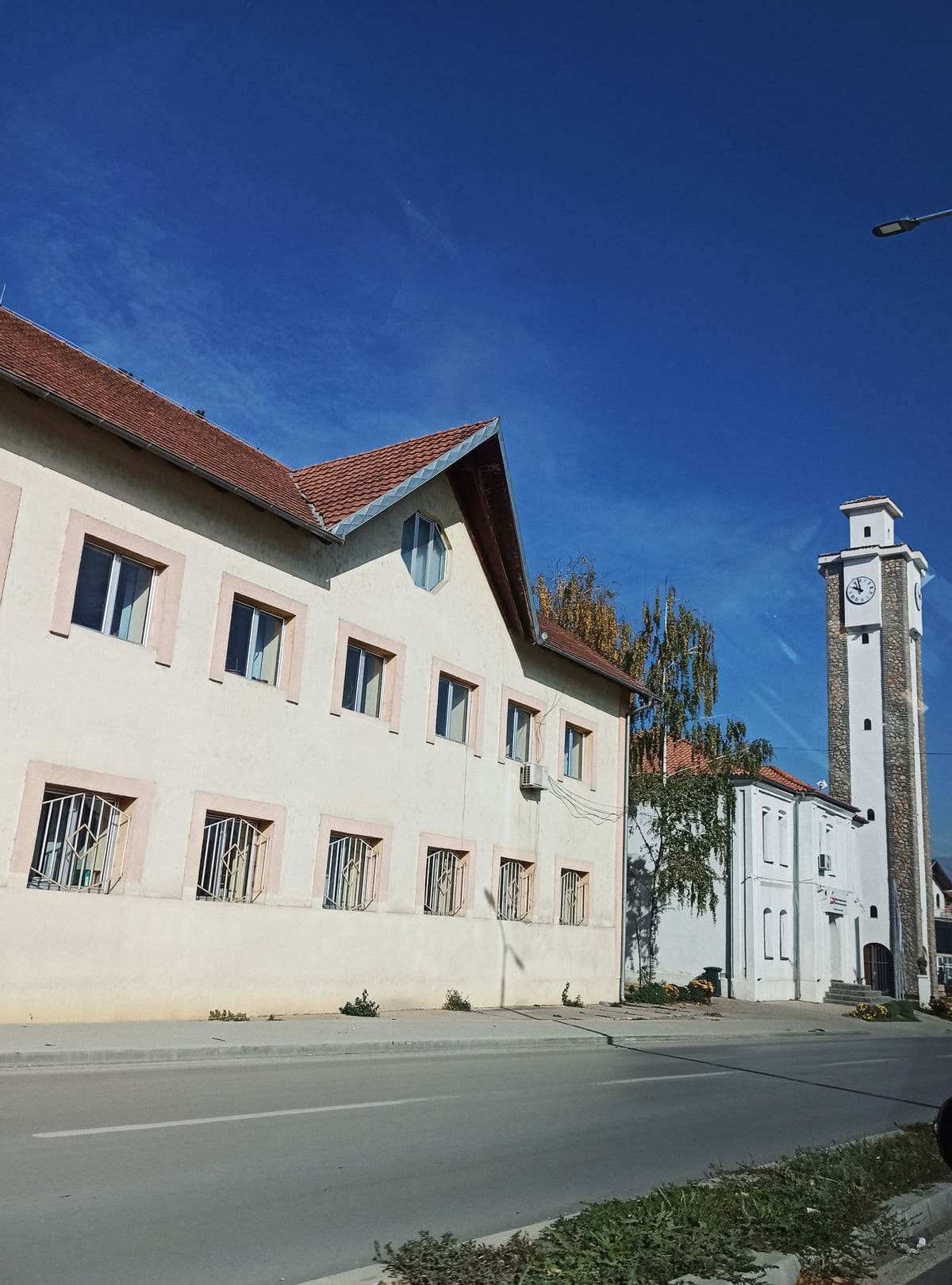
Atik Xhamia, or the Madrasa Mosque
The Atik Mosque, Gjilan's oldest
The Atik Mosque in Gjilan, also called the Madrasa Mosque, is the oldest in town. The Ministry of Culture heritage register dates it to the 17th century, with work finished around 1606 or 1609, and singles out the wall paintings in its dome. It stands in the centre, opposite the ethnological museum, and has no published visiting hours.
In 30 seconds
Full read: 2 min
- The Atik is Gjilan's oldest mosque, 17th century according to the heritage register.
- It was finished around 1606 or 1609, before Gjilan's usual founding date as a town.
- The painted dome is the highlight.
- The town's ethnological museum, opened in 2021, is directly opposite.
This is a working neighbourhood mosque, not a museum, and I'd treat it as such. Go outside prayer times, dress to cover shoulders and knees, and pair it with the ethnological museum across the road.

Before you go
What I would keep in mind
-
01 Most beautiful
A painted dome
The official record describes a ring of eight bays with windows in the dome, painted with plant motifs in a Turkish or Persian style.
mosques in Kosovo -
02 My tip
The ethnological museum is right opposite
Mustafa Pasha's former house of 1887 faces the Atik, according to the heritage register, and has been an ethnological museum since 18 May 2021.
Gjilan -
03 My tip
Restored with an Albanian touch
According to its record, painters Demir Behluli and Zeqirja Rexhepi restored the murals and worked in elements of Albanian tradition.
museums in Kosovo
If you want the one mosque in Gjilan worth seeking out, this is it. It isn’t the biggest or the showiest from the street, but it’s the building that explains the town, because it’s older than Gjilan as the history books usually tell it.
Older than the town
Kosovo’s Ministry of Culture heritage register (DTK) lists the Atik, also known as the Madrasa Mosque, as a 17th-century Ottoman building. Its entry says the work was completed in 1606, though other writings give 1609, and that it was the first mosque built in town.
That’s where it gets interesting. The same entry notes that Gjilan is usually said to have been founded as a town around 1750, and that the name Gilan crops up as a village as early as 1423. A mosque like this, the official text argues, wouldn’t be built somewhere insignificant, so it points to an older urban core than the standard account suggests. That’s the author’s reading, and I pass it on as such.
What to look for
From outside the mosque is plain. There’s the prayer hall and, set against the south wall, a minaret on a base of bare dressed stone with a rendered round shaft, a balcony carved with geometric patterns and a conical cap. The original porch went in 1993, when an annexe was built on the west side; that annexe is now the way in.
The good stuff is inside. The record describes a ring of eight bays in the dome, each with a window that’s square inside and round-arched outside, painted with plant motifs in a Turkish or Persian manner. The mihrab carries brown floral painting and the minbar is carved wood with geometric designs. When the paintings were restored, local artists Demir Behluli and Zeqirja Rexhepi added touches from Albanian tradition, such as rosettes on the side walls.
The walls mix stone, brick, horizontal and vertical timber ties and lime mortar, and the Ministry of Culture paid to renew the roof in 2012 and 2013. To compare it with other Ottoman mosques across Kosovo, see mosques in Kosovo.
If you are staying the night, see the best hotel deals in Gjilan for your dates: the well-placed rooms go fast.
Visiting
There are no visiting hours, admission charges or dress rules published by an official source. Prayers are still held here, so I’d turn up outside prayer times, with shoulders and knees covered, and do as I’m asked at the door. If it’s shut, the exterior and minaret are easy to see from the street.
OpenStreetMap places the Atik less than a kilometre north of the clock tower. The tower is the photo on this page because I couldn’t find a good freely licensed picture of the mosque itself.
Right next door
Directly opposite, according to the heritage register, is Mustafa Pasha’s former residence, built in 1887, later a school and then a music school, and the town’s ethnological museum since 18 May 2021. Put the two together and that’s your morning sorted. I cover other museums in museums in Kosovo, and if you’re staying in the east, the Gjilan region offers short trips to Draganac and the Pogragjë fort.
So you do not lose the morning at the ticket office, browse tickets and tours in Atik Mosque, Gjilan on GetYourGuide.
If you are staying the night, see the best hotel deals in Gjilan for your dates: the well-placed rooms go fast.
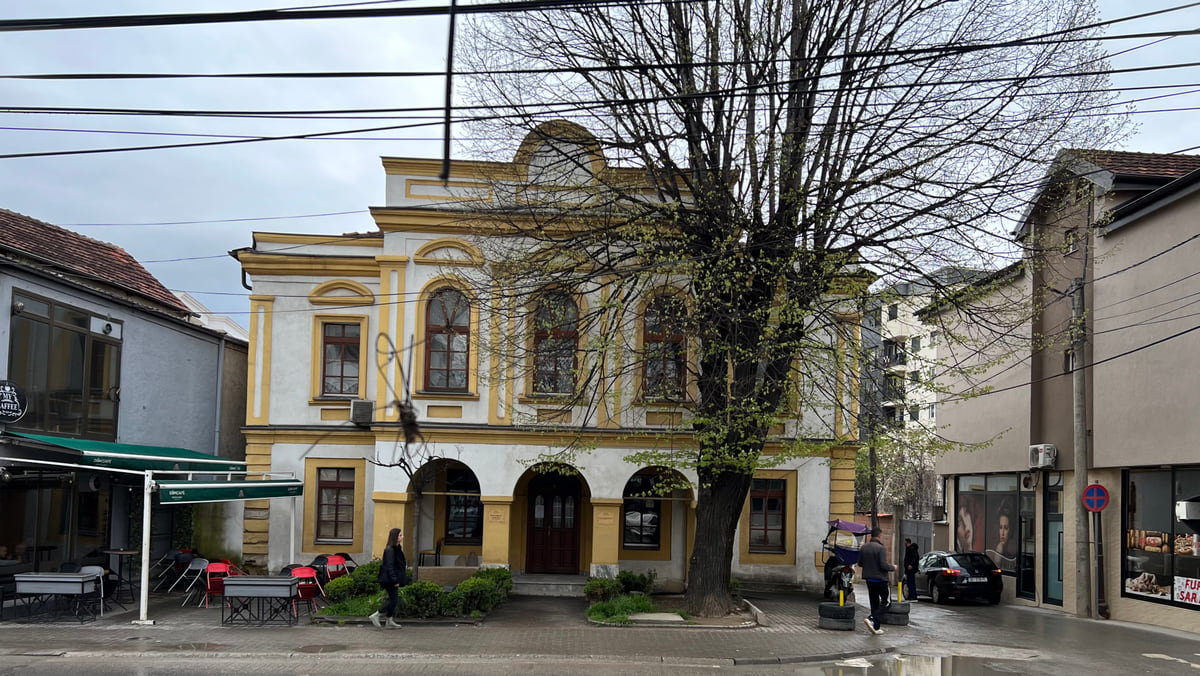
The old Kajmekam building in Gjilan, two storeys in white and yellow with arches, a tree in front and cables over the street
The Atik Mosque on the heritage register
| Item | Detail |
|---|---|
| Name | Atik Xhamia, also Xhamia e Medresesë |
| Municipality and settlement | Gjilan |
| Type | Architectural, Ottoman |
| Built | 17th century, completed around 1606 or 1609 |
| Porch | Demolished in 1993, when an annexe was added |
| Roof | Renewed in 2012-2013 with Ministry of Culture funding |
Source: DTK, record 421. Opening times, visiting rules and admission: no official information as of 11 October 2026.
Test yourself
True or false?
0/3 Pick before you peek.
-
The Atik Mosque still has its original porch.
See the answer
False. According to its record, the porch was pulled down in 1993 when an annexe was built that is now part of the mosque.
-
The dome is decorated with wall paintings.
See the answer
True. The heritage register describes eight windowed bays in the dome painted with plant motifs.
-
The Ministry of Culture paid for the roof to be renewed.
See the answer
True. The record says it funded the work in 2012-2013, carried out by Gjilan's regional heritage office.
Map
Where Atik Mosque, Gjilan is
The Bjeshkët e Nemuna mountains close off the west and the Sharr the south; in the middle lies the Pristina plain. Every number opens its guide.

0 of 208 Kosovo guides
Your next stamp
- Gjilan region
- Gjilan
- Mosques in Kosovo
- Hadum Mosque
- Imperial Mosque
- Bajrakli Mosque
- Sinan Pasha Mosque
- Gjakova Grand Bazaar
- Gjeravica
- Places to visit
- Pristina region
- Visoki Dečani Monastery
- Bjeshkët e Nemuna National Park
- Mitrovica Region
- Things to do
- Most beautiful places
- Sheh Danjolli tekke
- Prettiest villages
- Tailors' Bridge
- Rugova Canyon
- UNESCO sites
- Gjakova
- Map
- Where is Kosovo
- Regions
- Municipalities
- Cities
- Gračanica Monastery
- Mitrovica
- Patriarchate of Peć
- Pristina
- Prizren
- Rugova via ferrata
- Fushë Kosovë
- Population
- Vushtrri
- Podujeva
- Radavc Cave
- Size
- Devič Monastery
- Gazimestan
- Ibar Bridge
- Is it a country?
- Istog
- One day in Pristina
- Peja
- Prizren region
- Ulpiana
- Vushtrri Stone Bridge
- Gadime Cave
- Klina
- Name
- Vushtrri Fortress
- Deçan
- Flag
- Isa Boletini Complex
- Novo Brdo Fortress
- History
- Junik
- Lake Batllava
- Zvečan Fortress
- Banjska Monastery
- Ferizaj region
- Languages
- Rahovec
- Ferizaj
- Religion
- Sokolica Monastery
- Currency
- Lake Gazivoda
- Štrpce
- Brezovica
- EU membership
- Entry requirements
- Skiing in Kosovo
- Kaçanik
- Serbian border
- Gračanica
- Guesthouses in Rugova
- Hotels in Peja
- Kaçanik fortress
- Newborn monument
- North Mitrovica
- One day in Prizren
- Peja bazaar
- Peja region
- Public holidays
- Velika Hoča
- Facts
- Gjakova region
- Hani i Elezit
- Hotels in Gjakova
- National Library
- Obiliq
- Zočište Monastery
- Drenas
- Mother Teresa Cathedral
- Shtime
- Skënderaj
- Lipjan
- Mother Teresa Boulevard
- Zvečan
- Kosovo Museum
- Leposavić
- Novo Brdo
- Emin Gjiku Ethnological Museum
- Janjevo
- Zubin Potok
- Pristina Clock Tower
- Pristina Old Bazaar
- Great Hammam of Pristina
- Bogë
- Germia Park
- Getting there
- Lake Radoniq
- Prizren Fortress
- Bear Sanctuary Prishtina
- Drelaj
- Flights
- Hotels in Pristina
- Pristina airport
- Prizren stone bridge
- Buses
- Grand Hotel Pristina
- Our Lady of Ljeviš
- Prizren hammam
- Swiss Diamond Hotel
- Tirana to Pristina
- League of Prizren
- Restaurants in Pristina
- Skopje to Pristina
- Belgrade to Pristina
- Prizren Archaeological Museum
- Balkans itinerary
- St George's Cathedral
- Church of the Holy Saviour
- Getting around
- Holy Archangels Monastery
- Trains
- Car hire
- Day trips
- Marash
- Driving
- Sharr National Park
- Taxis
- Distances
- Prevalla
- Dragash
- Road trip
- Brod
- Prices and budget
- On a budget
- Restelica
- Free things to do
- Mirusha waterfalls
- Malisheva
- Safety
- Mamusha
- Scams
- Healthcare
- National parks in Kosovo
- Nightlife
- Suhareka
- Mobile and roaming
- Mountains in Kosovo
- Mushtisht
- Hiking in Kosovo
- Korisha
- Packing list
- DokuFest
- Peaks of the Balkans
- With kids
- Holidays
- Hotels in Prizren
- Kosovo lakes
- 3 days
- Caves and waterfalls
- Restaurants in Prizren
- 5 days
- One week
- Kosovo food
- Sunny Hill Festival
- Rahovec wine
- Kosovo beer
- Draganac Monastery
- Where to eat in Kosovo
- Kamenica
- Where to stay in Kosovo
- Kllokot
- Weather in Kosovo
- Best time to visit Kosovo
- Partesh
- Kosovo in winter
- Ranillug
- Kosovo in spring
- Viti
- Kosovo in summer
- Letnica
- Binač Monastery
- Kosovo in autumn
- Events in Kosovo
- Independence Day
- Kosovo monasteries
- Kullas in Kosovo
- Castles in Kosovo
- Museums in Kosovo
- Bazaars in Kosovo
Frequently asked questions
What is the oldest mosque in Gjilan?
The Atik Mosque, which the heritage register dates to the 17th century and describes as the first built in town, completed around 1606 or 1609.
Where is the Atik Mosque in Gjilan?
In the town centre, opposite Mustafa Pasha's former house, now the ethnological museum. OpenStreetMap puts it less than a kilometre north of the clock tower.
Can visitors go inside the Atik Mosque?
It's an active mosque with no visiting hours published by an official source. The sensible approach is to go outside prayer times and dress modestly.
What's special about the interior?
Its record highlights the painted dome with plant motifs, the mihrab painted in brown floral designs and the carved wooden minbar.
Why is it also called the Madrasa Mosque?
The heritage register lists both names. The courtyard, where the fountain and washing room once stood, now holds outbuildings, shops and the madrasa.
By
Tourism graduate with a master’s in Tourism Management and Planning from the University of Málaga, who has travelled across Europe. He writes every guide from official sources and his own judgement.
Published on . Facts checked on .
Sources
Some links in this guide are affiliate links: if you book through them, the site earns a commission at no extra cost to you. Affiliate disclosure
Photos: Drilon94 (CC BY-SA 4.0); Planeti (CC BY-SA 4.0), via Wikimedia Commons.