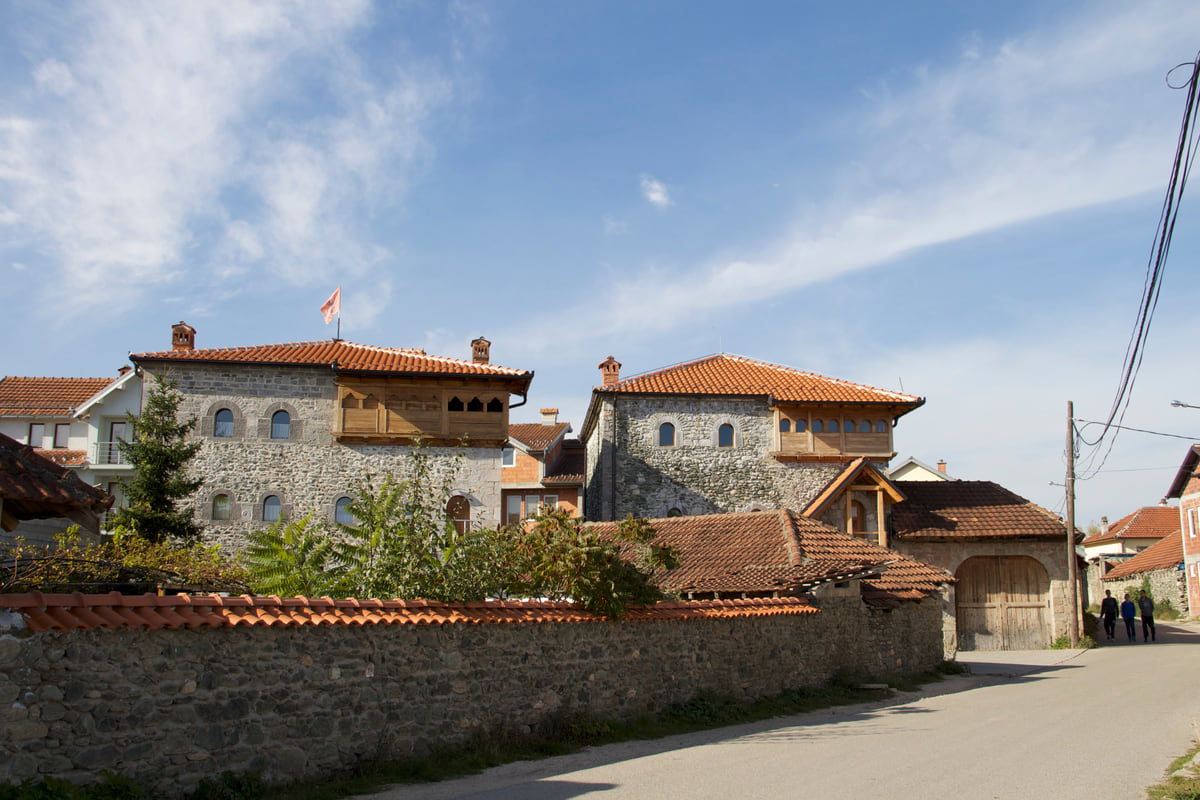
Traditional Albanian architecture
Kullas, the stone tower houses of western Kosovo
A kulla is a fortified family house in stone, two or three storeys high, with the men's room at the top. Kosovo's Ministry of Culture heritage register lists 49, most from the 19th century and nearly all in the west, in the municipalities of Gjakova and Peja (nine each), Deçan, Mitrovica and Istog.
In 30 seconds
Full read: 2 min
- The kulla is western Kosovo's fortified stone family house.
- The heritage register lists 49, 36 of them from the 19th century.
- Gjakova and Peja have nine each; Junik keeps its 18th-century Oda.
- A rebuilt kulla in Gjakova's bazaar now operates as a hotel.
Kullas are homes, many still lived in, so don't expect a museum trail. I'd look for them in Junik and Gjakova, where several with a story stand close together, and settle for the outside if nobody's around to open up.

Before you go
What I would keep in mind
-
01 Most beautiful
The Oda of Junik
Brahim Hoxha's kulla, from the 18th century, is known as the Oda of Junik. Its record describes it as a meeting room where justice was dispensed under customary law.
Junik -
02 Worth the splurge
Sleep in a rebuilt kulla
In Gjakova's great bazaar, the three-storey stone kulla of the Çarshia e Jupave, rebuilt after 1999, now works as a hotel and shops, according to the DTK.
bazaars in Kosovo -
03 My tip
How the floors were used
Zenel Bey's kulla in Peja, from 1854, is the textbook case in its record, with storage on the ground floor, family rooms above and the men's room at the top.
Peja -
04 Getting there
Further south, Shtime and Hani i Elezit
Outside the west they're scarce. The DTK records the Fejzullahu family kulla at Zotaj (Shtime) and Nuhi Brava's tower house in Hani i Elezit, both 19th century.
Shtime
Few things feel as rooted in western Kosovo as the kulla. It’s a stone house that doubled as a small family stronghold, and its square outline crops up in villages and towns all over the west. There’s no kulla museum to point you to, so here’s what they are, how many have an official record and where to see them.
What a kulla is
In Albanian the same word also names clock towers (sahat kulla), and the Ministry of Culture heritage database (DTK) describes these houses as fortified homes. Zenel Bey’s kulla in the centre of Peja is a good example. Its record dates it to 1854 and explains the three floors, with storage below, the family’s rooms on the first floor and, at the top, the men’s oda, where guests were received. Many have a stone projection on a corner or along the sides of the façade, the dyshekllëk, which the DTK flags as a typical feature.
Avdullah Pashë Dreni’s kulla, at the entrance to the bazaar in Gjakova, shows the defensive side. Its record dates it to around 1790 and says the large number of loopholes across its three floors proves it was both home and fortification.
How many, and where
The DTK protects 49 kullas. Gjakova and Peja have nine each, Mitrovica and Deçan seven, Istog six and Rahovec three, with one or two in eight other municipalities. By period, 36 are 19th century, nine 18th century and three 20th century. The oldest is Ymer Poga’s at Rogovë, near Gjakova, three storeys high, which its record credits to the same Hasan Agë who built the village mosque in 1580.
To sleep close to everything, search places to stay in Gjakova on Expedia and filter by area before price.
Junik, the place to see them
My pick for seeing them is Junik. The Hoxhaj quarter has Brahim Hoxha’s 18th-century kulla, known as the Oda of Junik, and Jah Imeri’s from the early 19th, three storeys of stone, lime and timber under a hipped roof. The DTK says the Oda served as a meeting room where elders applied customary law and where disputes between families were settled. The photo on this guide is that Junik kulla. Nearby, Deçan municipality has seven listed kullas, the Oda among them, since the DTK files it there.
Beyond the west
In the centre and south they thin out. In Shtime, the DTK records the Fejzullahu family kulla at Zotaj, probably built in the later 1800s, and in Hani i Elezit, Nuhi Brava’s tower house at Puset e Nikës. Gjilan has two, at Haxhaj and Terziaj.
If you are short on time, see the best tours in Gjakova and pick one that fits your day.
Seeing them respectfully
No official source publishes visiting hours, and many kullas are still private homes. I’d look from the road without wandering into yards or fields, and if someone does open the door, let the owner decide what to show. The one you can actually sleep in is the kulla of the Çarshia e Jupave in Gjakova’s bazaar, rebuilt after 1999 and now, according to the DTK, a hotel with shops. Prices there are in euros, Kosovo’s currency, so sort out your pounds before you travel.
To sleep close to everything, search places to stay in Gjakova on Booking.com and filter by area before price.
Kullas in the heritage register, by municipality
| Municipality | Kullas |
|---|---|
| Gjakova | 9 |
| Peja | 9 |
| Mitrovica | 7 |
| Deçan | 7 |
| Istog | 6 |
| Rahovec | 3 |
| Gjilan | 2 |
| Junik, Shtime, Suharekë, Vushtrri, Drenas and Skënderaj | 1 each |
My own count of DTK records whose name begins with kulla (49). It leaves out the tower houses in Kaçanik and Hani i Elezit, which the register calls shtëpi-kullë.
Five kullas with detailed records
| Kulla | Place | Date in the DTK |
|---|---|---|
| Ymer Poga | Rogovë (Gjakova) | 16th century |
| Brahim Hoxha, Oda of Junik | Junik | 18th century |
| Avdullah Pashë Dreni | Gjakova, bazaar entrance | Around 1790 |
| Zenel Bey | Peja, centre | 1854 |
| Jah Imeri | Junik | Early 19th century |
Source: DTK, each kulla's record. Opening times and visits: no official information as of 11 October 2026.
Test yourself
True or false?
0/3 Pick before you peek.
-
Most of Kosovo's protected kullas date from the 19th century.
See the answer
True. That's 36 of the 49 in the Ministry of Culture's heritage register.
-
In a kulla, the men's room was on the ground floor.
See the answer
False. According to the record for Zenel Bey's kulla, the ground floor was storage and the men's oda was on the top floor.
-
The oldest kulla in the heritage register dates from the 16th century.
See the answer
True. It's Ymer Poga's at Rogovë, which its record credits to the man who also built the village mosque in 1580.
0 of 208 Kosovo guides
Your next stamp
- Junik
- Prettiest villages
- Isa Boletini Complex
- Istog
- Places to visit
- UNESCO sites
- Castles in Kosovo
- Gjakova Grand Bazaar
- Gjeravica
- Pristina region
- Visoki Dečani Monastery
- Bjeshkët e Nemuna National Park
- Hadum Mosque
- Mitrovica Region
- Things to do
- Most beautiful places
- Sheh Danjolli tekke
- Tailors' Bridge
- Rugova Canyon
- Gjakova
- Map
- Where is Kosovo
- Regions
- Municipalities
- Cities
- Gračanica Monastery
- Mitrovica
- Patriarchate of Peć
- Pristina
- Prizren
- Rugova via ferrata
- Fushë Kosovë
- Population
- Vushtrri
- Podujeva
- Radavc Cave
- Size
- Bajrakli Mosque
- Devič Monastery
- Gazimestan
- Ibar Bridge
- Is it a country?
- One day in Pristina
- Peja
- Prizren region
- Ulpiana
- Vushtrri Stone Bridge
- Gadime Cave
- Klina
- Name
- Vushtrri Fortress
- Deçan
- Flag
- Novo Brdo Fortress
- History
- Lake Batllava
- Zvečan Fortress
- Banjska Monastery
- Ferizaj region
- Languages
- Rahovec
- Ferizaj
- Religion
- Sokolica Monastery
- Currency
- Lake Gazivoda
- Štrpce
- Brezovica
- EU membership
- Entry requirements
- Skiing in Kosovo
- Kaçanik
- Serbian border
- Gračanica
- Guesthouses in Rugova
- Hotels in Peja
- Kaçanik fortress
- Newborn monument
- North Mitrovica
- One day in Prizren
- Peja bazaar
- Peja region
- Public holidays
- Velika Hoča
- Facts
- Gjakova region
- Hani i Elezit
- Hotels in Gjakova
- National Library
- Obiliq
- Zočište Monastery
- Drenas
- Mother Teresa Cathedral
- Shtime
- Skënderaj
- Lipjan
- Mother Teresa Boulevard
- Zvečan
- Kosovo Museum
- Leposavić
- Novo Brdo
- Emin Gjiku Ethnological Museum
- Janjevo
- Zubin Potok
- Imperial Mosque
- Pristina Clock Tower
- Pristina Old Bazaar
- Great Hammam of Pristina
- Bogë
- Germia Park
- Getting there
- Lake Radoniq
- Prizren Fortress
- Bear Sanctuary Prishtina
- Drelaj
- Flights
- Sinan Pasha Mosque
- Hotels in Pristina
- Pristina airport
- Prizren stone bridge
- Buses
- Grand Hotel Pristina
- Our Lady of Ljeviš
- Prizren hammam
- Swiss Diamond Hotel
- Tirana to Pristina
- League of Prizren
- Restaurants in Pristina
- Skopje to Pristina
- Belgrade to Pristina
- Prizren Archaeological Museum
- Balkans itinerary
- St George's Cathedral
- Church of the Holy Saviour
- Getting around
- Holy Archangels Monastery
- Trains
- Car hire
- Day trips
- Marash
- Driving
- Sharr National Park
- Taxis
- Distances
- Prevalla
- Dragash
- Road trip
- Brod
- Prices and budget
- On a budget
- Restelica
- Free things to do
- Mirusha waterfalls
- Malisheva
- Safety
- Mamusha
- Scams
- Healthcare
- National parks in Kosovo
- Nightlife
- Suhareka
- Mobile and roaming
- Mountains in Kosovo
- Mushtisht
- Hiking in Kosovo
- Korisha
- Packing list
- DokuFest
- Peaks of the Balkans
- With kids
- Holidays
- Hotels in Prizren
- Kosovo lakes
- 3 days
- Caves and waterfalls
- Restaurants in Prizren
- 5 days
- One week
- Gjilan region
- Kosovo food
- Sunny Hill Festival
- Gjilan
- Rahovec wine
- Atik Mosque, Gjilan
- Kosovo beer
- Draganac Monastery
- Where to eat in Kosovo
- Kamenica
- Where to stay in Kosovo
- Kllokot
- Weather in Kosovo
- Best time to visit Kosovo
- Partesh
- Kosovo in winter
- Ranillug
- Kosovo in spring
- Viti
- Kosovo in summer
- Letnica
- Binač Monastery
- Kosovo in autumn
- Events in Kosovo
- Independence Day
- Kosovo monasteries
- Mosques in Kosovo
- Museums in Kosovo
- Bazaars in Kosovo
Frequently asked questions
What is a kulla in Kosovo?
A fortified family house built of stone, usually two or three storeys, typical of western Kosovo. The ground floor was for storage, the family lived in the middle and the men's guest room, the oda, was at the top.
How many kullas are there in Kosovo?
The Ministry of Culture heritage register protects 49. There are plenty more without a record, but I couldn't find an official total.
Where can you see kullas in Kosovo?
Mainly in the west, in Junik, Deçan, Gjakova, Peja and Istog. Junik has two with records in the same quarter, Brahim Hoxha's and Jah Imeri's.
What is Zenel Bey's kulla in Peja?
A three-storey kulla in central Peja, dated 1854 in its record and also known as the bey's residence. It's one of the area's examples of an urban tower house.
Can you stay in a kulla?
The DTK says the kulla of the Çarshia e Jupave, in Gjakova's bazaar, operates as a hotel. I couldn't find an official list of kullas that take guests.
By
Tourism graduate with a master’s in Tourism Management and Planning from the University of Málaga, who has travelled across Europe. He writes every guide from official sources and his own judgement.
Published on . Facts checked on .
Sources
Some links in this guide are affiliate links: if you book through them, the site earns a commission at no extra cost to you. Affiliate disclosure
Photos: Sali Shoshi (CC BY-SA 4.0), via Wikimedia Commons.