Pristina region, 48,079 people in 2024
Drenas, stone tower houses and caves west of Pristina
Drenas (Gllogoc in the Kosovo Agency of Statistics' tables, Glogovac in Serbian) is a rural municipality about 22 km west of Pristina, with 48,079 people in 2024 and 35 settlements. It has an 18th and 19th-century compound of tower houses at Gradicë, two late antique forts and three caves protected as natural monuments by the environment agency.
In 30 seconds
Full read: 3 min
- Drenas is a rural municipality west of Pristina with 48,079 people in 2024 and 35 settlements.
- Its finest heritage is the Dervisholli tower-house compound at Gradicë, from the 18th and 19th centuries.
- It also has two late antique forts and three caves protected as natural monuments.
Drenas has no single monument worth the trip on its own. What it does have is the Dervisholli family's tower houses at Gradicë, to my mind the best way to grasp how life worked inside a kulla, and with a cave or the hill at Llapushnik that's a decent morning.

Before you go
What I would keep in mind
-
01 Most beautiful
A tower for the men and one for the women
At Gradicë the Ministry of Culture protects the Dervisholli family compound, with a men's tower, a women's tower, the family house, two granaries and two corn cribs from the 18th and 19th centuries.
kullas in Kosovo -
02 Most beautiful
Three protected caves
The environment agency protects the caves of Baica and Gllanasella, since 1987, and Kishnareka, since 2006, as natural monuments.
caves and waterfalls in Kosovo -
03 Getting there
A railway station in town
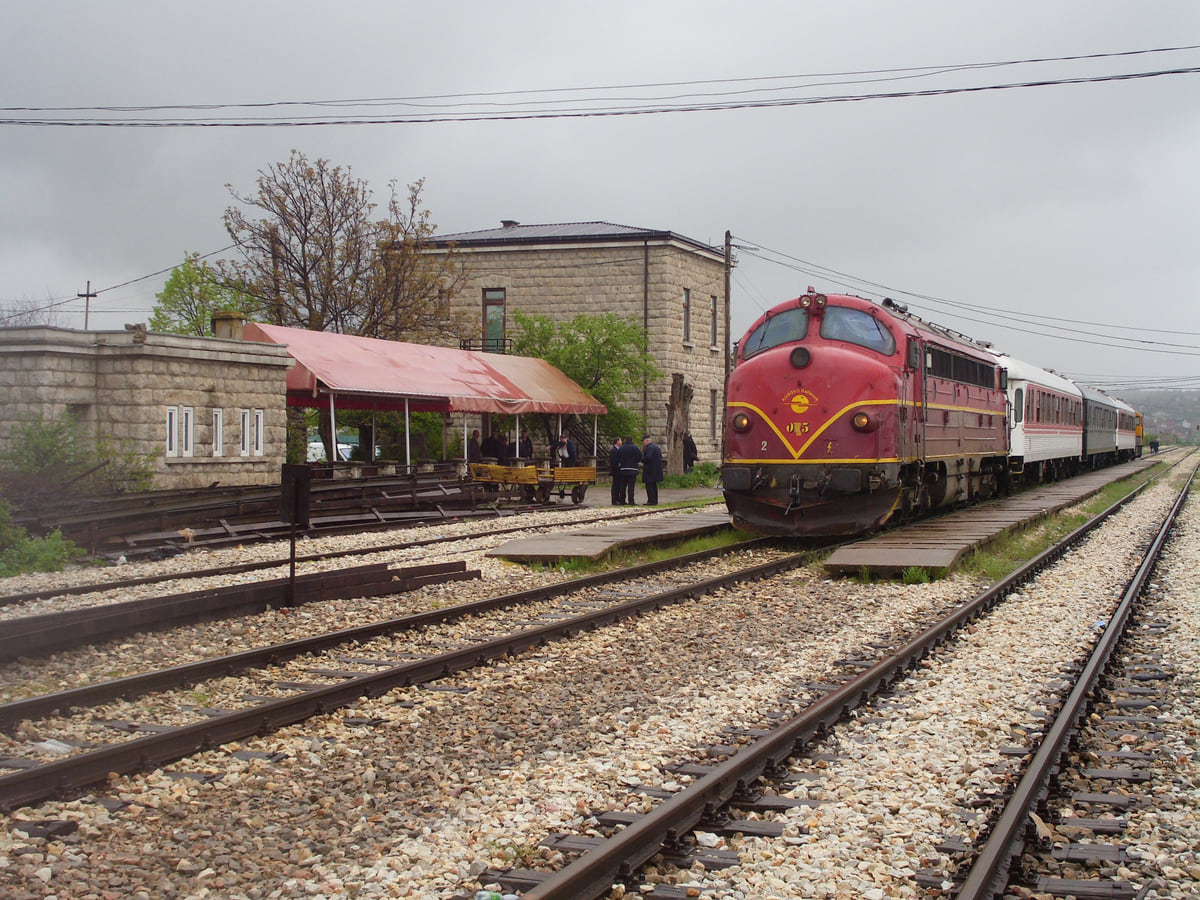
OpenStreetMap shows a railway station in Drenas. Trainkos doesn't publish readable timetables on its website, so check before you plan around a train.
Fushë Kosovë -
04 My tip
Two names on the map
The statistics agency still calls the municipality Gllogoc in its tables, while OpenStreetMap and the regional water company use Drenas. The Serbian name is Glogovac.
Drenas is one of those municipalities that never makes the guidebooks and, once you read the official records properly, turns out to hold more than you’d expect. There’s no grand monument or historic old town, but there are 18th-century tower houses, two late antique walled enclosures and a handful of protected caves, all about 22 km from Pristina.
One municipality, three names
In the statistics agency’s tables it still appears as Gllogoc; OpenStreetMap and the regional water company use Drenas, and the Serbian name is Glogovac. It sits in the Pristina region, about 22 km west of the capital in a straight line. In 2024 it had 48,079 inhabitants, ten thousand fewer than in 2011, spread across 35 settlements, while the town itself rose to 7,081. Komoran, Tërstenik and Llapushnik come next. The OSCE, in its 2018 profile, reckons on about 290 km² and describes an economy of farming and small businesses.
The tower houses of Gradicë
What interests me most in Drenas is in the village of Gradicë. There the Ministry of Culture protects the Dervisholli family compound, from the 18th and 19th centuries, which its record calls one of the few surviving examples of this kind of residential complex. The Ministry adds that it was where the village men gathered to deliberate.
The compound has a men’s kulla, 9 by 7.77 metres and two storeys high, with the stable and kitchen downstairs and, upstairs, the meeting room, a corner for ablutions and another for washing. The women’s kulla is stone up to the first floor and fired brick above. The family house, two granaries and two corn cribs complete the group, and every building has wooden ceilings, hearths and chimneys. If Kosovo’s kullas intrigue you, this is a good place to understand how they worked inside.
The Ministry also protects the late 19th-century Ibish Morina kulla at Qikatovë and a 19th-century house at Pokleku i vjetër, but both records say they’re in poor condition. I wouldn’t travel for them.
To sleep close to everything, search places to stay in Pristina on Expedia and filter by area before price.
Two forts for hill walkers
Some 12 km south-west of town, at Vuçak, at the foot of Mount Kasmaç, the walls of two enclosures survive, Gjyteti i Madh and Gjyteti i Vogël, in a commanding position. Finds range from prehistory to the Middle Ages, but the Ministry regards it as a typical late antique fort built to protect the local population.
Llapushnik, about 10 km south-west, on the slopes of the Drenica mountains, had a circuit wall of roughly 200 by 300 metres, more than two metres thick, with towers. The so-called fortress tower measures 10 by 10 metres, and late Roman bricks and roof tiles turn up all over the site.
Caves, springs and old trees
The Environmental Protection Agency has one of its longest lists of natural monuments here. The caves of Baica and Gllanasella have been protected since 1987, and the two-hectare Kishnareka cave since 2006. At Llapushnik it protects a rock formation, Guri i Gradinës, and at Poklek a mineral spring, along with several notable oaks, among them the six at Likoshan. The list doesn’t say whether the caves can be visited, so I’m mentioning them as a fact rather than a plan; for a cave that’s set up for visitors, Gadime Cave in Lipjan is the safe bet.
If you are short on time, see the best tours in Pristina and pick one that fits your day.
How I’d do it
From Pristina, by car and in the morning, with Gradicë as the goal and Llapushnik if there’s time. OpenStreetMap shows a railway station in Drenas, but without reliable published timetables I wouldn’t plan the day around a train.
To sleep close to everything, search places to stay in Pristina on Booking.com and filter by area before price.
Drenas' largest settlements
| Settlement | 2024 | 2011 |
|---|---|---|
| Gllogoc | 7,081 | 6,143 |
| Komoran | 3,354 | 4,393 |
| Tërstenik | 3,017 | 3,903 |
| Llapushnik | 2,904 | 3,433 |
| Nekoc | 2,498 | 3,118 |
| Arllat | 2,348 | 3,134 |
| Municipality total (35 settlements) | 48,079 | 58,531 |
Kosovo Agency of Statistics (ASK), 2024 census, population by settlement. The town is listed as Gllogoc.
Protected heritage in Drenas
| Site | Place | Type |
|---|---|---|
| Dervisholli family compound | Gradicë | Tower houses, 18th-19th century |
| Ibish Morina kulla | Qikatovë | Tower house, late 19th century |
| Gjyteti i Madh and Gjyteti i Vogël | Vuçak | Fort, late antiquity |
| Llapushnik fort | Llapushnik | Late antique walled enclosure |
| Baica, Gllanasella and Kishnareka caves | Baicë, Gllanasellë, Kishnarekë | Natural monuments |
Kosovo Ministry of Culture heritage database (records 9076, 9074, 2423 and 9464) and the Kosovo Environmental Protection Agency's list of protected areas, checked on 10 October 2026. No opening hours or prices published.
Test yourself
True or false?
0/3 Pick before you peek.
-
The Dervisholli compound has one tower for the men and another for the women.
See the answer
True. The Ministry of Culture describes a men's kulla, with the meeting room upstairs, and a women's kulla, plus the house, two granaries and two corn cribs.
-
Drenas town lost residents between 2011 and 2024.
See the answer
False. The town grew from 6,143 to 7,081; it was the municipality as a whole that fell, from 58,531 to 48,079.
-
Llapushnik fort had walls more than two metres thick.
See the answer
True. According to the Ministry of Culture, its circuit of about 200 by 300 metres was over two metres thick and had towers.
Map
Where Drenas is
The Bjeshkët e Nemuna mountains close off the west and the Sharr the south; in the middle lies the Pristina plain. Every number opens its guide.
 1Pristina region 2Pristina 3Fushë Kosovë 4Podujeva 5Gračanica 6Obiliq 7Drenas 8Lipjan 9Novo Brdo
 Map data © OpenStreetMap contributors (ODbL)
- 1Pristina regionOne of Kosovo's seven statistical regions
- 2PristinaCapital of Kosovo under its Constitution
- 3Fushë KosovëPristina region, 63,949 people in 2024
- 4PodujevaPristina region, 70,975 people in 2024
- 5GračanicaPristina region, 18,486 people in 2024
- 6ObiliqPristina region, 22,815 people in 2024
- 7DrenasPristina region, 48,079 people in 2024
- 8LipjanPristina region, 55,044 people in 2024
- 9Novo BrdoPristina region, 4,493 people in 2024
0 of 208 Kosovo guides
Your next stamp
- Pristina region
- Regions
- Pristina
- Gračanica
- Prizren
- Cities
- Fushë Kosovë
- Gjakova Grand Bazaar
- Gjeravica
- Places to visit
- Visoki Dečani Monastery
- Bjeshkët e Nemuna National Park
- Hadum Mosque
- Mitrovica Region
- Things to do
- Most beautiful places
- Sheh Danjolli tekke
- Prettiest villages
- Tailors' Bridge
- Rugova Canyon
- UNESCO sites
- Gjakova
- Map
- Where is Kosovo
- Municipalities
- Gračanica Monastery
- Mitrovica
- Patriarchate of Peć
- Rugova via ferrata
- Population
- Vushtrri
- Podujeva
- Radavc Cave
- Size
- Bajrakli Mosque
- Devič Monastery
- Gazimestan
- Ibar Bridge
- Is it a country?
- Istog
- One day in Pristina
- Peja
- Prizren region
- Ulpiana
- Vushtrri Stone Bridge
- Gadime Cave
- Klina
- Name
- Vushtrri Fortress
- Deçan
- Flag
- Isa Boletini Complex
- Novo Brdo Fortress
- History
- Junik
- Lake Batllava
- Zvečan Fortress
- Banjska Monastery
- Ferizaj region
- Languages
- Rahovec
- Ferizaj
- Religion
- Sokolica Monastery
- Currency
- Lake Gazivoda
- Štrpce
- Brezovica
- EU membership
- Entry requirements
- Skiing in Kosovo
- Kaçanik
- Serbian border
- Guesthouses in Rugova
- Hotels in Peja
- Kaçanik fortress
- Newborn monument
- North Mitrovica
- One day in Prizren
- Peja bazaar
- Peja region
- Public holidays
- Velika Hoča
- Facts
- Gjakova region
- Hani i Elezit
- Hotels in Gjakova
- National Library
- Obiliq
- Zočište Monastery
- Mother Teresa Cathedral
- Shtime
- Skënderaj
- Lipjan
- Mother Teresa Boulevard
- Zvečan
- Kosovo Museum
- Leposavić
- Novo Brdo
- Emin Gjiku Ethnological Museum
- Janjevo
- Zubin Potok
- Imperial Mosque
- Pristina Clock Tower
- Pristina Old Bazaar
- Great Hammam of Pristina
- Bogë
- Germia Park
- Getting there
- Lake Radoniq
- Prizren Fortress
- Bear Sanctuary Prishtina
- Drelaj
- Flights
- Sinan Pasha Mosque
- Hotels in Pristina
- Pristina airport
- Prizren stone bridge
- Buses
- Grand Hotel Pristina
- Our Lady of Ljeviš
- Prizren hammam
- Swiss Diamond Hotel
- Tirana to Pristina
- League of Prizren
- Restaurants in Pristina
- Skopje to Pristina
- Belgrade to Pristina
- Prizren Archaeological Museum
- Balkans itinerary
- St George's Cathedral
- Church of the Holy Saviour
- Getting around
- Holy Archangels Monastery
- Trains
- Car hire
- Day trips
- Marash
- Driving
- Sharr National Park
- Taxis
- Distances
- Prevalla
- Dragash
- Road trip
- Brod
- Prices and budget
- On a budget
- Restelica
- Free things to do
- Mirusha waterfalls
- Malisheva
- Safety
- Mamusha
- Scams
- Healthcare
- National parks in Kosovo
- Nightlife
- Suhareka
- Mobile and roaming
- Mountains in Kosovo
- Mushtisht
- Hiking in Kosovo
- Korisha
- Packing list
- DokuFest
- Peaks of the Balkans
- With kids
- Holidays
- Hotels in Prizren
- Kosovo lakes
- 3 days
- Caves and waterfalls
- Restaurants in Prizren
- 5 days
- One week
- Gjilan region
- Kosovo food
- Sunny Hill Festival
- Gjilan
- Rahovec wine
- Atik Mosque, Gjilan
- Kosovo beer
- Draganac Monastery
- Where to eat in Kosovo
- Kamenica
- Where to stay in Kosovo
- Kllokot
- Weather in Kosovo
- Best time to visit Kosovo
- Partesh
- Kosovo in winter
- Ranillug
- Kosovo in spring
- Viti
- Kosovo in summer
- Letnica
- Binač Monastery
- Kosovo in autumn
- Events in Kosovo
- Independence Day
- Kosovo monasteries
- Mosques in Kosovo
- Kullas in Kosovo
- Castles in Kosovo
- Museums in Kosovo
- Bazaars in Kosovo
Frequently asked questions
Where is Drenas in Kosovo?
West of Pristina, in the Pristina statistical region. Drenas town is about 22 km from the capital's centre as the crow flies, according to OpenStreetMap.
Is Glogovac the same as Drenas?
Yes. Glogovac is the Serbian name, Gllogoc the one the statistics agency still uses in its tables, and Drenas the name used by OpenStreetMap and the regional water company.
What is the population of Drenas?
The municipality had 48,079 people in the 2024 census and 58,531 in 2011, according to the Kosovo Agency of Statistics. The town had 7,081.
What is there to see in Drenas?
The Dervisholli tower-house compound at Gradicë, the late antique forts at Vuçak and Llapushnik, and the caves of Baica, Gllanasella and Kishnareka, protected as natural monuments.
What is a kulla?
A stone tower house built for living and defence. In its record for the Ibish Morina kulla, the Ministry of Culture describes it as a distinctive type of Albanian material culture, rectangular in plan and two storeys high.
By
Tourism graduate with a master’s in Tourism Management and Planning from the University of Málaga, who has travelled across Europe. He writes every guide from official sources and his own judgement.
Published on . Facts checked on .
Sources
- Kosovo Agency of Statistics, Gllogoc population by settlement
- Kosovo Ministry of Culture, Kompleks banimi - Familja Dërvisholli
- Kosovo Ministry of Culture, Gjyteti i Madh dhe Gjyteti i Vogël në Vuçak
- Kosovo Ministry of Culture, Kalaja e Llapushnikut
- Kosovo Environmental Protection Agency, protected areas
- OSCE Mission in Kosovo, municipal profiles 2018
Some links in this guide are affiliate links: if you book through them, the site earns a commission at no extra cost to you. Affiliate disclosure
Photos: Jan Pešula (CC0), via Wikimedia Commons.