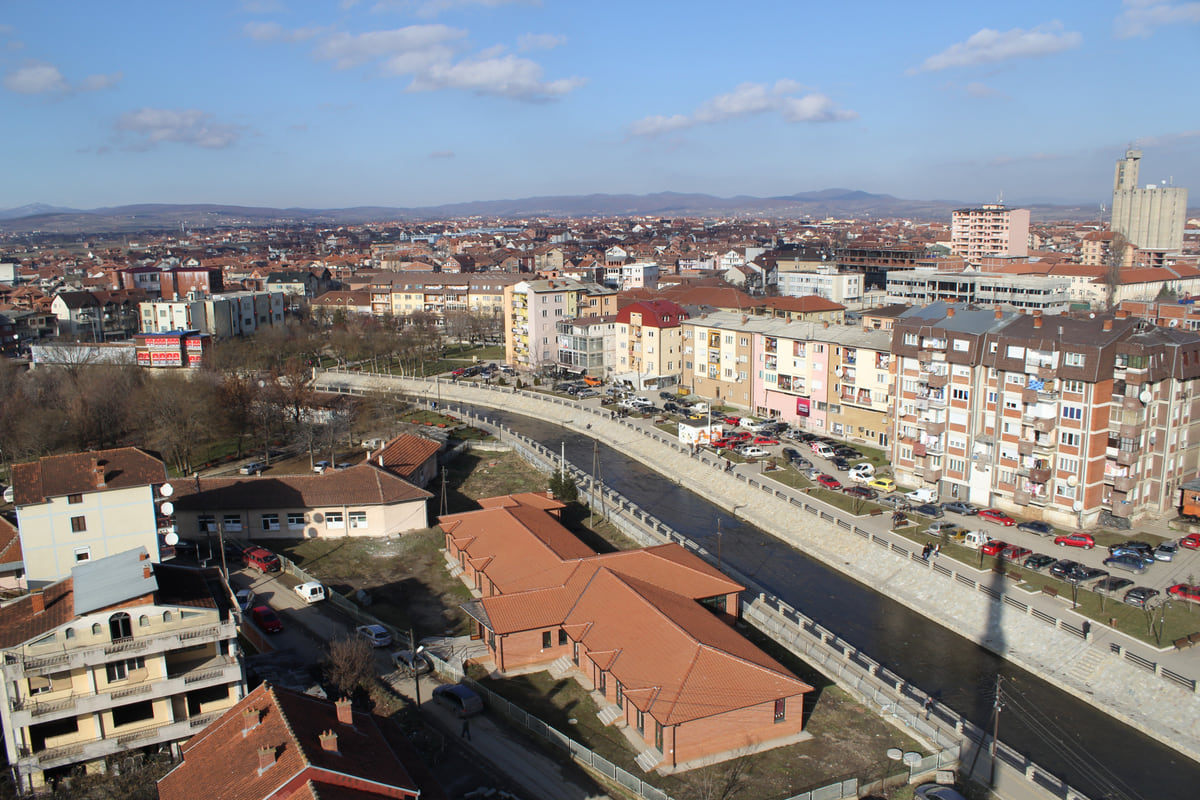
Pristina region, 70,975 people in 2024
Podujeva, the rural north of the Pristina region
Podujeva (Podujevë in Albanian, Podujevo in Serbian) is the largest municipality in the Pristina region, about 663 km² according to the OSCE, with 70,975 people in 2024 and 77 settlements, according to the Kosovo Agency of Statistics. The town lies some 27 km north of the capital. It has the Roman site of Vindenis, two protected mills and the Batllava reservoir.
In 30 seconds
Full read: 3 min
- Podujeva is the northern municipality of the Pristina region, with 70,975 people in 2024 and 77 settlements.
- It lost almost one resident in five between 2011 and 2024, according to the statistics agency.
- It has the Batllava reservoir, the Roman road station of Vindenis and two protected mills.
Podujeva is somewhere you pass through rather than visit, and I'd treat it that way. What would make me stop is Lake Batllava and, if provincial Rome is your thing, knowing that under the fields at Gllamnik lies a station on the Lissus to Naissus road that produced an Orpheus mosaic.

Before you go
What I would keep in mind
-
01 Most beautiful
Vindenis, a stop on the Roman road
At Gllamnik, beside the Llap river, the Ministry of Culture protects the Vindenis road station on the route from Lissus to Naissus. Only 2% of the site, estimated at around 20 hectares, has been excavated.
-
02 Getting there
The reservoir that waters Pristina
Lake Batllava, 3.27 km², has supplied drinking water to the capital since the late 1970s, according to the regional water company.
Batlava Lake -
03 My tip
A protected mill in an empty village
The Demë Ahmeti mill at Reçicë was repaired in 2014 under a Ministry of Culture emergency programme. In the 2024 census, Reçicë had not a single resident.
-
04 Most beautiful
A village mill still grinding
At Metehi the Ministry protects a mill that local tradition dates to the 18th century and which, according to its record, still grinds grain for the village.
Some 27 km north of Pristina as the crow flies sits Podujeva, a town of 20,330 people at the head of the region’s biggest municipality, with 77 settlements and a clearly shrinking population. In 2011 the municipality counted 88,499 residents; in 2024, 70,975. It won’t make anyone’s list of essentials, but it has three or four things I wouldn’t ignore if I were driving that way.
A big, agricultural municipality
Podujeva (Podujevë in Albanian, Podujevo in Serbian) covers about 663 km² according to the OSCE’s 2018 municipal profile, which makes it the largest in the Pristina region. The same profile describes an economy built on trade, food processing, farming, brickworks and metal parts, with around 4,600 registered businesses. The Ministry of Culture, in one of its records, writes the town’s name as Podujeva with Besiana in brackets, its other name.
After the town itself, the most populous settlements are Gllamnik, Obrançë and Dumnicë e Poshtme. At the other end of the scale, five villages (Bllatë, Përpellac, Reçicë, Surdull and Tërnavicë) had nobody living in them at the 2024 census.
Vindenis, the Rome under the fields
Podujeva’s real treasure isn’t visible at a glance. In the Gllamnik area, close to the Llap river, lies the Vindenis site, which the Ministry of Culture places in the Roman period (1st to 4th century) and late antiquity (4th to 6th). It was one of the main stations on the road from Lissus, today’s Lezhë in Albania, to Naissus, modern Niš, and it appears in Ptolemy and on the Peutinger Map. It linked Ulpiana with Ad Fines on the way to Naissus.
The digs of 1980 to 1986 opened just 534 m², 2% of the total, and still turned up a great deal. Out came the Orpheus mosaic, which the Ministry calls unique in the Balkans and which is now kept at the National Museum in Belgrade. So did a white marble sarcophagus 2.15 metres long, its gabled lid carved with fish-scale decoration, weighing over three tonnes with the lid, plus imperial coins, glass and pottery. Later a German and Kosovan team surveyed the ground with a magnetometer and found a structure 150 by 150 metres with walls around five metres thick, which points to a Roman military camp. The whole site would cover about 20 hectares.
I’m giving you just what the official record says. No source I’ve read describes what’s visible on the ground or whether there are panels or paths, so I’d see it as a stop for people who already enjoy this kind of place.
If you are staying the night, see the best hotel deals in Pristina for your dates: the well-placed rooms go fast.
Mills and houses on the heritage list
Two mills in the heritage database strike me as among the municipality’s most charming entries. The one at Metehi belongs to the village; oral tradition takes it back to the 18th century and, according to its record, it still grinds grain. It has two sets of millstones, and in 2014 an emergency programme cleared the inside and re-roofed it with traditional tiles. The Demë Ahmeti mill at Reçicë is tiny, 5.30 by 5.80 metres, from the late 19th century, and after the 2014 works its mechanism was repaired. The odd thing is that Reçicë was recorded with zero inhabitants in the 2024 census.
The list is rounded off by an early 20th-century timber-framed house with mud-brick walls at Llaushë e Ulët, and the Neolithic site of Gumnishtë at Surkish, a few kilometres south of town, known from finds turned up by ploughing.
Lake Batllava and the springs
Lake Batllava is a 3.27 km² reservoir, according to the statistics agency, beside the village of Batllavë. The regional water company KRU Prishtina says it started supplying the capital’s drinking water in the late 1970s and that the untreated water is made drinkable at the company’s plant at Albanik (Shajkovc). Since 1988 the Environmental Protection Agency has also protected two springs in the municipality as natural monuments, a mineral spring at Sallabajë and another at Shajkovc, along with several notable trees dotted around the villages.
So you do not lose the morning at the ticket office, browse tickets and tours in Pristina on GetYourGuide.
Fitting it into a trip
I’d stay in Pristina and head north one morning, with the lake as the main stop and Podujeva for lunch. The OSCE profile counts 40 mosques in the municipality, but none of them appears in the Ministry’s heritage database, so I’ve no data to point you to one in particular.
If you are staying the night, see the best hotel deals in Pristina for your dates: the well-placed rooms go fast.
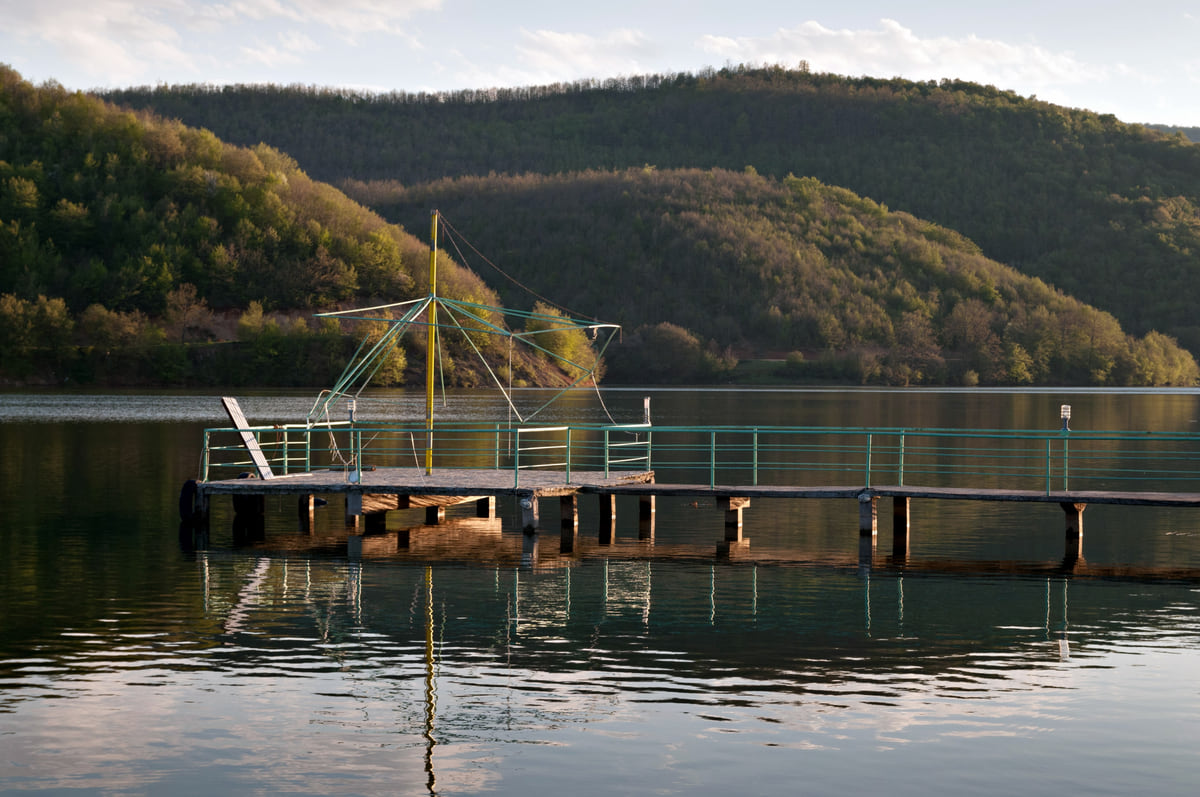
A wooden jetty on Lake Batlava, with calm water and forested hills rising behind it on a bright day
Podujeva's largest settlements
| Settlement | 2024 | 2011 |
|---|---|---|
| Podujevë | 20,330 | 23,453 |
| Gllamnik | 3,162 | 3,794 |
| Obrançë | 3,010 | 3,092 |
| Dumnicë e Poshtme | 2,526 | 2,975 |
| Llapashticë e Poshtme | 2,395 | 2,701 |
| Letanc | 2,118 | 2,080 |
| Batllavë | 2,056 | 2,334 |
| Municipality total (77 settlements) | 70,975 | 88,499 |
Kosovo Agency of Statistics (ASK), 2024 census, population by settlement. Names in Albanian, as ASK publishes them.
Podujeva in the Ministry of Culture's heritage database
| Site | Settlement | Period |
|---|---|---|
| Vindenis Roman site | Gllamnik | 1st to 6th century |
| Gumnishtë Neolithic site | Surkish | Neolithic |
| Village mill | Metehi | 19th century per the record (18th by tradition) |
| Demë Ahmeti mill | Reçicë | Late 19th century |
| Avdullah Avdullahu house | Llaushë e Ulët | Early 20th century |
Kosovo Ministry of Culture cultural heritage database (records 6691, 8978, 9147, 9334 and 9046), checked on 10 October 2026. All under temporary protection; no opening hours published.
Test yourself
True or false?
0/3 Pick before you peek.
-
Podujeva's population grew between 2011 and 2024.
See the answer
False. It fell from 88,499 to 70,975, according to the Kosovo Agency of Statistics.
-
The Orpheus mosaic from Vindenis is on show at the Kosovo Museum.
See the answer
False. The Ministry of Culture's record says it is kept at the National Museum in Belgrade.
-
Lake Batllava supplies Pristina with drinking water.
See the answer
True. The regional water company KRU Prishtina says it has used the lake since the late 1970s, treating the water at its Albanik plant in Shajkovc.
Map
Where Podujeva is
The Bjeshkët e Nemuna mountains close off the west and the Sharr the south; in the middle lies the Pristina plain. Every number opens its guide.
 1Pristina region 2Pristina 3Fushë Kosovë 4Podujeva 5Gračanica 6Obiliq 7Drenas 8Lipjan 9Novo Brdo
 Map data © OpenStreetMap contributors (ODbL)
- 1Pristina regionOne of Kosovo's seven statistical regions
- 2PristinaCapital of Kosovo under its Constitution
- 3Fushë KosovëPristina region, 63,949 people in 2024
- 4PodujevaPristina region, 70,975 people in 2024
- 5GračanicaPristina region, 18,486 people in 2024
- 6ObiliqPristina region, 22,815 people in 2024
- 7DrenasPristina region, 48,079 people in 2024
- 8LipjanPristina region, 55,044 people in 2024
- 9Novo BrdoPristina region, 4,493 people in 2024
What to see
What to see in Podujeva
0 of 208 Kosovo guides
Your next stamp
- Fushë Kosovë
- Pristina region
- Lake Batllava
- Cities
- Regions
- Malisheva
- Janjevo
- Drenas
- Gjakova Grand Bazaar
- Gjeravica
- Places to visit
- Visoki Dečani Monastery
- Bjeshkët e Nemuna National Park
- Hadum Mosque
- Mitrovica Region
- Things to do
- Most beautiful places
- Sheh Danjolli tekke
- Prettiest villages
- Tailors' Bridge
- Rugova Canyon
- UNESCO sites
- Gjakova
- Map
- Where is Kosovo
- Municipalities
- Gračanica Monastery
- Mitrovica
- Patriarchate of Peć
- Pristina
- Prizren
- Rugova via ferrata
- Population
- Vushtrri
- Radavc Cave
- Size
- Bajrakli Mosque
- Devič Monastery
- Gazimestan
- Ibar Bridge
- Is it a country?
- Istog
- One day in Pristina
- Peja
- Prizren region
- Ulpiana
- Vushtrri Stone Bridge
- Gadime Cave
- Klina
- Name
- Vushtrri Fortress
- Deçan
- Flag
- Isa Boletini Complex
- Novo Brdo Fortress
- History
- Junik
- Zvečan Fortress
- Banjska Monastery
- Ferizaj region
- Languages
- Rahovec
- Ferizaj
- Religion
- Sokolica Monastery
- Currency
- Lake Gazivoda
- Štrpce
- Brezovica
- EU membership
- Entry requirements
- Skiing in Kosovo
- Kaçanik
- Serbian border
- Gračanica
- Guesthouses in Rugova
- Hotels in Peja
- Kaçanik fortress
- Newborn monument
- North Mitrovica
- One day in Prizren
- Peja bazaar
- Peja region
- Public holidays
- Velika Hoča
- Facts
- Gjakova region
- Hani i Elezit
- Hotels in Gjakova
- National Library
- Obiliq
- Zočište Monastery
- Mother Teresa Cathedral
- Shtime
- Skënderaj
- Lipjan
- Mother Teresa Boulevard
- Zvečan
- Kosovo Museum
- Leposavić
- Novo Brdo
- Emin Gjiku Ethnological Museum
- Zubin Potok
- Imperial Mosque
- Pristina Clock Tower
- Pristina Old Bazaar
- Great Hammam of Pristina
- Bogë
- Germia Park
- Getting there
- Lake Radoniq
- Prizren Fortress
- Bear Sanctuary Prishtina
- Drelaj
- Flights
- Sinan Pasha Mosque
- Hotels in Pristina
- Pristina airport
- Prizren stone bridge
- Buses
- Grand Hotel Pristina
- Our Lady of Ljeviš
- Prizren hammam
- Swiss Diamond Hotel
- Tirana to Pristina
- League of Prizren
- Restaurants in Pristina
- Skopje to Pristina
- Belgrade to Pristina
- Prizren Archaeological Museum
- Balkans itinerary
- St George's Cathedral
- Church of the Holy Saviour
- Getting around
- Holy Archangels Monastery
- Trains
- Car hire
- Day trips
- Marash
- Driving
- Sharr National Park
- Taxis
- Distances
- Prevalla
- Dragash
- Road trip
- Brod
- Prices and budget
- On a budget
- Restelica
- Free things to do
- Mirusha waterfalls
- Safety
- Mamusha
- Scams
- Healthcare
- National parks in Kosovo
- Nightlife
- Suhareka
- Mobile and roaming
- Mountains in Kosovo
- Mushtisht
- Hiking in Kosovo
- Korisha
- Packing list
- DokuFest
- Peaks of the Balkans
- With kids
- Holidays
- Hotels in Prizren
- Kosovo lakes
- 3 days
- Caves and waterfalls
- Restaurants in Prizren
- 5 days
- One week
- Gjilan region
- Kosovo food
- Sunny Hill Festival
- Gjilan
- Rahovec wine
- Atik Mosque, Gjilan
- Kosovo beer
- Draganac Monastery
- Where to eat in Kosovo
- Kamenica
- Where to stay in Kosovo
- Kllokot
- Weather in Kosovo
- Best time to visit Kosovo
- Partesh
- Kosovo in winter
- Ranillug
- Kosovo in spring
- Viti
- Kosovo in summer
- Letnica
- Binač Monastery
- Kosovo in autumn
- Events in Kosovo
- Independence Day
- Kosovo monasteries
- Mosques in Kosovo
- Kullas in Kosovo
- Castles in Kosovo
- Museums in Kosovo
- Bazaars in Kosovo
Frequently asked questions
Where is Podujevo in Kosovo?
In the north of the Pristina region. Podujeva town is about 27 km north of central Pristina as the crow flies, according to OpenStreetMap.
What is the population of Podujevo?
The municipality had 70,975 people in the 2024 census, down from 88,499 in 2011, according to the Kosovo Agency of Statistics. The town had 20,330.
Are Podujevo and Besiana the same place?
Yes. In one of its records the Ministry of Culture writes “Podujevës (Besianës)”, using Besiana as another name for the town. The statistics agency uses Podujevë, and the Serbian form is Podujevo.
What is there to see around Podujevo?
Lake Batllava, the Roman site of Vindenis at Gllamnik and two protected mills, at Metehi and Reçicë. No official source publishes opening hours or prices for any of them.
What was Vindenis?
A station on the Roman road from Lissus to Naissus, mentioned by Ptolemy and on the Peutinger Map, according to the Ministry of Culture. The Orpheus mosaic found there is now in the National Museum in Belgrade.
By
Tourism graduate with a master’s in Tourism Management and Planning from the University of Málaga, who has travelled across Europe. He writes every guide from official sources and his own judgement.
Published on . Facts checked on .
Sources
- Kosovo Agency of Statistics, Podujevë population by settlement
- Kosovo Ministry of Culture, Lokaliteti arkeologjik Vindenis
- Kosovo Ministry of Culture, Mulliri i Demë Ahmetit
- OSCE Mission in Kosovo, municipal profiles 2018
- KRU Prishtina, regional water company profile
- Kosovo Environmental Protection Agency, protected areas
Some links in this guide are affiliate links: if you book through them, the site earns a commission at no extra cost to you. Affiliate disclosure
Photos: Aid Muliqi (CC BY-SA 3.0); Otaulant (CC BY-SA 3.0), via Wikimedia Commons.