A 2.08 km² state, explained
Is Monaco a country? What makes it a state and what it shares with France
Yes. Monaco is a sovereign, independent state, a hereditary constitutional monarchy of 2.08 km² with 38,857 residents at the end of 2025, surrounded by France but not part of it. It is not an EU member, although it uses the euro, sits inside the EU customs territory and takes part in the Schengen area through France.
In 30 seconds
Full read: 6 min
- Yes, Monaco is a country. It is a sovereign, independent state, a hereditary constitutional monarchy with Albert II as head of state.
- It is not part of France, although France has guaranteed its defence since the 2002 treaty and the two share customs.
- It covers 2.08 km² and had 38,857 residents at the end of 2025, of whom only 24% were Monegasque.
- There is no separate capital, because the whole country is one municipality; the old town is Monaco-Ville.
- It is not in the EU, but it uses the euro and takes part in Schengen through France, so British visitors need no visa for short stays.
I find it helps to think of Monaco as a country that has handed France everything it cannot do alone, from defence to customs, and kept for itself whatever gives it an identity, from the throne to the stamps. For a visitor from the UK, the only thing that really changes as you cross is your phone, which leaves the European roaming zone.

Before you go
What I would keep in mind
-
01 Getting there
You cross from France into Monaco without noticing
The border is 5,469 metres long and all of it is with France, split between Cap-d'Ail, La Turbie, Beausoleil and Roquebrune-Cap-Martin. There is no fixed checkpoint. The airport you actually use is Nice.
how to get to Monaco -
02 My tip
Your phone does notice the change of country
Monaco is not on the EU's regulated roaming list and has its own network. UK networks draw up their own European rules, so I would check the tariff before leaving, because your phone joins the Monegasque network without warning.
using your phone in Monaco -
03 Money
Pay in euros, with a Monegasque face
An agreement with the EU in force since 1 December 2011 allows Monaco to use the euro as its official currency and to mint its own coins, in such small quantities that they become collectors' pieces.
money and payments in Monaco -
04 Most beautiful
An old town that is not the capital
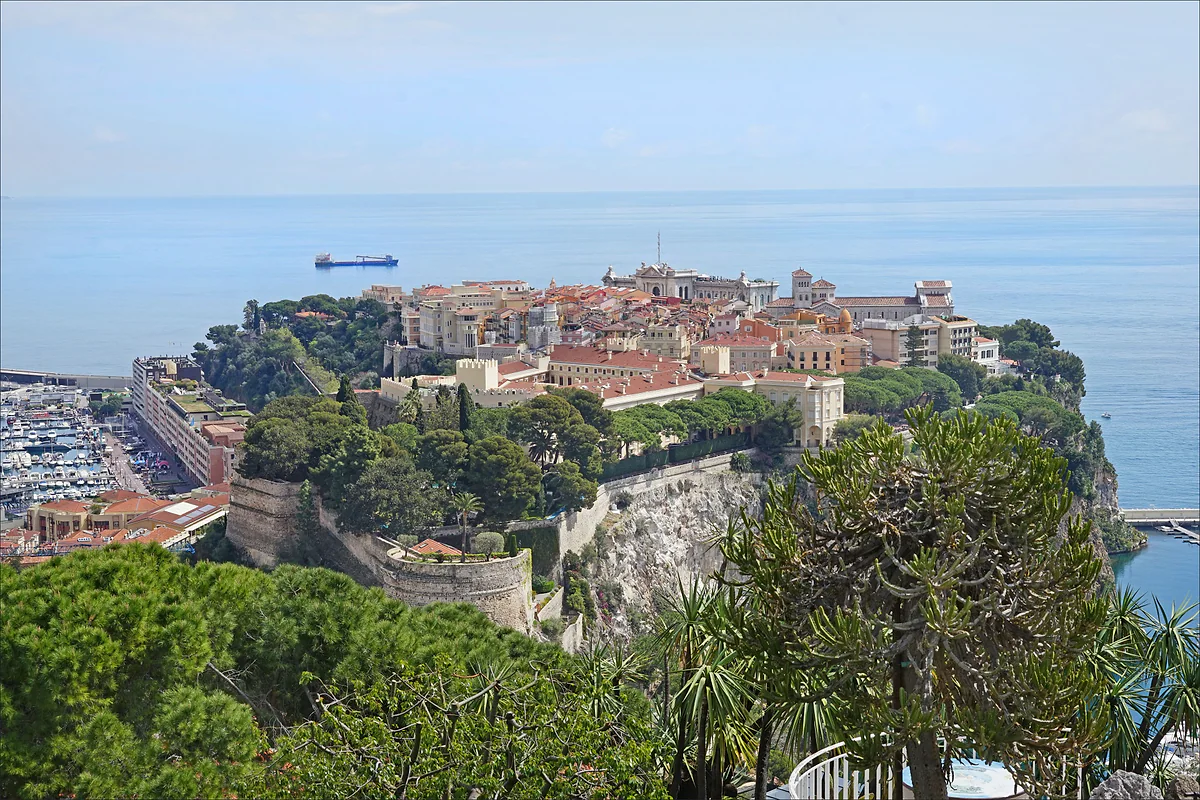
Monaco-Ville, on the Rock, has the Palace, the cathedral and the Oceanographic, and it is still just one district. The whole country is a single municipality, so there is no separate capital.
Monaco-Ville, the old town on the Rock
What I would book
- Places to stayBooking.com Sleeping in Monaco rather than France If you want to wake up inside the Principality, filter for Monaco. Many hotels that appear in the search are in Beausoleil or Cap-d'Ail, which are France.
- Data eSIMHolafly An eSIM for the country outside EU roaming Monaco is not in the EU's regulated roaming area. If your UK network does not include it, an eSIM spares you a surprise on the bill.
Yes, Monaco is a country, and one with more paperwork than its size suggests. It has a Constitution, a prince, a government, a parliament, a seat at the UN and its own dialling code, +377. What confuses people is that you can walk in from France, you pay in euros and the streets sound French. Here I explain what makes it a state, what it has agreed with its neighbour and what all that means for a visitor. The practical side of planning a trip is in my Monaco travel guide.
A sovereign state with its own Constitution
The Monegasque Constitution gets straight to the point. Article 1 says the Principality is a sovereign, independent state within the general principles of international law, and Article 2 that its government is a hereditary constitutional monarchy. The text in force dates from 1962, with a significant revision in 2002.
Executive power belongs to the Prince, currently Albert II, on the throne since 6 April 2005. The government is led by a Minister of State under his authority, and since 21 July 2025 that post has been held by Christophe Mirmand. Laws are made jointly by the Prince and the National Council, 24 members elected by universal suffrage every five years. Because the municipality and the state are one, there is also a 15-member Communal Council that acts as the town council for the entire country.
What surprises me is how recent some of the milestones are. Monaco joined the UN as a full member on 28 May 1993, after almost forty years as an observer, and the Council of Europe in 2004. The long version, from Genoese fortress to Albert II, is in my history of Monaco.
Is Monaco part of France?
No, and this is where most people go wrong. Monaco was absorbed into France only once, between 1793 and 1814, as just another commune in the Alpes-Maritimes department, and the Grimaldis got it back under the Treaty of Paris. The moment that set up its present independence was 1861, when Charles III ceded Menton and Roquebrune, 90% of his territory, for four million francs. According to the Monegasque statistics institute, from then on the Principality regained full and lasting independence.
What there is, though, is a very close relationship. Since 1865 the two countries have formed a customs union, and the 2002 treaty, in force since 1 December 2005, says France ensures the defence of Monaco’s independence and sovereignty and guarantees its territory as it does its own. That is why Monaco has no armed forces of its own for defence. Its only military unit is the Prince’s Carabiniers, whom you see every day at the changing of the guard at the Palace.
For the finer detail, that treaty replaced one from 1918 which, according to the French Senate, required Monaco to exercise its sovereignty in perfect conformity with French interests. The 2002 version was presented as a modernisation, and I think it neatly sums up how the relationship has shifted over a century.
A capital, districts and a country that is one municipality
Monaco is a city-state. The municipality and the state coincide, and have done since 1918, after a brief experiment with three communes in 1911. So there is no capital separate from the rest, and no official source I have read names one. When someone says “the capital of Monaco” they usually mean Monaco-Ville, the historic quarter up on the headland, home to the Palace, the cathedral and the Oceanographic, but it is simply another district.
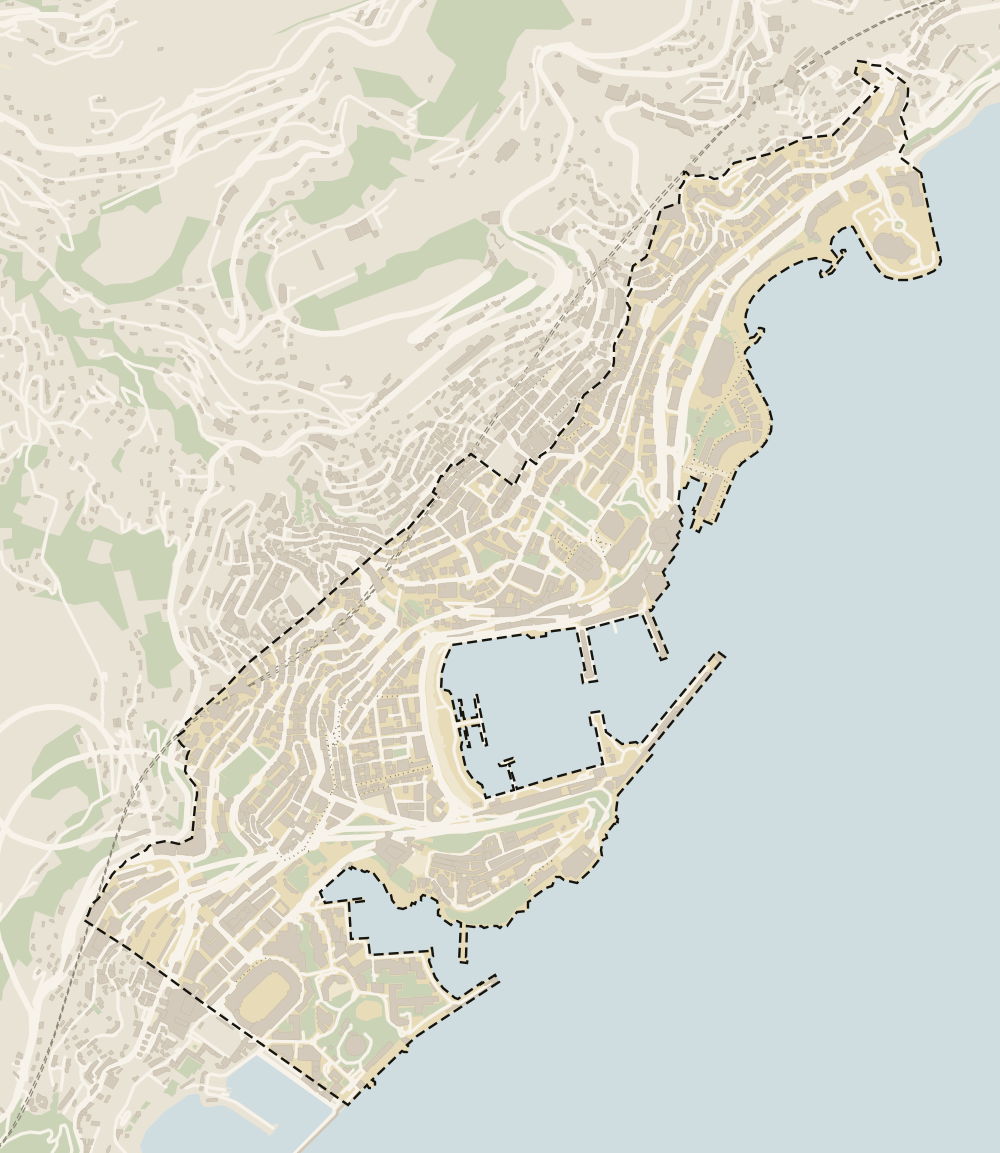
The tourist office counts eight districts, namely Monaco-Ville, Monte-Carlo, La Condamine, Fontvieille, Larvotto, La Rousse, Les Moneghetti and Jardin Exotique. The official division since a 2013 ordinance is slightly different, seven districts plus two reserved sectors, but the eight are all you need to find your way. Monte-Carlo is not a separate city either. It is the casino district and the most populous, with 8,318 residents in 2025, while only 1,022 people live in Monaco-Ville. The map of Monaco shows how they fit together.
How many people, how big, and which language
The official area is 2.08 km², which makes Monaco the second-smallest state in the world, after Vatican City. In 1861 it covered 145 hectares, and it has been winning ground from the sea ever since, first with Rainier III’s land reclamation and then, in 2024, with the Mareterra district.
On 31 December 2025, 38,857 people lived in Monaco, which works out at about 18,700 per square kilometre. The figure I find most telling is another one. The Monegasques numbered 9,333, just 24% of residents, and they are still the largest nationality, ahead of the French at 21.3% and the Italians at 19.5%. Britons come fourth, with 3,081 residents, 7.9% of the total. Counting those living abroad, Monegasque nationals do not reach ten thousand.
The official language is French, as Article 8 of the Constitution states, and the rest is in what language is spoken in Monaco. Monegasque, which derives from Genoese, was only written down seriously from 1924 and has been compulsory in state schools since 1976. It is also the language of the national anthem, which I cover alongside the flag of Monaco. There are no official figures on Italian or English, so I will not give you percentages. The state religion is Catholicism.
The EU, the euro and Schengen, each on its own terms
Monaco is not in the European Union. It negotiated an association agreement from 2015, together with Andorra and San Marino, and suspended it in 2023 because the model did not suit its living, working and housing conditions. The Monegasque government describes the country as the only third state integrated into the European customs territory.
The euro comes by another route. A monetary agreement signed with the EU in 2011 allows Monaco to use it as its official currency and to mint coins with its own national side. The practical side of paying there is in money in Monaco.
On Schengen, the official sources do not phrase it the same way. The EU says Monaco has not signed the agreement and is not associated with its rules, but takes part in the area through its arrangements with France. The Monegasque government says it belongs to it. For a British traveller the useful version comes from gov.uk, which treats Monaco as part of the Schengen area, so the days you spend there count towards your 90 in any 180. There is no fixed checkpoint coming in from France, and if you fly, you land at Nice, because Monaco has no airport.
What this country changes about your trip
Very little, which is the curious part. You arrive by train from Nice in about 23 minutes with no customs, pay in euros and keep French time (the time zone in Monaco matches Paris). The one thing I would keep firmly in mind is your phone. Monaco has its own network and is not on the EU’s regulated roaming list, and UK networks set their own European terms anyway, so depending on your tariff you might pay as you would at home or receive an unpleasant bill. My page on phone and roaming in Monaco covers the details. The other is health cover, because the UK government says the GHIC is not recognised in Monaco, so travel insurance matters more here than in France.
Monaco in official figures
| Fact | Figure | Source |
|---|---|---|
| Area | 2.08 km² (208 ha) | IMSEE and VisitMonaco |
| Population (31 Dec 2025) | 38,857 | IMSEE |
| Monegasque residents | 9,333, or 24.0% | IMSEE |
| British residents | 3,081, or 7.9% | IMSEE |
| Monegasque nationals worldwide | 9,959 | IMSEE |
| Density | About 18,700 people per km² | Worked out from IMSEE data |
| Land border | 5,469 m, all with France | IMSEE |
| Official language | French (Constitution, art. 8) | Legimonaco |
| State religion | Catholic (Constitution, art. 9) | Legimonaco |
| Dialling code and domain | +377 and .mc | VisitMonaco and IANA |
IMSEE's table by district adds up to 208.4 ha; the official rounded figure is 208 ha. Density is an estimate from population and area.
What Monaco shares with France and the EU, and what it does not
| Matter | Position | Since |
|---|---|---|
| Independence | Sovereign state; France guarantees its defence | 2002 treaty, in force 1 Dec 2005 |
| European Union | Not a member | Association agreement suspended by Monaco in 2023 |
| Customs | Customs union with France, inside the EU customs territory | 1865 agreement |
| Euro | Official currency by agreement with the EU | 2002; current agreement 2011 |
| Schengen | Never signed, but takes part through France | Executive Committee decision of 1998 |
| United Nations and Council of Europe | Member of both | 1993 and 2004 |
Test yourself
True or false?
0/4 Pick before you peek.
-
Monaco is French territory with a prince as a figurehead.
See the answer
False. Its Constitution defines it as a sovereign, independent state, and the Prince holds executive power. France guarantees its defence under the 2002 treaty, but it does not govern it.
-
The Monegasques are a minority in their own country.
See the answer
True. In 2025 they numbered 9,333 out of 38,857 residents, 24%. Even so, they are the largest nationality, ahead of the French and the Italians.
-
Monaco-Ville is Monaco's official capital.
See the answer
False. No official source names a capital. The country is a single municipality and Monaco-Ville is one of its districts, the old town on the Rock.
-
Monaco uses the euro without being a member of the European Union.
See the answer
True. A monetary agreement with the EU, in force since 1 December 2011, allows it, replacing the earlier agreement of 2001.
- Official area of the Principality
- 2.08 km²
- Residents on 31 December 2025
- 38,857
- Share of residents who are Monegasque
- 24%
- Land border, all of it with France
- 5,469 m
- Year of the treaty behind its lasting independence
- 1861
Map
Where Is it a country? is
The dashed line is the border with France. Every number opens its guide.
 1Monaco-Ville 2Monte Carlo Casino 3Prince's Palace 4Changing of the guard 5Cathedral 6Port Hercule 7Oceanographic Museum 8Museums 9Prince's Car Collection 10Stade Louis II 11Beaches 12Exotic Garden 13Japanese Garden 14Monte-Carlo 15La Condamine 16Fontvieille 17Larvotto 18Monaco circuit 19Moneghetti 20La Rousse-Saint-Roman 21Les Moulins 22Fort Antoine 23Villa Paloma 24Casino Square 25Viewpoints 26Yacht Club de Monaco 27Fontvieille harbour 28Train station 29Helicopter from Nice 30Le Méridien Beach Plaza 31Port Palace 32Hotel Ambassador 33Hotel Miramar 34Hôtel de Paris 35Hôtel Hermitage 36Map 37Café de Paris 38Monte-Carlo Bay 39Fairmont Monte Carlo 40Hôtel Métropole 41Le Louis XV 42Novotel Monte-Carlo 43Buddha-Bar Monte-Carlo 44Columbus Monte-Carlo 45Jimmy'z Monte-Carlo 46Twiga Monte Carlo 47Nikki Beach Monte Carlo 48Sporting Monte-Carlo 49Cipriani Monte Carlo 50Circus Festival 51Maya Bay Monaco 52COYA Monte-Carlo 53Les Ballets de Monte-Carlo 54Monte Carlo Opera 55Beefbar Monaco 56Top Marques 57Diamond League (Herculis) 58Sainte-Dévote church 59Sass Café 60Jazz Festival 61Mareterra 62Monaco beer 63National Day 64Rainier III swimming pool 65Grimaldi Forum 66Saint-Martin Gardens 67Princess Grace Rose Garden 68Princess Antoinette Park 69La Condamine Market 70Museum of Old Monaco 71Chapel of Mercy 72Zoological Garden 73Metropole shopping centre
 Map data © OpenStreetMap contributors (ODbL)
- 1Monaco-VilleThe old quarter, perched on the Rock
- 2Monte Carlo CasinoVisits 10:00 to 13:00, gaming from 14:00
- 3Prince's PalaceOpen inside from 30 March to 15 October 2026
- 4Changing of the guardDaily, five minutes before noon
- 5CathedralFree entry, 08:15 to 18:00
- 6Port Hercule760 berths and cruise ships up to 300 metres
- 7Oceanographic MuseumHanging off the cliff since 1910
- 8MuseumsFrom free to €20.50
- 9Prince's Car CollectionAt Port Hercule since July 2022
- 10Stade Louis IIGuided tours until 30 September
- 11BeachesOne public beach, no smoking and no dogs
- 12Exotic GardenOpen again since 30 March 2026
- 13Japanese GardenFree, and open 365 days a year
- 14Monte-CarloTen stops with scores, four of them free
- 15La CondamineMarket in kiosks until early 2027
- 16FontvieilleGrace's rose garden never closes
- 17LarvottoA beach, a Zen garden and a museum under wraps
- 18Monaco circuitFree and ticketless, it's the town's own streets
- 19Moneghetti11.5 hectares of lifts and locals
- 20La Rousse-Saint-RomanEnd of the line for buses 1 and 4
- 21Les MoulinsA daily market from 07:00
- 22Fort AntoineFree theatre in July, booking required
- 23Villa PalomaFree on Sundays and for under-26s
- 24Casino SquareFree, at any hour
- 25ViewpointsTen views, six of them free
- 26Yacht Club de Monaco2,500 members from 82 nationalities
- 27Fontvieille harbour275 berths below the Rock
- 28Train stationFour exits, three of them with lifts
- 29Helicopter from NiceFrom €195 a seat, about 7 minutes
- 30Le Méridien Beach Plaza398 rooms on Larvotto beach
- 31Port Palace50 rooms, every one facing the harbour
- 32Hotel AmbassadorBreakfast included, the station yards away
- 33Hotel MiramarBreakfast on the roof, above the yachts
- 34Hôtel de ParisOn Casino Square since 1864
- 35Hôtel HermitageAn Eiffel dome over the Winter Garden
- 36Map3,344 metres from end to end
- 37Café de ParisOpen 08:00 to 01:00, every day of the week
- 38Monte-Carlo BayA sandy lagoon and pools at 28°C all year
- 39Fairmont Monte CarloTerraces over the Grand Prix hairpin
- 40Hôtel MétropoleIn the Carré d'Or since 1886
- 41Le Louis XVThree Michelin stars, lunch from €230
- 42Novotel Monte-CarloThree minutes on foot from the trains
- 43Buddha-Bar Monte-CarloMonday to Saturday, 18:00 to 3:00
- 44Columbus Monte-Carlo181 rooms facing the Princess Grace Rose Garden
- 45Jimmy'z Monte-CarloFriday and Saturday, 23:30 to 5:00
- 46Twiga Monte CarloTuesday to Sunday, dinner then club until 5:00
- 47Nikki Beach Monte CarloSummer only, pool open 11:00 to 20:00
- 48Sporting Monte-CarloSummer dinner concerts from €120
- 49Cipriani Monte CarloOpen every day, all year round
- 50Circus Festival22 to 31 January 2027
- 51Maya Bay MonacoEvery day, 12:00 to 23:00 without a break
- 52COYA Monte-CarloOpen until 24 October 2026
- 53Les Ballets de Monte-CarloRomeo and Juliet turns 30
- 54Monte Carlo OperaSalle Garnier seats from €60
- 55Beefbar MonacoOn Quai Jean-Charles Rey since 2005
- 56Top Marques5 to 9 May 2027
- 57Diamond League (Herculis)Part of the Diamond League since 2010
- 58Sainte-Dévote churchDaily Mass at 18:00
- 59Sass CaféEvery night from 20:30
- 60Jazz Festival18 to 29 November 2026
- 61MareterraInaugurated on 4 December 2024
- 62Monaco beerOpen every day from 12:00 to 2:00
- 63National DayThursday 19 November 2026, a public holiday
- 64Rainier III swimming poolSeawater at 27 °C, 2026 season 1 May to 7 October
- 65Grimaldi ForumAround 100 events a year on Avenue Princesse Grace
- 66Saint-Martin GardensFree, and public since 1816
- 67Princess Grace Rose GardenNo hedge and no night-time closing since 2014
- 68Princess Antoinette Park18-hole mini golf for €5, booking only
- 69La Condamine MarketIn kiosks on Place d'Armes until 2027
- 70Museum of Old MonacoFree, Tuesday to Sunday, 10:30 to 17:00
- 71Chapel of MercyHome to a brotherhood founded in 1639
- 72Zoological GardenClosed in 2026 for works
- 73Metropole shopping centreMonday to Saturday, 10:00 to 19:30
0 of 139 Monaco guides
Your next stamp
- Facts
- Map
- Language
- Entry requirements
- Money
- Phone and roaming
- Dialling code
- Things to do
- One day
- Two days
- Monaco-Ville
- Monte Carlo Casino
- Prince's Palace
- Changing of the guard
- Cathedral
- Port Hercule
- Oceanographic Museum
- Museums
- Prince's Car Collection
- Stade Louis II
- Beaches
- Exotic Garden
- Japanese Garden
- Monte-Carlo
- La Condamine
- Fontvieille
- Gardens and parks
- Larvotto
- Monaco Grand Prix
- Grand Prix tickets
- Monaco circuit
- Moneghetti
- La Rousse-Saint-Roman
- Monte Carlo Masters
- Events
- Les Moulins
- Best time to visit
- Fort Antoine
- Villa Paloma
- Weather
- With kids
- Casino Square
- Viewpoints
- Sculpture trail
- Yacht Club de Monaco
- Churches
- Fontvieille harbour
- Getting there
- Flights to Monaco
- Nice to Monaco
- Getting around
- Paris to Monaco
- Parking in Monaco
- Public lifts
- Train station
- Helicopter from Nice
- Nightlife
- Scams and safety
- Shopping
- Accessible travel
- Cruise port
- Tours
- Where to stay
- Cheap hotels
- Where to eat
- Food
- Grand Prix hotels
- Le Méridien Beach Plaza
- Luxury experiences
- Free and cheap
- Port Palace
- Day trips
- Hotel Ambassador
- Hotel Miramar
- Hôtel de Paris
- Hôtel Hermitage
- Café de Paris
- Flag
- Monte-Carlo Bay
- Fairmont Monte Carlo
- History
- Grimaldi family
- Hôtel Métropole
- Grace Kelly
- Le Louis XV
- Novotel Monte-Carlo
- Buddha-Bar Monte-Carlo
- Columbus Monte-Carlo
- Euro coins
- Jimmy'z Monte-Carlo
- Monaco in films
- Twiga Monte Carlo
- Nikki Beach Monte Carlo
- Sporting Monte-Carlo
- Cipriani Monte Carlo
- Michelin restaurants
- Monte Carlo Rally
- Circus Festival
- Historic Grand Prix
- Maya Bay Monaco
- COYA Monte-Carlo
- Les Ballets de Monte-Carlo
- Monaco Yacht Show
- Monte Carlo Opera
- Beefbar Monaco
- Christmas
- Top Marques
- Diamond League (Herculis)
- Sainte-Dévote church
- Sass Café
- Jazz Festival
- Mareterra
- Monaco beer
- Monaco E-Prix
- National Day
- Traditions
- Yacht and boat charter
- Rainier III swimming pool
- Grimaldi Forum
- Saint-Martin Gardens
- Princess Grace Rose Garden
- Princess Antoinette Park
- La Condamine Market
- Museum of Old Monaco
- Chapel of Mercy
- Monegasques
- Opening hours and holidays
- Time zone
- Prison
- Tax
- Number plates
- MonaBike, bike hire
- Post office and postcode
- Cannes to Monaco
- Sanremo to Monaco
- Car hire
- Zoological Garden
- Metropole shopping centre
Frequently asked questions
Is Monaco part of France?
No. Its Constitution defines it as a sovereign, independent state, and the 2002 treaty with France confirms it. France guarantees its defence and the two share a customs union, but Monaco has its own prince, government and laws, and has held a seat at the UN since 1993.
What is the capital of Monaco?
It does not have a separate one. Monaco is a city-state where the municipality and the state are a single commune. What many people call the capital is Monaco-Ville, the old town on the Rock, home to the Palace, the cathedral and the government.
What is the population of Monaco?
38,857 on 31 December 2025, according to the Monegasque statistics institute. Of those, 9,333 are Monegasque, 24%, and they are still the largest nationality, ahead of the French and the Italians. There were 3,081 Britons, the fourth-largest group.
What language do they speak in Monaco?
The official language is French, and it is what you will hear in shops and offices. There is also Monegasque, which comes from Genoese, is compulsory in state schools and is the language the national anthem is sung in. I have no official figures on how widely Italian or English are spoken.
Is Monaco in the EU?
No. It negotiated an association agreement from 2015 alongside Andorra and San Marino and suspended it in 2023. Even so, it belongs to the EU customs territory, uses the euro under a monetary agreement and takes part in the Schengen area through France.
How big is Monaco?
2.08 km², or 208 hectares. In 1861 it covered 145 hectares, and it has grown by reclaiming land from the sea at Fontvieille, Larvotto, Le Portier and, in 2024, the new Mareterra district. It is the second-smallest state in the world, after Vatican City.
Who runs Monaco?
Prince Albert II, head of state since 6 April 2005, with a Minister of State running the government under his authority, Christophe Mirmand since 21 July 2025. Laws are made jointly by the Prince and the National Council, whose 24 members are elected every five years.
Do British visitors need a visa for Monaco?
No. Gov.uk says British citizens can visit the Schengen area, which includes Monaco, without a visa for up to 90 days in any 180-day period. Your passport must have been issued less than 10 years before you arrive and be valid for 3 months after you leave the Schengen area.
By
Tourism graduate with a master’s in Tourism Management and Planning from the University of Málaga, who has travelled across Europe. He writes every guide from official sources and his own judgement.
Published on . Facts checked on .
Sources
Photos: Jean-Pierre Dalbéra from Paris, France (CC BY 2.0), via Wikimedia Commons.