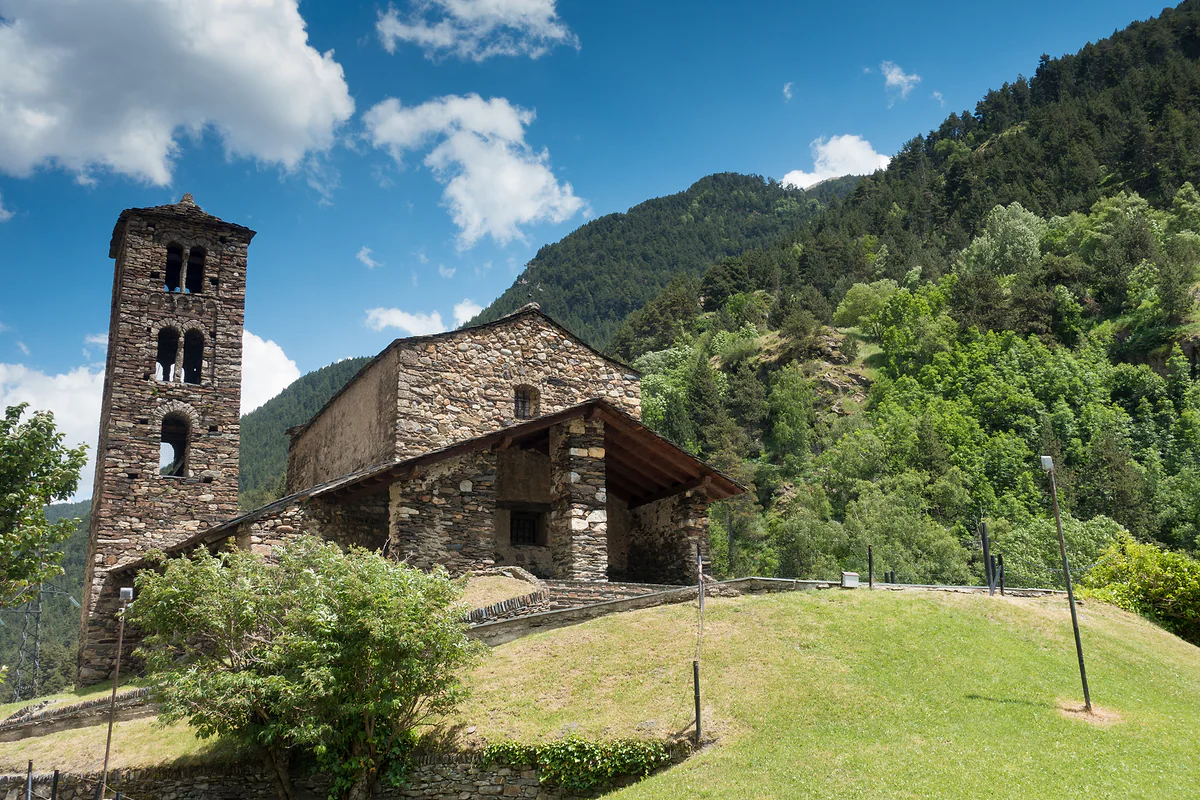
More than 30 Romanesque churches in 468 km²
Andorra's Romanesque churches, valley by valley
Andorra has more than 30 Romanesque churches, according to Andorra Turisme, most of them from the 11th and 12th centuries. They're small, with a single nave, an apse and a bell tower or bell gable. All are free to visit except Santa Coloma, which is seen together with the Espai Columba. In July and August, the Romànic de bat a bat programme opens six of the finest with a guide.
In 30 seconds
Full read: 3 min
- Andorra has more than 30 Romanesque churches, mostly from the 11th and 12th centuries.
- All are free except Santa Coloma, visited with the Espai Columba.
- In July and August, the Romànic de bat a bat tours open six churches with a free guide.
- The four I'd never skip are Caselles, Santa Coloma, Engolasters and Sant Serni de Nagol.
With a single day for Romanesque, I'd do Santa Coloma and the Espai Columba in the morning, Sant Miquel d'Engolasters at lunchtime and Sant Joan de Caselles in the afternoon. Three churches, three styles and no rush. And if you can choose, go in July or August.

Before you go
What I would keep in mind
-
01 To save money
All free but one
Andorra Turisme says every church visit is free except Santa Coloma, which is seen together with the Espai Columba, at €7 for a standard ticket.
Espai Columba -
02 My tip
July and August, with a guide
The Romànic de bat a bat tours open Sant Joan de Caselles, Meritxell, Sant Romà de les Bons, Sant Climent de Pal, Sant Miquel d'Engolasters and Santa Coloma.
-
03 Most beautiful
The church of 1055
Sant Serni de Nagol was consecrated in 1055, before the Lombard style arrived, and keeps primitive wall paintings uncovered in 1978.
Sant Serni de Nagol -
04 My tip
Not everything that looks Romanesque is
Building methods barely changed until the 20th century. Santa Creu in Canillo and Sant Pere d'Aixirivall look Romanesque but are much later, the tourist board warns.
My ranking, scored
The Romanesque churches I'd see in Andorra
My own marks out of 10. I weigh what each church preserves inside, its setting and what you won't find elsewhere. Personal opinion, not an official ranking.
0 of 8 seen
-
Sant Joan de Caselles (Canillo)
11th and 12th centuries, a Lombard bell tower, two porches and a stucco Christ framed by a painted Crucifixion. The most complete of them all.
9.4 out of 10
-
Santa Coloma (Andorra la Vella)
Pre-Romanesque origins and the country's only round bell tower, almost 18 m tall. Visited with the Espai Columba and its projection mapping.
9.2 out of 10
-
Sant Miquel d'Engolasters (Escaldes-Engordany)
12th century, a 17 m bell tower with carved heads and the Engolasters woods all around.
9.0 out of 10
-
Sant Serni de Nagol (Sant Julià de Lòria)
Consecrated in 1055, with primitive murals and the best view in the south. Free, with free guided visits.
8.9 out of 10
-
Sant Martí de la Cortinada (Ordino)
Late 12th-century wall paintings and 17th-century woodwork, in one of the loveliest villages in the Ordino valley.
8.7 out of 10
-
Sant Climent de Pal (La Massana)
A three-storey Lombard bell tower with paired windows and a 13th-century statue of the Virgin.
8.5 out of 10
-
Sant Romà de les Bons (Encamp)
Part of the Les Bons historic group, with a defensive tower. In 1785 a bishop ordered some of its paintings erased.
8.3 out of 10
-
Santa Eulàlia d'Encamp
Its 23 m Lombard tower is, according to Andorra Turisme, the tallest in the country.
7.8 out of 10
Andorra is small, but when it comes to Romanesque it punches well above its weight. According to Andorra Turisme, the country has more than 30 Romanesque churches, most of them from the 11th and 12th centuries, and nearly all are free to visit. The hard part isn’t finding them, it’s choosing. This page is the overview; each major church has its own page with opening times, prices where they exist and practical details.
What does an Andorran Romanesque church look like?
Almost always small and plain. The tourist board describes a single nave, an apse and an entrance porch, very little ornament and a building that sits naturally in the mountain landscape. The giveaway is the bell tower, either a proper tower or a bell gable, used to signal between villages and for defence. Inside there were brightly coloured paintings, many by followers of the great Catalan masters, and many churches still hold Baroque altarpieces from the 17th and 18th centuries.
Some are part of the World Heritage bid for «the material evidence of the construction of the state in the Pyrenees». For centuries they were also each village’s only communal building, where grazing rights and taxes were argued over. The reversible benches you’ll see in some of them are the proof.
The ones I wouldn’t skip
First, Sant Joan de Caselles church in Canillo, with its Lombard tower, two porches and a 12th-century stucco Christ framed by a painted Crucifixion, found buried under the floor in the 1960s. Second, Santa Coloma church, pre-Romanesque in origin and home to the country’s only round bell tower, visited with the Espai Columba. That’s where you see the original frescoes, and in the church a projection puts them back where they belong.
Third comes Sant Miquel d’Engolasters, with a 17 m tower topped by carved heads, and fourth, in the south, Sant Serni de Nagol, whose consecration dates to 1055, painted in an almost childlike hand. The rest of the ranking above is just as worthwhile if you have more days to spare.
The Romànic de bat a bat, July and August
This is the best way to understand them. In July and August the government opens six churches with a guide, namely Santa Coloma, Sant Miquel d’Engolasters, Sant Climent de Pal, Sant Romà de les Bons, Meritxell Sanctuary and Sant Joan de Caselles. Visits run Tuesday to Friday, 10am to 2pm and 3pm to 7pm, until 8pm on Saturday and on Sunday mornings, and you book on (+376) 839 760. Outside those months, Andorra Turisme points to the museus.ad calendar and each parish tourist office, and many smaller churches publish no hours at all.
If it rains or you’re short of time
There are two indoor shortcuts. The Escaldes-Engordany Art Centre on Avinguda Carlemany holds a collection of models of Andorran Romanesque buildings and is free, so in half an hour you get a feel for the churches you’ll later see for real. And the Espai Columba explains how Romanesque arrived in Andorra and how to read its wall paintings, with the originals from Santa Coloma and two fragments from Sant Esteve. I’d start with one of them before hitting the road, because the churches make far more sense once you know what used to cover their walls.
Grouping them by valley
I wouldn’t mix them up. One day for the Valira d’Orient valley, with Santa Eulàlia d’Encamp, Sant Romà de les Bons, Meritxell Sanctuary and Caselles. Another for the north, with Sant Martí de la Cortinada, Sant Climent de Pal and Sant Cristòfol d’Anyós. And half a day for the centre and south, with Santa Coloma, Sant Esteve, Engolasters and Nagol. The treasures that left the churches, from Encamp’s sacred art to the Santa Coloma frescoes, are covered in museums in Andorra.
Curiosities that change the visit
The tourist board has a list I’d read before going. In 1785 Bishop García de Montenegro had several paintings in Sant Romà de les Bons erased as indecent. In 1898 shepherds kept their flocks inside Sant Miquel d’Engolasters. Sant Esteve in Andorra la Vella owes its look to Puig i Cadafalch’s restoration of 1940. And not everything that looks Romanesque is, because building methods changed little until the 20th century, as Santa Creu in Canillo and Sant Pere d’Aixirivall show.
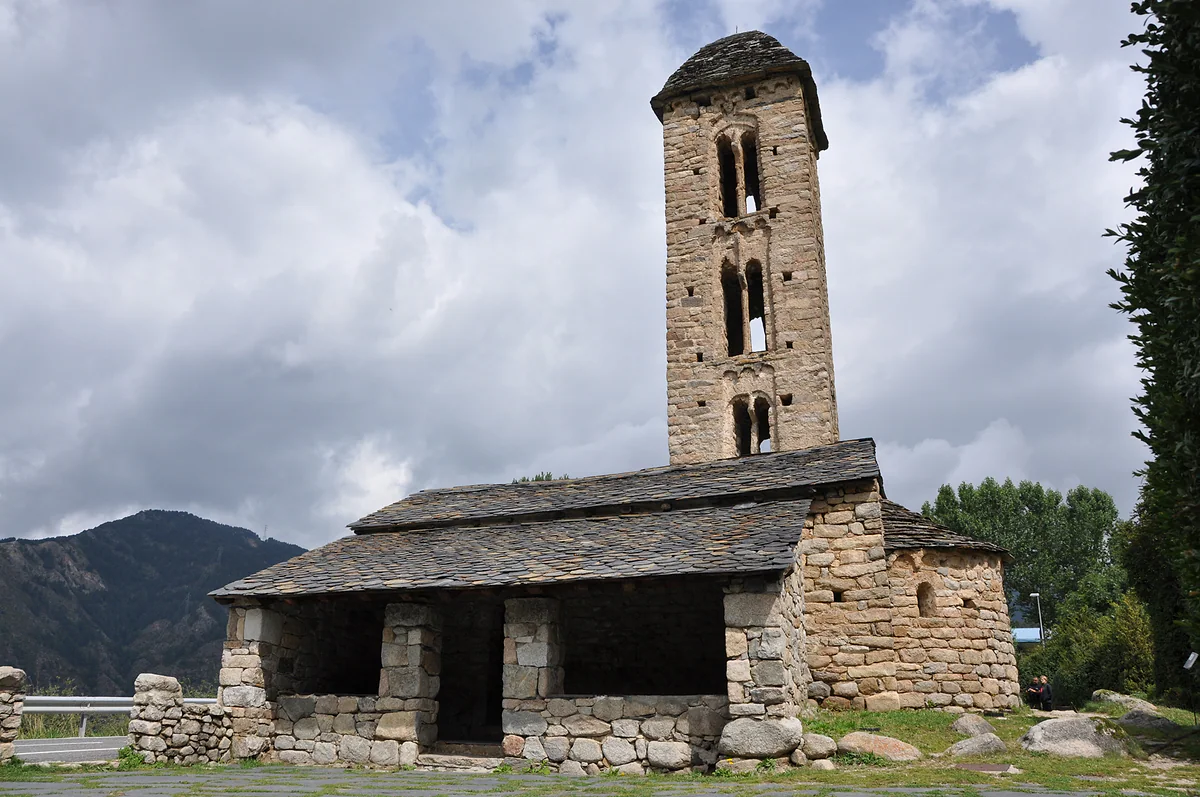
The Romanesque church of Sant Miquel d'Engolasters, with a stone porch and three-storey Lombard bell tower
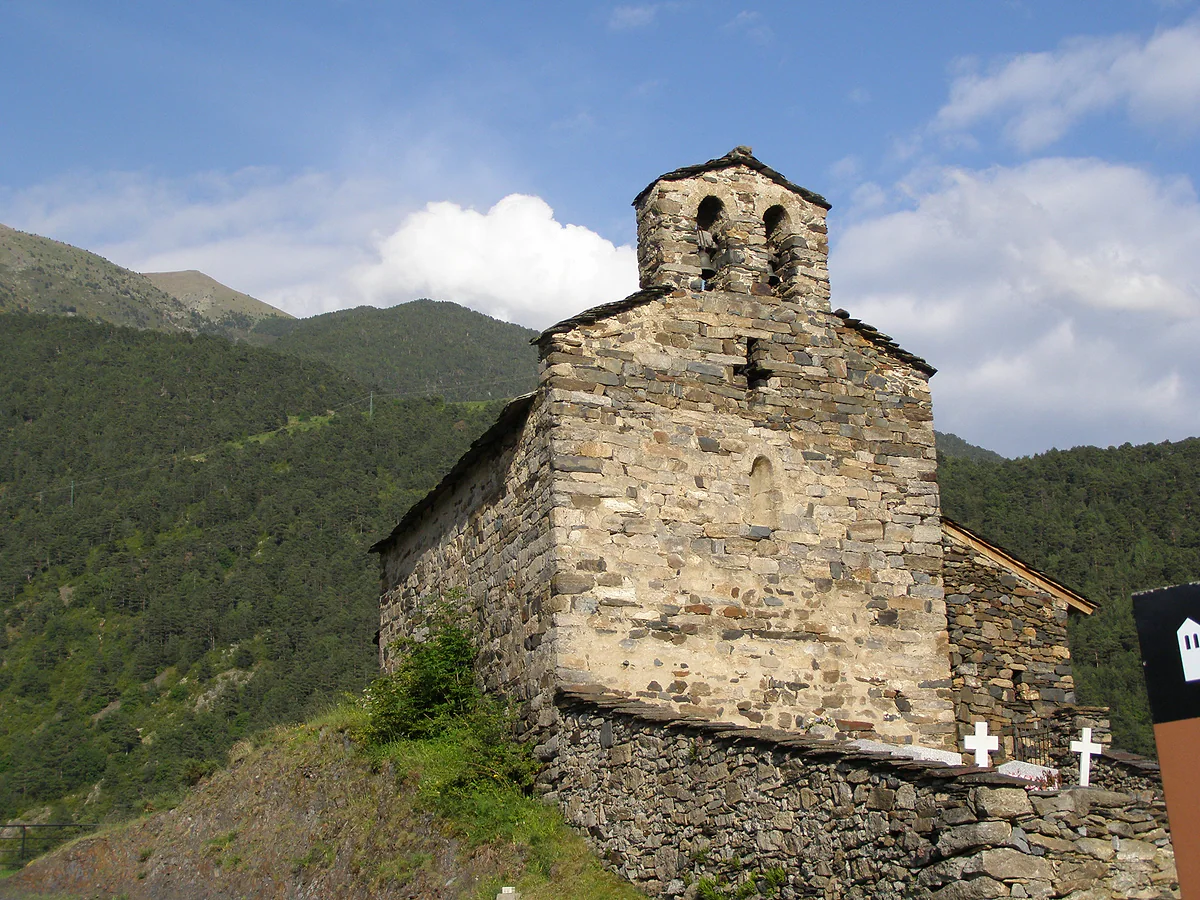
The pre-Romanesque church of Sant Serni de Nagol, with a double bellcote, above Sant Julià de Lòria
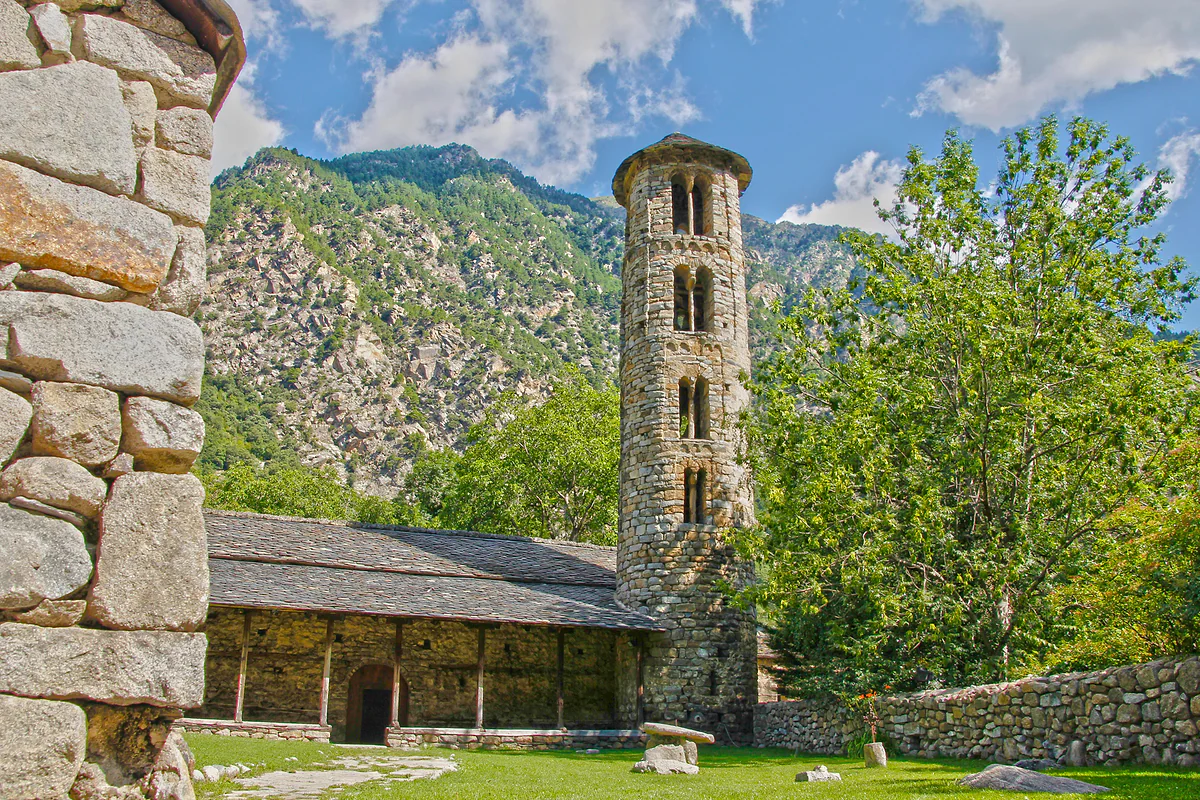
The pre-Romanesque church of Santa Coloma in Andorra la Vella, with its round four-storey bell tower
Romànic de bat a bat, July and August
| Days | Hours |
|---|---|
| Tuesday to Friday | 10am-2pm and 3pm-7pm |
| Saturday | 10am-2pm and 3pm-8pm |
| Sunday | 10am-2pm |
| Monday | No visits |
Andorra Turisme, checked on 29-09-2026. Churches included: Sant Joan de Caselles, Meritxell, Sant Romà de les Bons, Sant Climent de Pal, Sant Miquel d'Engolasters and Santa Coloma. Bookings on (+376) 839 760.
Churches with their own page, by parish
| Parish | Churches |
|---|---|
| Canillo | Sant Joan de Caselles, Sant Serni, Meritxell Sanctuary |
| Encamp | Santa Eulàlia, Sant Romà de les Bons |
| Ordino | Sant Martí de la Cortinada |
| La Massana | Sant Climent de Pal, Sant Cristòfol d'Anyós |
| Andorra la Vella | Santa Coloma, Sant Esteve, Sant Vicenç d'Enclar |
| Sant Julià de Lòria | Sant Serni de Nagol, Canòlich Sanctuary |
| Escaldes-Engordany | Sant Miquel d'Engolasters, Sant Romà dels Vilars |
Test yourself
True or false?
0/4 Pick before you peek.
-
Most of Andorra's Romanesque churches charge an entry fee.
See the answer
False. It's the other way round. They're all free except Santa Coloma, visited together with the Espai Columba.
-
In 1785 a bishop ordered some of the paintings in Sant Romà de les Bons to be erased.
See the answer
True. Bishop García de Montenegro had several paintings removed as indecent, according to Andorra Turisme's Romanesque curiosities.
-
Andorra's medieval bridges are Romanesque.
See the answer
False. Andorra Turisme calls this the most widespread myth. At best they were built at the very end of the Middle Ages, like the Margineda bridge.
-
Santa Coloma has a round bell tower.
See the answer
True. Its circular tower, almost 18 m tall, is the only one of its kind in the country.
- Romanesque churches, per Andorra Turisme
- 30+
- Churches on the Romànic de bat a bat
- 6
- Consecration of Sant Serni de Nagol
- 1055
- Lombard tower of Santa Eulàlia d'Encamp
- 23 m
0 of 269 Andorra guides
Your next stamp
- Sant Martí de la Cortinada
- Sant Esteve church
- Espai Columba
- Sant Joan de Caselles
- Sant Romà dels Vilars
- In July
- Sant Romà de les Bons
- Places to visit
- Things to do
- Most beautiful places
- Prettiest villages
- Andorra la Vella
- UNESCO World Heritage
- Map
- Escaldes-Engordany
- Where is Andorra?
- Is Andorra a country?
- Parishes
- Casa de la Vall
- Margineda bridge
- Old town
- Santa Coloma church
- Towns and villages
- Population
- Size
- Mountains
- Language
- Andorra in one day
- Canillo
- History
- Margineda rock shelter
- Co-princes
- Soldeu
- Weekend break
- Andorra in 3 days
- El Tarter
- Political system
- Andorra in 4 days
- Flag
- Ransol
- A week in Andorra
- Facts
- Prats
- El Forn
- Public holidays
- Sant Julià de Lòria
- Currency and payments
- L'Aldosa de Canillo
- Els Plans
- EU and Schengen
- Bordes d'Envalira
- Entry requirements
- Prices and budget
- On a budget
- Santa Coloma
- Ski holidays
- Tourist tax
- Mobile and roaming
- Sant Serni de Canillo
- Tourist information
- Healthcare
- Meritxell Sanctuary
- With a dog
- Packing list
- Safety
- How to get there
- Scams
- From Barcelona
- Bus from Barcelona
- Day trip from Barcelona
- From Madrid
- From Toulouse
- Encamp
- Flights
- La Margineda
- La Massana
- Roc del Quer viewpoint
- Andorra-La Seu airport
- Canillo Tibetan bridge
- Museums in Andorra
- Pal
- Pas de la Casa
- Arinsal
- Driving
- Grau Roig
- Mon(t) Magic
- Nearest airports
- By train
- Erts
- Les Bons
- Palau de Gel
- Road conditions
- Motorcycle Museum
- Parking
- Sispony
- Vila
- Anyós
- Incles valley
- La Mosquera
- Petrol
- El Tremat
- Getting around
- Juclar lakes
- L'Aldosa (La Massana)
- Buses
- Els Cortals d'Encamp
- Sant Climent de Pal
- Bus station
- Sant Cristòfol d'Anyós
- Casa Rull
- Shopping
- Farga Rossell
- Sant Vicenç d'Enclar
- Santa Eulàlia d'Encamp
- What to buy
- Customs allowances
- La Massana Còmic
- Car Museum
- Cigarettes
- Comapedrosa
- Electronics
- Alcohol
- Casa Cristo
- Clothes and sports shops
- Iron Route
- Coll d'Ordino
- Perfume
- Sacred Art Museum
- Shopping centres
- Funicamp
- Supermarkets
- Avinguda Meritxell
- Encamp Tibetan bridge
- Avinguda Carlemany (Vivand)
- Envalira pass
- Auvinyà
- Bici Lab Andorra
- Ordino
- Skiing
- With kids
- Zip lines
- Fontaneda
- For couples
- La Cortinada
- Ski pass
- Via ferratas
- Climbing
- Llorts
- Nagol
- Nightlife
- Ski season
- El Serrat
- Grandvalira
- Horse riding
- Juberri
- Aixovall
- Mountain biking
- Pal Arinsal
- Sornàs
- Aixirivall
- Ansalonga
- Ordino Arcalís
- Road cycling
- Bixessarri
- Naturland
- Segudet
- Arans
- Llumeneres
- Tobotronc
- Casa d'Areny-Plandolit
- Cross-country skiing
- Miniature Museum
- Skiing with kids
- Cal Pal
- Free walking tour
- Pessons lakes
- Sant Serni de Nagol
- Ski lessons
- Where to stay
- Canòlich Sanctuary
- Hotels in Andorra la Vella
- Ski hire
- Hotels in Escaldes
- Juberri Gardens
- Llorts iron mine
- Webcams
- Hotels in Soldeu
- Snow report
- Sorteny valley
- Hotels in El Tarter
- Tristaina lakes
- Hotels in Canillo
- Night skiing
- Tristaina solar viewpoint
- Freeride
- Hotels in Encamp
- Hotels in Pas de la Casa
- Ski touring
- Hotels in La Massana
- Snowshoeing
- Hotels in Arinsal and Pal
- Snow activities
- Après-ski
- Engordany
- Hotels in Ordino
- Medieval bridges
- Nature parks
- Els Vilars
- Hotels in Sant Julià de Lòria
- Lakes
- Viewpoints
- Where to eat
- Caldea
- Restaurants in Andorra la Vella
- Borda restaurants
- Inúu
- Cheap hotels
- Food
- Hiking
- Spas and thermal baths
- Weather and climate
- Engolasters lake
- Pas de la Casa weather
- Spa hotels
- Trinxat
- Events
- Luxury hotels
- Sant Miquel d'Engolasters
- Ski resort weather
- Wine
- Best time to visit
- Family hotels
- Madriu valley
- All inclusive
- Estany de l'Illa
- In winter
- Apartments
- Coronallacs
- In spring
- Ski World Cup
- Christmas
- Hostels
- In summer
- Mountain huts
- Camping and rural stays
- Easy walks
- In autumn
- New Year
- Family walks
- Festes majors
- In January
- GR11 and other GRs
- In February
- National day
- Around Andorra
- GRP round Andorra
- In March
- Midsummer fire festival
- Carnival
- In April
- In May
- Travessa d'Encamp
- In June
- In August
- In September
- In October
- In November
- In December
Frequently asked questions
How many Romanesque churches are there in Andorra?
Andorra Turisme speaks of more than 30 Romanesque churches and, on another page, of more than 40 Romanesque churches and monuments. Most date from the 11th and 12th centuries.
Do you have to pay to visit Andorra's Romanesque churches?
No, except for Santa Coloma, which is visited with the Espai Columba (€7 standard ticket). The rest are free, according to Andorra Turisme.
What is the Romànic de bat a bat?
Free guided visits to six churches in July and August, Tuesday to Sunday. Book through the government museums' central line on (+376) 839 760.
Which church should I see if I only have time for one?
Sant Joan de Caselles in Canillo, for its stucco Christ, Renaissance-era altarpiece and classic Lombard tower. If you're in the south, Sant Serni de Nagol.
Are the churches open outside summer?
Some are. Andorra Turisme points to the museus.ad calendar, the [email protected] inbox and each parish tourist office, and many smaller churches publish no hours.
Can I see Andorra's Romanesque art indoors on a rainy day?
Yes. The Espai Columba shows the original murals of Santa Coloma, and the Escaldes-Engordany Art Centre has a free collection of models of Andorran Romanesque buildings.
By
Tourism graduate with a master’s in Tourism Management and Planning from the University of Málaga, who has travelled across Europe. He writes every guide from official sources and his own judgement.
Published on . Facts checked on .
Sources
Photos: Kent Wang (CC BY-SA 2.0); Josep Bracons (CC BY-SA 2.0); Queralt jqmj (CC BY-SA 2.0); Ferran Llorens (CC BY-SA 2.0), via Wikimedia Commons.