Constitution of 14 March 1993, UN member since 1993
Is Andorra a country, or part of Spain?
Yes, Andorra is a sovereign country. It's a parliamentary co-principality with its own constitution, adopted on 14 March 1993, the year it also joined the UN. It isn't part of Spain or France, although its two heads of state are the French president and the Bishop of Urgell. It has its own parliament, government and seven parishes.
In 30 seconds
Full read: 4 min
- Andorra is a sovereign country, a parliamentary co-principality.
- Its constitution dates from 14 March 1993, the year it joined the UN.
- It isn't part of Spain or France.
- Its heads of state are the French president and the Bishop of Urgell.
- It isn't in the EU or Schengen, although it uses the euro.
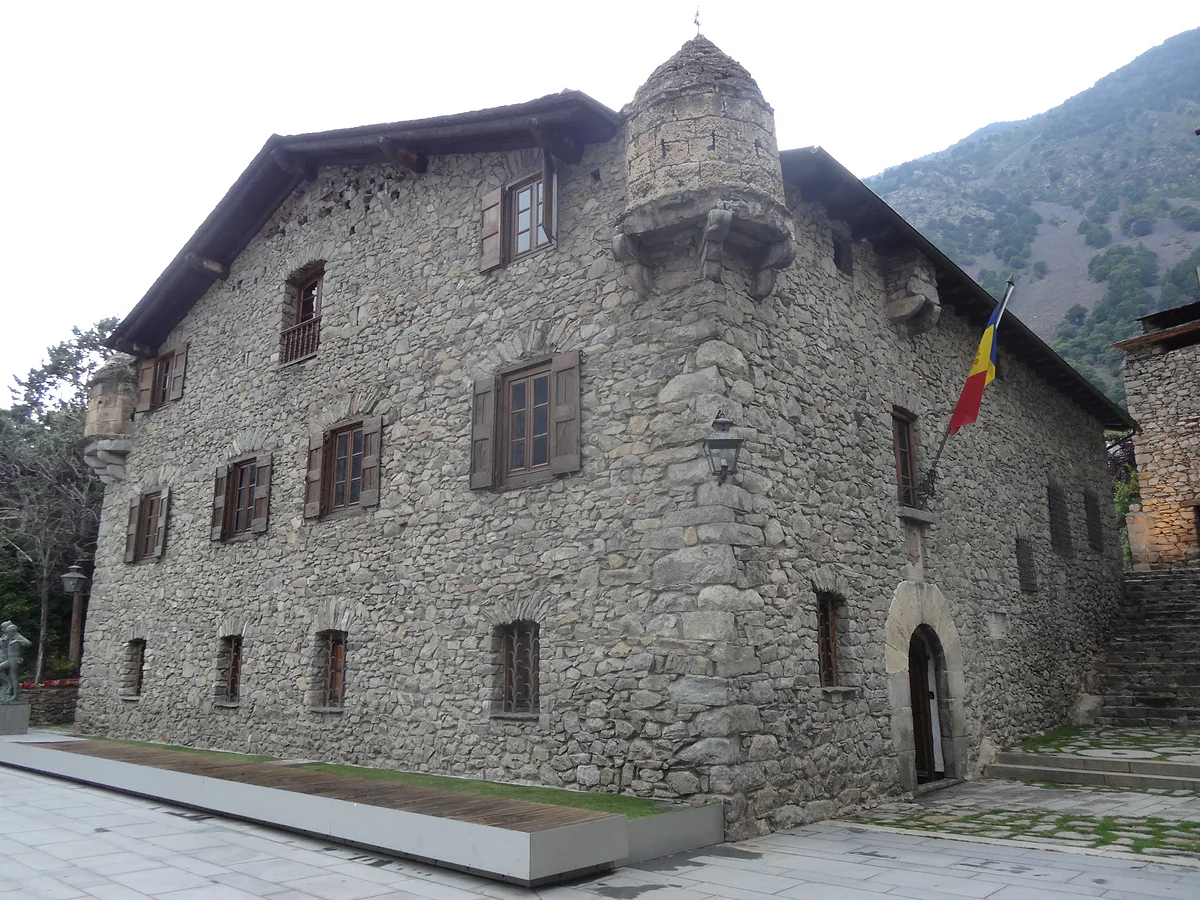
If someone in your group thinks Andorra is just a big ski resort with shops, I'd walk them round Casa de la Vall. Seeing the Cupboard of the Seven Keys and the room where the parliament sat for three centuries changes the conversation in ten minutes.

Before you go
What I would keep in mind
-
01 My tip
No visa, but it's not Schengen
You don't need a visa, but you arrive through France or Spain, so the Foreign Office says Schengen passport rules apply on the way. There's also a customs check when you leave.
Andorra entry requirements -
02 Money
Its own euros since 2014
Andorra has used the euro since 2002 and, after a 2011 monetary agreement with the EU, has minted its own euro coins since 2014. The €1 coin shows Casa de la Vall.
Andorra's currency -
03 Most beautiful
A parliament with roots in 1419
The General Council grew from the Consell de la Terra of 1419. The tourist board calls it one of the oldest, smallest and most continuous parliaments in Europe, with 28 members.
Andorra's government
What I would book
It’s a question plenty of British skiers ask on the transfer coach. Andorra speaks Catalan, sits next door to Spain, uses the euro and is best known for its shops and slopes, so it can feel like one more Pyrenean resort town. It isn’t. It’s a state, with a constitution, a parliament, a government and a seat at the UN, and with two heads of state, one of them a bishop. Here’s how that works.
Yes, Andorra is a country, and it has the paperwork
The clearest marker is 1993. On 14 March that year the constitution was approved, according to the Spanish foreign ministry, and Andorra joined the UN, which the tourist board calls its official international recognition. Until then it ran, in the ministry’s words, on forms typical of a feudal system with elements of direct democracy. The constitution didn’t create the country, it wrote it down.
Today Andorra is a member of the UN, the Council of Europe, the OSCE, the Francophonie and the Ibero-American Summits. It has a parliament, the General Council, with 28 members elected every four years, and a government led by Xavier Espot. Voters are due back at the polls in spring 2027. How the pieces fit together is in Andorra’s political system.
Why is it called a principality?
Because of the Pareatges of 1278 and 1288. According to the tourist board, those two agreements, signed by Count Roger Bernat III of Foix and Bishop Pere d’Urg of Urgell, created a joint sovereignty over the valleys, and that’s when the Principality was born. The count’s share ended up with the French kings and is now held by the President of the Republic; the bishop’s has never changed hands.
Hence the two heads of state Andorra keeps to this day, who represent the people jointly and indivisibly. As of September 2026 they are Emmanuel Macron, whose term as French president ends in May 2027, and the Bishop of Urgell, Josep-Lluís Serrano i Pentinat, co-prince since 31 May 2025. Who they are and what they do is in the co-princes of Andorra.
Is Andorra part of Spain or France?
Neither, and that’s the one answer here with no grey areas. Andorra borders Catalonia, shares Catalan with it as its only official language, and has 21,197 Spanish residents according to the statistics department’s August 2026 figures. But it isn’t part of the Spanish state. Nor is it French, however much the French president’s role might suggest otherwise.
What does bind it to its neighbours are specific agreements, a customs union with what was then the European Economic Community from 28 June 1990 and a monetary agreement with the EU from 2011. That’s why it uses the euro without being a member. The full relationship with Brussels, including an association agreement awaiting a referendum, is in is Andorra in the EU.
The clues you’ll notice as a visitor
You can tell it’s another country in small ways. The dialling code is +376. It has minted its own euro coins since 2014, in four designs, and the €1 coin shows Casa de la Vall. There’s no national postal service, so the French and Spanish post offices, La Poste and Correos, run side by side, both issuing Andorran stamps. And there’s a customs check when you leave for Spain or France, with per-person allowances.
For British visitors, another clue matters more. The Foreign Office is clear that the GHIC and EHIC aren’t valid here, which is exactly what you’d expect of a country outside the EU. Take out proper travel insurance.
My favourite proof, though, is this one. The tourist board says the country has never kept armed forces or a ministry of defence. When an emergency demanded it, the sometent was summoned, drawing on every head of household between 21 and 60. You’d struggle to find another European country with a story like that.
More than a thousand years of paperwork
The story starts with a legend, Charlemagne founding Andorra in 805 in thanks for help against the Saracens. The tourist board labels it a legend, and that’s how to treat it. The first reliable document is the act consecrating Santa Maria d’Urgell cathedral, from the mid-9th century, which already names the parishes.
Then come the Pareatges, the Consell de la Terra of 1419 and, in 1702, the purchase of Casa de la Vall, where the parliament met until 2011. In 1978 the seventh parish, Escaldes-Engordany, was created. Every date, in order, is in the history of Andorra, and the house that sums it all up is Casa de la Vall. For everything else, from skiing to getting there without an airport, carry on with the Andorra travel guide. Its only official language is Catalan, which I cover in what language they speak in Andorra.
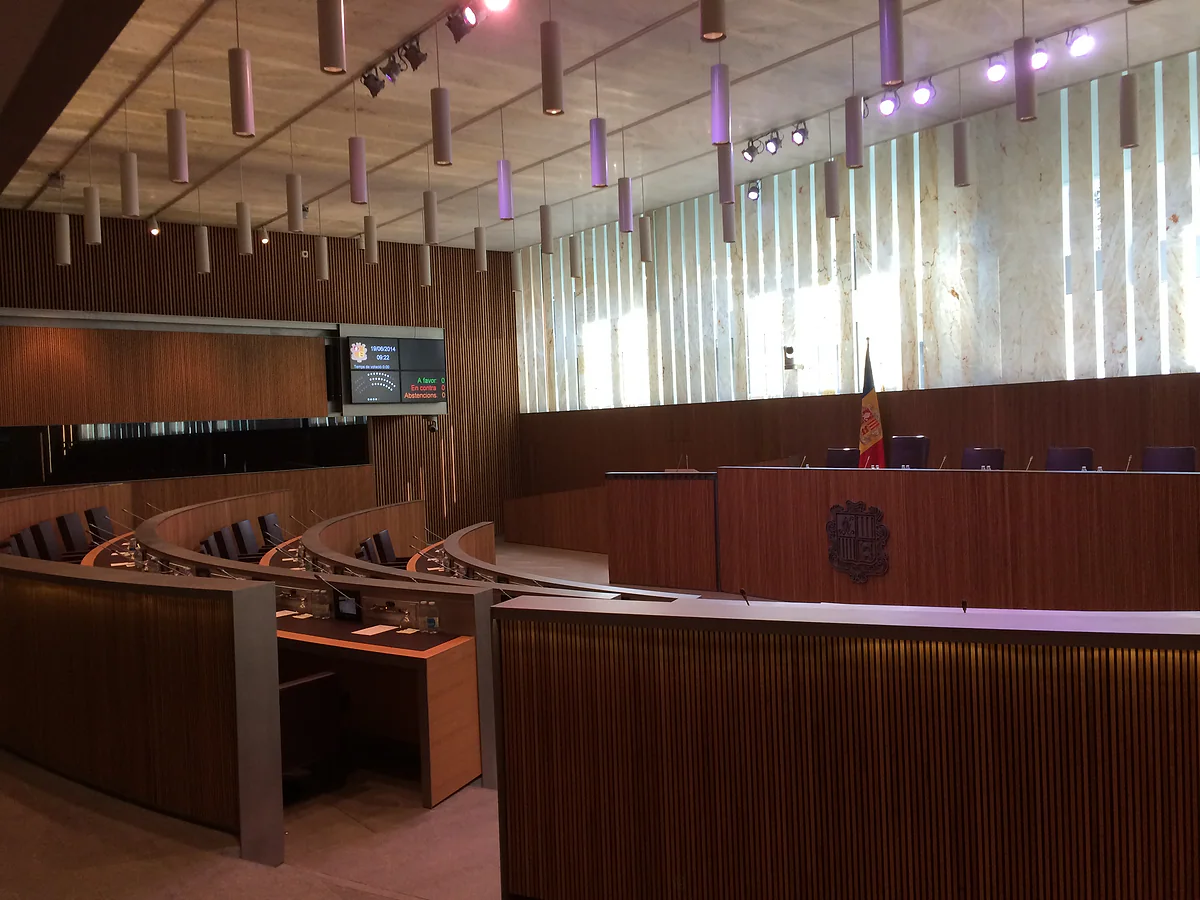
The chamber of the Consell General, Andorra's parliament, with wooden benches and the national coat of arms
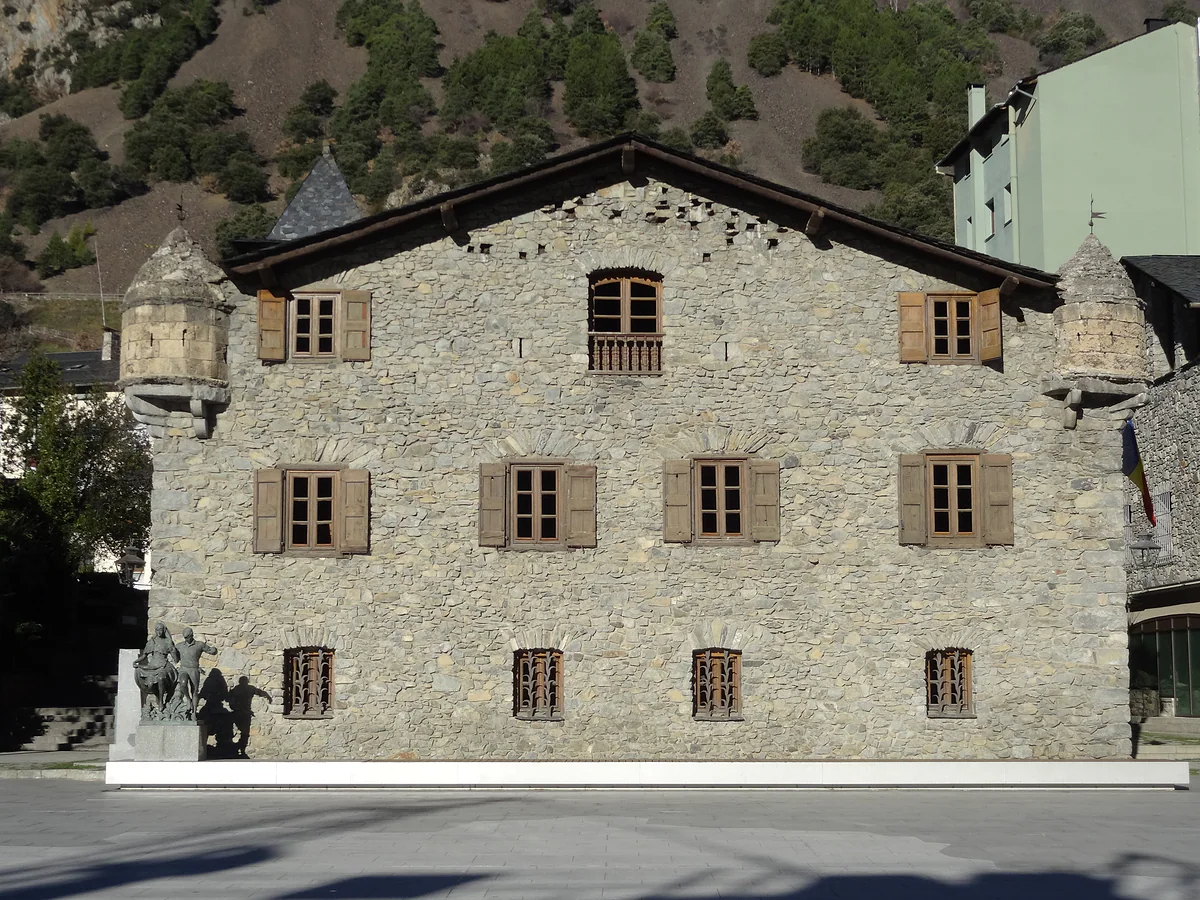
The main facade of Casa de la Vall, with corner turrets and wooden shutters on its stone walls
The dates that make Andorra a country
| Year | What happened | Source |
|---|---|---|
| 805 | Founded by Charlemagne, according to legend | Andorra tourist board |
| 9th century | First document, the consecration record of Urgell cathedral | Andorra tourist board |
| 1278 and 1288 | The Pareatges between the Bishop of Urgell and the Count of Foix | Andorra tourist board |
| 1419 | Consell de la Terra, forerunner of the General Council | Andorra tourist board |
| 1978 | The seventh parish, Escaldes-Engordany, is created | Andorra tourist board |
| 28-6-1990 | Customs union with the EEC | Spanish foreign ministry |
| 14-3-1993 | Constitution and UN membership | Spanish foreign ministry |
| 2011 | Monetary agreement with the EU | Spanish foreign ministry |
The date of 805 is a legend, and the tourist board presents it as such.
Test yourself
True or false?
0/4 Pick before you peek.
-
Andorra is a region of Spain.
See the answer
False. It's a sovereign state with its own constitution since 1993 and a seat at the UN. It borders Catalonia but isn't part of Spain.
-
The President of France is also one of Andorra's heads of state.
See the answer
True. The French president is one of the two co-princes; the other is the Bishop of Urgell.
-
Charlemagne founded Andorra in 805.
See the answer
False. That's a legend, and the tourist board tells it as one. The first document naming the parishes is the consecration record of Urgell cathedral, from the mid-9th century.
-
Andorra has never had an army.
See the answer
True. The tourist board says it has never had an army or a defence ministry. In exceptional cases the sometent militia is called up.
- Constitution and UN membership
- 1993
- Heads of state, the co-princes
- 2
- Members of the General Council
- 28
- Consell de la Terra, root of the parliament
- 1419
0 of 269 Andorra guides
Your next stamp
- Co-princes
- Political system
- Where is Andorra?
- Map
- History
- EU and Schengen
- Currency and payments
- Places to visit
- Things to do
- Most beautiful places
- Prettiest villages
- Andorra la Vella
- UNESCO World Heritage
- Escaldes-Engordany
- Parishes
- Casa de la Vall
- Margineda bridge
- Old town
- Santa Coloma church
- Towns and villages
- Population
- Size
- Mountains
- Language
- Andorra in one day
- Canillo
- Espai Columba
- Margineda rock shelter
- Sant Esteve church
- Soldeu
- Weekend break
- Andorra in 3 days
- El Tarter
- Andorra in 4 days
- Flag
- Ransol
- A week in Andorra
- Facts
- Prats
- El Forn
- Public holidays
- Sant Julià de Lòria
- L'Aldosa de Canillo
- Els Plans
- Bordes d'Envalira
- Entry requirements
- Prices and budget
- On a budget
- Sant Joan de Caselles
- Santa Coloma
- Ski holidays
- Tourist tax
- Mobile and roaming
- Sant Serni de Canillo
- Tourist information
- Healthcare
- Meritxell Sanctuary
- With a dog
- Packing list
- Safety
- How to get there
- Scams
- From Barcelona
- Bus from Barcelona
- Day trip from Barcelona
- From Madrid
- From Toulouse
- Encamp
- Flights
- La Margineda
- La Massana
- Roc del Quer viewpoint
- Romanesque churches
- Andorra-La Seu airport
- Canillo Tibetan bridge
- Museums in Andorra
- Pal
- Pas de la Casa
- Arinsal
- Driving
- Grau Roig
- Mon(t) Magic
- Nearest airports
- By train
- Erts
- Les Bons
- Palau de Gel
- Road conditions
- Motorcycle Museum
- Parking
- Sispony
- Vila
- Anyós
- Incles valley
- La Mosquera
- Petrol
- El Tremat
- Getting around
- Juclar lakes
- L'Aldosa (La Massana)
- Buses
- Els Cortals d'Encamp
- Sant Climent de Pal
- Bus station
- Sant Cristòfol d'Anyós
- Casa Rull
- Shopping
- Farga Rossell
- Sant Vicenç d'Enclar
- Santa Eulàlia d'Encamp
- What to buy
- Customs allowances
- La Massana Còmic
- Sant Romà de les Bons
- Car Museum
- Cigarettes
- Comapedrosa
- Electronics
- Alcohol
- Casa Cristo
- Clothes and sports shops
- Iron Route
- Coll d'Ordino
- Perfume
- Sacred Art Museum
- Shopping centres
- Funicamp
- Supermarkets
- Avinguda Meritxell
- Encamp Tibetan bridge
- Avinguda Carlemany (Vivand)
- Envalira pass
- Auvinyà
- Bici Lab Andorra
- Ordino
- Skiing
- With kids
- Zip lines
- Fontaneda
- For couples
- La Cortinada
- Ski pass
- Via ferratas
- Climbing
- Llorts
- Nagol
- Nightlife
- Ski season
- El Serrat
- Grandvalira
- Horse riding
- Juberri
- Aixovall
- Mountain biking
- Pal Arinsal
- Sornàs
- Aixirivall
- Ansalonga
- Ordino Arcalís
- Road cycling
- Bixessarri
- Naturland
- Segudet
- Arans
- Llumeneres
- Tobotronc
- Casa d'Areny-Plandolit
- Cross-country skiing
- Miniature Museum
- Skiing with kids
- Cal Pal
- Free walking tour
- Pessons lakes
- Sant Serni de Nagol
- Ski lessons
- Where to stay
- Canòlich Sanctuary
- Hotels in Andorra la Vella
- Sant Martí de la Cortinada
- Ski hire
- Hotels in Escaldes
- Juberri Gardens
- Llorts iron mine
- Webcams
- Hotels in Soldeu
- Snow report
- Sorteny valley
- Hotels in El Tarter
- Tristaina lakes
- Hotels in Canillo
- Night skiing
- Tristaina solar viewpoint
- Freeride
- Hotels in Encamp
- Hotels in Pas de la Casa
- Ski touring
- Hotels in La Massana
- Snowshoeing
- Hotels in Arinsal and Pal
- Snow activities
- Après-ski
- Engordany
- Hotels in Ordino
- Medieval bridges
- Nature parks
- Els Vilars
- Hotels in Sant Julià de Lòria
- Lakes
- Sant Romà dels Vilars
- Viewpoints
- Where to eat
- Caldea
- Restaurants in Andorra la Vella
- Borda restaurants
- Inúu
- Cheap hotels
- Food
- Hiking
- Spas and thermal baths
- Weather and climate
- Engolasters lake
- Pas de la Casa weather
- Spa hotels
- Trinxat
- Events
- Luxury hotels
- Sant Miquel d'Engolasters
- Ski resort weather
- Wine
- Best time to visit
- Family hotels
- Madriu valley
- All inclusive
- Estany de l'Illa
- In winter
- Apartments
- Coronallacs
- In spring
- Ski World Cup
- Christmas
- Hostels
- In summer
- Mountain huts
- Camping and rural stays
- Easy walks
- In autumn
- New Year
- Family walks
- Festes majors
- In January
- GR11 and other GRs
- In February
- National day
- Around Andorra
- GRP round Andorra
- In March
- Midsummer fire festival
- Carnival
- In April
- In May
- Travessa d'Encamp
- In June
- In July
- In August
- In September
- In October
- In November
- In December
Frequently asked questions
Is Andorra a country?
Yes. It's a sovereign parliamentary co-principality with a constitution dating from 14 March 1993, a UN member since that year and a member of the Council of Europe. It has its own parliament, government and euro coins.
Is Andorra part of Spain?
No. It borders Catalonia and shares the Catalan language, but it's an independent country. Nor is it part of France, even though the French president is one of its two co-princes.
Is Andorra a principality?
Yes. Its official name is the Principality of Andorra, and the Spanish foreign ministry describes it as a parliamentary co-principality. The principality dates back to the Pareatges of 1278 and 1288.
Who rules Andorra?
The government, led by Xavier Espot, answers to the 28-member General Council. The heads of state are the two co-princes, Emmanuel Macron and Bishop Josep-Lluís Serrano i Pentinat.
Is Andorra in the Commonwealth or the EU?
Neither. It isn't an EU or Schengen member, though it uses the euro and has had a customs union with the EU since 1990. It belongs to the UN, the Council of Europe and the OSCE.
Does Andorra have an army?
No. The tourist board says it has never had an army or a defence ministry. In exceptional circumstances the sometent is called up, a militia of heads of household aged 21 to 60.
By
Tourism graduate with a master’s in Tourism Management and Planning from the University of Málaga, who has travelled across Europe. He writes every guide from official sources and his own judgement.
Published on . Facts checked on .
Sources
Photos: Jordiferrer (CC BY-SA 3.0); Boigandorra (CC BY-SA 4.0); Don-vip (CC BY-SA 3.0), via Wikimedia Commons.