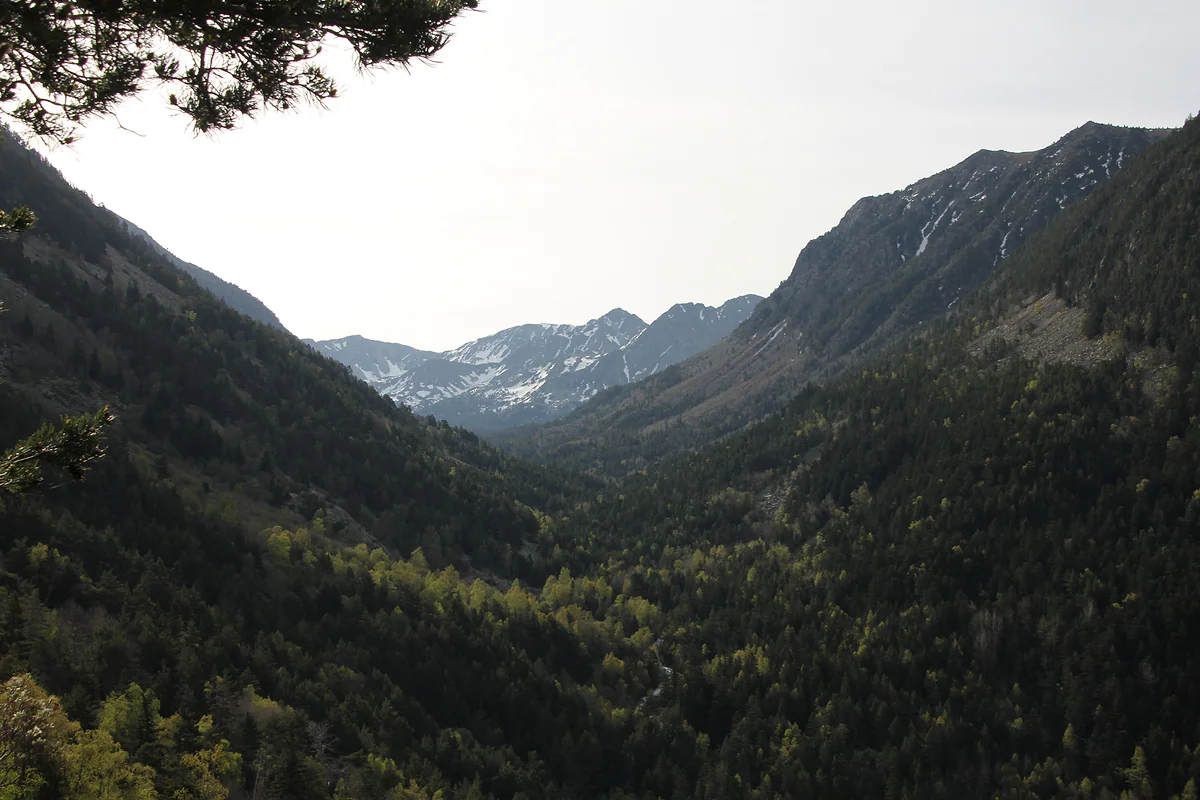
One World Heritage site, four traditions, one reserve
Andorra's UNESCO World Heritage, explained
Andorra has five UNESCO heritage listings and one Biosphere Reserve. Its only World Heritage site is the Madriu-Perafita-Claror valley, a cultural landscape inscribed in 2004. The other four are shared intangible traditions, including the midsummer fire festivals, listed in 2015. The Ordino valley has been a Biosphere Reserve since 2020.
In 30 seconds
Full read: 3 min
- Andorra has five UNESCO heritage listings and a Biosphere Reserve.
- Its only World Heritage site is the Madriu-Perafita-Claror valley, since 2004.
- The midsummer fire festivals have been intangible heritage since 2015.
- The Ordino valley has been a Biosphere Reserve since 2020.
If you only have time for one, make it the Madriu, and on foot. I wouldn't treat it as a photo stop but as a walk through how people lived on this mountain for centuries, with the barns and dry-stone walls as your guide.

Before you go
What I would keep in mind
-
01 Most beautiful
Not a single road in the Madriu
The tourist board puts it simply. No roads and no modern infrastructure, only stone-paved paths used for centuries by shepherds and traders. It covers nearly 10% of the country.
Madriu valley -
02 My tip
Start at Borda Gabriel
Since 1 October 2025 the Madriu visitor centre has been at Borda Gabriel, on Carrer de l'Obac in Escaldes-Engordany, and it's free. The usual way into the valley is via the Engolasters road, the CS-200.
Madriu valley -
03 Most beautiful
Fire on Midsummer's Eve
The fallas take place on the night of Sant Joan, around 23 June, in Andorra la Vella, Encamp and Sant Julià de Lòria among others. Young fallers run down from the hillside whirling burning torches.
Andorra fire festival
What I would book
- Places to stayBooking.com Escaldes, the gateway to the Madriu The usual path into the valley starts from the Engolasters road in the same parish, so you can set off at first light.
- Places to stayBooking.com Ordino, inside the Biosphere Reserve Staying in the valley UNESCO recognised in 2020 puts Sorteny, Tristaina and the stone villages a few minutes away.
Andorra has no Gothic cathedrals or walled towns for UNESCO to list. What it does have is rarer, a whole valley that has reached the 21st century without a road, and a handful of traditions still very much alive. The tourist board counts five UNESCO heritage listings and one Biosphere Reserve. Here’s what each one is, which you can visit and which you can only experience on one night of the year.
The Madriu valley, Andorra’s only World Heritage site
The Madriu-Perafita-Claror valley was inscribed as a World Heritage cultural landscape in 2004. No other place in Andorra holds that status, and according to the tourist board few valleys anywhere in the Pyrenees share it. The valley’s website puts it at 4,247 hectares, nearly 10% of Andorra, shared between Escaldes-Engordany, Encamp, Sant Julià de Lòria and Andorra la Vella.
What UNESCO recognised is, above all, the mark of human work. Barns, dry-stone walls, fields, woods and wetlands that evolved far from any town. The tourist board speaks of more than 700 years of use of the valley’s resources, and the remains of old forges are still there. The full valley, with its routes and its five huts, is in the Madriu valley.
How do you visit the Madriu?
On foot. It runs 12 km end to end, rises 1,855 m and tops out at the Portelleta peak, 2,905 m. Most people walk in from the CS-200, the road up to Engolasters. Cars aren’t allowed inside the valley, as the official website makes plain. The only thing you can drive is a forestry track climbing from the Spanish border on the Sant Julià side to La Rabassa and Claror, outside the protected area, which the tourist board lists as paid access. The valley’s visitor centre moved to Borda Gabriel (Carrer de l’Obac, Escaldes-Engordany) in October 2025; it opens on weekdays and costs nothing.
For routes above 1,700 m, the official advice is to go in the mountain summer, from late June to late September. That’s when I’d go, and early in the day. If you fancy sleeping in the valley, mountain huts in Andorra explains which ones are staffed.
Four listings you don’t visit, you live
The other four are intangible. The best known are the fallas, which UNESCO added in 2015 as part of the summer solstice fire festivals of the Pyrenees. They take place on the night of Sant Joan, around 23 June, in Andorra la Vella, Encamp and Sant Julià de Lòria, among others. The fallers, usually young people from the village, run down from the hills swinging lit torches. There’s more in Andorra’s midsummer fire festival.
The other three are the bear festivals of the Pyrenees, transhumance and the art of dry-stone walling. The tourist board includes them on its list without giving the year of each inscription, and UNESCO’s website wouldn’t load for me, so I don’t give dates I haven’t checked. You can, though, see the dry-stone craft for yourself in the walls of the Madriu.
The Ordino valley, a Biosphere Reserve
In 2020 UNESCO named the Ordino valley a Biosphere Reserve, and in 2022 it joined the World Network of Mountain Biosphere Reserves. The tourist board says Ordino is the parish that has best preserved its traditional landscape, with Scots pine forest, alpine pasture, wetlands and glacial lakes, and wildlife such as capercaillie, chamois and golden eagles. To me it’s the best place in Andorra to see village and mountain fit together. The parish is covered in Ordino.
Is another World Heritage site on the way?
A bid is under way on the material evidence of how the Andorran state was built in the Pyrenees, taking in several Romanesque churches, according to the tourist board. None of the sources I’ve read gives a decision date, so I won’t present it as a done deal. Meanwhile, nearly all those churches are free to visit, and you’ll find them in Romanesque churches in Andorra.
How I’d fit it all in
A day for the Madriu, unhurried and with plenty of water. An afternoon in Ordino, between Sorteny and La Cortinada. And if your trip falls at the end of June, a night of fallas in Andorra la Vella or Sant Julià. That way you’ll have seen what UNESCO set out to protect here, a way of living in the mountains that you can still read in the landscape.
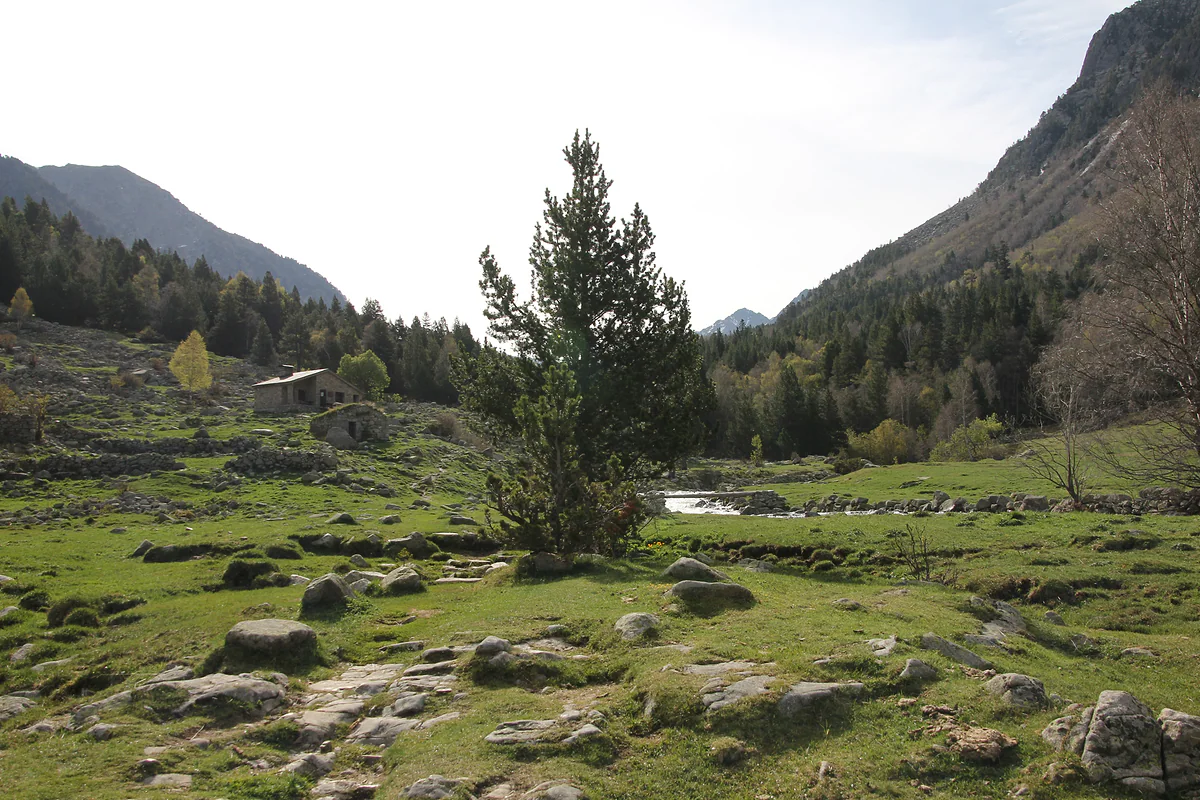
A boulder-strewn meadow with a mountain pine and a stone barn in the Madriu valley, beside the river
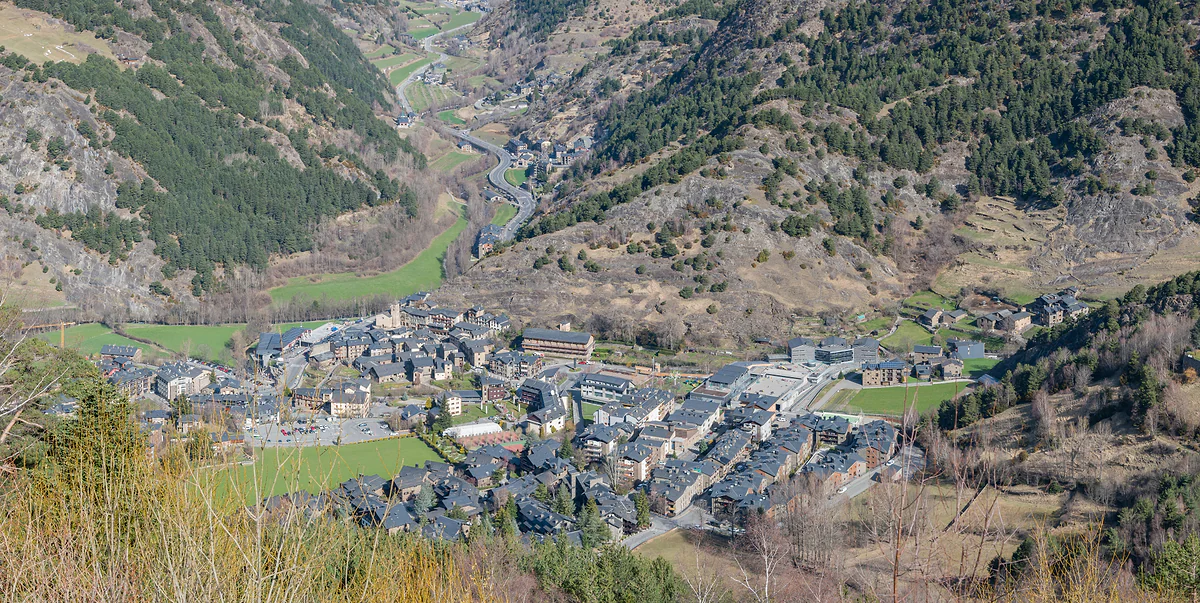
Ordino on the valley floor, with stone and slate houses, meadows and the road heading north
Andorra's UNESCO listings
| Listing | Type | Year | Where |
|---|---|---|---|
| Madriu-Perafita-Claror valley | World Heritage, cultural landscape | 2004 | Escaldes-Engordany, Encamp, Sant Julià and Andorra la Vella |
| Summer solstice fire festivals (fallas) | Intangible heritage, shared | 2015 | Andorra la Vella, Encamp, Sant Julià de Lòria and others |
| Bear festivals of the Pyrenees | Intangible heritage | Not given in the source | Pyrenees |
| Transhumance | Intangible heritage | Not given in the source | Andorra |
| Art of dry-stone walling | Intangible heritage | Not given in the source | Andorra |
| Ordino valley | Biosphere Reserve | 2020 | Ordino |
List from the Andorra tourist board, checked on 28-09-2026. UNESCO's own website couldn't be read, so I don't give inscription years the Andorran source leaves out.
The Madriu valley in figures
| Fact | Figure |
|---|---|
| Area | 4,247 ha, nearly 10% of the country |
| Length | 12 km end to end |
| Height difference | 1,855 m |
| Highest point | Portelleta peak, 2,905 m |
| Mountain huts | Five |
| Lakes | 30, according to the valley's website |
Test yourself
True or false?
0/4 Pick before you peek.
-
Andorra has several World Heritage sites.
See the answer
False. Only one, the Madriu-Perafita-Claror valley, since 2004. Its other UNESCO listings are intangible heritage or the Ordino Biosphere Reserve.
-
The Madriu valley covers about a tenth of the country.
See the answer
True. It covers 4,247 hectares, and its official website says that's close to 10% of Andorra's area.
-
Andorra's fire festivals are held in the spring.
See the answer
False. They take place on the night of Sant Joan, around 23 June, as part of the Pyrenean summer solstice fire festivals.
-
You can drive to the far end of the Madriu valley.
See the answer
False. Its official website calls it a walkers' landscape where vehicle access is banned. On the Sant Julià side a forestry track reaches Claror, just short of the protected area, and you carry on on foot.
- Year the Madriu became a World Heritage site
- 2004
- Area of the Madriu valley
- 4,247 ha
- The fire festivals join the intangible list
- 2015
- Ordino becomes a Biosphere Reserve
- 2020
0 of 269 Andorra guides
Your next stamp
- Madriu valley
- Nature parks
- Ordino
- Places to visit
- Sorteny valley
- Andorra in 3 days
- Around Andorra
- Towns and villages
- Things to do
- Most beautiful places
- Prettiest villages
- Andorra la Vella
- Map
- Escaldes-Engordany
- Where is Andorra?
- Is Andorra a country?
- Parishes
- Casa de la Vall
- Margineda bridge
- Old town
- Santa Coloma church
- Population
- Size
- Mountains
- Language
- Andorra in one day
- Canillo
- Espai Columba
- History
- Margineda rock shelter
- Sant Esteve church
- Co-princes
- Soldeu
- Weekend break
- El Tarter
- Political system
- Andorra in 4 days
- Flag
- Ransol
- A week in Andorra
- Facts
- Prats
- El Forn
- Public holidays
- Sant Julià de Lòria
- Currency and payments
- L'Aldosa de Canillo
- Els Plans
- EU and Schengen
- Bordes d'Envalira
- Entry requirements
- Prices and budget
- On a budget
- Sant Joan de Caselles
- Santa Coloma
- Ski holidays
- Tourist tax
- Mobile and roaming
- Sant Serni de Canillo
- Tourist information
- Healthcare
- Meritxell Sanctuary
- With a dog
- Packing list
- Safety
- How to get there
- Scams
- From Barcelona
- Bus from Barcelona
- Day trip from Barcelona
- From Madrid
- From Toulouse
- Encamp
- Flights
- La Margineda
- La Massana
- Roc del Quer viewpoint
- Romanesque churches
- Andorra-La Seu airport
- Canillo Tibetan bridge
- Museums in Andorra
- Pal
- Pas de la Casa
- Arinsal
- Driving
- Grau Roig
- Mon(t) Magic
- Nearest airports
- By train
- Erts
- Les Bons
- Palau de Gel
- Road conditions
- Motorcycle Museum
- Parking
- Sispony
- Vila
- Anyós
- Incles valley
- La Mosquera
- Petrol
- El Tremat
- Getting around
- Juclar lakes
- L'Aldosa (La Massana)
- Buses
- Els Cortals d'Encamp
- Sant Climent de Pal
- Bus station
- Sant Cristòfol d'Anyós
- Casa Rull
- Shopping
- Farga Rossell
- Sant Vicenç d'Enclar
- Santa Eulàlia d'Encamp
- What to buy
- Customs allowances
- La Massana Còmic
- Sant Romà de les Bons
- Car Museum
- Cigarettes
- Comapedrosa
- Electronics
- Alcohol
- Casa Cristo
- Clothes and sports shops
- Iron Route
- Coll d'Ordino
- Perfume
- Sacred Art Museum
- Shopping centres
- Funicamp
- Supermarkets
- Avinguda Meritxell
- Encamp Tibetan bridge
- Avinguda Carlemany (Vivand)
- Envalira pass
- Auvinyà
- Bici Lab Andorra
- Skiing
- With kids
- Zip lines
- Fontaneda
- For couples
- La Cortinada
- Ski pass
- Via ferratas
- Climbing
- Llorts
- Nagol
- Nightlife
- Ski season
- El Serrat
- Grandvalira
- Horse riding
- Juberri
- Aixovall
- Mountain biking
- Pal Arinsal
- Sornàs
- Aixirivall
- Ansalonga
- Ordino Arcalís
- Road cycling
- Bixessarri
- Naturland
- Segudet
- Arans
- Llumeneres
- Tobotronc
- Casa d'Areny-Plandolit
- Cross-country skiing
- Miniature Museum
- Skiing with kids
- Cal Pal
- Free walking tour
- Pessons lakes
- Sant Serni de Nagol
- Ski lessons
- Where to stay
- Canòlich Sanctuary
- Hotels in Andorra la Vella
- Sant Martí de la Cortinada
- Ski hire
- Hotels in Escaldes
- Juberri Gardens
- Llorts iron mine
- Webcams
- Hotels in Soldeu
- Snow report
- Hotels in El Tarter
- Tristaina lakes
- Hotels in Canillo
- Night skiing
- Tristaina solar viewpoint
- Freeride
- Hotels in Encamp
- Hotels in Pas de la Casa
- Ski touring
- Hotels in La Massana
- Snowshoeing
- Hotels in Arinsal and Pal
- Snow activities
- Après-ski
- Engordany
- Hotels in Ordino
- Medieval bridges
- Els Vilars
- Hotels in Sant Julià de Lòria
- Lakes
- Sant Romà dels Vilars
- Viewpoints
- Where to eat
- Caldea
- Restaurants in Andorra la Vella
- Borda restaurants
- Inúu
- Cheap hotels
- Food
- Hiking
- Spas and thermal baths
- Weather and climate
- Engolasters lake
- Pas de la Casa weather
- Spa hotels
- Trinxat
- Events
- Luxury hotels
- Sant Miquel d'Engolasters
- Ski resort weather
- Wine
- Best time to visit
- Family hotels
- All inclusive
- Estany de l'Illa
- In winter
- Apartments
- Coronallacs
- In spring
- Ski World Cup
- Christmas
- Hostels
- In summer
- Mountain huts
- Camping and rural stays
- Easy walks
- In autumn
- New Year
- Family walks
- Festes majors
- In January
- GR11 and other GRs
- In February
- National day
- GRP round Andorra
- In March
- Midsummer fire festival
- Carnival
- In April
- In May
- Travessa d'Encamp
- In June
- In July
- In August
- In September
- In October
- In November
- In December
Frequently asked questions
How many UNESCO sites does Andorra have?
One World Heritage site, the Madriu-Perafita-Claror valley, inscribed in 2004. The tourist board counts five UNESCO heritage listings in all, the other four being intangible traditions, plus the Ordino Biosphere Reserve.
Why is the Madriu valley a World Heritage site?
Because it preserves a high-mountain cultural landscape shaped by centuries of farming and herding, with stone barns, dry-stone walls, fields and cobbled paths, and no roads or modern infrastructure.
When is the Andorra fire festival?
On the night of Sant Joan, around 23 June. It's held in Andorra la Vella, Encamp and Sant Julià de Lòria among other places, and UNESCO recognised it in 2015 as part of the Pyrenean summer solstice fire festivals.
How big is the Madriu valley?
4,247 hectares, close to 10% of Andorra, according to its official website. It spreads over Escaldes-Engordany, Encamp, Sant Julià de Lòria and Andorra la Vella.
What is the Ordino Biosphere Reserve?
The Ordino valley, recognised by UNESCO in 2020 for balancing development with conservation. It has Scots pine forest, alpine pasture and glacial lakes, home to capercaillie, chamois and golden eagles.
By
Tourism graduate with a master’s in Tourism Management and Planning from the University of Málaga, who has travelled across Europe. He writes every guide from official sources and his own judgement.
Published on . Updated on . Facts checked on .
Sources
Photos: Ferran Llorens (CC BY-SA 2.0); Ferran Llorens (CC BY-SA 2.0); Krzysztof Golik (CC BY-SA 4.0), via Wikimedia Commons.