Free entry in the old town
Sant Esteve, the capital's Romanesque parish church
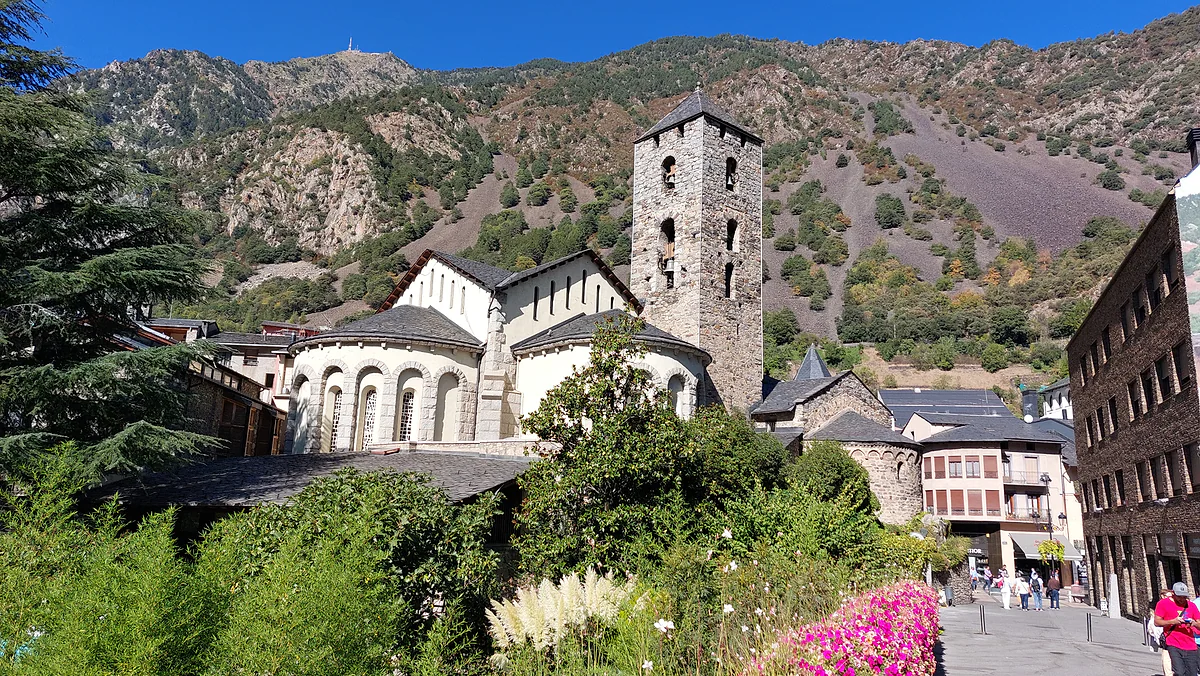
Sant Esteve is the parish church of Andorra la Vella, Romanesque in origin (12th century) and heavily reworked in the 20th. Its semicircular apse is the largest in the Principality, according to the official tourist board, and entry is free. Its Romanesque murals are now in Barcelona's Museu Nacional d'Art de Catalunya, in private hands and, two fragments, at Espai Columba.
In 30 seconds
Full read: 3 min
- Sant Esteve is Andorra la Vella's parish church, Romanesque in origin (12th century) and remodelled in the 20th.
- Its semicircular apse is the largest in the Principality and keeps its Lombard decoration.
- Entry is free, according to the official tourist board.
- Its Romanesque murals are in Barcelona's MNAC, in private collections and, two fragments, at Espai Columba.
I'd look at it from outside first. Walk round the apse, which is where the Romanesque survives, then go in to find the painted beam. If the murals leave you curious, the two that came home are at Espai Columba.

Before you go
What I would keep in mind
-
01 Most beautiful
Walk round the apse before going in
The semicircular apse keeps its original Lombard decoration outside and is the largest in the Principality. It's the most Romanesque part of the building, and you can see it from the street.
-
02 To save money
One of the capital's free sights
The tourist board lists Sant Esteve as free to enter. Add a stroll round the Barri Antic and the square outside Casa de la Vall and your morning costs nothing.
Andorra la Vella old town -
03 My tip
Its murals are on show in Santa Coloma
Two fragments from the apse, The Kiss of Judas and The Flagellation of Christ, hang in Espai Columba. The €7 ticket also gets you into Santa Coloma church.
Espai Columba
What I would book
Sant Esteve is the church everyone walks past and hardly anyone looks at properly. It stands in the middle of the Barri Antic, a few steps from Casa de la Vall, and it has two things going for it. The largest Romanesque apse in the country, and the story of murals that ended up split between Barcelona and private owners. Here’s what to look for, and where to find the pieces that are missing.
A Romanesque church with 20th-century touches
The official listing dates it to the 12th century, squarely Romanesque, with major changes in the 20th. You can see the mix straight away, so don’t expect an untouched mountain chapel of the kind you’ll find up the Ordino or Canillo valleys. This is a town church that has grown along with the capital.
The restoration that shaped it most came in 1940, by Josep Puig i Cadafalch, the Catalan modernista architect. According to the tourist board, he concentrated on the bell tower and on the side entrance used today. I find that a nice twist. One of the big names of Catalan modernisme ended up working on the parish church of a small mountain capital.
Start with the apse, outside
This is where I’d begin, before you set foot inside. The semicircular apse is, according to the official listing, the largest in the whole Principality, and it still has its original Lombard decoration. Walk slowly round it. Next to it are the bell tower and tower from the Romanesque period, the oldest parts you can see.
If you’ve visited other Romanesque churches in Andorra, you’ll notice the scale. Village churches tend to be humbler. This is the capital’s, and the apse shows it. I’ve mapped out the rest in my guide to Romanesque churches in Andorra.
What’s left inside?
Inside, only one Romanesque piece survives, a polychrome timber beam. Look for it first, because it’s easy to miss. Everything else is later, including two Baroque altarpieces and the 18th-century Painting of the Souls.
Entry is free, according to the tourist board. museus.ad sets no visiting hours and simply refers to service times, so I’d go during the day and treat it as the working church it is, keeping clear of services. The same government page mentions free guided visits and warns that the building isn’t adapted for wheelchair users.
Where did Sant Esteve’s murals go?
This is the part of the story I like best. The apse was once covered in Romanesque wall paintings that are no longer there. Most are in Barcelona’s Museu Nacional d’Art de Catalunya, with fragments such as The Wedding at Cana, a winged bull and Christ before Pilate. Other pieces sit in two private collections.
Two fragments have come back to Andorra. The Kiss of Judas and the Flagellation scene, taken from low on the apse wall, now hang at Espai Columba in Santa Coloma. Officially they belong to the 1200 style, prized for their rare subject matter. If Romanesque art is your thing, that’s the reason to head down to Santa Coloma after Sant Esteve. A €7 ticket there also lets you into Santa Coloma church (government prices, 28-9-2026).
Church and parliament, side by side
What strikes me about this corner is how close everything is. Within a few metres you have the capital’s parish church and the house where the Consell General met for centuries, which also served as a court. For a country born of an agreement between a bishop and a count, church and parliament almost wall to wall makes sense. No listing says so, it’s just my own view, but I think it helps explain why the Barri Antic was the centre of everything for so long.
A practical tip if you’re searching online. There are other places called Sant Esteve in Catalonia that crowd the results, so add «Andorra la Vella» to avoid reading about the wrong village.
Fitting it into your day
Sant Esteve is on Plaça Bisbe Benlloch in the Andorra la Vella old town. I’d pair it with Casa de la Vall in the same morning. If you prefer a guide, the capital’s free walking tour listed by the tourist board stops here, and the parish audio trail, with an English version, costs €2 at the tourist office. For the rest of the day, see my guide to things to do in Andorra la Vella.
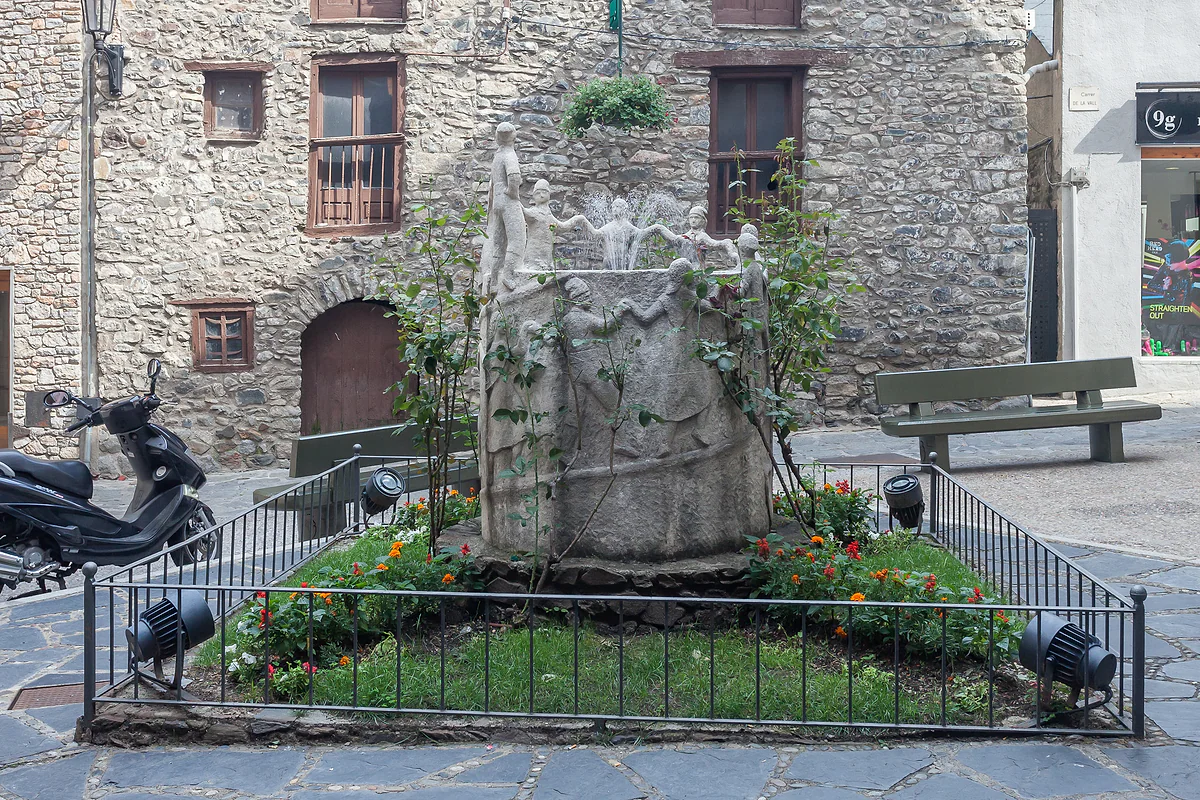
A sculpted fountain in the old quarter of Andorra la Vella, facing the stone houses of Carrer de la Vall
Where Sant Esteve's murals are today
| Fragment | Where to see it | Source |
|---|---|---|
| The Wedding at Cana | Museu Nacional d'Art de Catalunya, Barcelona | Andorra tourist board |
| A winged bull | Museu Nacional d'Art de Catalunya, Barcelona | Andorra tourist board |
| Christ before Pilate | Museu Nacional d'Art de Catalunya, Barcelona | Andorra tourist board |
| The Kiss of Judas | Espai Columba, Santa Coloma | Andorra tourist board |
| The Flagellation of Christ | Espai Columba, Santa Coloma | Andorra tourist board |
Other parts of the cycle are in two private collections, according to the church's official listing. Checked on 28-9-2026.
Test yourself
True or false?
0/3 Pick before you peek.
-
Sant Esteve has the largest Romanesque apse in Andorra.
See the answer
True. The church's official listing describes its semicircular apse as the largest in the whole Principality.
-
All of Sant Esteve's murals are still inside the church.
See the answer
False. They're split between Barcelona's Museu Nacional d'Art de Catalunya, two private collections and Espai Columba, which shows two fragments.
-
Puig i Cadafalch restored Sant Esteve in 1940.
See the answer
True. The modernista architect remodelled the bell tower and today's side entrance, according to the tourist board.
Map
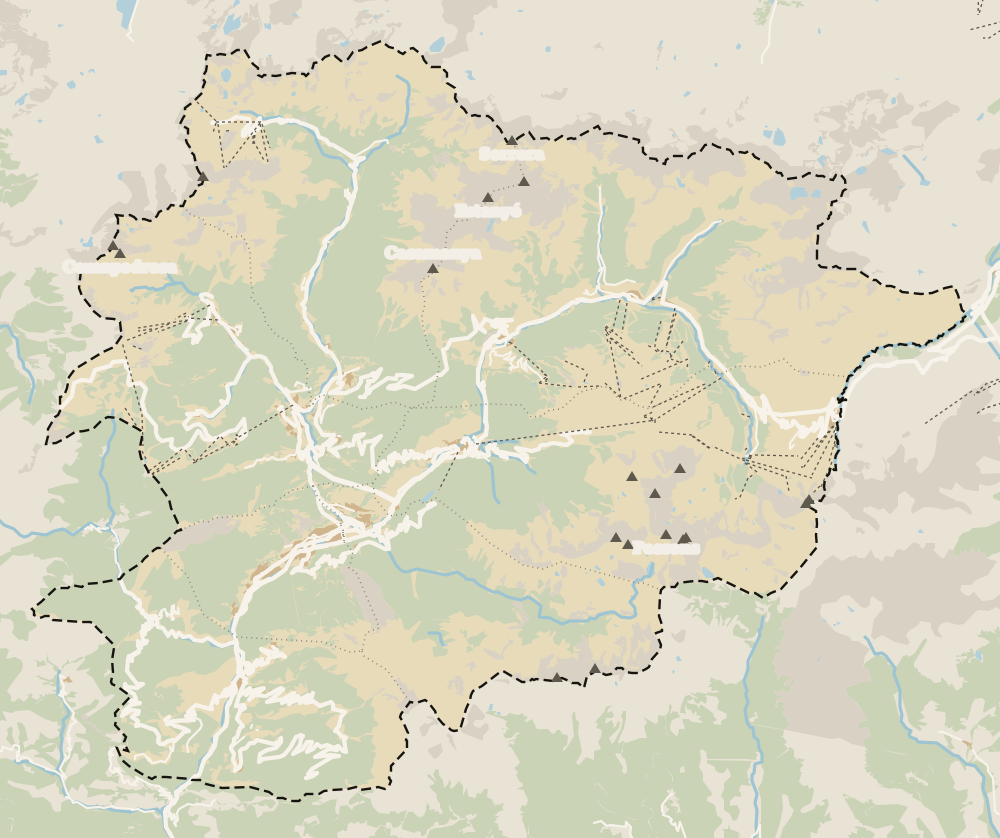
Where Sant Esteve church is
The dashed line is the border with France and Spain. The Valira valley runs down from Pas de la Casa to Sant Julià, with Ordino and La Massana in the northern valley. Every number opens its guide.
0 of 269 Andorra guides
Your next stamp
- Espai Columba
- Sant Martí de la Cortinada
- Juberri
- Sant Romà dels Vilars
- Romanesque churches
- Old town
- Sant Miquel d'Engolasters
- Sant Romà de les Bons
- Places to visit
- Things to do
- Most beautiful places
- Prettiest villages
- Andorra la Vella
- UNESCO World Heritage
- Map
- Escaldes-Engordany
- Where is Andorra?
- Is Andorra a country?
- Parishes
- Casa de la Vall
- Margineda bridge
- Santa Coloma church
- Towns and villages
- Population
- Size
- Mountains
- Language
- Andorra in one day
- Canillo
- History
- Margineda rock shelter
- Co-princes
- Soldeu
- Weekend break
- Andorra in 3 days
- El Tarter
- Political system
- Andorra in 4 days
- Flag
- Ransol
- A week in Andorra
- Facts
- Prats
- El Forn
- Public holidays
- Sant Julià de Lòria
- Currency and payments
- L'Aldosa de Canillo
- Els Plans
- EU and Schengen
- Bordes d'Envalira
- Entry requirements
- Prices and budget
- On a budget
- Sant Joan de Caselles
- Santa Coloma
- Ski holidays
- Tourist tax
- Mobile and roaming
- Sant Serni de Canillo
- Tourist information
- Healthcare
- Meritxell Sanctuary
- With a dog
- Packing list
- Safety
- How to get there
- Scams
- From Barcelona
- Bus from Barcelona
- Day trip from Barcelona
- From Madrid
- From Toulouse
- Encamp
- Flights
- La Margineda
- La Massana
- Roc del Quer viewpoint
- Andorra-La Seu airport
- Canillo Tibetan bridge
- Museums in Andorra
- Pal
- Pas de la Casa
- Arinsal
- Driving
- Grau Roig
- Mon(t) Magic
- Nearest airports
- By train
- Erts
- Les Bons
- Palau de Gel
- Road conditions
- Motorcycle Museum
- Parking
- Sispony
- Vila
- Anyós
- Incles valley
- La Mosquera
- Petrol
- El Tremat
- Getting around
- Juclar lakes
- L'Aldosa (La Massana)
- Buses
- Els Cortals d'Encamp
- Sant Climent de Pal
- Bus station
- Sant Cristòfol d'Anyós
- Casa Rull
- Shopping
- Farga Rossell
- Sant Vicenç d'Enclar
- Santa Eulàlia d'Encamp
- What to buy
- Customs allowances
- La Massana Còmic
- Car Museum
- Cigarettes
- Comapedrosa
- Electronics
- Alcohol
- Casa Cristo
- Clothes and sports shops
- Iron Route
- Coll d'Ordino
- Perfume
- Sacred Art Museum
- Shopping centres
- Funicamp
- Supermarkets
- Avinguda Meritxell
- Encamp Tibetan bridge
- Avinguda Carlemany (Vivand)
- Envalira pass
- Auvinyà
- Bici Lab Andorra
- Ordino
- Skiing
- With kids
- Zip lines
- Fontaneda
- For couples
- La Cortinada
- Ski pass
- Via ferratas
- Climbing
- Llorts
- Nagol
- Nightlife
- Ski season
- El Serrat
- Grandvalira
- Horse riding
- Aixovall
- Mountain biking
- Pal Arinsal
- Sornàs
- Aixirivall
- Ansalonga
- Ordino Arcalís
- Road cycling
- Bixessarri
- Naturland
- Segudet
- Arans
- Llumeneres
- Tobotronc
- Casa d'Areny-Plandolit
- Cross-country skiing
- Miniature Museum
- Skiing with kids
- Cal Pal
- Free walking tour
- Pessons lakes
- Sant Serni de Nagol
- Ski lessons
- Where to stay
- Canòlich Sanctuary
- Hotels in Andorra la Vella
- Ski hire
- Hotels in Escaldes
- Juberri Gardens
- Llorts iron mine
- Webcams
- Hotels in Soldeu
- Snow report
- Sorteny valley
- Hotels in El Tarter
- Tristaina lakes
- Hotels in Canillo
- Night skiing
- Tristaina solar viewpoint
- Freeride
- Hotels in Encamp
- Hotels in Pas de la Casa
- Ski touring
- Hotels in La Massana
- Snowshoeing
- Hotels in Arinsal and Pal
- Snow activities
- Après-ski
- Engordany
- Hotels in Ordino
- Medieval bridges
- Nature parks
- Els Vilars
- Hotels in Sant Julià de Lòria
- Lakes
- Viewpoints
- Where to eat
- Caldea
- Restaurants in Andorra la Vella
- Borda restaurants
- Inúu
- Cheap hotels
- Food
- Hiking
- Spas and thermal baths
- Weather and climate
- Engolasters lake
- Pas de la Casa weather
- Spa hotels
- Trinxat
- Events
- Luxury hotels
- Ski resort weather
- Wine
- Best time to visit
- Family hotels
- Madriu valley
- All inclusive
- Estany de l'Illa
- In winter
- Apartments
- Coronallacs
- In spring
- Ski World Cup
- Christmas
- Hostels
- In summer
- Mountain huts
- Camping and rural stays
- Easy walks
- In autumn
- New Year
- Family walks
- Festes majors
- In January
- GR11 and other GRs
- In February
- National day
- Around Andorra
- GRP round Andorra
- In March
- Midsummer fire festival
- Carnival
- In April
- In May
- Travessa d'Encamp
- In June
- In July
- In August
- In September
- In October
- In November
- In December
Frequently asked questions
Is Sant Esteve church free to visit?
Yes. The official tourist board lists it as free entry. museus.ad, the government's museums site, gives no visiting hours and refers you to service times, so I'd go during the day and steer clear of Mass.
How old is Sant Esteve church?
Romanesque in origin, from the 12th century, with major changes in the 20th. The apse with its Lombard decoration, the bell tower and the tower are what survive from the Romanesque period.
Where are the Sant Esteve murals now?
Scattered. Fragments such as The Wedding at Cana, a winged bull and Christ before Pilate are in Barcelona's Museu Nacional d'Art de Catalunya, others are in two private collections, and two, The Kiss of Judas and The Flagellation, are at Espai Columba in Santa Coloma.
Who restored Sant Esteve?
The Catalan modernista architect Josep Puig i Cadafalch, in 1940. His work focused on remodelling the bell tower and the side entrance used today.
Where is Sant Esteve church?
On Plaça Bisbe Benlloch in Andorra la Vella's old town, a few steps from Casa de la Vall. It's a short walk up from Plaça de la Rotonda.
By
Tourism graduate with a master’s in Tourism Management and Planning from the University of Málaga, who has travelled across Europe. He writes every guide from official sources and his own judgement.
Published on . Updated on . Facts checked on .
Sources
Photos: FrankAndProust (CC0); Luis Miguel Bugallo Sánchez (CC BY-SA 3.0), via Wikimedia Commons.