In a nutshell
The language of Slovenia is Slovenian, a South Slavic language that keeps the dual form and is written with 25 letters. Some 2.4 million people speak it as their mother tongue, 1.85 million of them in the country.
In mixed areas, Italian on the coast and Hungarian in Prekmurje are official too.
The fact file
- Official language
- Slovenian
- Co-official
- Italian (coast), Hungarian (Prekmurje)
- Alphabet
- 25 letters for 29 sounds
- Dialects
- More than 40
- Native speakers
- About 2.4 million
In 30 seconds
Full read: 2 min
- The official language is Slovenian, a South Slavic language.
- Italian and Hungarian are official in the mixed areas of the coast and Prekmurje.
- Slovenian keeps the dual form and has 25 letters.

Learning a few Slovenian words is the best-value prep for the trip. In a country of two million people, greeting and thanking someone in their language is a gesture I think gets appreciated twice over.
Slovenian in numbers
| Feature | Detail |
|---|---|
| Family | South Slavic |
| Alphabet | 25 letters for 29 sounds |
| Grammatical cases | 6 |
| Genders | 3 |
| Number | Singular, dual and plural |
| Dialects | More than 40 |
| Native speakers | About 2.4 million, 1.85 million in Slovenia |
| EU official language | Since accession in 2004 |
Government of Slovenia, official language, checked on 4 October 2026.
My key points
What the official sites leave out
-
01 My tip
The dual form
Slovenian keeps the dual, a grammatical form for talking about exactly two of something, alongside singular and plural, according to the government. Few European languages still use it.
Slovenian phrases for travellers -
02 Most beautiful
Towns with two names
On the coast you'll see Koper/Capodistria or Piran/Pirano, and in Prekmurje Lendava/Lendva. These are bilingual municipalities where Italian or Hungarian is official too.
municipalities of Slovenia -
03 Getting there
The first books, in 1550
Primož Trubar published the first printed books in Slovenian in 1550, a catechism and a primer, according to the government. Dalmatin's Bible and Bohorič's grammar followed in 1584.
Slovenia history
What language is spoken in Slovenia?
The government describes it as a South Slavic language, with six cases, three genders and an alphabet of 25 letters for 29 sounds. The striking thing is that it keeps the dual, a grammatical form for talking about exactly two of something, alongside singular and plural. It has more than 40 dialects, which is remarkable for a country of two million people, and it has been an official EU language since accession in 2004. Around 1.85 million of its native speakers live in Slovenia.
Italian and Hungarian are official too
Where communities are mixed, two more languages share official status, Italian along the coast and Hungarian over in Prekmurje. You’ll see it in municipality names, which SURS gives with a slash, Piran/Pirano by the sea or Lendava/Lendva near Hungary, for instance. Here I write the Slovenian name first and add the other in brackets on first mention, and I’d keep both in mind when reading a map. If you drive from Koper to Piran, an Italian-language map will call them Capodistria and Pirano. The full list is in the municipalities of Slovenia.
The history of Slovenian
Written Slovenian has a birthday. In 1550 Primož Trubar published the first printed books in the language, a catechism and a primer, and in 1584 came Jurij Dalmatin’s Bible and Adam Bohorič’s grammar. Those books were born of the Reformation, which is why 31 October, Reformation Day, is still a work-free day across the country. The national anthem is the seventh stanza of «Zdravljica», a poem by France Prešeren (1800-1849), and 8 February, Prešeren Day, is the national day of culture. How it all fits into the country’s story is in the history of Slovenia.
Once your dates are set, check which hotels are still free in Piran before prices climb.
Do people speak English in Slovenia?
There’s no official figure for how many people speak English or German, so I won’t give you a percentage. What’s verifiable is that the Tourist Board and the headline attractions, such as Postojna Cave or the castles at Bled and Ljubljana, all have English websites. I’d still take a few words of Slovenian for everything else, because it’s a courtesy that costs nothing.
The words I’d learn
Hello, thank you, please and goodbye. With those and a smile you’ll get by anywhere in the country, and once you know how they sound, place names with č, š and ž stop being intimidating. A short list of greetings and courtesies, each with its stressed syllable, is in Slovenian phrases for travellers. More of the country’s oddities, from Guinness records to old dates, are in facts about Slovenia.
If you would rather have a local show you round, book a guided tour in Piran and choose by the reviews.
Once your dates are set, check which hotels are still free in Piran before prices climb.
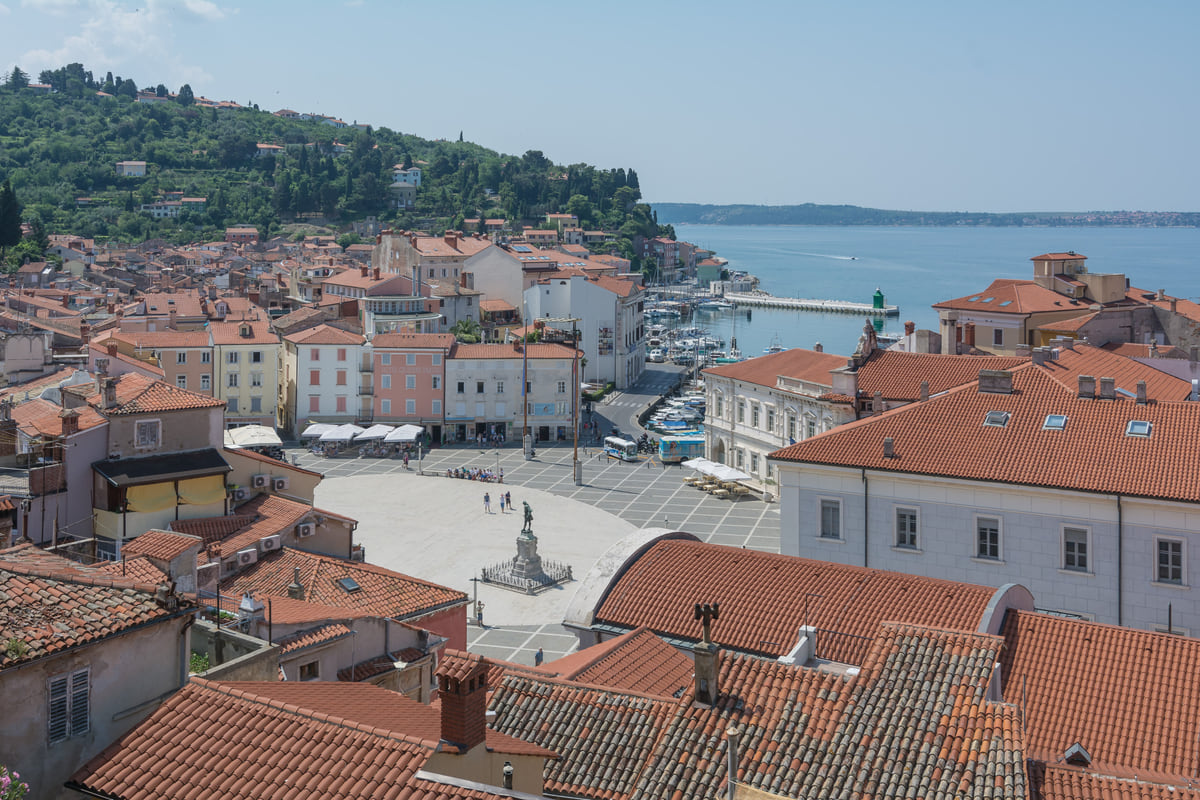
Tartini Square in Piran from above, with the statue in the middle, the harbour and the sea beyond
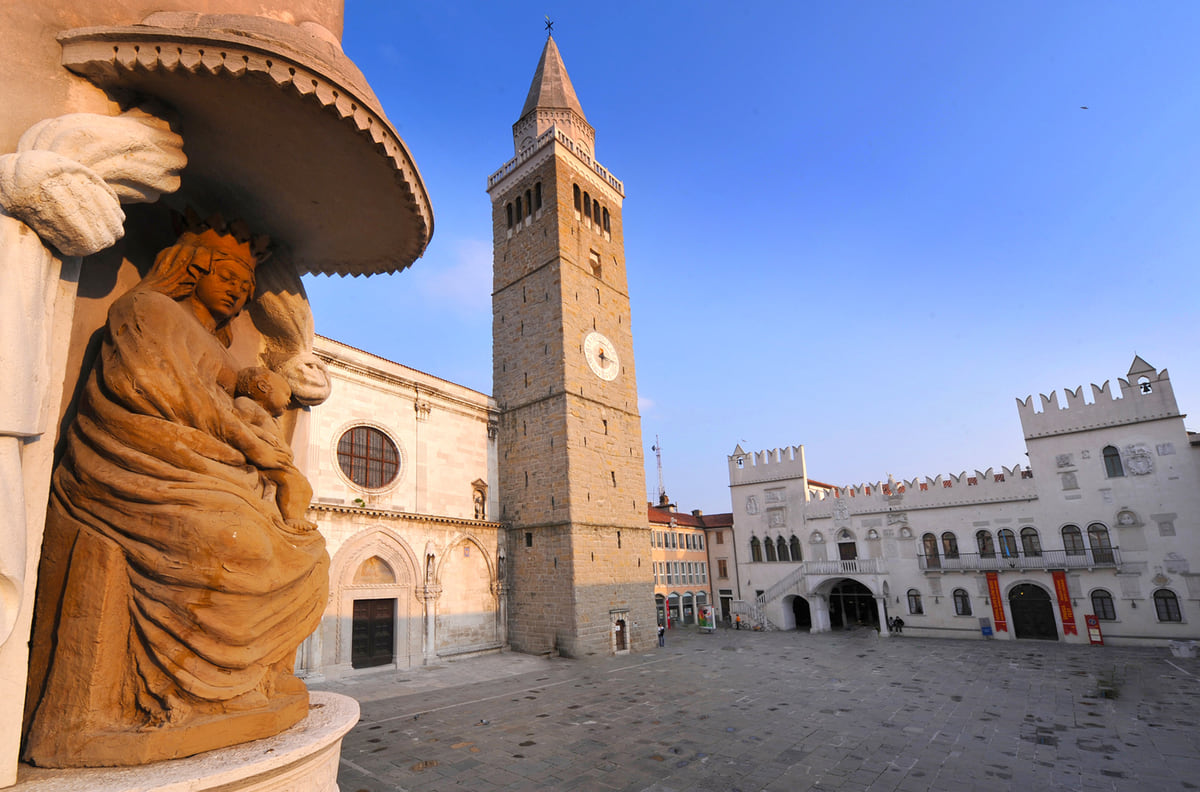
Tito Square in Koper with the cathedral bell tower and the Praetorian Palace, and a stone sculpture in the foreground
Test yourself
True or false?
0/3 Pick before you peek.
-
Hungarian is an official language in parts of Slovenia.
See the answer
True. It is in the ethnically mixed areas of Prekmurje, according to the government, just as Italian is on the coast.
-
The Slovenian alphabet has 26 letters, like English.
See the answer
False. It has 25 letters for 29 sounds, according to the Slovenian government.
-
Slovenian has a grammatical form for talking about two things.
See the answer
True. It's the dual, which Slovenian keeps alongside singular and plural.
- Letters in the Slovenian alphabet
- 25
- Grammatical cases
- 6
- Dialects
- 40+
- First printed books in Slovenian
- 1550
Frequently asked questions
What language do they speak in Slovenia?
Slovenian, the country's official language. In the ethnically mixed areas, Italian on the coast and Hungarian in Prekmurje are also official, according to the government.
Is Slovenian the same as Slovak?
No. They are the languages of two different countries, Slovenia and Slovakia. Slovenian is a South Slavic language, according to the Slovenian government, with its own 25-letter alphabet.
Do people speak English in Slovenia?
There's no official figure for how many people speak English, so I won't quote one. The Tourist Board and the big attractions all have English versions of their websites.
What languages are spoken on the Slovenian coast?
Slovenian and Italian, which is co-official in the bilingual municipalities of Koper, Izola, Piran and Ankaran. That's why signs and place names appear in both.
How many letters are in the Slovenian alphabet?
25 letters for 29 sounds, according to the Slovenian government. That's why you'll see letters such as č, š and ž in place names like Škofja Loka or Vršič.
How many people speak Slovenian?
About 2.4 million as a mother tongue, some 1.85 million of them in Slovenia, according to the government. It has been an official EU language since 2004.
0 of 425 Slovenia guides
Your next stamp
- Slovenia or Slovakia
- Facts
- Where is Slovenia
- Map
- Slovenian phrases
- Bogenšperk Castle
- Bogojina
- Debeli rtič
- Ig pile dwellings
- Jeruzalem
- Kolpa River
- Koper
- Lake Cerknica
- Lipica
- Ljubljana
- Ljubljana to Bled
- Mariborsko Pohorje
- Mount Snežnik
- Palace Portorož
- Park of Military History
- Plečnik House
- Postojna
- Postojna Cave
- Škocjan Caves
- Štanjel
- Tartini Square
- Trbovlje
- Županova jama
- Izola
- Kamnik
- Karst
- Ljubljana to Postojna
- Lovrenc Lakes
- Maribor
- Portorož
- Predjama Castle
- Things to do in Ljubljana
- Travel guide
- Vilenica Cave
- Zagorje ob Savi
- Celje
- Cerknica
- Domžale
- Hrastnik
- Ljubljana in a day
- Ljubljana to Piran
- Piran
- Slovenian Istria
- Strunjan
- Things to do
- Activities
- Ankaran
- Grosuplje
- Litija
- Ljubljana in two days
- Pivka
- Sečovlje salt pans
- Velenje
- Brežice Castle
- Getting around Ljubljana
- Ilirska Bistrica
- Mežica Mine
- Most beautiful places
- Novo mesto
- Sevnica Castle
- Terme Olimia
- Vrhnika
- Žiče Charterhouse
- Dolenjska
- Ig
- Prettiest villages
- Ptuj
- Sežana
- Divača
- Medvode
- Murska Sobota
- Posavje
- World Heritage
- Hrpelje-Kozina
- Logatec
- Mengeš
- Brezovica
- Komen
- Savinjska
- Bled
- Brežice
- Čatež ob Savi
- Celje Castle
- Coal Mining Museum
- Gorenjska
- Hotels in Piran
- Hrastovlje
- Karawanken Geopark
- Koroška
- Kostanjevica Cave
- Kostel Castle
- Krokar primeval forest
- Kurentovanje
- Lent
- Ljubljana Castle
- Ljubljana Cathedral
- Logar Valley
- Oldest vine in the world
- Olimje
- Otočec
- Regions
- Rimske Toplice
- Rinka Waterfall
- Rogla
- Sava River
- Slovenj Gradec
- Topolšica
- Velika Planina
- Goriška
- Krško
- Lake Bled
- Municipalities
- Podravje
- Prešeren Square
- Ravne na Koroškem
- Restaurants in Piran
- Škocjan Inlet
- Volčji Potok Arboretum
- Bled Island
- Cities
- Mežica
- Pomurje
- Sevnica
- Socerb Castle
- Bled Castle
- Coast and Karst
- Dravograd
- Kostanjevica na Krki
- Population
- Notranjska
- Ojstrica viewpoint
- Radlje ob Dravi
- Size
- Central Slovenia
- Mislinja
- Plečnik's Ljubljana
- Slovenska Bistrica
- Vila Bled
- Currency
- Grand Hotel Toplice
- Ormož
- Zasavje
- EU and Schengen
- Hotel Savica Garni
- Hotels in Bled
- Pohorje
- Haloze
- History
- Restaurants in Bled
- Flag and symbols
- Hoče-Slivnica
- Bizeljsko
- Bohinj
- Christmas in Ljubljana
- City Hotel Ljubljana
- Gorjanci
- Kranj
- Krka River
- Laško
- Moravske Toplice
- Ptuj Castle
- Public holidays
- Rajhenburg Castle
- Šentilj
- Slovenia beaches
- Šmartno pri Litiji
- Uršlja Gora
- Brdo Castle
- Independence Day
- Lake Bohinj
- Ljubljana Festival
- Radenci
- Rogaška Slatina
- Day trips from Ljubljana
- Jesenice
- Lendava
- Podčetrtek
- Savica waterfall
- Time zone
- Dobrna
- Ljubljana nightlife
- Ljutomer
- Nova Gorica
- Vogel
- Bohinjska Bistrica
- Gornja Radgona
- Ljubljana Old Town
- Slovenia and Croatia
- Solkan
- Zreče
- Grad
- Sabotin
- Slovenia, Italy and Austria
- Slovenske Konjice
- Stara Fužina
- Trnovo
- Goričko
- Holidays and tours
- Hotels in Bohinj
- Škofja Loka
- Vitanje
- Škofja Loka Castle
- Šoštanj
- Veržej
- Slovenia in 3 days
- Bela krajina
- Caves in Slovenia
- Črnomelj
- Dragon Bridge
- Gorje
- Hiking
- Hotels in Maribor
- Kozjansko Regional Park
- Kranjska Gora
- Lake Ptuj
- Ljubljana Marshes
- Slovenia in 5 days
- Vinarium Tower
- Where to stay in Ljubljana
- Žalec
- Metlika
- Slovenia castles
- Slovenia in a week
- Slovenian Mountain Trail
- Triple Bridge
- Vintgar Gorge
- Vršič Pass
- Where to eat in Ljubljana
- Best viewpoints in Slovenia
- Central Market
- Juliana Trail
- Lake Jasna
- Road trip
- Semič
- Žirovnica
- Kočevje
- Metelkova
- Motorhome
- Museums in Slovenia
- Naklo
- Soča rafting
- Tržič
- Zelenci
- Jezersko
- Kostel
- Lake Planšar
- Skiing
- Slovenia with kids
- Slovenian Alpine Museum
- Tivoli Park
- Best time to visit
- Cerklje na Gorenjskem
- Cycling
- Dolenjske Toplice
- Ljubljanica river
- Mojstrana
- Šenčur
- Krvavec
- National Gallery
- Parenzana
- Peričnik waterfall
- Šmarješke Toplice
- Weather
- National and University Library
- Paragliding
- Slovenia in winter
- Strmol Castle
- Trebnje
- Vrata valley
- Climbing
- Events
- Martuljek waterfalls
- Žale
- Fly fishing
- In January
- Ljubljana museums
- National Museum of Slovenia
- Rateče
- Bovec
- Festival Lent
- Golf
- Hotels in Ptuj
- In February
- Kamnik-Savinja Alps
- Nature parks
- Parking in Ljubljana
- Pekel Cave
- Planica
- Snežnik Castle
- Solčava
- Gornji Grad
- In March
- Kranjska Gora ski resort
- Lakes
- Trenta
- Ziplines
- Alpe Adria Trail
- Hotels in Kranjska Gora
- In April
- Kanin
- Nazarje
- Waterfalls
- In May
- Rivers
- Virje waterfall
- Vransko
- Hotels in Bovec
- In June
- Mountains
- Šentjur
- Dobra Vila Bovec
- In July
- Ljubljana Card
- Mozirje
- Spas
- In August
- Nebesa Chalets
- Rečica ob Savinji
- In September
- Kobarid
- Šmartno ob Paki
- In October
- Kobarid Museum
- Hiša Franko
- In November
- In December
- Radovljica
- Železniki
- In spring
- Museum of Apiculture
- Žiri
- In summer
- Kropa
- Tolmin
- Brezje
- In autumn
- Metaldays
- Tolmin Gorges
- Begunje
- Javorca church
- Slovenia in 10 days
- Most na Soči
- Two weeks in Slovenia
- Idrija
- Ljubljana Marathon
- How to get there
- Idrija mercury mine
- Wild Lake
- Cerkno
- Flights
- Laufarji
- Divje babe
- Franja Partisan Hospital
- Ljubljana Airport
- Ajdovščina
- Nearby airports
- Venice to Ljubljana
- Vipava
- Vipavski Križ
- Zagreb to Ljubljana
- Brda
- Trains to Slovenia
- Getting around
- Šmartno
- Dobrovo Castle
- Trains
- Buses
- Julian Alps
- Car hire
- Triglav National Park
- Driving
- Pokljuka
- Triglav Lakes
- Vignette
- Mount Triglav
- Taxis
- Distances
- Soča Valley
- Soča River
- Trieste to Ljubljana
- Kozjak Waterfall
- Vienna to Ljubljana
- Boka Waterfall
- Budapest to Ljubljana
- Ljubljana to Maribor
- Walk of Peace
- Bled to Bohinj
- Mangart
- Lake Krn
- Prices and budget
- Slovenia on a budget
- Vipava Valley
- Free things to do
- Otlica Natural Window
- Entry requirements
- Rihemberk Castle
- Customs
- Safety
- Scams
- Bears
- Healthcare
- Mobile and roaming
- Plugs
- Packing list
- What to buy
- Hotels
- Campsites
- Farm stays
- Mountain huts
- Food
- Bled cream cake
- Wine
- Potica
- Prekmurska gibanica
- Štruklji
- Carniolan sausage
- Idrija žlikrofi
- Beer
- Tipping

Questions about Slovenia? Write to me
I read every email. If a fact is wrong or missing, tell me and I will check it.
My email sergiolepone@gmail.com
By
Tourism graduate with a master’s in Tourism Management and Planning from the University of Málaga, who has travelled across Europe. He writes every guide from official sources and his own judgement.
Published on . Updated on . Facts checked on .
Sources
Some links in this guide are affiliate links: if you book through them, the site earns a commission at no extra cost to you. Affiliate disclosure
Photos: G-Cup (CC BY-SA 4.0); Isiwal (CC BY-SA 4.0); TICKoper (CC BY-SA 4.0), via Wikimedia Commons.