Food and drink
Slovenian wine, from Brda to Prekmurje

- Regions
- Primorska, Podravje and Posavje
- Districts
- 9
- Producers
- More than 2,500
Slovenian wine comes from three regions, Primorska, Podravje and Posavje, with nine districts and more than 2,500 producers, according to the Slovenian Tourist Board. There are 15,500 hectares of vines and 70% of the wine is white, with native grapes such as Rebula in Brda, Pinela and Zelen in Vipava, and Ranina, plus the light red cviček of Posavje.
The three regions and their wines
| Region | Districts | Typical wines |
|---|---|---|
| Primorska | Vipava, Brda, Karst, Slovenian Istria | Teran, Rebula, Malvazija, Refošk, Pinela |
| Podravje | Štajerska Slovenija, Prekmurje | Furmint, Welschriesling, Ranina, Traminer, Blaufränkisch |
| Posavje | Bizeljsko-Sremič, Dolenjska, Bela krajina | Cviček, Bizeljčan, Blaufränkisch |
Slovenian Tourist Board, «Wines of Slovenia», and Taste Slovenia, checked on 18 October 2026.
I'd choose one region and explore it slowly: for a first trip, Brda or the Vipava Valley, close to Ljubljana; heading east, Jeruzalem and the hills around Ptuj. And in November, for St Martin's Day, I'd be there for the new wine.
Is it worth it?
Yes
Yes. Slovenian wine is made by small producers in three very different regions, and Brda and the Vipava Valley are easy day trips from Ljubljana.
Who will enjoy it and who will not
Yes, if…
- Wine lovers keen on native grapes
- Anyone touring Brda, Vipava or Jeruzalem
- Visitors in November for St Martin's Day
Better not, if…
- Anyone looking for big-brand wine estates
- Travellers who won't leave Ljubljana
If you only read this
Full read: 2 min
- Three regions, Primorska, Podravje and Posavje, and nine districts.
- More than 2,500 producers and 70% white wine.
- Rebula, Teran, Malvazija, Furmint and Cviček, among others.
- In Maribor, a vine more than 400 years old.
My key points
What the official sites leave out
-
01 Most beautiful
Primorska, the most diverse
With four districts, Vipava, Brda, Karst and Istria, it's the region that produces most and wins most awards, according to the Tourist Board, with famous reds and orange wines.
Brda -
02 Getting there
Podravje, the largest
The biggest region, in the east, is split into Štajerska and Prekmurje. Welschriesling, Sauvignon, Furmint and the Radgona sparkling wines stand out.
Maribor -
03 Worth the splurge
Posavje and Cviček
Cviček blends at least four varieties, red and white, has a reddish colour and 8 to 9% alcohol, according to the Tourist Board.
farm stays in Slovenia -
04 My tip
The oldest vine
In Maribor's Lent district grows a Žametovka vine more than 400 years old, yielding 40 to 55 kg of grapes a year, used by the city for official gifts.
Primorska: Brda, Vipava and the Karst
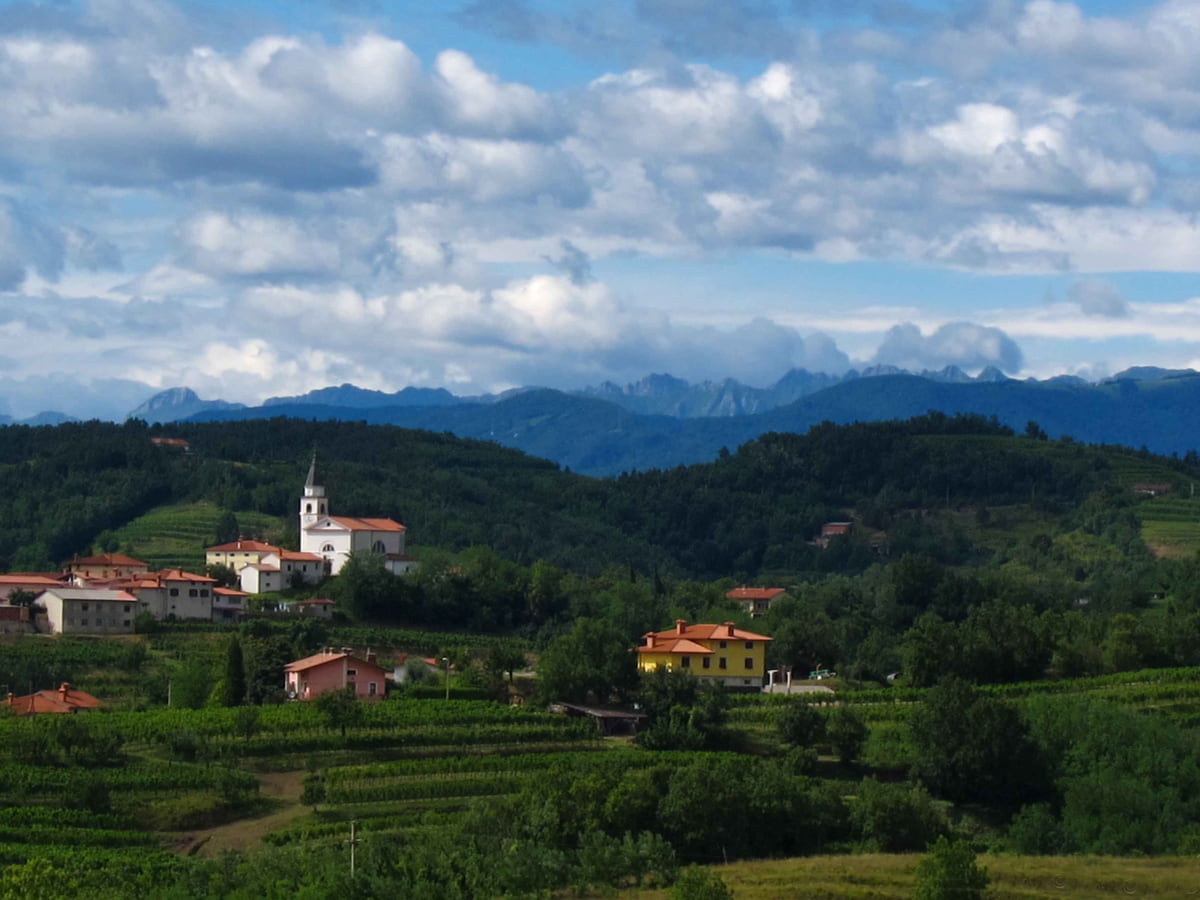
The most diverse region, with four districts. In Brda, Rebula is king among whites, alongside Merlot and Cabernet Sauvignon. The Vipava Valley, the region’s largest district, has the most native varieties, such as Pinela, Zelen and Klarnica. In the Karst, the star is Teran, deep-coloured from the red soil. And in Slovenian Istria, white Malvazija and red Refošk. According to the Tourist Board, Primorska produces the most wine and wins the most awards. Brda is covered in Brda.
Podravje: the whites of the east
The largest region, in the east, divided into Štajerska Slovenija, with more than 7,000 hectares, and Prekmurje. Whites dominate, Welschriesling, Sauvignon, Riesling, Chardonnay, Furmint and Yellow Muscat, and among reds, Blaufränkisch, Pinot Noir and Žametna Črnina. Radgona has 150 years of sparkling wine tradition, and Prekmurje is known for predicate wines and Ranina. Maribor is home to the world’s oldest vine, according to the Tourist Board, a Žametovka growing in Lent for over four centuries, and Ptuj has the country’s oldest wine cellar, with a 1917 vintage. It’s covered in Maribor.
Posavje and cviček
This is Cviček country, a light, reddish wine blending at least four varieties with 8 to 9% alcohol, carrying a geographical indication in Dolenjska. Bizeljsko-Sremič, between the Sava and Sotla rivers, is the land of repnice, cellars dug into the ground, and of Bizeljčan. Most charming are the zidanice, vineyard cottages you can sleep in; see farm stays in Slovenia.
Once your dates are set, check which hotels are still free in Brda before prices climb.
When to go: St Martin’s Day
St Martin’s Day in November is when the new wine is celebrated, and the Tourist Board lists wine festivals across the country throughout the year. If you’re buying to take home, check the UK’s personal allowances and duty rules before filling the car. And if beer is more your thing, the Savinja Valley has a map of its own, covered in Slovenian beer.
Slovenian wine in numbers
What to eat with these wines is in Slovenian food. Taste Slovenia gives the figures. There are 15,500 hectares of vineyards, roughly the size of Alsace and 0.2% of world production, and the average vineyard is just 0.32 hectares. There are no wine multinationals; even the largest producer, Klet Brda, is a cooperative of 400 farmers. About 70% of the wine is white. The Tourist Board counts more than 2,500 producers, 800,000 to 900,000 hectolitres a year and 52 grape varieties, while Taste Slovenia says 53. Most vineyards are on slopes, so hand-picking is the norm, and Taste Slovenia reckons consumption at about 42 litres per person a year.
If you would rather have a local show you round, book a guided tour in Brda and choose by the reviews.
Once your dates are set, check which hotels are still free in Brda before prices climb.
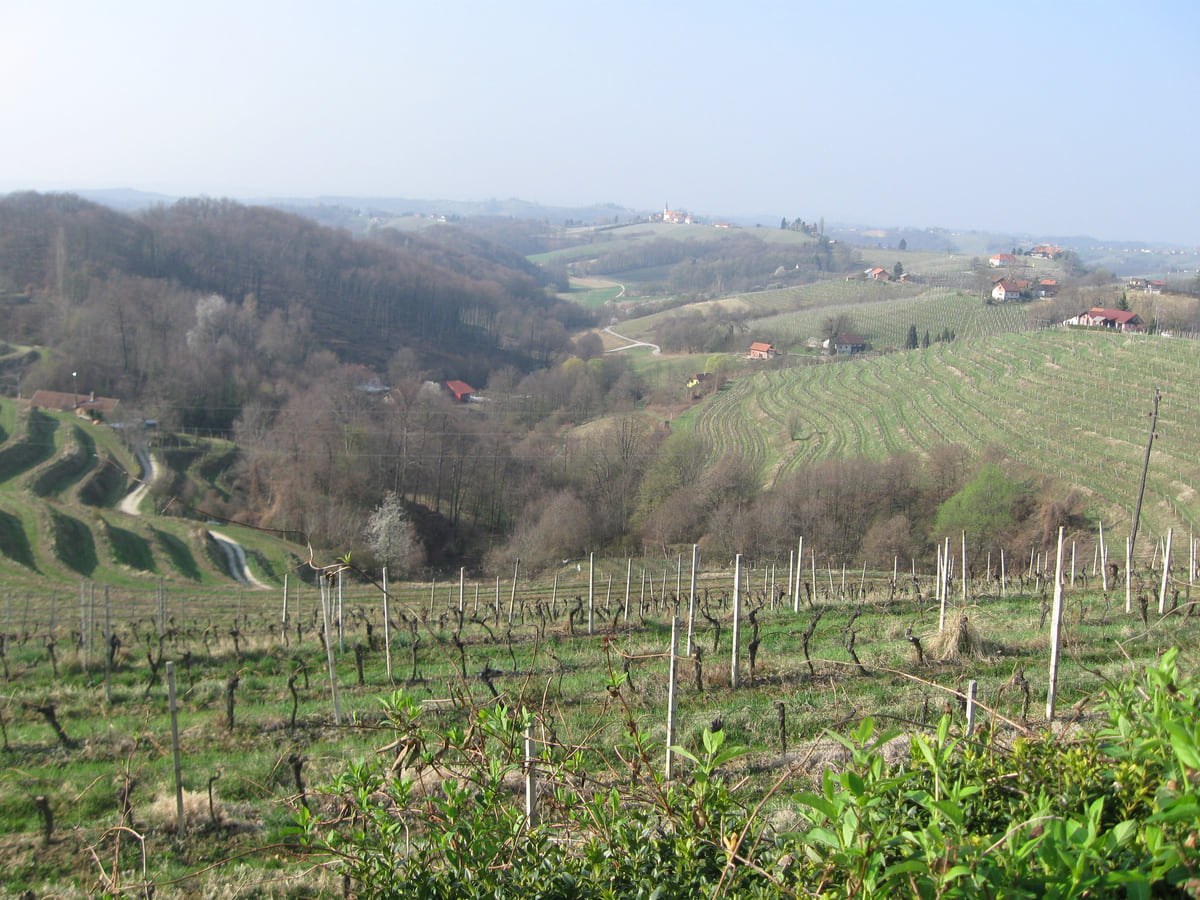
The vineyard hills of Jeruzalem in early spring, with rows of vines on terraced slopes and scattered houses
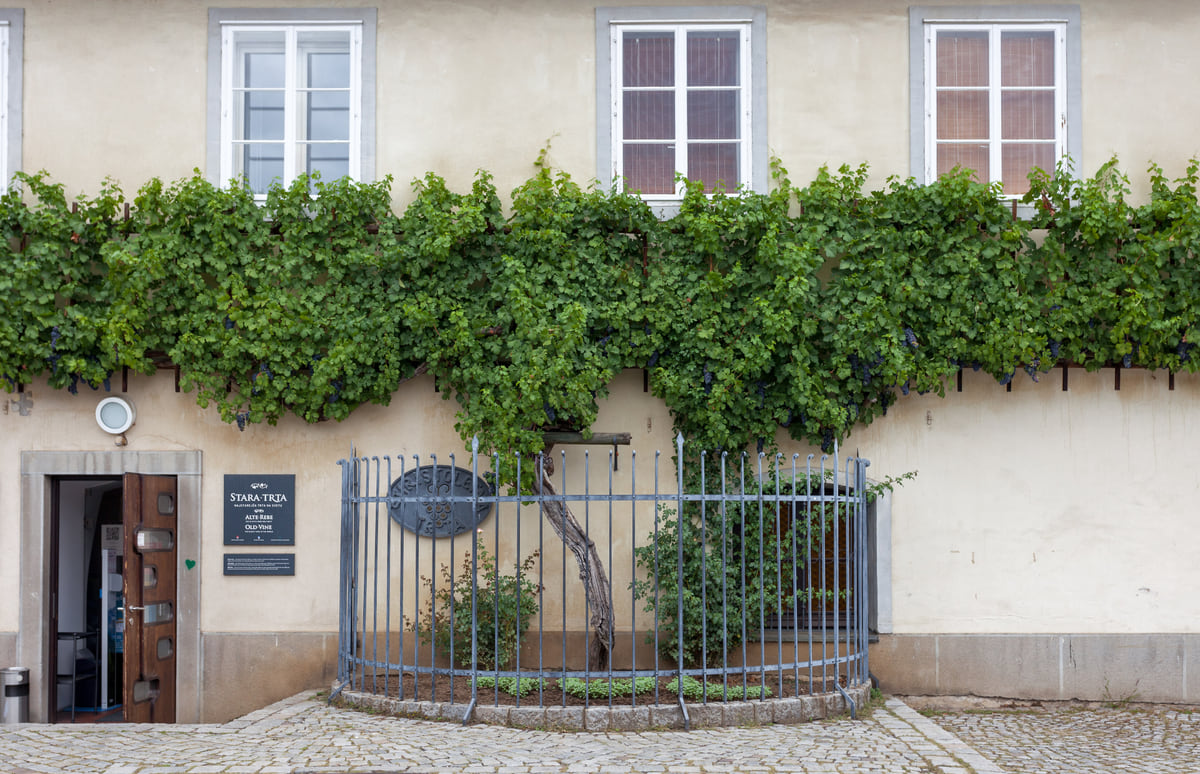
The world's oldest vine trained across the front of its house in Lent, Maribor, with the railing protecting its trunk
Test yourself
True or false?
0/3 Pick before you peek.
-
Most Slovenian wine is red.
See the answer
False. Taste Slovenia says about 70% is white and 30% red.
-
Cviček is a low-alcohol wine.
See the answer
True. It has 8 to 9% alcohol, according to the Tourist Board.
-
Slovenia has large multinational wine companies.
See the answer
False. Taste Slovenia says there are none and that the average vineyard is 0.32 hectares.
- Wine regions
- 3
- Districts
- 9
- Producers, more than
- 2,500
- Consumption per person per year
- 42 l
Frequently asked questions
What are Slovenia's wine regions?
Three, Primorska in the west, Podravje in the east and Posavje in the south-east, with nine districts between them, according to the Tourist Board.
What is typical Slovenian wine?
It depends on the region. Teran in the Karst, Rebula in Brda, Malvazija and Refošk in Istria, Furmint and Welschriesling in the east, and Cviček in Dolenjska.
What is Slovenian orange wine?
White grapes made in the orange style, with varieties such as Rebula, Malvazija or Pinela. The Tourist Board says Primorska makes more and more of it.
Is the world's oldest vine really in Maribor?
The Tourist Board and Taste Slovenia say so, though they give different ages, more than 400 or almost 450 years. It's a Žametovka vine in the Lent district.
Can I bring Slovenian wine back to the UK?
Wine isn't among the foods gov.uk restricts, but UK personal allowances and duty rules apply; check them before buying in quantity.
0 of 425 Slovenia guides
Your next stamp
- Podravje
- Food
- Farm stays
- Beer
- Pomurje
- Posavje
- Maribor
- Regions
- Bogenšperk Castle
- Bogojina
- Debeli rtič
- Ig pile dwellings
- Jeruzalem
- Kolpa River
- Koper
- Lake Cerknica
- Lipica
- Ljubljana
- Ljubljana to Bled
- Mariborsko Pohorje
- Mount Snežnik
- Palace Portorož
- Park of Military History
- Plečnik House
- Postojna
- Postojna Cave
- Škocjan Caves
- Štanjel
- Tartini Square
- Trbovlje
- Županova jama
- Izola
- Kamnik
- Karst
- Ljubljana to Postojna
- Lovrenc Lakes
- Portorož
- Predjama Castle
- Things to do in Ljubljana
- Travel guide
- Vilenica Cave
- Zagorje ob Savi
- Celje
- Cerknica
- Domžale
- Hrastnik
- Ljubljana in a day
- Ljubljana to Piran
- Piran
- Slovenian Istria
- Strunjan
- Things to do
- Activities
- Ankaran
- Grosuplje
- Litija
- Ljubljana in two days
- Pivka
- Sečovlje salt pans
- Velenje
- Brežice Castle
- Getting around Ljubljana
- Ilirska Bistrica
- Mežica Mine
- Most beautiful places
- Novo mesto
- Sevnica Castle
- Terme Olimia
- Vrhnika
- Žiče Charterhouse
- Dolenjska
- Ig
- Prettiest villages
- Ptuj
- Sežana
- Divača
- Medvode
- Murska Sobota
- World Heritage
- Hrpelje-Kozina
- Logatec
- Map
- Mengeš
- Brezovica
- Komen
- Savinjska
- Where is Slovenia
- Bled
- Brežice
- Čatež ob Savi
- Celje Castle
- Coal Mining Museum
- Gorenjska
- Hotels in Piran
- Hrastovlje
- Karawanken Geopark
- Koroška
- Kostanjevica Cave
- Kostel Castle
- Krokar primeval forest
- Kurentovanje
- Lent
- Ljubljana Castle
- Ljubljana Cathedral
- Logar Valley
- Oldest vine in the world
- Olimje
- Otočec
- Rimske Toplice
- Rinka Waterfall
- Rogla
- Sava River
- Slovenj Gradec
- Topolšica
- Velika Planina
- Goriška
- Krško
- Lake Bled
- Municipalities
- Prešeren Square
- Ravne na Koroškem
- Restaurants in Piran
- Škocjan Inlet
- Volčji Potok Arboretum
- Bled Island
- Cities
- Mežica
- Sevnica
- Socerb Castle
- Bled Castle
- Coast and Karst
- Dravograd
- Kostanjevica na Krki
- Population
- Notranjska
- Ojstrica viewpoint
- Radlje ob Dravi
- Size
- Central Slovenia
- Language
- Mislinja
- Plečnik's Ljubljana
- Slovenska Bistrica
- Vila Bled
- Currency
- Grand Hotel Toplice
- Ormož
- Zasavje
- EU and Schengen
- Hotel Savica Garni
- Hotels in Bled
- Pohorje
- Haloze
- History
- Restaurants in Bled
- Flag and symbols
- Hoče-Slivnica
- Bizeljsko
- Bohinj
- Christmas in Ljubljana
- City Hotel Ljubljana
- Gorjanci
- Kranj
- Krka River
- Laško
- Moravske Toplice
- Ptuj Castle
- Public holidays
- Rajhenburg Castle
- Šentilj
- Slovenia beaches
- Šmartno pri Litiji
- Uršlja Gora
- Brdo Castle
- Independence Day
- Lake Bohinj
- Ljubljana Festival
- Radenci
- Rogaška Slatina
- Day trips from Ljubljana
- Jesenice
- Lendava
- Podčetrtek
- Savica waterfall
- Time zone
- Dobrna
- Facts
- Ljubljana nightlife
- Ljutomer
- Nova Gorica
- Vogel
- Bohinjska Bistrica
- Gornja Radgona
- Ljubljana Old Town
- Slovenia and Croatia
- Solkan
- Zreče
- Grad
- Sabotin
- Slovenia, Italy and Austria
- Slovenske Konjice
- Stara Fužina
- Trnovo
- Goričko
- Holidays and tours
- Hotels in Bohinj
- Škofja Loka
- Vitanje
- Škofja Loka Castle
- Slovenia or Slovakia
- Šoštanj
- Veržej
- Slovenian phrases
- Slovenia in 3 days
- Bela krajina
- Caves in Slovenia
- Črnomelj
- Dragon Bridge
- Gorje
- Hiking
- Hotels in Maribor
- Kozjansko Regional Park
- Kranjska Gora
- Lake Ptuj
- Ljubljana Marshes
- Slovenia in 5 days
- Vinarium Tower
- Where to stay in Ljubljana
- Žalec
- Metlika
- Slovenia castles
- Slovenia in a week
- Slovenian Mountain Trail
- Triple Bridge
- Vintgar Gorge
- Vršič Pass
- Where to eat in Ljubljana
- Best viewpoints in Slovenia
- Central Market
- Juliana Trail
- Lake Jasna
- Road trip
- Semič
- Žirovnica
- Kočevje
- Metelkova
- Motorhome
- Museums in Slovenia
- Naklo
- Soča rafting
- Tržič
- Zelenci
- Jezersko
- Kostel
- Lake Planšar
- Skiing
- Slovenia with kids
- Slovenian Alpine Museum
- Tivoli Park
- Best time to visit
- Cerklje na Gorenjskem
- Cycling
- Dolenjske Toplice
- Ljubljanica river
- Mojstrana
- Šenčur
- Krvavec
- National Gallery
- Parenzana
- Peričnik waterfall
- Šmarješke Toplice
- Weather
- National and University Library
- Paragliding
- Slovenia in winter
- Strmol Castle
- Trebnje
- Vrata valley
- Climbing
- Events
- Martuljek waterfalls
- Žale
- Fly fishing
- In January
- Ljubljana museums
- National Museum of Slovenia
- Rateče
- Bovec
- Festival Lent
- Golf
- Hotels in Ptuj
- In February
- Kamnik-Savinja Alps
- Nature parks
- Parking in Ljubljana
- Pekel Cave
- Planica
- Snežnik Castle
- Solčava
- Gornji Grad
- In March
- Kranjska Gora ski resort
- Lakes
- Trenta
- Ziplines
- Alpe Adria Trail
- Hotels in Kranjska Gora
- In April
- Kanin
- Nazarje
- Waterfalls
- In May
- Rivers
- Virje waterfall
- Vransko
- Hotels in Bovec
- In June
- Mountains
- Šentjur
- Dobra Vila Bovec
- In July
- Ljubljana Card
- Mozirje
- Spas
- In August
- Nebesa Chalets
- Rečica ob Savinji
- In September
- Kobarid
- Šmartno ob Paki
- In October
- Kobarid Museum
- Hiša Franko
- In November
- In December
- Radovljica
- Železniki
- In spring
- Museum of Apiculture
- Žiri
- In summer
- Kropa
- Tolmin
- Brezje
- In autumn
- Metaldays
- Tolmin Gorges
- Begunje
- Javorca church
- Slovenia in 10 days
- Most na Soči
- Two weeks in Slovenia
- Idrija
- Ljubljana Marathon
- How to get there
- Idrija mercury mine
- Wild Lake
- Cerkno
- Flights
- Laufarji
- Divje babe
- Franja Partisan Hospital
- Ljubljana Airport
- Ajdovščina
- Nearby airports
- Venice to Ljubljana
- Vipava
- Vipavski Križ
- Zagreb to Ljubljana
- Brda
- Trains to Slovenia
- Getting around
- Šmartno
- Dobrovo Castle
- Trains
- Buses
- Julian Alps
- Car hire
- Triglav National Park
- Driving
- Pokljuka
- Triglav Lakes
- Vignette
- Mount Triglav
- Taxis
- Distances
- Soča Valley
- Soča River
- Trieste to Ljubljana
- Kozjak Waterfall
- Vienna to Ljubljana
- Boka Waterfall
- Budapest to Ljubljana
- Ljubljana to Maribor
- Walk of Peace
- Bled to Bohinj
- Mangart
- Lake Krn
- Prices and budget
- Slovenia on a budget
- Vipava Valley
- Free things to do
- Otlica Natural Window
- Entry requirements
- Rihemberk Castle
- Customs
- Safety
- Scams
- Bears
- Healthcare
- Mobile and roaming
- Plugs
- Packing list
- What to buy
- Hotels
- Campsites
- Mountain huts
- Bled cream cake
- Potica
- Prekmurska gibanica
- Štruklji
- Carniolan sausage
- Idrija žlikrofi
- Tipping

Questions about Slovenia? Write to me
I read every email. If a fact is wrong or missing, tell me and I will check it.
My email sergiolepone@gmail.com
By
Tourism graduate with a master’s in Tourism Management and Planning from the University of Málaga, who has travelled across Europe. He writes every guide from official sources and his own judgement.
Published on . Updated on . Facts checked on .
Sources
Some links in this guide are affiliate links: if you book through them, the site earns a commission at no extra cost to you. Affiliate disclosure
Photos: neiljs (CC BY 2.0); KocmutD (CC BY-SA 3.0); Marco Almbauer (CC BY-SA 4.0), via Wikimedia Commons.