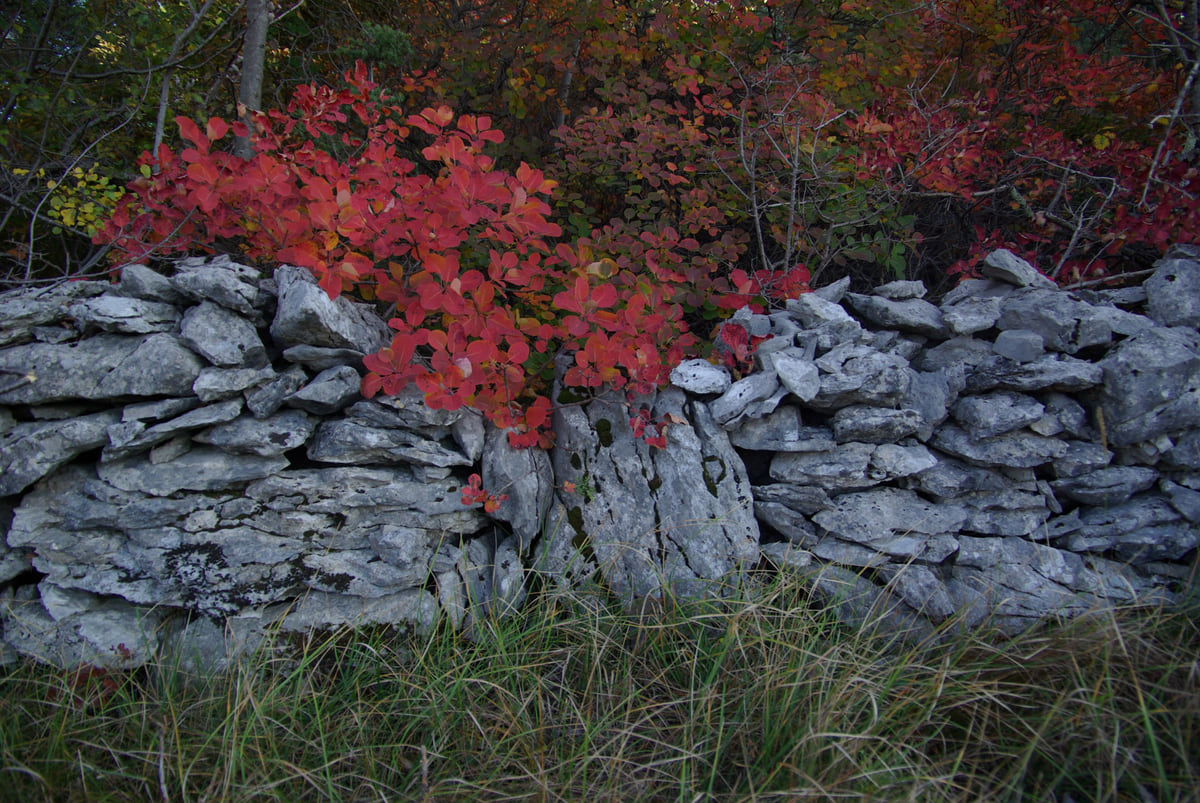
Area of south-west Slovenia
The Karst, the stone plateau that gave its name to every karst in the world

- Bounded by
- Gulf of Trieste, Vipava valley and Brkini
- World Heritage
- Škocjan Caves, since 1986
Map
Where Karst is
The Julian Alps, Triglav and the Soča valley lie to the north-west; Ljubljana sits in the centre; the Karst, its caves and the 47 km of coast are to the south-west, and Maribor, Ptuj and the Prekmurje plains to the east. Every number opens its guide.
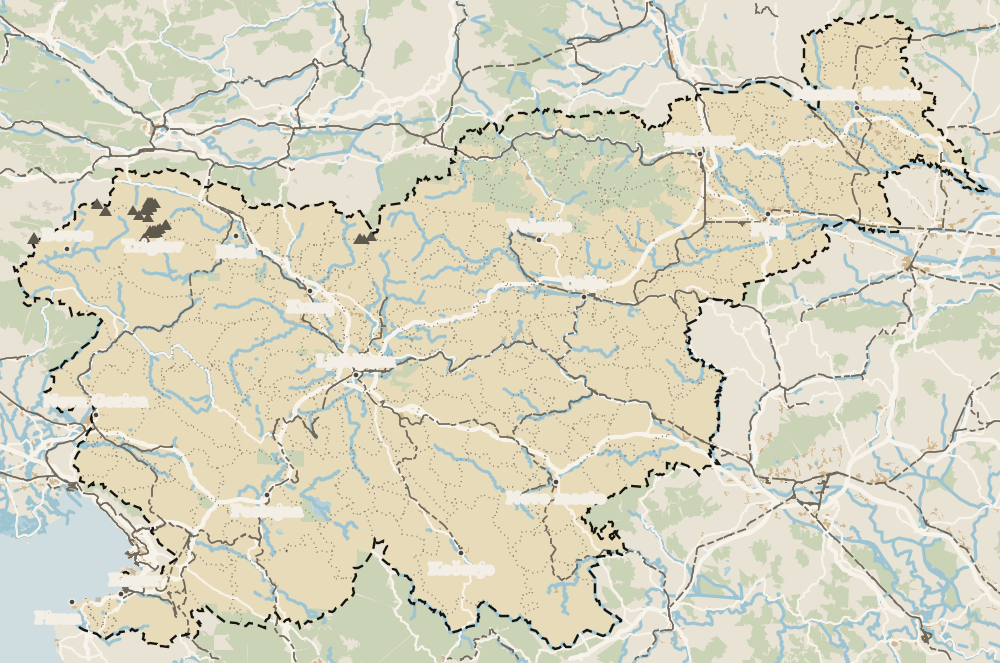 1Koper 2Izola 3Karst 4Piran 5Slovenian Istria 6Ankaran 7Sežana 8Divača 9Hrpelje-Kozina 10Komen
Map data © OpenStreetMap contributors (ODbL)
- 1KoperTown on the Slovenian coast
- 2IzolaTown on the Slovenian coast
- 3KarstArea of south-west Slovenia
- 4PiranTown on the Slovenian coast
- 5Slovenian IstriaArea of the Slovenian coast
- 6AnkaranVillage on the Slovenian coast
- 7SežanaKarst town
- 8DivačaKarst village
- 9Hrpelje-KozinaKarst municipality
- 10KomenKarst municipality
The Karst in Slovenia (Kras) is the limestone plateau between the Gulf of Trieste, the Vipava valley and the Brkini hills, whose name came to stand for karst landscapes worldwide. It holds the Škocjan Caves, a World Heritage Site, the Lipica stud farm, Teran wine from red soil, wind-dried ham and stone villages such as Štanjel.
I'd give the Karst a whole day by car. Škocjan in the morning, the reason to come; ham and Teran at a farm for lunch; Štanjel or Lipica in the afternoon. If you can, come back in autumn, with red sumac on the walls.
The essentials in a few lines
Full read: 2 min
- The Karst is the limestone plateau between Trieste, the Vipava valley and Brkini.
- Its name, Kras, gave its name to every karst in the world.
- It has the Škocjan Caves, Lipica and stone villages such as Štanjel.
- You eat Karst ham and drink Teran, the red from the red soil.
My key points
What the official sites leave out
-
01 Most beautiful
Autumn red
In autumn the sumac turns red along the dry stone walls that divide meadows and pastures. It is the plateau's classic image and the best explanation of why stone rules here.
-
02 Getting there
The great canyon underground
The Škocjan Caves, a World Heritage Site since 1986, are the Karst's headline sight. The river Reka has carved passages up to 150 m high there.
Škocjan Caves -
03 My tip
Štanjel's wine festival
Štanjel holds its wine festival from 5 to 8 November 2026. If you need an excuse for an autumn visit, that is it.
-
04 Most beautiful
Streets built against the bora
The narrow streets of Karst villages are typical of places hit by the bora, the strong wind that drops towards the sea, and houses close round a courtyard, the borjač.
-
05 Getting there
On a two-week loop
On a full two-week loop of the country, the Karst comes in the first week, between the Soča valley, Brda and the coast.
two weeks in Slovenia
What I would book
The plateau that gave karst its name
The Karst, Kras in Slovene, is the limestone plateau stretching between the Gulf of Trieste, the Vipava valley and the Brkini hills, and it carries on partly into Italy. Here water met a soluble rock and together they made a world of caves, sinking rivers and sinkholes. The word comes from an old term for stone, and the Slovene Wikipedia records the form Grast as early as 1177. The German Karst and the Italian carso came from the Slovene, and with them the scientific name for such landscapes everywhere.
The most visible feature is not underground. It is the dry stone walls dividing meadows and pastures, the small quarries every village had, known here as jave, and a stonemasons’ tradition going back to antiquity that shows in doorways, steps, well heads and the arched gateways into the farmhouses, the kalone.
Škocjan and the Karst caves
The Karst’s most dramatic side is below ground. The Škocjan Caves, in the municipality of Divača, have been a World Heritage Site since 1986. There the river Reka has cut an underground canyon whose halls reach 150 m in height, and a 2026 visit costs €16 to €24 depending on the month. Vilenica Cave, near Lokev, has been visited since 1633 and its website calls it the world’s first show cave. There are others, such as Divača Cave, which drew visitors in the 19th century.
Teran and Karst ham
The red soil, the terra rossa, colours the landscape and flavours everything that grows in it. The Karst tourist board sums it up as Teran, the plateau’s pleasantly tart red, ham cured on the farms, a cheese of its own, herbs from the Karst heath and honey. Brkini, on the edge, adds fruit, with its plum brandy, which holds a protected geographical indication just like the Karst juniper brandy.
Many farms open their cellars and tables to visitors. My advice is to stop at one at lunchtime, between caves, and order ham and Teran.
To sleep close to everything, search places to stay in Sežana on Expedia and filter by area before price.
Lipica, Štanjel and the stone villages
In Lipica, which belongs to Sežana, Lipizzaner horses have been bred since 1580; they are born dark and turn white with age. The stud has more than 300 horses, and the tourist board calls it the largest Lipizzaner stud in the world.
Štanjel is the finest Karst village, with narrow streets built against the bora, stone houses round enclosed courtyards, a restored castle and the garden designed by Maks Fabiani. It holds its wine festival from 5 to 8 November 2026. For the rest of the region, coast included, start with the coast and the Karst, the region as a whole. If you can choose your dates, autumn in Slovenia is the ideal season for the plateau, with St Martin’s Day and the new wine in November.
To sleep close to everything, search places to stay in Sežana on Booking.com and filter by area before price.
What to see on the Slovenian Karst
| Place | What it is | Municipality |
|---|---|---|
| Škocjan Caves | Underground canyon of the river Reka, World Heritage | Divača |
| Lipica | Lipizzaner stud farm founded in 1580 | Sežana |
| Štanjel | Medieval stone village with a castle and the Ferrari garden | Komen |
| Vilenica Cave | Cave visited since 1633 | Sežana |
| Sežana Botanical Garden | Garden of the Mirasasso villa, from 1848 | Sežana |
Visit Kras, Škocjan Caves Park and the Lipica stud farm, checked on 17 and 19 Oct 2026.
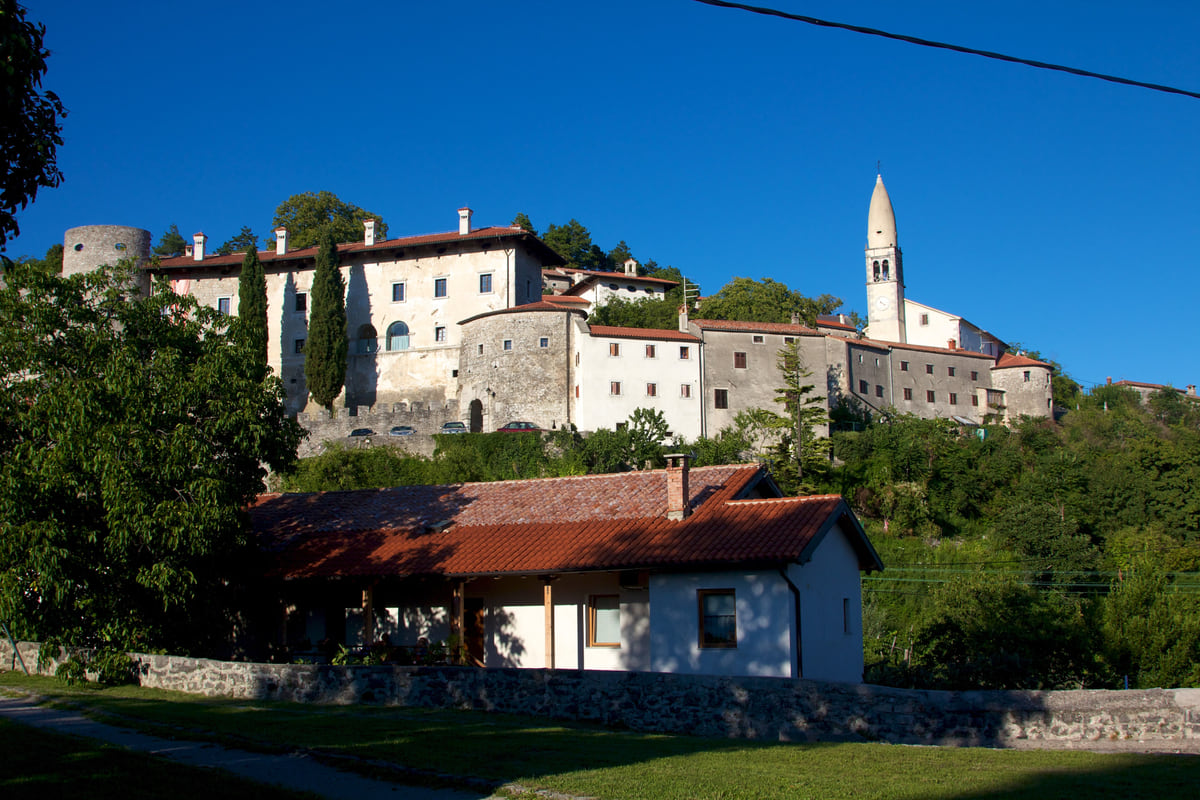
The stone village of Štanjel on its hill, with the castle, cypresses and the pointed bell tower under a blue sky
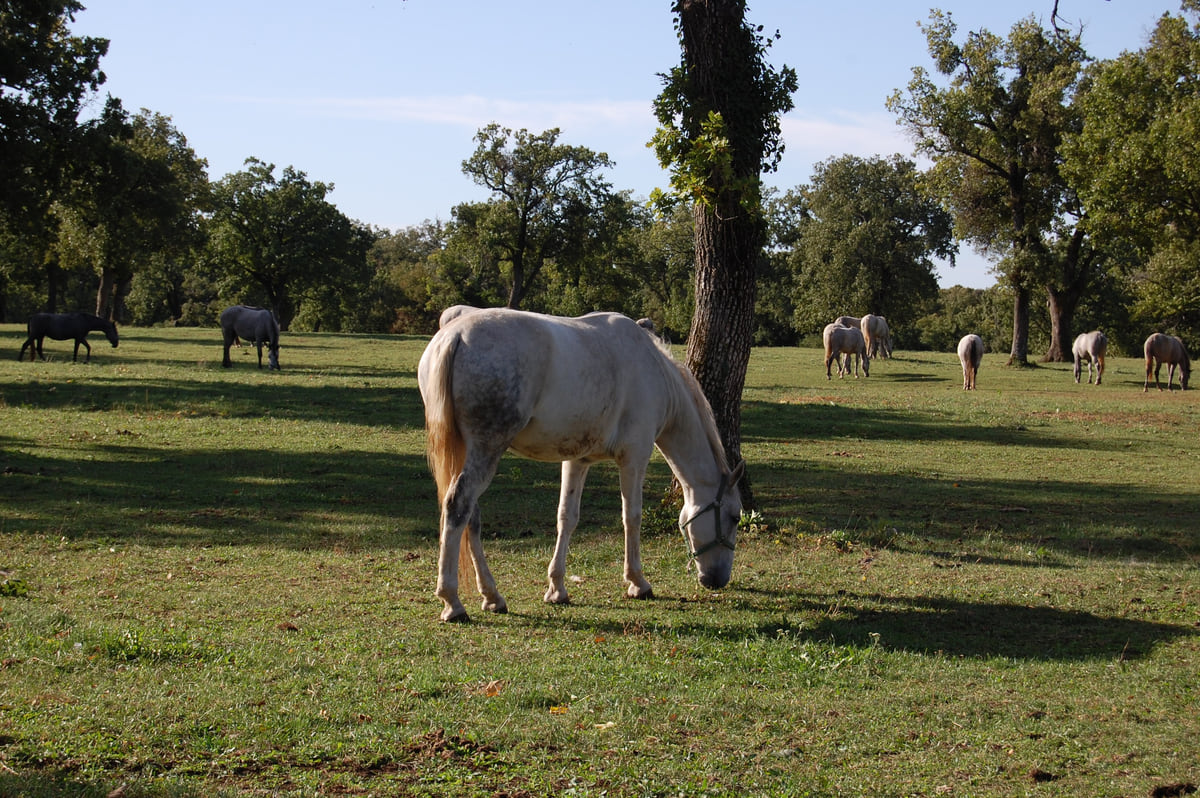
White and dark Lipizzaner horses grazing in a tree-dotted pasture at the Lipica stud farm in the Karst
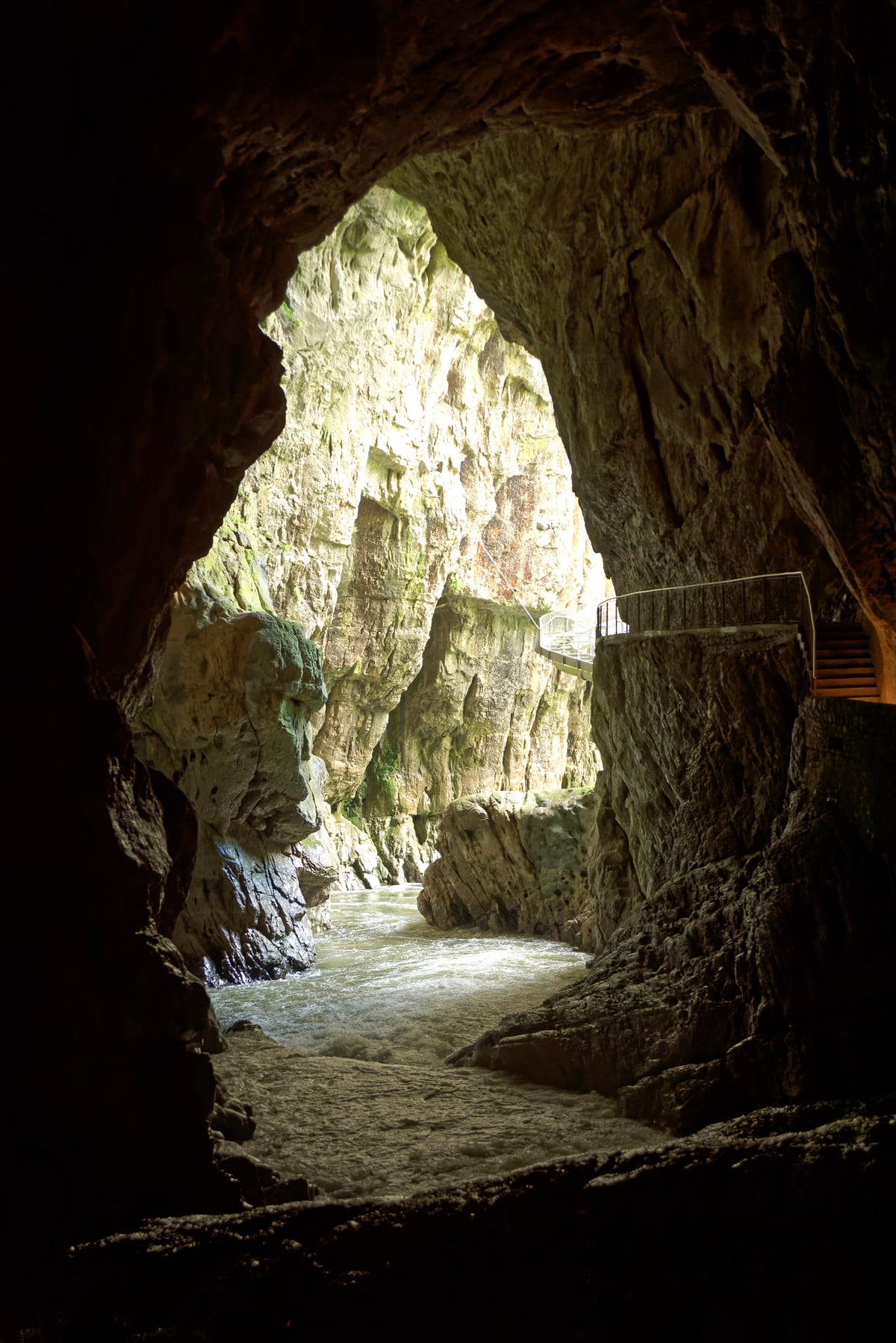
The exit of the Škocjan Caves seen from inside, the dark rock mouth opening onto the sunlit canyon of the Reka
Test yourself
True or false?
0/3 Pick before you peek.
-
The word karst comes from a plateau in Slovenia.
See the answer
True. It comes from Kras, the Slovene name of this plateau. The German Karst and the Italian carso grew out of it.
-
Teran is a white wine.
See the answer
False. It is the Karst's red, grown on the terra rossa, the red soil, and has a slightly tart edge.
-
The Lipica stud farm was founded in the 16th century.
See the answer
True. It was founded in 1580 and now has more than 300 horses, according to the Karst tourist board.
- First recorded, as Grast
- 1177
- Škocjan becomes World Heritage
- 1986
- Lipica stud farm founded
- 1580
- Horses at Lipica, more than
- 300
What people ask most about Karst
What is the Slovenian Karst?
The limestone plateau in south-west Slovenia, between the Gulf of Trieste, the Vipava valley and Brkini. Water dissolves the rock to form caves, vanishing rivers and sinkholes. Its name, Kras, ended up describing similar landscapes worldwide.
What is there to see on the Karst?
The Škocjan Caves, the Lipica stud farm, the stone village of Štanjel, Vilenica Cave and the botanical garden in Sežana, plus the farms where you can try Teran and Karst ham.
What is Teran?
The red wine of the Karst, grown on the plateau's red soil, the terra rossa. The Karst tourist board describes it as pleasantly tart, and it is the wine poured with the ham.
Where does the word karst come from?
From Kras, the Slovene name of this plateau. The German Karst and the Italian carso come from it. The form Grast is already recorded in 1177, according to the Slovene Wikipedia.
How much are the Škocjan Caves?
It depends on the month. In 2026 an adult ticket runs from €16 in winter to €24 in July and August, with discounts for seniors, students and children. They close on 1 January and 25 December.
When is the best time to visit the Karst?
Spring and autumn. In autumn the sumac turns red and there are wine festivals, such as Štanjel's. Summer is hot on the plateau, and in winter the bora blows.
0 of 425 Slovenia guides
Your next stamp
- Komen
- Caves in Slovenia
- Coast and Karst
- Climbing
- Things to do
- Štanjel
- Škocjan Caves
- Slovenia in a week
- Bogenšperk Castle
- Bogojina
- Debeli rtič
- Ig pile dwellings
- Jeruzalem
- Kolpa River
- Koper
- Lake Cerknica
- Lipica
- Ljubljana
- Ljubljana to Bled
- Mariborsko Pohorje
- Mount Snežnik
- Palace Portorož
- Park of Military History
- Plečnik House
- Postojna
- Postojna Cave
- Tartini Square
- Trbovlje
- Županova jama
- Izola
- Kamnik
- Ljubljana to Postojna
- Lovrenc Lakes
- Maribor
- Portorož
- Predjama Castle
- Things to do in Ljubljana
- Travel guide
- Vilenica Cave
- Zagorje ob Savi
- Celje
- Cerknica
- Domžale
- Hrastnik
- Ljubljana in a day
- Ljubljana to Piran
- Piran
- Slovenian Istria
- Strunjan
- Activities
- Ankaran
- Grosuplje
- Litija
- Ljubljana in two days
- Pivka
- Sečovlje salt pans
- Velenje
- Brežice Castle
- Getting around Ljubljana
- Ilirska Bistrica
- Mežica Mine
- Most beautiful places
- Novo mesto
- Sevnica Castle
- Terme Olimia
- Vrhnika
- Žiče Charterhouse
- Dolenjska
- Ig
- Prettiest villages
- Ptuj
- Sežana
- Divača
- Medvode
- Murska Sobota
- Posavje
- World Heritage
- Hrpelje-Kozina
- Logatec
- Map
- Mengeš
- Brezovica
- Savinjska
- Where is Slovenia
- Bled
- Brežice
- Čatež ob Savi
- Celje Castle
- Coal Mining Museum
- Gorenjska
- Hotels in Piran
- Hrastovlje
- Karawanken Geopark
- Koroška
- Kostanjevica Cave
- Kostel Castle
- Krokar primeval forest
- Kurentovanje
- Lent
- Ljubljana Castle
- Ljubljana Cathedral
- Logar Valley
- Oldest vine in the world
- Olimje
- Otočec
- Regions
- Rimske Toplice
- Rinka Waterfall
- Rogla
- Sava River
- Slovenj Gradec
- Topolšica
- Velika Planina
- Goriška
- Krško
- Lake Bled
- Municipalities
- Podravje
- Prešeren Square
- Ravne na Koroškem
- Restaurants in Piran
- Škocjan Inlet
- Volčji Potok Arboretum
- Bled Island
- Cities
- Mežica
- Pomurje
- Sevnica
- Socerb Castle
- Bled Castle
- Dravograd
- Kostanjevica na Krki
- Population
- Notranjska
- Ojstrica viewpoint
- Radlje ob Dravi
- Size
- Central Slovenia
- Language
- Mislinja
- Plečnik's Ljubljana
- Slovenska Bistrica
- Vila Bled
- Currency
- Grand Hotel Toplice
- Ormož
- Zasavje
- EU and Schengen
- Hotel Savica Garni
- Hotels in Bled
- Pohorje
- Haloze
- History
- Restaurants in Bled
- Flag and symbols
- Hoče-Slivnica
- Bizeljsko
- Bohinj
- Christmas in Ljubljana
- City Hotel Ljubljana
- Gorjanci
- Kranj
- Krka River
- Laško
- Moravske Toplice
- Ptuj Castle
- Public holidays
- Rajhenburg Castle
- Šentilj
- Slovenia beaches
- Šmartno pri Litiji
- Uršlja Gora
- Brdo Castle
- Independence Day
- Lake Bohinj
- Ljubljana Festival
- Radenci
- Rogaška Slatina
- Day trips from Ljubljana
- Jesenice
- Lendava
- Podčetrtek
- Savica waterfall
- Time zone
- Dobrna
- Facts
- Ljubljana nightlife
- Ljutomer
- Nova Gorica
- Vogel
- Bohinjska Bistrica
- Gornja Radgona
- Ljubljana Old Town
- Slovenia and Croatia
- Solkan
- Zreče
- Grad
- Sabotin
- Slovenia, Italy and Austria
- Slovenske Konjice
- Stara Fužina
- Trnovo
- Goričko
- Holidays and tours
- Hotels in Bohinj
- Škofja Loka
- Vitanje
- Škofja Loka Castle
- Slovenia or Slovakia
- Šoštanj
- Veržej
- Slovenian phrases
- Slovenia in 3 days
- Bela krajina
- Črnomelj
- Dragon Bridge
- Gorje
- Hiking
- Hotels in Maribor
- Kozjansko Regional Park
- Kranjska Gora
- Lake Ptuj
- Ljubljana Marshes
- Slovenia in 5 days
- Vinarium Tower
- Where to stay in Ljubljana
- Žalec
- Metlika
- Slovenia castles
- Slovenian Mountain Trail
- Triple Bridge
- Vintgar Gorge
- Vršič Pass
- Where to eat in Ljubljana
- Best viewpoints in Slovenia
- Central Market
- Juliana Trail
- Lake Jasna
- Road trip
- Semič
- Žirovnica
- Kočevje
- Metelkova
- Motorhome
- Museums in Slovenia
- Naklo
- Soča rafting
- Tržič
- Zelenci
- Jezersko
- Kostel
- Lake Planšar
- Skiing
- Slovenia with kids
- Slovenian Alpine Museum
- Tivoli Park
- Best time to visit
- Cerklje na Gorenjskem
- Cycling
- Dolenjske Toplice
- Ljubljanica river
- Mojstrana
- Šenčur
- Krvavec
- National Gallery
- Parenzana
- Peričnik waterfall
- Šmarješke Toplice
- Weather
- National and University Library
- Paragliding
- Slovenia in winter
- Strmol Castle
- Trebnje
- Vrata valley
- Events
- Martuljek waterfalls
- Žale
- Fly fishing
- In January
- Ljubljana museums
- National Museum of Slovenia
- Rateče
- Bovec
- Festival Lent
- Golf
- Hotels in Ptuj
- In February
- Kamnik-Savinja Alps
- Nature parks
- Parking in Ljubljana
- Pekel Cave
- Planica
- Snežnik Castle
- Solčava
- Gornji Grad
- In March
- Kranjska Gora ski resort
- Lakes
- Trenta
- Ziplines
- Alpe Adria Trail
- Hotels in Kranjska Gora
- In April
- Kanin
- Nazarje
- Waterfalls
- In May
- Rivers
- Virje waterfall
- Vransko
- Hotels in Bovec
- In June
- Mountains
- Šentjur
- Dobra Vila Bovec
- In July
- Ljubljana Card
- Mozirje
- Spas
- In August
- Nebesa Chalets
- Rečica ob Savinji
- In September
- Kobarid
- Šmartno ob Paki
- In October
- Kobarid Museum
- Hiša Franko
- In November
- In December
- Radovljica
- Železniki
- In spring
- Museum of Apiculture
- Žiri
- In summer
- Kropa
- Tolmin
- Brezje
- In autumn
- Metaldays
- Tolmin Gorges
- Begunje
- Javorca church
- Slovenia in 10 days
- Most na Soči
- Two weeks in Slovenia
- Idrija
- Ljubljana Marathon
- How to get there
- Idrija mercury mine
- Wild Lake
- Cerkno
- Flights
- Laufarji
- Divje babe
- Franja Partisan Hospital
- Ljubljana Airport
- Ajdovščina
- Nearby airports
- Venice to Ljubljana
- Vipava
- Vipavski Križ
- Zagreb to Ljubljana
- Brda
- Trains to Slovenia
- Getting around
- Šmartno
- Dobrovo Castle
- Trains
- Buses
- Julian Alps
- Car hire
- Triglav National Park
- Driving
- Pokljuka
- Triglav Lakes
- Vignette
- Mount Triglav
- Taxis
- Distances
- Soča Valley
- Soča River
- Trieste to Ljubljana
- Kozjak Waterfall
- Vienna to Ljubljana
- Boka Waterfall
- Budapest to Ljubljana
- Ljubljana to Maribor
- Walk of Peace
- Bled to Bohinj
- Mangart
- Lake Krn
- Prices and budget
- Slovenia on a budget
- Vipava Valley
- Free things to do
- Otlica Natural Window
- Entry requirements
- Rihemberk Castle
- Customs
- Safety
- Scams
- Bears
- Healthcare
- Mobile and roaming
- Plugs
- Packing list
- What to buy
- Hotels
- Campsites
- Farm stays
- Mountain huts
- Food
- Bled cream cake
- Wine
- Potica
- Prekmurska gibanica
- Štruklji
- Carniolan sausage
- Idrija žlikrofi
- Beer
- Tipping

Questions about Karst? Write to me
I read every email. If a fact is wrong or missing, tell me and I will check it.
My email sergiolepone@gmail.com
By
Tourism graduate with a master’s in Tourism Management and Planning from the University of Málaga, who has travelled across Europe. He writes every guide from official sources and his own judgement.
Published on . Updated on . Facts checked on .
Sources
Some links in this guide are affiliate links: if you book through them, the site earns a commission at no extra cost to you. Affiliate disclosure
Photos: TIC Sežana (CC BY-SA 4.0); Ramón from Llanera, España (CC BY-SA 2.0); KLMircea from Focsani, Romania (CC BY-SA 2.0); Jakub Hałun (CC BY 4.0), via Wikimedia Commons.