Soča Valley, Goriška
Tolmin, festivals and gorges at the gateway to the Julian Alps

- Population (1-1-2026)
- 3,086 town, 10,661 municipality
- Tourist arrivals (2025)
- 81,561
Map
Where Tolmin is
The Julian Alps, Triglav and the Soča valley lie to the north-west; Ljubljana sits in the centre; the Karst, its caves and the 47 km of coast are to the south-west, and Maribor, Ptuj and the Prekmurje plains to the east. Every number opens its guide.
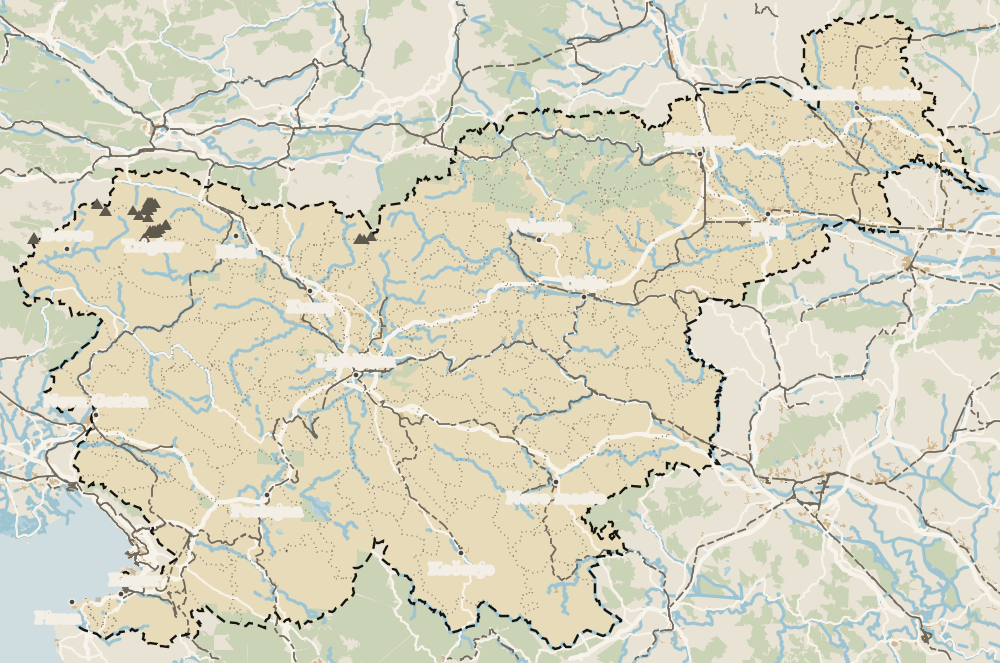 1Goriška 2Nova Gorica 3Bovec 4Kobarid 5Tolmin 6Idrija 7Cerkno 8Ajdovščina 9Vipava 10Brda 11Soča Valley 12Vipava Valley
Map data © OpenStreetMap contributors (ODbL)
- 1GoriškaRegions of Slovenia
- 2Nova GoricaGoriška, Slovenia
- 3BovecSoča Valley, Goriška
- 4KobaridSoča Valley, Goriška
- 5TolminSoča Valley, Goriška
- 6IdrijaGoriška, pre-Alpine Slovenia
- 7CerknoGoriška, Idrijca valley
- 8AjdovščinaVipava Valley, Goriška
- 9VipavaVipava Valley, Goriška
- 10BrdaGoriška, on the Italian border
- 11Soča ValleyGoriška, Julian Alps
- 12Vipava ValleyGoriška
What to see in Tolmin, the Soča Valley's festival town: the Tolmin Gorges, where the Tolminka meets the Zadlaščica at the lowest entrance to Triglav National Park, Kozlov rob hill with its ruined castle, the Tolmin Museum, the German charnel house and, up the valley, the church at Javorca. It has 3,086 people and its municipality, the valley's largest, 10,661.
For me Tolmin is a better base than Bovec if the Isonzo Front history draws you, and outside July and August it's very quiet. I'd do the gorges first thing and leave the afternoon for Kozlov rob or the museum; Javorca deserves a day of its own.
My checklist before setting off
What I would book
My key points
What the official sites leave out
-
01 Most beautiful
The Tolmin Gorges
The Tolminka and the Zadlaščica meet inside the gorges, the lowest entry point to Triglav National Park at 180 m, and a circular path leads through them.
Tolmin Gorges -
02 Worth the splurge
The Javorca church
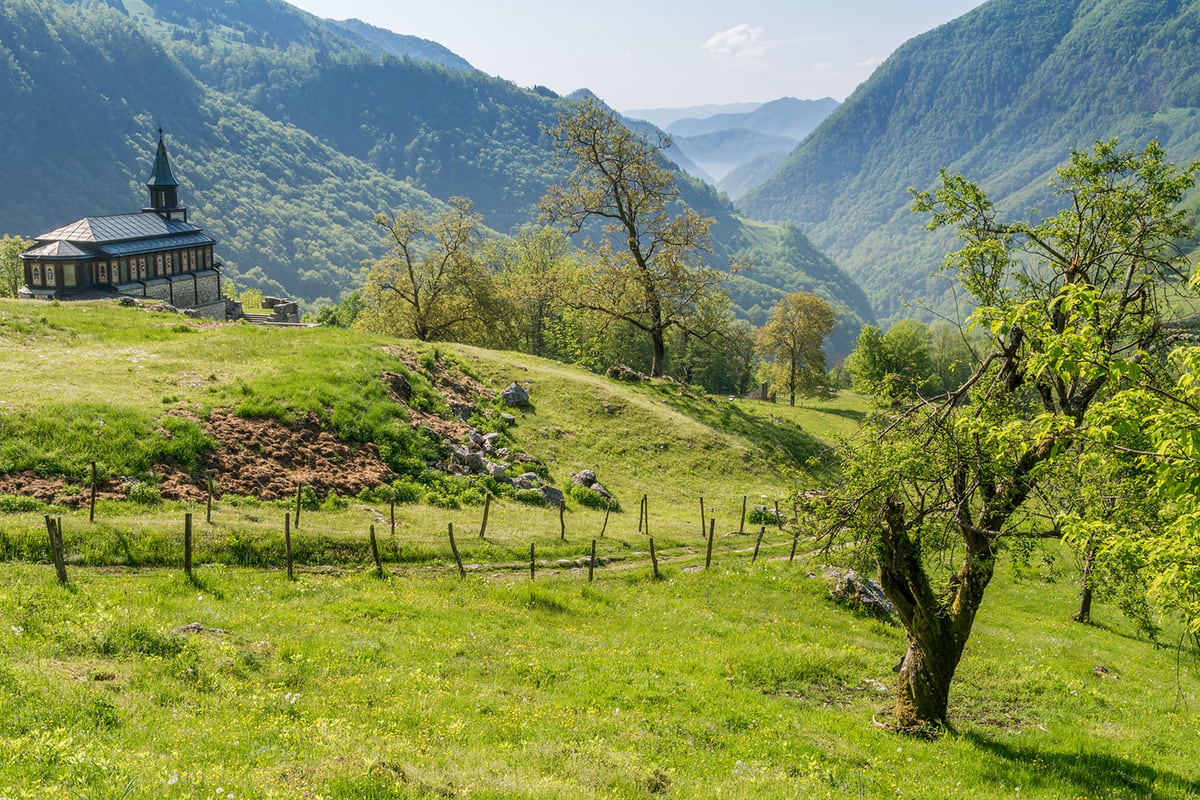
Austro-Hungarian soldiers built a wooden church in the Tolminka valley bearing the names of 2,564 fallen men; it holds the European Heritage Label.
Javorca church -
03 My tip
Kozlov rob with children
At Kozlov rob castle there's a seven-stage game about a little goat on a mission, three stops inside the centre and four around the ruins.
castles in Slovenia -
04 Getting there
The lake at Most na Soči
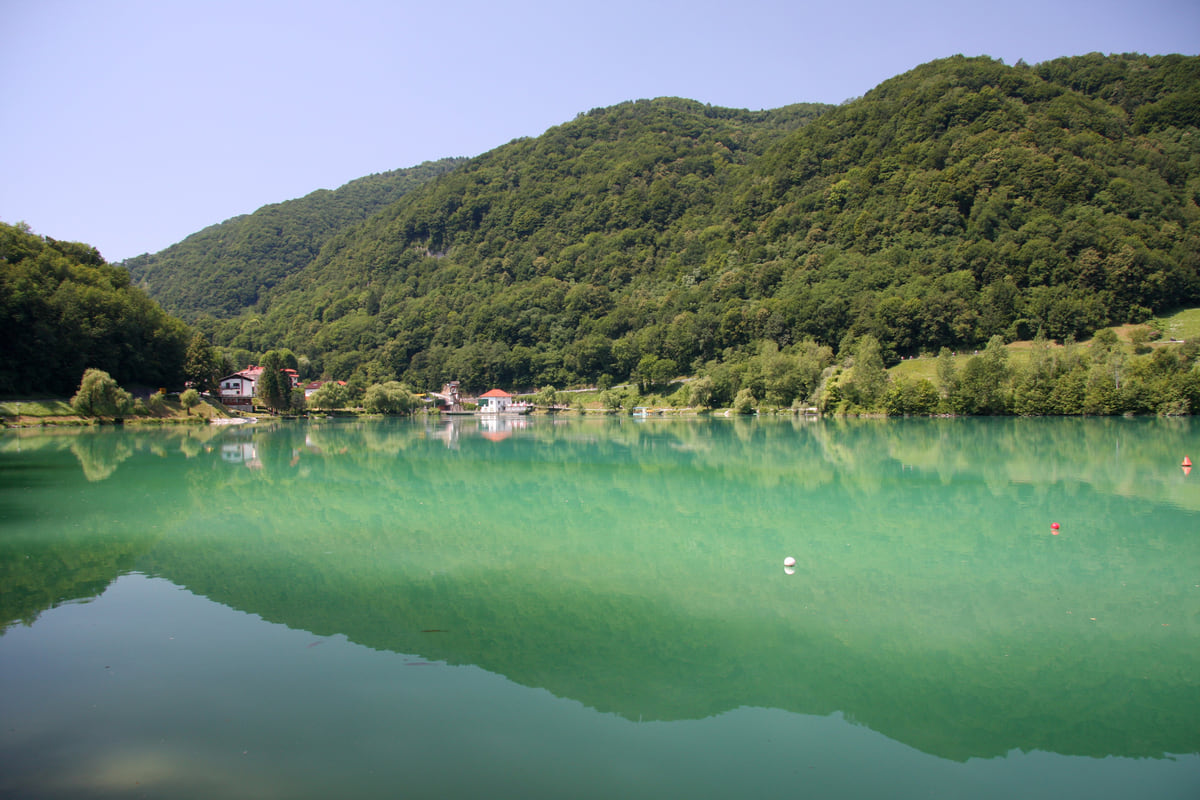
A few kilometres away, Most na Soči has an emerald lake with boat trips, kayaks and paddleboards, plus a stop on the Bohinj railway.
Most na Soči
The Tolmin Gorges and Javorca
In the Tolmin Gorges the Tolminka and its tributary the Zadlaščica join deep in the canyon, and at just 180 m this is the lowest gateway into Triglav National Park. Inside you’ll find a thermal spring, the Devil’s Bridge and a wedged boulder known as the Bear’s Head, and tickets are sold by time slot. Further up the Tolminka stands the Javorca church, built by Austro-Hungarian soldiers during the First World War in memory of their comrades.
Kozlov rob castle and the museum
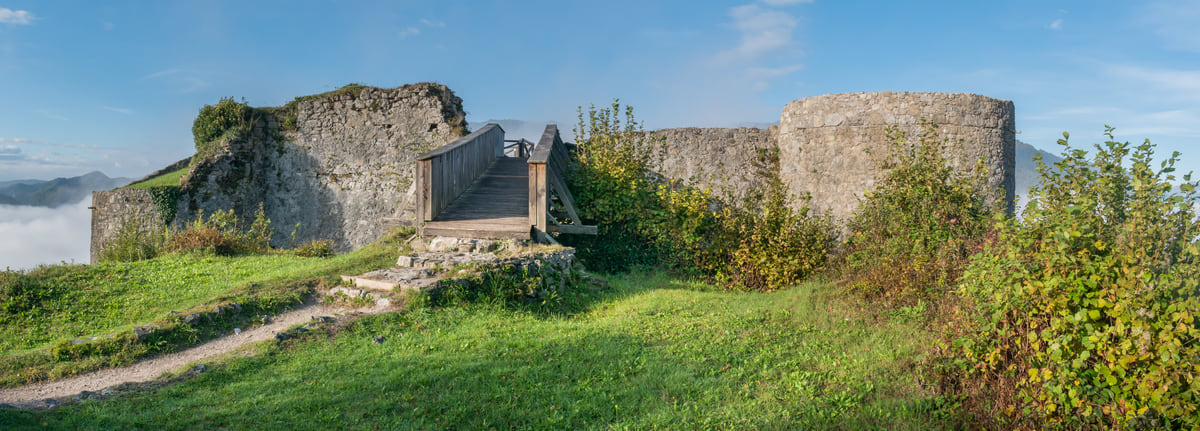
Above the town rises Kozlov rob, a dome-shaped hill the locals call the Castle. Its castle, first mentioned in the 12th century, passed through the hands of the patriarchs of Aquileia, the counts of Gorizia, people of Cividale, Venice and the Habsburgs, suffered the earthquakes of 1348 and 1511 and was abandoned in the 17th century, when the Coronini family moved down into town. Today it has an interpretation centre with an immersive room and a fourteen-point educational trail on the southern slope.
The Coronini mansion in the centre houses the Tolmin Museum, with the archaeological finds from Most na Soči, everyday life in the region and the Great Peasant Revolt of 1713. The museum also arranges visits to the German charnel house, built between 1936 and 1938 beside the Soča and holding 965 German soldiers who fell in the twelfth battle of the Isonzo, and to other sites nearby, such as Simon Gregorčič’s birth house in Vrsno.
Tolmin on the Walk of Peace
Tolmin is also one of the stops on the Walk of Peace, which links the remains of the Isonzo Front. Together with Javorca, the German charnel house and the Mengore outdoor museum near Most na Soči, it lets you follow the history of the war closely in this part of the valley, with the town museum as the natural starting point and guides who can take groups out to the sites.
To sleep close to everything, search places to stay in Tolmin on Expedia and filter by area before price.
Festivals and mountains
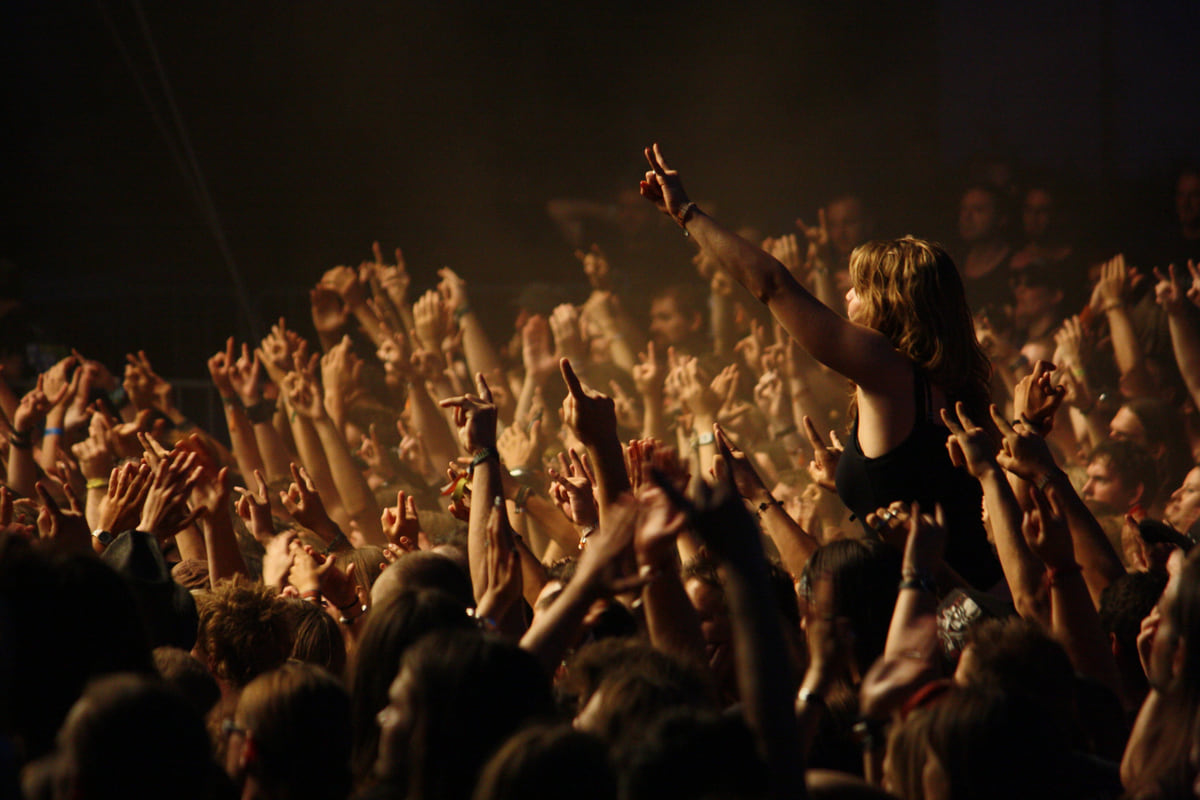
Tolmin is the festival town of the Soča Valley. Metal carries on at Sotočje with Tolminator, which took over from Metaldays when that festival left in 2023, and August brings Punk Rock Holiday; the Slovenian Tourist Board also lists Butik and the Sajeta creative gathering. Around the town, Čadrg keeps a hundred-year-old cheesemaking tradition, the Šentvid plateau offers wide views and a heritage train runs along the old Baška grapa line. A few kilometres away, Most na Soči has its emerald lake.
If you are short on time, see the best tours in Tolmin and pick one that fits your day.
To sleep close to everything, search places to stay in Tolmin on Booking.com and filter by area before price.
Tolmin museums and monuments
| What | Hours | Adults |
|---|---|---|
| Tolmin Museum | September to June, Tuesday to Friday 9:00-16:00; weekends 13:00-16:00 | €5 |
| Tolmin Museum in July and August | Tuesday to Friday 10:00-18:00; weekends 14:00-18:00 | €5 |
| Kozlov rob centre | 25-4 to 31-10-2026, with days varying by month | €5 |
| German charnel house | Visits with the museum; in summer, Friday mornings | €3 |
Soča Valley Tourist Board, checked on 17-10-2026. Tolmin Museum closes on Mondays; free with the Julian Alps Card Soča Valley.
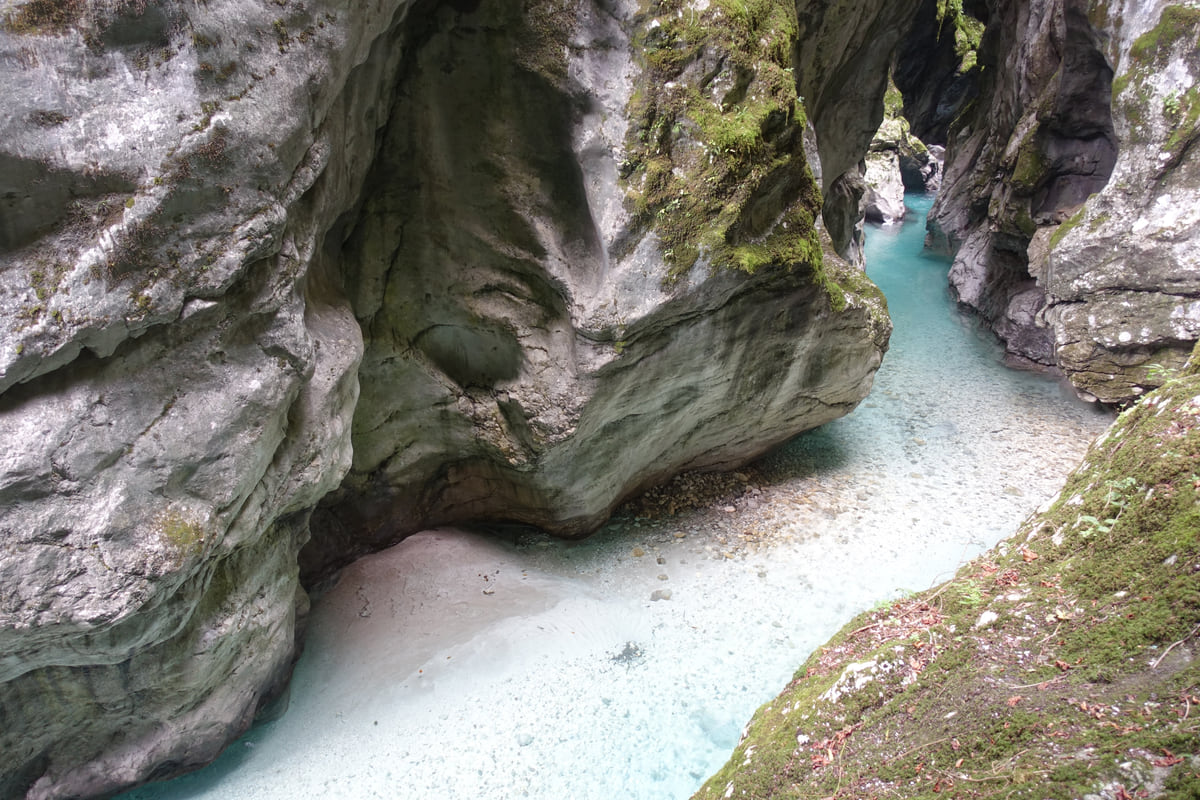
Turquoise water runs between grey rock walls in the Tolmin Gorges, the southern gateway to Triglav National Park
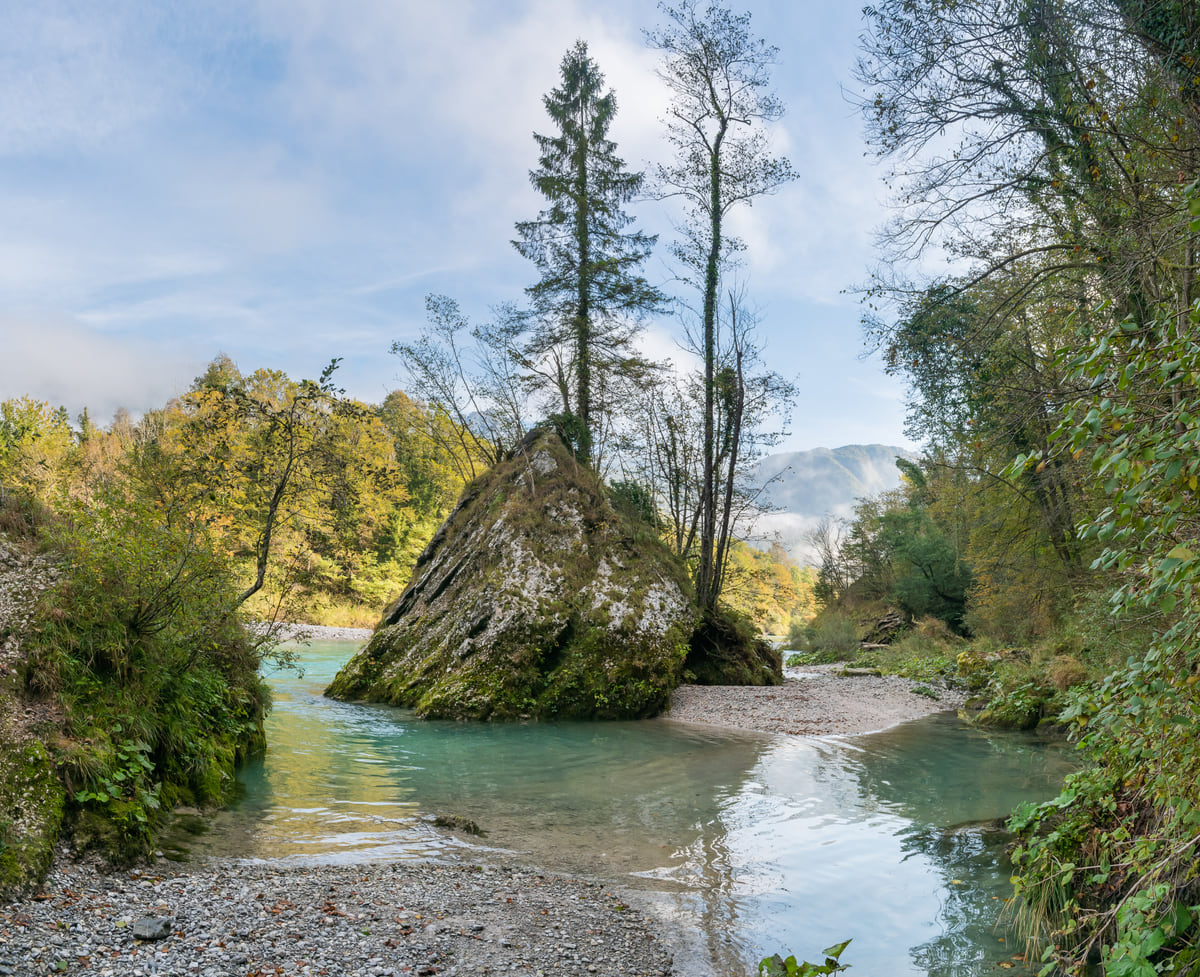
The Soča river with its turquoise water flowing round a large tree-topped rock near Kamno, among riverside woodland
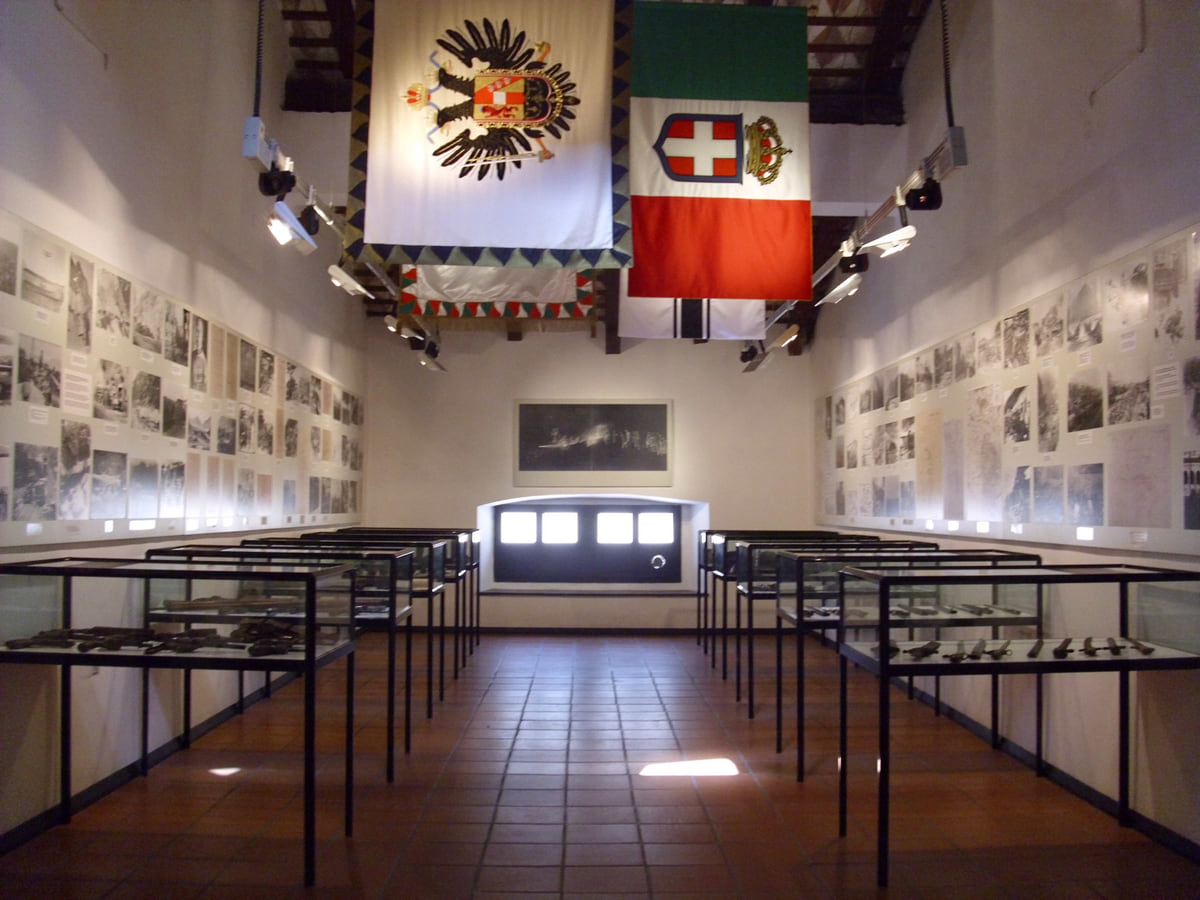
A room in the Kobarid Museum with display cases, war photographs on the walls and Austro-Hungarian and Italian flags
Test yourself
True or false?
0/3 Pick before you peek.
-
The Tolmin Gorges are the lowest point of Triglav National Park.
See the answer
True. The confluence of the Tolminka and the Zadlaščica, at 180 m, is the park's lowest point.
-
Kozlov rob castle is intact and lived in.
See the answer
False. It was abandoned in the second half of the 17th century and its ruins are being restored bit by bit.
-
The Great Tolmin Peasant Revolt took place in 1713.
See the answer
True. The Tolmin Museum presents it in its permanent exhibition as part of the fight for old rights.
What to see
What to see in Tolmin
Common questions about Tolmin
What is there to see in Tolmin?
The Tolmin Gorges, Kozlov rob castle, the Tolmin Museum in the former Coronini mansion, the German charnel house and, in the Tolminka valley, the memorial church at Javorca.
Why is Tolmin called a festival town?
Because every summer Sotočje, where the Soča meets the Tolminka, hosts several festivals. For 2026 the Slovenian Tourist Board listed Butik, Tolminator and Punk Rock Holiday. Metaldays, the most famous, left in 2023 and no longer exists.
What is Kozlov rob?
A hill above Tolmin with the ruins of a castle first recorded in the 12th century and held by the patriarchs of Aquileia, the counts of Gorizia, Venice and the Habsburgs. Today it has an interpretation centre and an educational trail.
What is in the Tolmin Museum?
Archaeological finds from Most na Soči, especially from the early Iron Age, life in the Tolmin region and the Great Peasant Revolt of 1713, plus temporary exhibitions.
What is the German charnel house in Tolmin?
A memorial built between 1936 and 1938 on the bank of the Soča near Tolmin, holding the remains of 965 German soldiers who fell in the twelfth battle of the Isonzo.
0 of 425 Slovenia guides
Your next stamp
- Javorca church
- Soča Valley
- Tolmin Gorges
- Slovenj Gradec
- Metaldays
- Solčava
- Zagorje ob Savi
- Bovec
- Bogenšperk Castle
- Bogojina
- Debeli rtič
- Ig pile dwellings
- Jeruzalem
- Kolpa River
- Koper
- Lake Cerknica
- Lipica
- Ljubljana
- Ljubljana to Bled
- Mariborsko Pohorje
- Mount Snežnik
- Palace Portorož
- Park of Military History
- Plečnik House
- Postojna
- Postojna Cave
- Škocjan Caves
- Štanjel
- Tartini Square
- Trbovlje
- Županova jama
- Izola
- Kamnik
- Karst
- Ljubljana to Postojna
- Lovrenc Lakes
- Maribor
- Portorož
- Predjama Castle
- Things to do in Ljubljana
- Travel guide
- Vilenica Cave
- Celje
- Cerknica
- Domžale
- Hrastnik
- Ljubljana in a day
- Ljubljana to Piran
- Piran
- Slovenian Istria
- Strunjan
- Things to do
- Activities
- Ankaran
- Grosuplje
- Litija
- Ljubljana in two days
- Pivka
- Sečovlje salt pans
- Velenje
- Brežice Castle
- Getting around Ljubljana
- Ilirska Bistrica
- Mežica Mine
- Most beautiful places
- Novo mesto
- Sevnica Castle
- Terme Olimia
- Vrhnika
- Žiče Charterhouse
- Dolenjska
- Ig
- Prettiest villages
- Ptuj
- Sežana
- Divača
- Medvode
- Murska Sobota
- Posavje
- World Heritage
- Hrpelje-Kozina
- Logatec
- Map
- Mengeš
- Brezovica
- Komen
- Savinjska
- Where is Slovenia
- Bled
- Brežice
- Čatež ob Savi
- Celje Castle
- Coal Mining Museum
- Gorenjska
- Hotels in Piran
- Hrastovlje
- Karawanken Geopark
- Koroška
- Kostanjevica Cave
- Kostel Castle
- Krokar primeval forest
- Kurentovanje
- Lent
- Ljubljana Castle
- Ljubljana Cathedral
- Logar Valley
- Oldest vine in the world
- Olimje
- Otočec
- Regions
- Rimske Toplice
- Rinka Waterfall
- Rogla
- Sava River
- Topolšica
- Velika Planina
- Goriška
- Krško
- Lake Bled
- Municipalities
- Podravje
- Prešeren Square
- Ravne na Koroškem
- Restaurants in Piran
- Škocjan Inlet
- Volčji Potok Arboretum
- Bled Island
- Cities
- Mežica
- Pomurje
- Sevnica
- Socerb Castle
- Bled Castle
- Coast and Karst
- Dravograd
- Kostanjevica na Krki
- Population
- Notranjska
- Ojstrica viewpoint
- Radlje ob Dravi
- Size
- Central Slovenia
- Language
- Mislinja
- Plečnik's Ljubljana
- Slovenska Bistrica
- Vila Bled
- Currency
- Grand Hotel Toplice
- Ormož
- Zasavje
- EU and Schengen
- Hotel Savica Garni
- Hotels in Bled
- Pohorje
- Haloze
- History
- Restaurants in Bled
- Flag and symbols
- Hoče-Slivnica
- Bizeljsko
- Bohinj
- Christmas in Ljubljana
- City Hotel Ljubljana
- Gorjanci
- Kranj
- Krka River
- Laško
- Moravske Toplice
- Ptuj Castle
- Public holidays
- Rajhenburg Castle
- Šentilj
- Slovenia beaches
- Šmartno pri Litiji
- Uršlja Gora
- Brdo Castle
- Independence Day
- Lake Bohinj
- Ljubljana Festival
- Radenci
- Rogaška Slatina
- Day trips from Ljubljana
- Jesenice
- Lendava
- Podčetrtek
- Savica waterfall
- Time zone
- Dobrna
- Facts
- Ljubljana nightlife
- Ljutomer
- Nova Gorica
- Vogel
- Bohinjska Bistrica
- Gornja Radgona
- Ljubljana Old Town
- Slovenia and Croatia
- Solkan
- Zreče
- Grad
- Sabotin
- Slovenia, Italy and Austria
- Slovenske Konjice
- Stara Fužina
- Trnovo
- Goričko
- Holidays and tours
- Hotels in Bohinj
- Škofja Loka
- Vitanje
- Škofja Loka Castle
- Slovenia or Slovakia
- Šoštanj
- Veržej
- Slovenian phrases
- Slovenia in 3 days
- Bela krajina
- Caves in Slovenia
- Črnomelj
- Dragon Bridge
- Gorje
- Hiking
- Hotels in Maribor
- Kozjansko Regional Park
- Kranjska Gora
- Lake Ptuj
- Ljubljana Marshes
- Slovenia in 5 days
- Vinarium Tower
- Where to stay in Ljubljana
- Žalec
- Metlika
- Slovenia castles
- Slovenia in a week
- Slovenian Mountain Trail
- Triple Bridge
- Vintgar Gorge
- Vršič Pass
- Where to eat in Ljubljana
- Best viewpoints in Slovenia
- Central Market
- Juliana Trail
- Lake Jasna
- Road trip
- Semič
- Žirovnica
- Kočevje
- Metelkova
- Motorhome
- Museums in Slovenia
- Naklo
- Soča rafting
- Tržič
- Zelenci
- Jezersko
- Kostel
- Lake Planšar
- Skiing
- Slovenia with kids
- Slovenian Alpine Museum
- Tivoli Park
- Best time to visit
- Cerklje na Gorenjskem
- Cycling
- Dolenjske Toplice
- Ljubljanica river
- Mojstrana
- Šenčur
- Krvavec
- National Gallery
- Parenzana
- Peričnik waterfall
- Šmarješke Toplice
- Weather
- National and University Library
- Paragliding
- Slovenia in winter
- Strmol Castle
- Trebnje
- Vrata valley
- Climbing
- Events
- Martuljek waterfalls
- Žale
- Fly fishing
- In January
- Ljubljana museums
- National Museum of Slovenia
- Rateče
- Festival Lent
- Golf
- Hotels in Ptuj
- In February
- Kamnik-Savinja Alps
- Nature parks
- Parking in Ljubljana
- Pekel Cave
- Planica
- Snežnik Castle
- Gornji Grad
- In March
- Kranjska Gora ski resort
- Lakes
- Trenta
- Ziplines
- Alpe Adria Trail
- Hotels in Kranjska Gora
- In April
- Kanin
- Nazarje
- Waterfalls
- In May
- Rivers
- Virje waterfall
- Vransko
- Hotels in Bovec
- In June
- Mountains
- Šentjur
- Dobra Vila Bovec
- In July
- Ljubljana Card
- Mozirje
- Spas
- In August
- Nebesa Chalets
- Rečica ob Savinji
- In September
- Kobarid
- Šmartno ob Paki
- In October
- Kobarid Museum
- Hiša Franko
- In November
- In December
- Radovljica
- Železniki
- In spring
- Museum of Apiculture
- Žiri
- In summer
- Kropa
- Brezje
- In autumn
- Begunje
- Slovenia in 10 days
- Most na Soči
- Two weeks in Slovenia
- Idrija
- Ljubljana Marathon
- How to get there
- Idrija mercury mine
- Wild Lake
- Cerkno
- Flights
- Laufarji
- Divje babe
- Franja Partisan Hospital
- Ljubljana Airport
- Ajdovščina
- Nearby airports
- Venice to Ljubljana
- Vipava
- Vipavski Križ
- Zagreb to Ljubljana
- Brda
- Trains to Slovenia
- Getting around
- Šmartno
- Dobrovo Castle
- Trains
- Buses
- Julian Alps
- Car hire
- Triglav National Park
- Driving
- Pokljuka
- Triglav Lakes
- Vignette
- Mount Triglav
- Taxis
- Distances
- Soča River
- Trieste to Ljubljana
- Kozjak Waterfall
- Vienna to Ljubljana
- Boka Waterfall
- Budapest to Ljubljana
- Ljubljana to Maribor
- Walk of Peace
- Bled to Bohinj
- Mangart
- Lake Krn
- Prices and budget
- Slovenia on a budget
- Vipava Valley
- Free things to do
- Otlica Natural Window
- Entry requirements
- Rihemberk Castle
- Customs
- Safety
- Scams
- Bears
- Healthcare
- Mobile and roaming
- Plugs
- Packing list
- What to buy
- Hotels
- Campsites
- Farm stays
- Mountain huts
- Food
- Bled cream cake
- Wine
- Potica
- Prekmurska gibanica
- Štruklji
- Carniolan sausage
- Idrija žlikrofi
- Beer
- Tipping

Questions about Tolmin? Write to me
I read every email. If a fact is wrong or missing, tell me and I will check it.
My email sergiolepone@gmail.com
By
Tourism graduate with a master’s in Tourism Management and Planning from the University of Málaga, who has travelled across Europe. He writes every guide from official sources and his own judgement.
Published on . Updated on . Facts checked on .
Sources
Some links in this guide are affiliate links: if you book through them, the site earns a commission at no extra cost to you. Affiliate disclosure
Photos: Krzysztof Golik (CC BY-SA 4.0); Luka Peternel (CC BY-SA 4.0); Krzysztof Golik (CC BY-SA 4.0); Lokiseinchef (CC BY 3.0), via Wikimedia Commons.