Central Slovenia is the Osrednjeslovenska region: 25 municipalities, 2,334 km² and 573,209 residents on 1 January 2026, the most populous and densest in the country. It centres on Ljubljana, which draws 90% of its tourists, and takes in Kamnik, the herders' village of Velika planina, the marshes with the Ig pile dwellings and Bogenšperk Castle.
I'd sleep in Ljubljana and explore the surroundings in half-day trips. Kamnik and Velika planina, the marshes and Bogenšperk are close at hand and hardly anyone goes, because everyone heads straight for Bled.
Sergio LeponeMy advice for Central Slovenia
Central Slovenia: the quick answer
Full read: 3 min
Osrednjeslovenska is Ljubljana's statistical region, with 25 municipalities and 573,209 residents.
It is the most populous and densely settled region, at 245.6 people per km².
Ljubljana takes 90% of its tourists, 1,392,728 of 1,547,866 arrivals in 2025.
Beyond the capital, see Kamnik, Velika planina, the Ljubljana Marshes and Bogenšperk.
Notebook
Before you go to Central Slovenia, this
01 Most beautiful
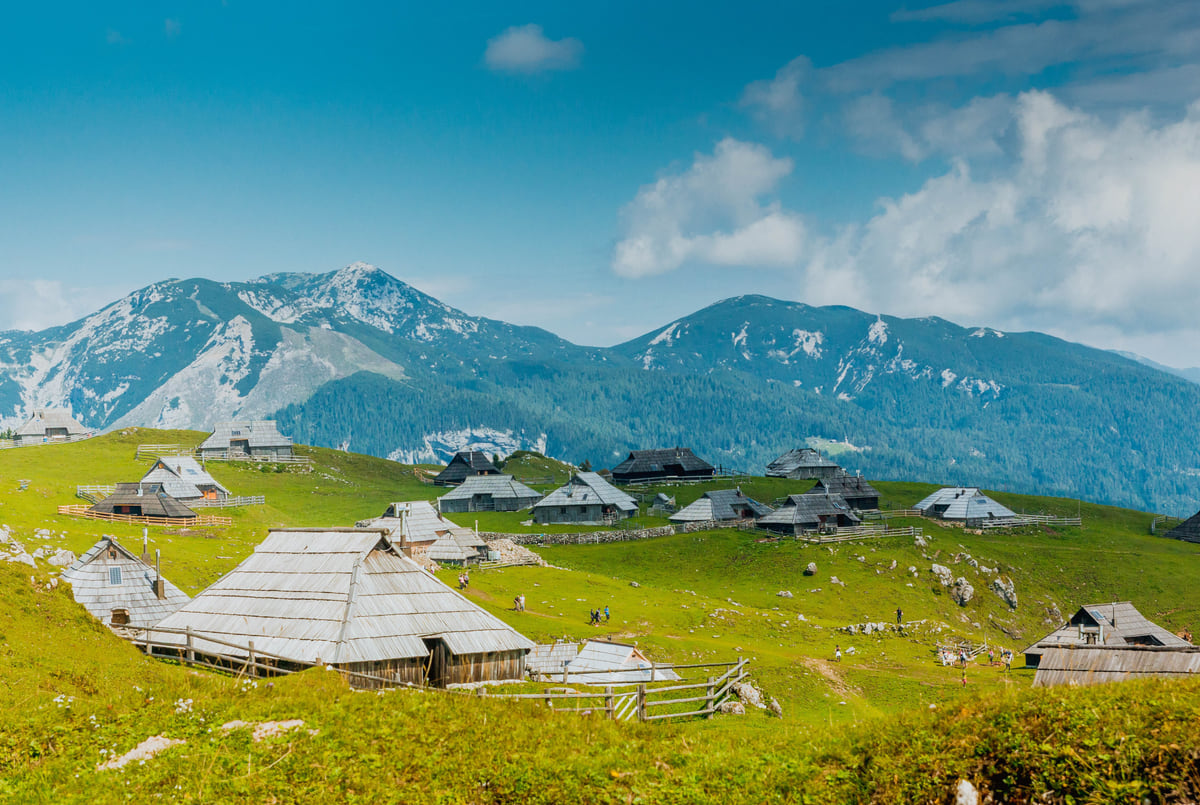
Velika planina, the herders' village
Above Kamnik survives one of the few Alpine herders' settlements left in Europe, with wooden huts, soured milk and trnič cheese, listed as intangible heritage. A cable car and chairlift take you up.
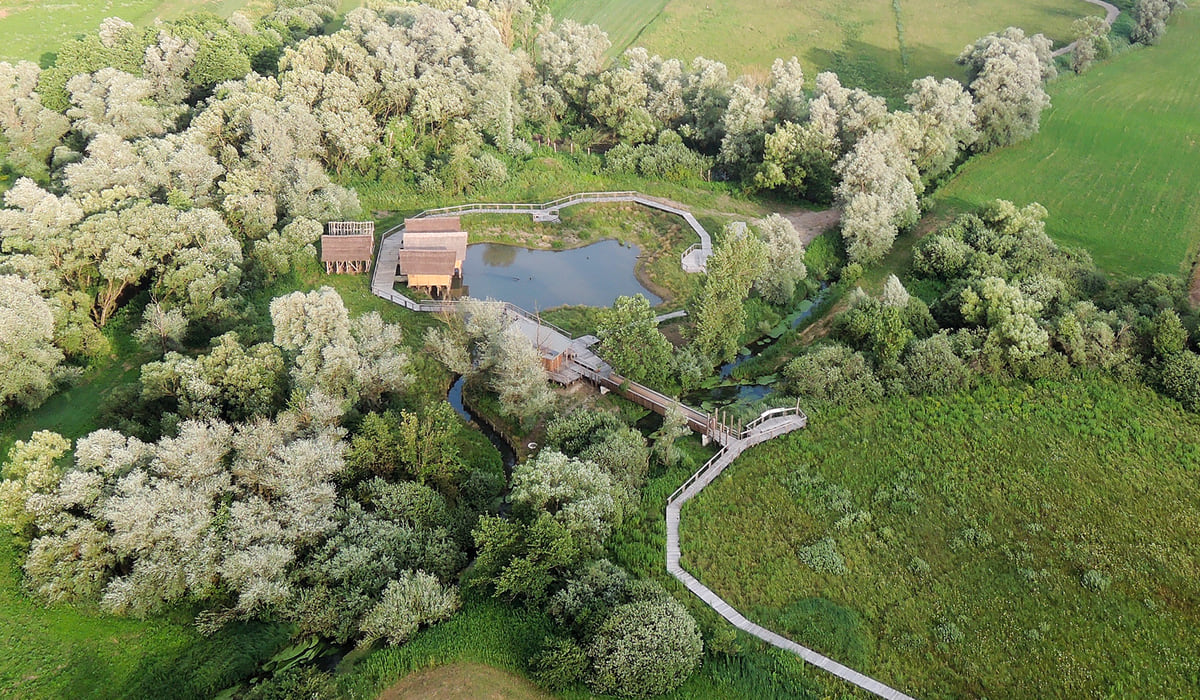
In the Ljubljana Marshes near Ig, two groups of prehistoric pile dwellings joined UNESCO's Alpine pile dwellings listing in 2011. The same marshes gave up a 5,200-year-old wooden wheel.
The capital's centre is closed to traffic, apart from the tourist train and the electric Kavalir buggies. City buses do not take cash, so carry a contactless card or buy an Urbana card.
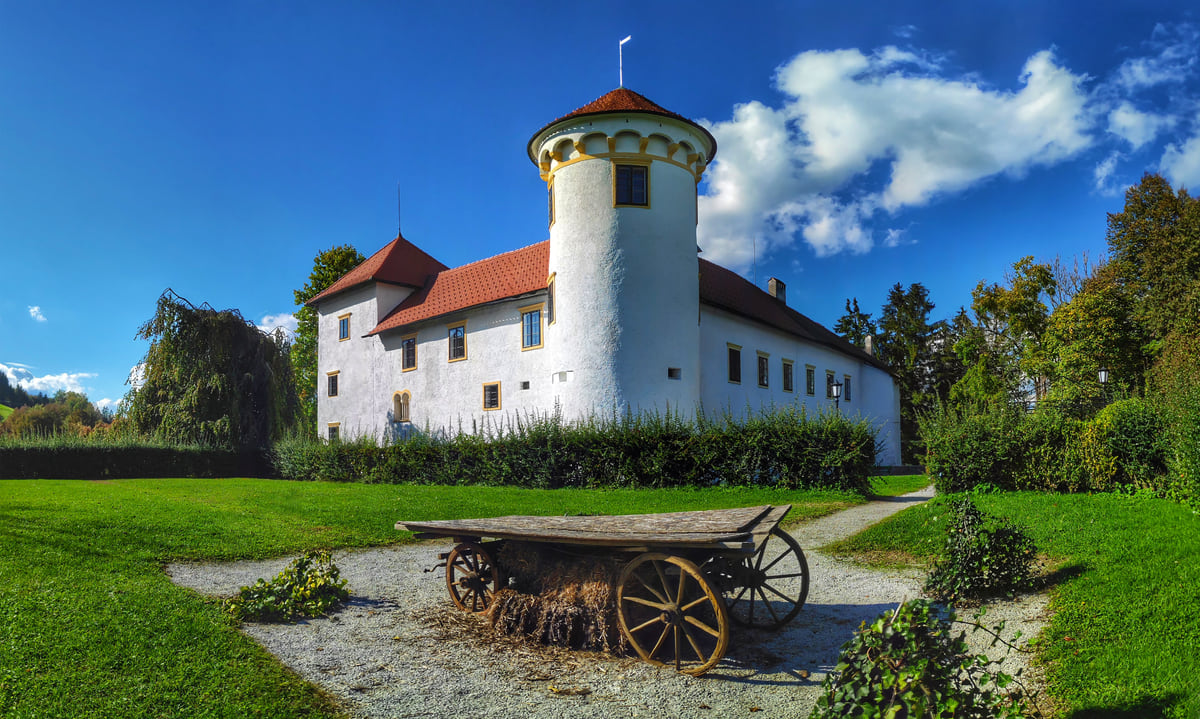
Bogenšperk, in Šmartno pri Litiji, was home to the scholar Johann Weikhard von Valvasor, a Fellow of the Royal Society in London. It now displays his work, including his study of Lake Cerknica.
What I would see in Central Slovenia beyond central Ljubljana
My own marks out of 10, weighing what you cannot see elsewhere in Slovenia and how easily it works as a trip from the capital. Opinion, not an official rating.
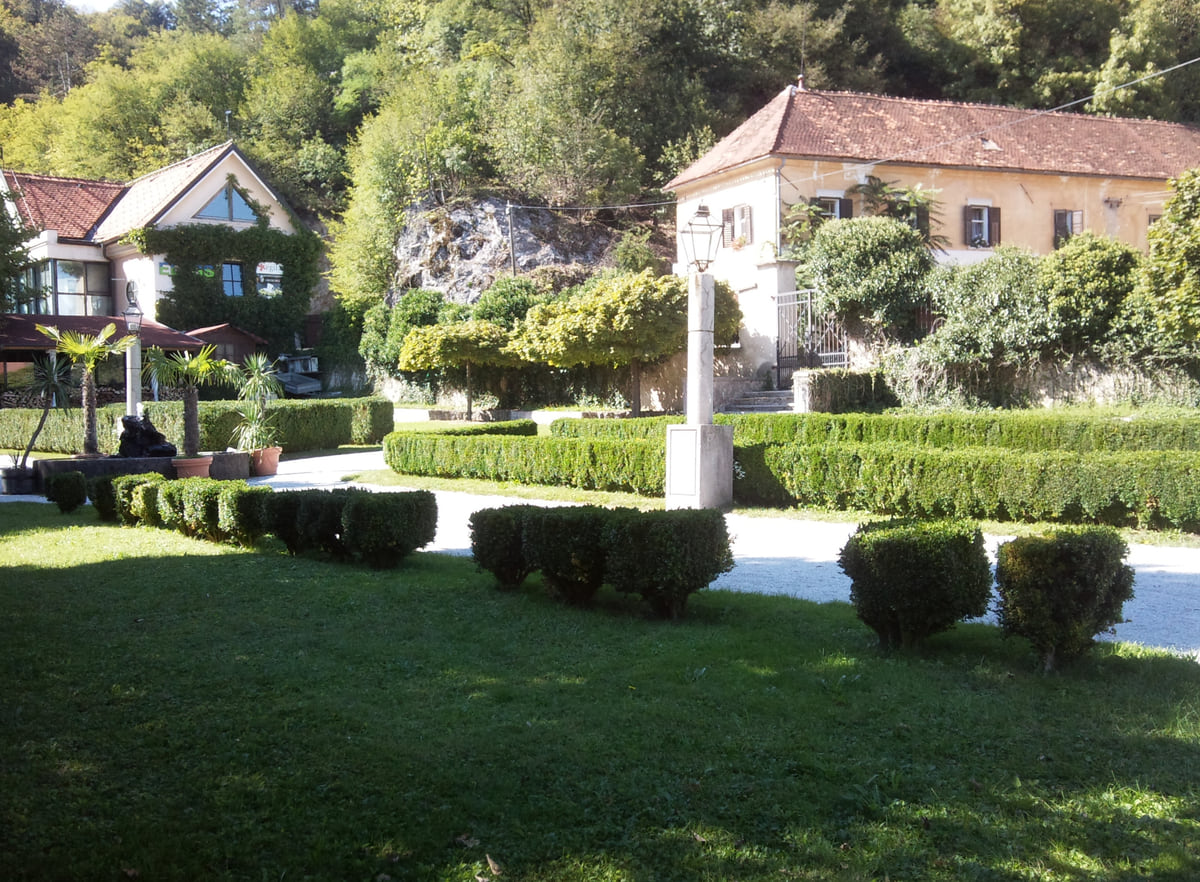
A cultural monument of national importance between Ljubljana and Kamnik. An easy garden morning.
7.8 out of 10
Ljubljana, the heart of the region
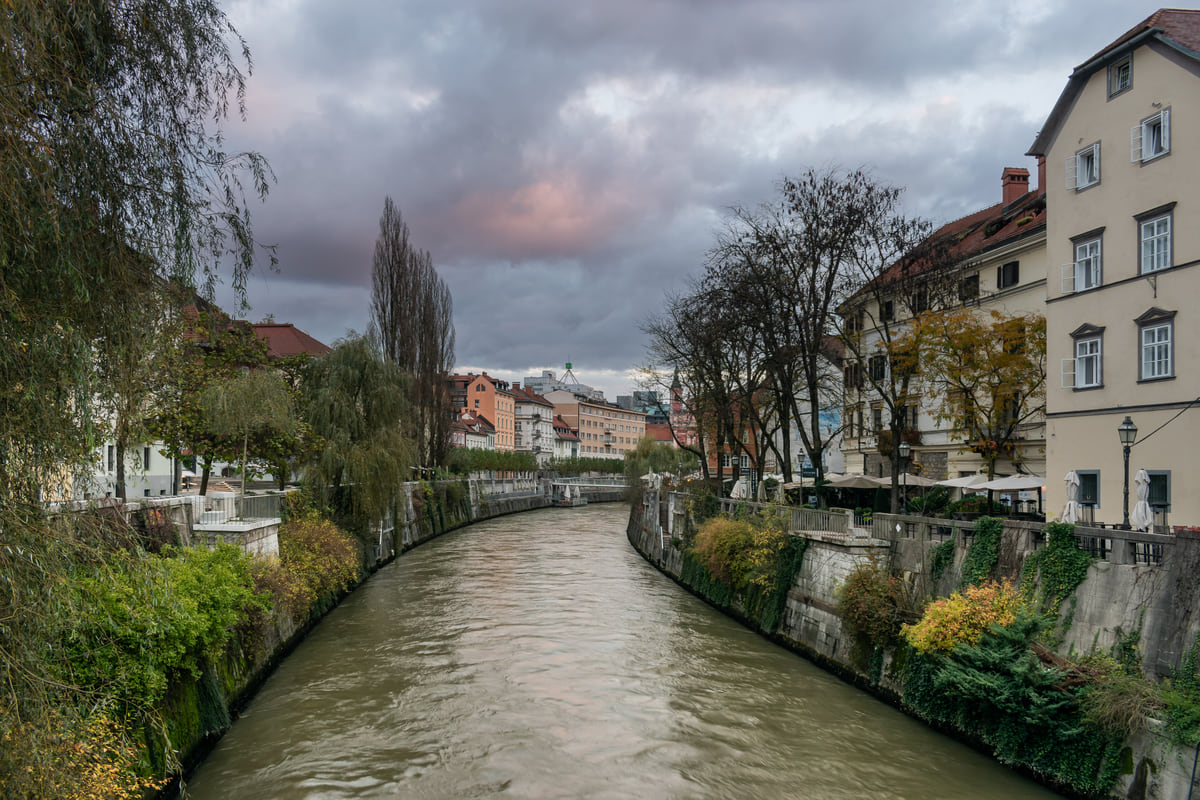
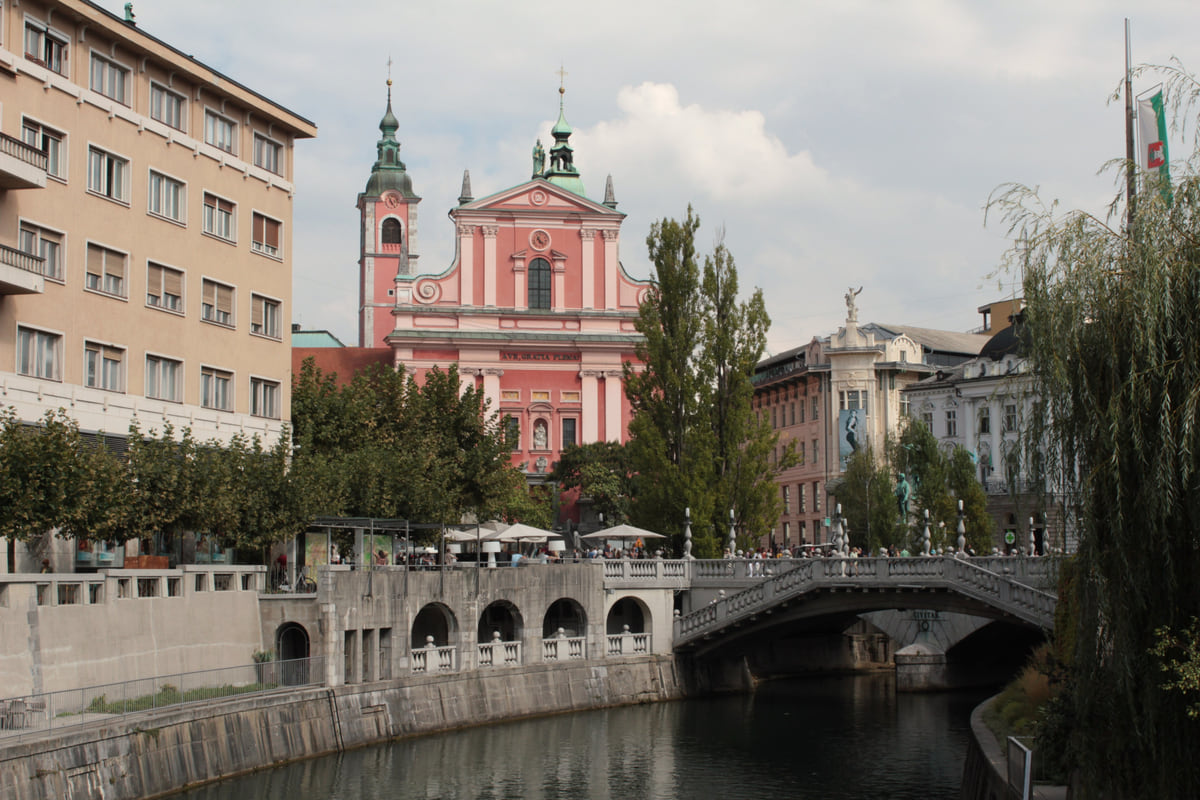
Ljubljana logged 1,392,728 tourist arrivals in 2025, far ahead of anywhere else in Slovenia. The tourist board lists its titles, European Green Capital 2016 and UNESCO City of Literature, and one striking figure, more than 542 m² of public green space per resident, nearly half of it woodland. The centre is closed to traffic, the Ljubljanica river runs through it and the townscape bears the stamp of Jože Plečnik, whose works joined the UNESCO list in 2021. It deserves at least two days, and it has its own guide.
What to see in Central Slovenia beyond Ljubljana
To the north, Kamnik is a medieval town with two castles, a monastery with a Franciscan library of around 10,000 books and a street of workshops. The tourist board puts it 23 km from the capital and claims it has more microbreweries per head than any town in the world. Above it is Velika planina, one of the few Alpine herders’ settlements still standing in Europe, with wooden huts, soured milk and trnič cheese. Between Ljubljana and Kamnik, Volčji Potok Arboretum is a cultural monument of national importance.
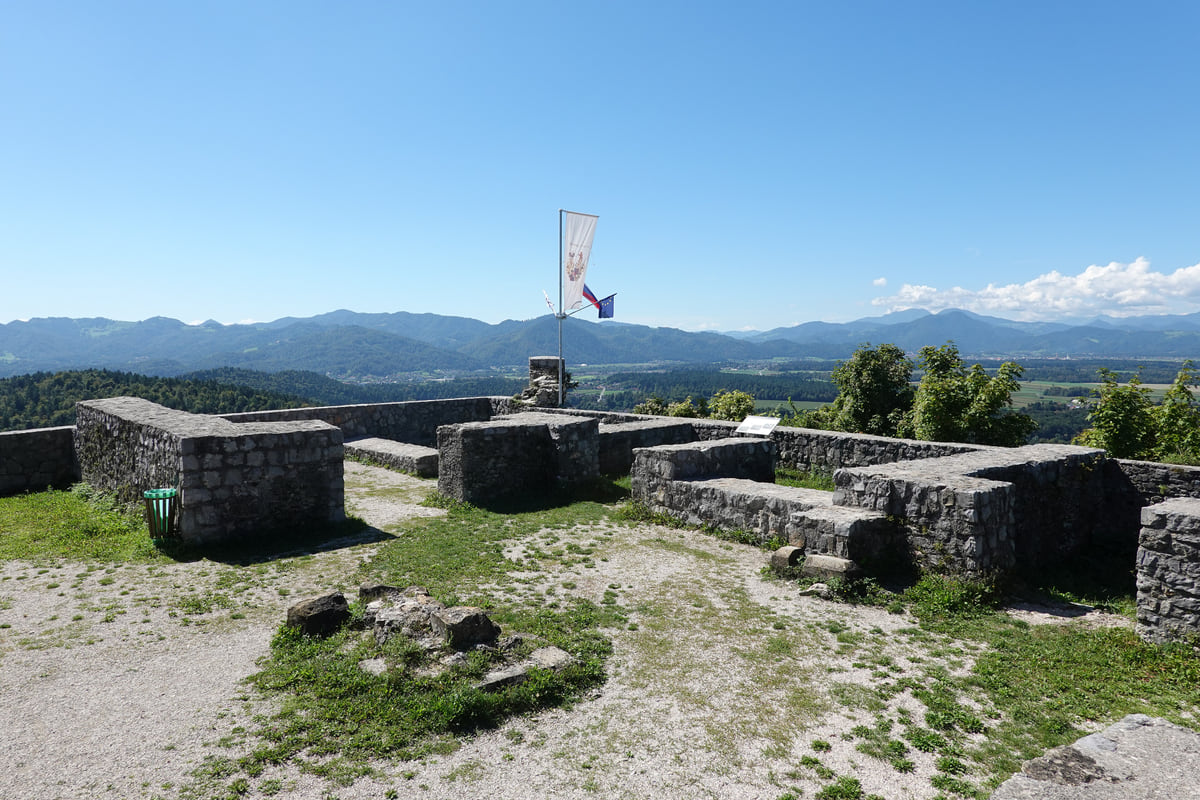
Kamnik’s three castles are worth the climb in their own right. Zaprice houses the Kamnik Intermunicipal Museum, the Little Castle on its rock carries the legend of Countess Veronika, and the ruins of the Old Castle on the hill above give views across the Kamnik-Savinja Alps, the Karawanks and the Julian Alps, according to the tourist board.
To the south spread the Ljubljana Marshes, a landscape park where the Ig pile dwellings were found, World Heritage since 2011, along with a 5,200-year-old wooden wheel and axle. In the middle of that flat landscape stands the Church of St Michael, another Plečnik work on the World Heritage List. Vrhnika, to the west, was Roman Nauportus.
To the east, Bogenšperk Castle in Šmartno pri Litiji preserves the memory of Valvasor, the polymath who described 17th-century Carniola. And near Grosuplje, Županova jama cave was a set for the Winnetou and Kekec films.
Kamnik and the mountains nearby
The region is not all flatland. Above Kamnik, the Kamniška Bistrica valley has the Veliki and Mali Predaselj gorges and the source of the river, and the tourist board recommends the Polhov Gradec Hills west of the capital, with green summits dotted with small churches and isolated farms. If Ljubljana is your only base, they are the quickest way to see rural Slovenia.
Most of the region’s 25 municipalities never appear in a guidebook, though some have a reason to. Domžale, the second most populous with 38,326 people, keeps its straw-hat tradition alive in its own museum. Kamnik also has Terme Snovik, the first tourist business in the country to earn the EU Ecolabel. By the marshes, Lake Podpeč is one of the swimming spots the tourist board mentions. And at the other end of the table is Trzin, just 8.6 km² and a single settlement, the region’s smallest.
Grosuplje, Vrhnika, Ig, Medvode, Mengeš, Brezovica and Logatec each have their own page in this guide, covering what each really offers. I would not travel for any of them alone, but several fit nicely into a free afternoon from Ljubljana.
Eating in Central Slovenia
In Ljubljana, the two fixtures are Plečnik’s central market and the Friday street-food market, Odprta kuhna. The tourist board also points to leteči žganci, the capital’s «flying žganci», the Ljubljana Quality label and, in Kamnik, ice cream made with trnič, the cheese of the Velika planina herders.
Intercity buses run from Ljubljana to almost every village, with tickets sold at the larger stations or by the driver. For Velika planina, the marshes or Bogenšperk, a car gives far more freedom. In the capital, LPP city buses do not take cash, so get an Urbana card or pay by contactless bank card.
The wooden-roofed herders' huts of Velika planina on the green pasture, with the Kamnik-Savinja Alps behind
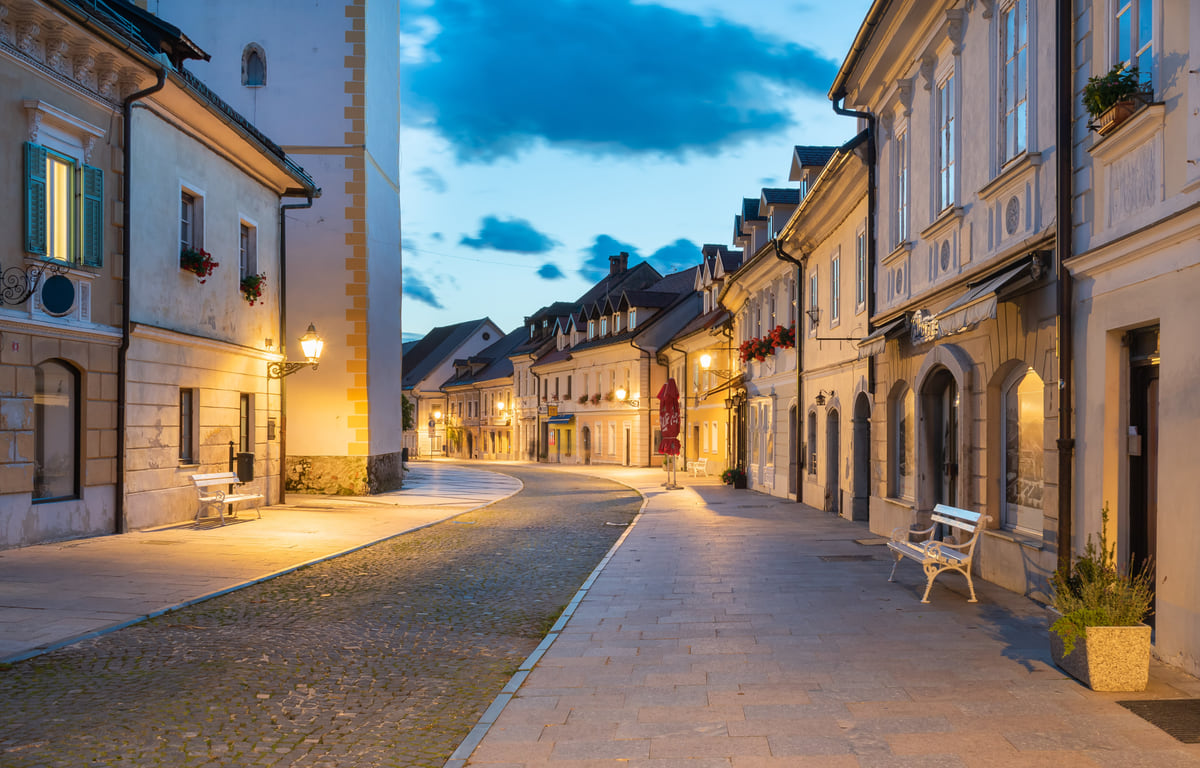
Šutna street in Kamnik at dusk, with the street lamps lit, colourful façades and the curving cobbled pavement
Bogenšperk Castle, Valvasor's home, with its round white tower and an old cart on the lawn in front
Central Slovenia's municipalities with the most visitors
Municipality
Population (1-1-2026)
Arrivals 2025
Ljubljana
302,826
1,392,728
Kamnik
29,830
43,087
Domžale
38,326
29,708
Grosuplje
22,276
16,682
Brezovica
13,202
10,131
Medvode
17,580
9,740
Logatec
15,129
8,493
Vrhnika
18,296
7,596
Ig
7,974
2,471
SURS (SiStat), population on 1-1-2026 and tourist arrivals in 2025, checked on 04-10-2026. The region has 25 municipalities; these are the busiest, plus Ig for its pile dwellings.
Test yourself
Myths and facts about Central Slovenia
0/3Pick before you peek.
Ljubljana takes the vast majority of its region's tourists.
See the answer
True. According to SURS, 1,392,728 of the region's 1,547,866 arrivals in 2025 were in Ljubljana, 90%.
Central Slovenia is the country's least populated region.
See the answer
False. It is the most populated, with 573,209 people on 1 January 2026; the least populated is Notranjska.
The pile dwellings at Ig are a World Heritage Site.
See the answer
True. Two groups of pile dwellings near Ig have been part of UNESCO's Prehistoric Pile Dwellings around the Alps since 2011.
Ljubljana, of course, and around it Kamnik and Velika planina, the Ljubljana Marshes with the Ig pile dwellings, Bogenšperk Castle, Volčji Potok Arboretum and Županova jama cave near Grosuplje.
Which municipalities make up Central Slovenia?
Twenty-five, according to SURS. The most populous are Ljubljana, Domžale, Kamnik, Grosuplje, Vrhnika and Ivančna Gorica; the smallest by area is Trzin, at 8.6 km².
What is the most populated region of Slovenia?
This one. Osrednjeslovenska had 573,209 residents on 1 January 2026, according to SURS, and a density of 245.6 per km², the highest in the country.
What day trips can I do from Ljubljana within the region?
Kamnik, 23 km away according to the tourist board, with Velika planina above it; the marshes and Vrhnika to the south; Bogenšperk to the east; and Volčji Potok Arboretum between the capital and Kamnik.
Is Central Slovenia the same as the Ljubljana region?
Not quite. Osrednjeslovenska is the statistical region of SURS, with 25 municipalities. The tourist board uses a wider destination, Ljubljana & Central Slovenia, which also includes places such as Idrija and Škofja Loka.
Questions about Central Slovenia? Write to me
If your question is not answered here, write to me and I will look it up in the official sources.
Tourism graduate with a master’s in Tourism Management and Planning from the University of Málaga, who has travelled across Europe. He writes every guide from official sources and his own judgement.