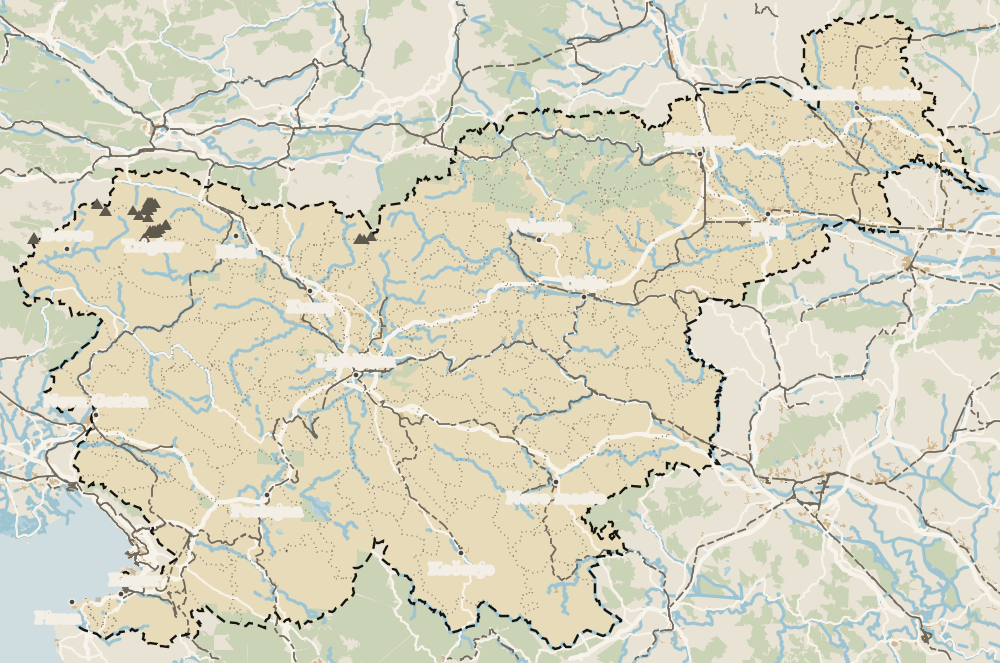
The Julian Alps, Triglav and the Soča valley lie to the north-west; Ljubljana sits in the centre; the Karst, its caves and the 47 km of coast are to the south-west, and Maribor, Ptuj and the Prekmurje plains to the east. Every number opens its guide.
Prekmurje, across the River Mura, is the best-known part of Pomurje, the north-eastern region of 1,336 km², 27 municipalities and 112,740 people (SURS, 1 January 2026), which also takes in part of Prlekija. It's flat spa country, with three kinds of thermal water, vineyards such as Jeruzalem's, gibanica and the great castle at Grad in Goričko.
It's the part of Slovenia that surprises me most, because it looks like nowhere else. I'd stay at Moravske Toplice, give one day to Prekmurje with Bogojina, the Island of Love and Grad, and the other to Lendava, Vinarium and the Jeruzalem hills.
Sergio LeponeMy advice for Pomurje
The essentials in a few lines
Full read: 3 min
Pomurska covers 1,336 km², with 27 municipalities and 112,740 people.
Moravske Toplice gets half of all arrivals, 164,739 in 2025.
There are three kinds of thermal water, black, mineral and paraffin.
The Mura is a biosphere reserve, and Grad is Slovenia's largest Baroque castle.
Notebook
Worth knowing about Pomurje
01 My tip
Three different thermal waters
The tourist board says Pomurje has three unique kinds of thermal water. Black water at Terme 3000 in Moravske Toplice, the warmest in Slovenia; mineral water at Radenci; and paraffin water at Terme Lendava.
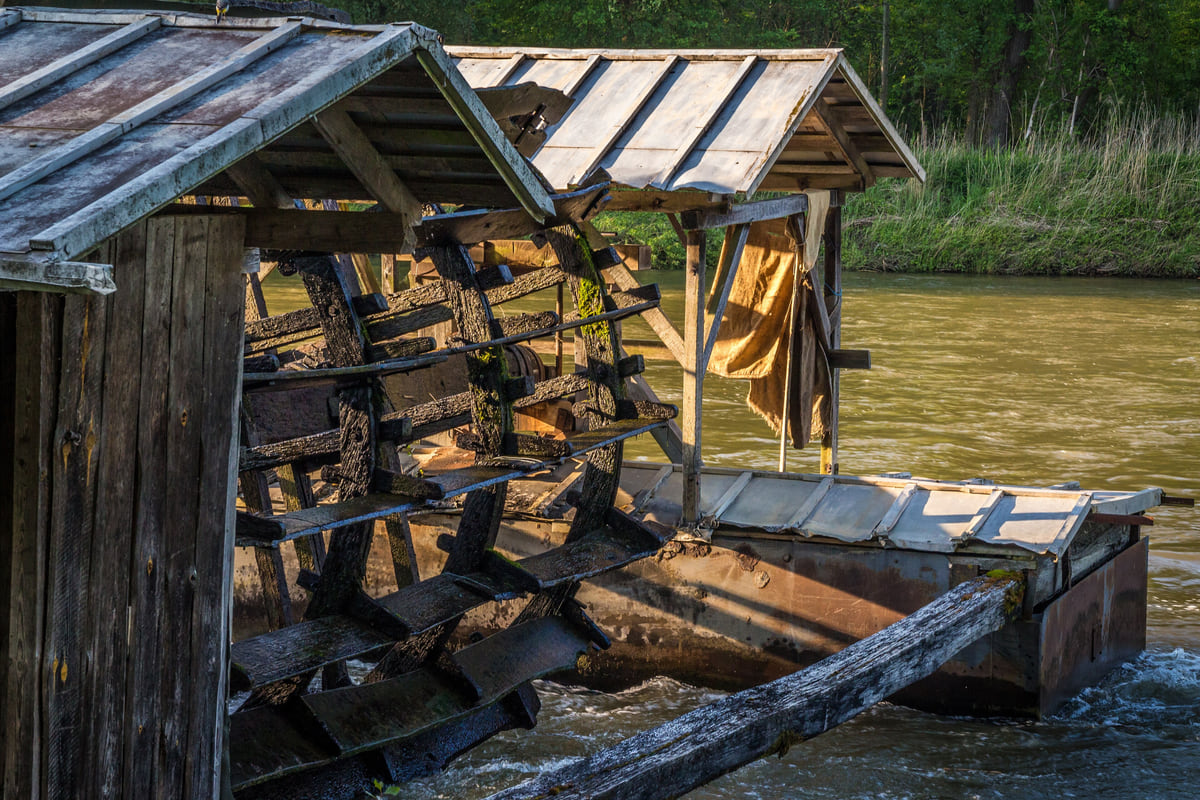
The river leaves backwaters and islands such as the Island of Love, and its biodiversity has made the area a UNESCO biosphere reserve. You can still cross it by ferry and see a floating mill.
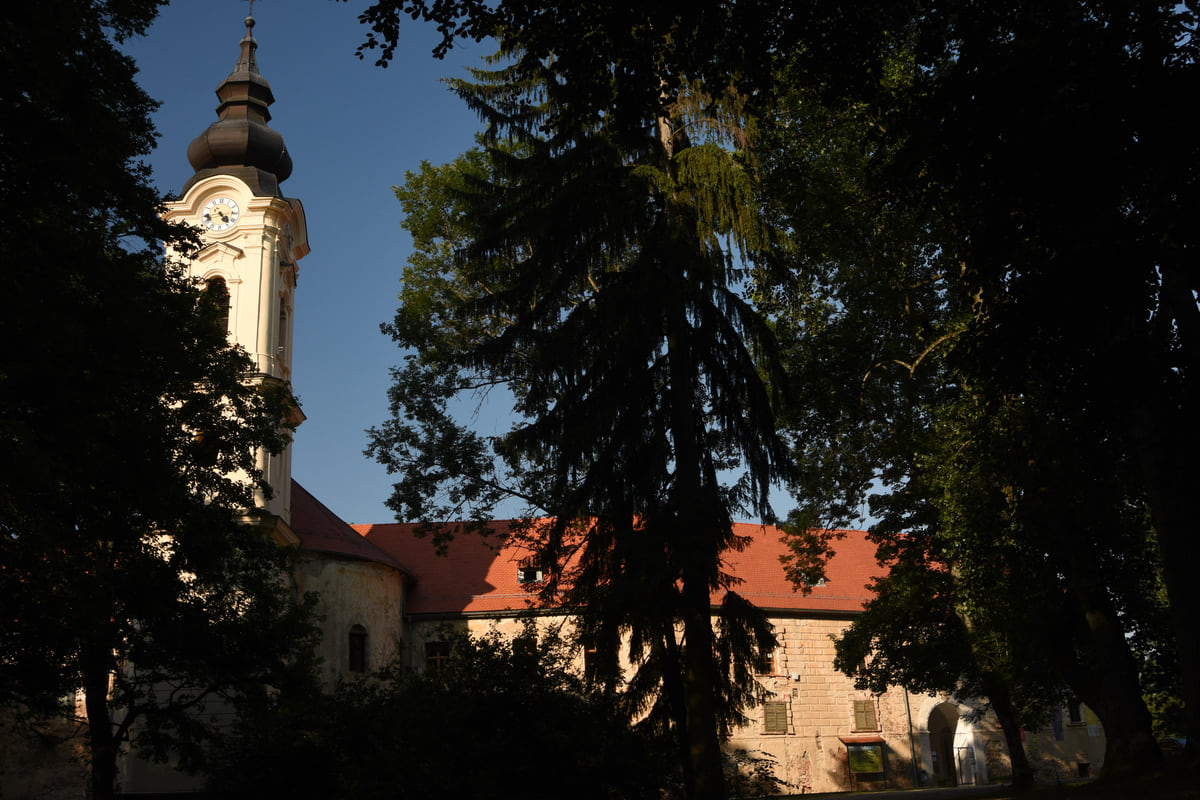
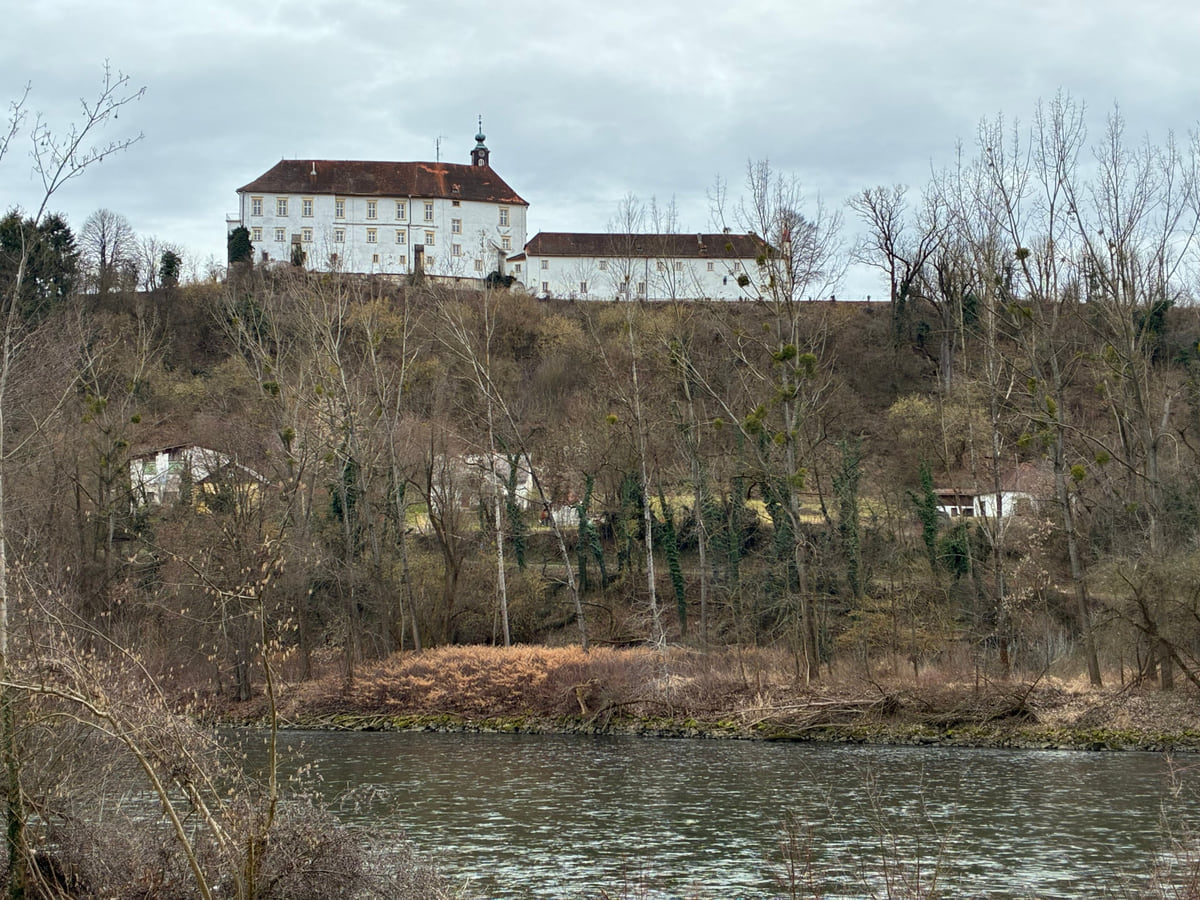
In Goričko, Grad Castle is in the tourist board's words the largest Baroque castle in Slovenia, dating back to the 11th century and set in a large English garden.
According to SURS, Pomurska covers 1,336 km², with 27 municipalities and 112,740 people on 1 January 2026. It recorded 327,138 tourist arrivals in 2025, half of them in one municipality, Moravske Toplice, the eleventh busiest in the country. That’s where Terme 3000 uses black thermal and mineral water the tourist board describes as the warmest in Slovenia. Next come Radenci, with its Radenska mineral water, and Lendava, with paraffin water. Three different waters in such a small region is its great curiosity.
At the other extreme, Hodoš/Hodos has just 335 residents and is Slovenia’s second least populated municipality. Like every statistical region, Pomurska has no government of its own.
Prekmurje, across the river
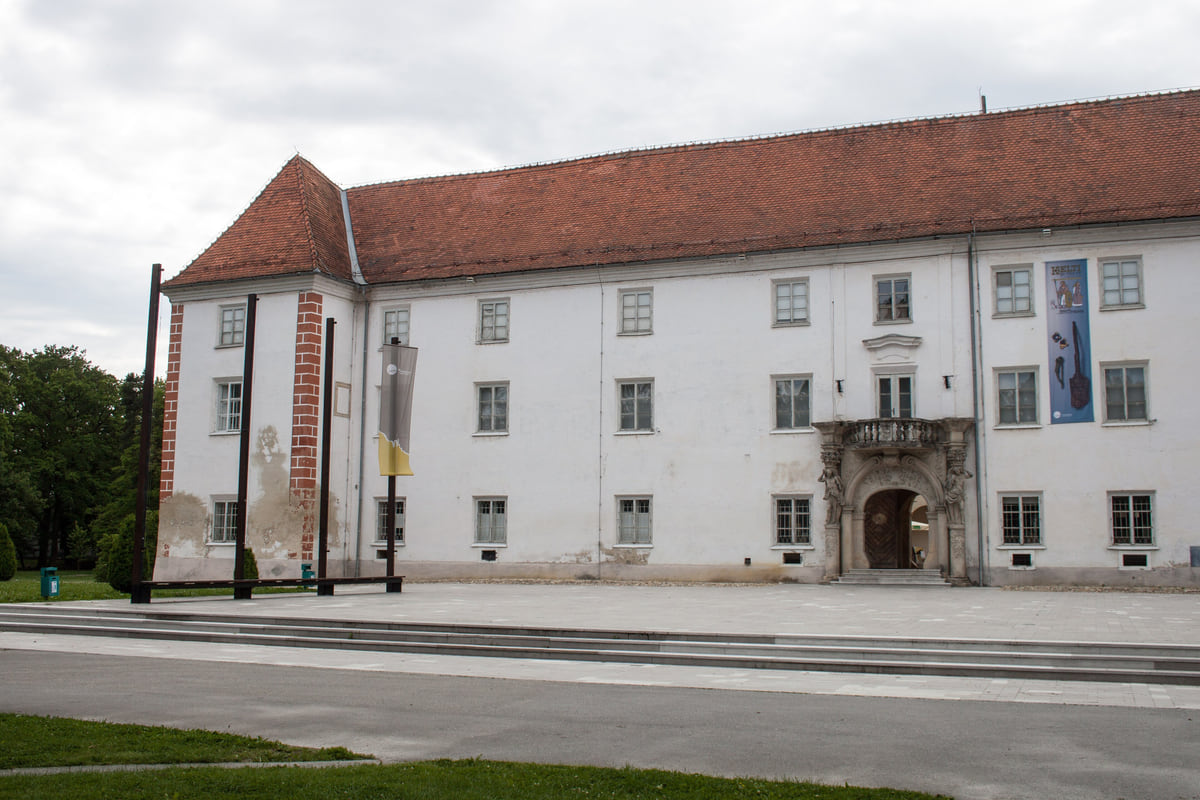
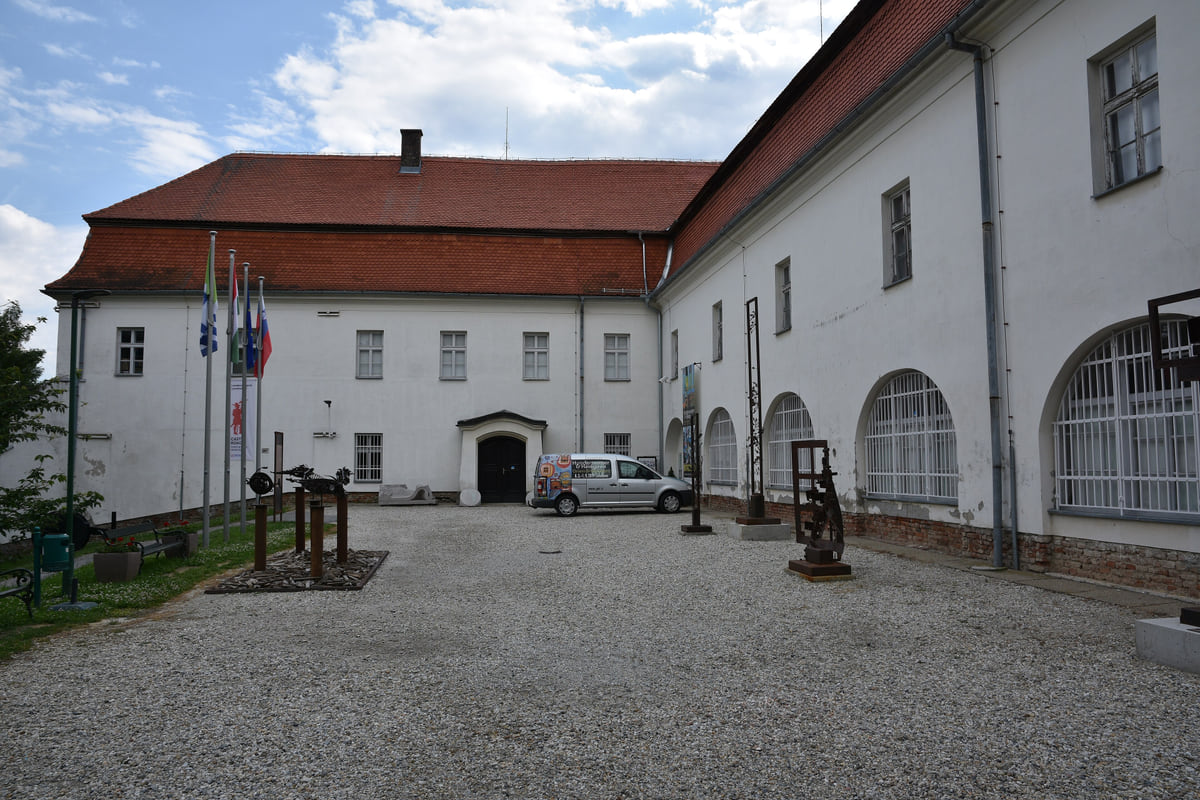
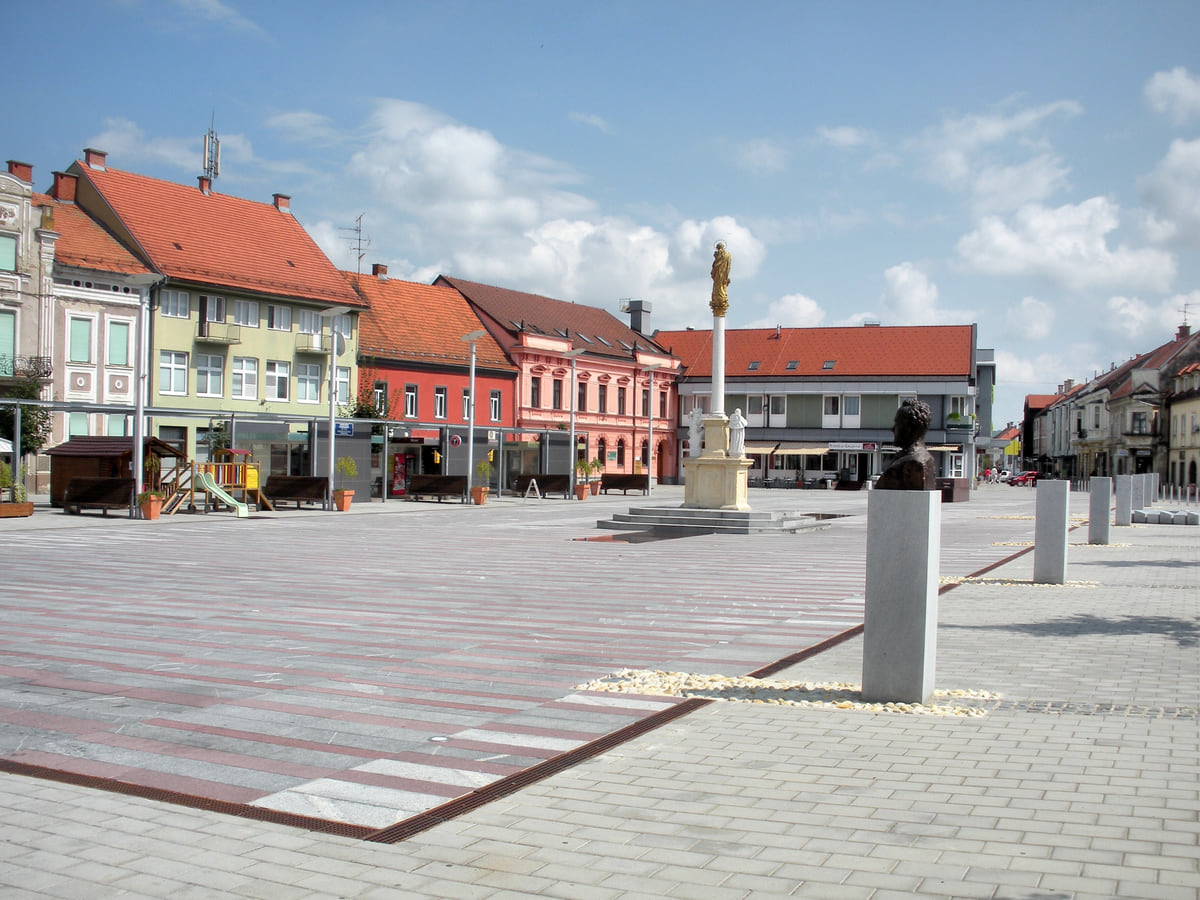
Prekmurje has a history all its own. 17 August is a national holiday, though a working day, marking the union of the Prekmurje Slovenes with the nation. This is home to the Hungarian community, which is why municipalities such as Lendava/Lendva, Hodoš/Hodos and Dobrovnik/Dobronak carry double names. The main town is Murska Sobota, with a castle housing the Pomurje Museum and Lake Sobota with its Expano pavilion.
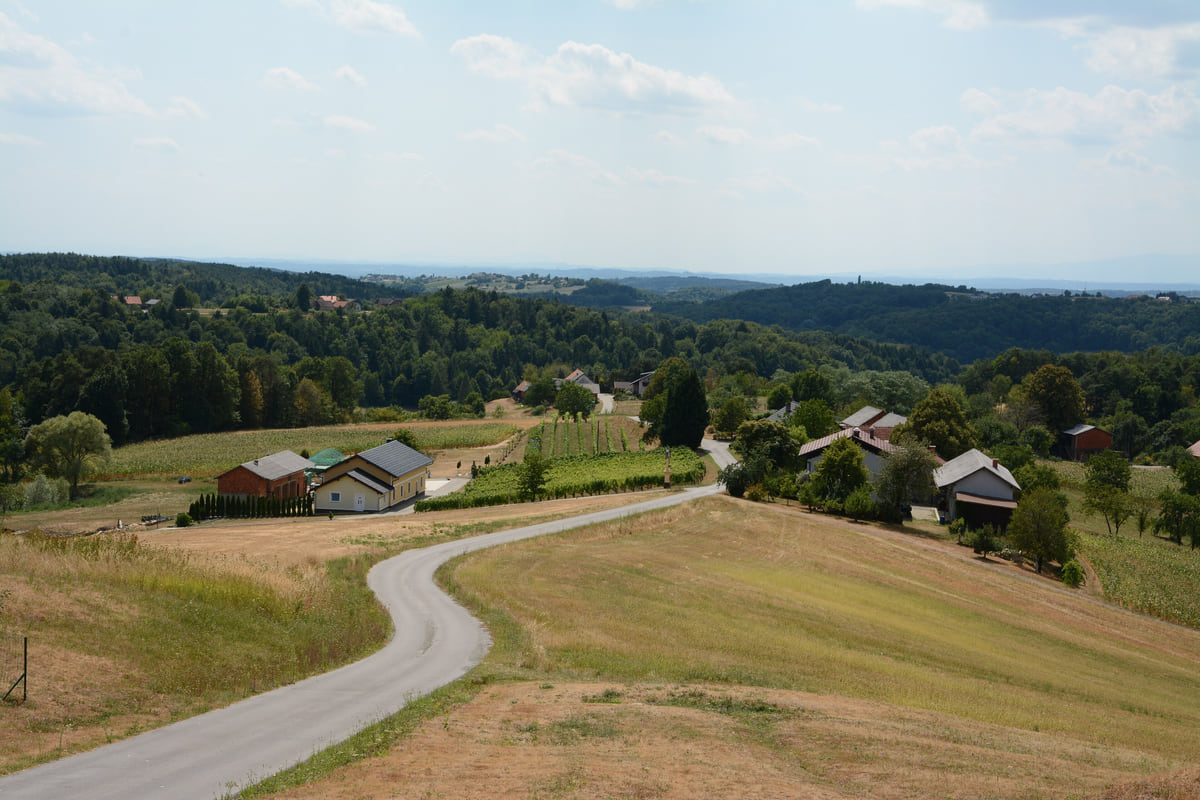
To the north spreads Goričko, a landscape park of hills where the Alps meet the Pannonian plain. Here you’ll find Grad Castle, which the tourist board calls the largest Baroque castle in Slovenia, and Lake Bukovnica with its adventure park.
What’s special about the River Mura?
The Mura is a slow river, with backwaters and meanders it has left behind over time. One of them is the Island of Love, near Moravske Toplice, where legend says lovers meet. Its biodiversity has earned the Mura area a place among UNESCO biosphere reserves, and it’s part of Natura 2000. You can still cross by ferry and visit a floating mill.
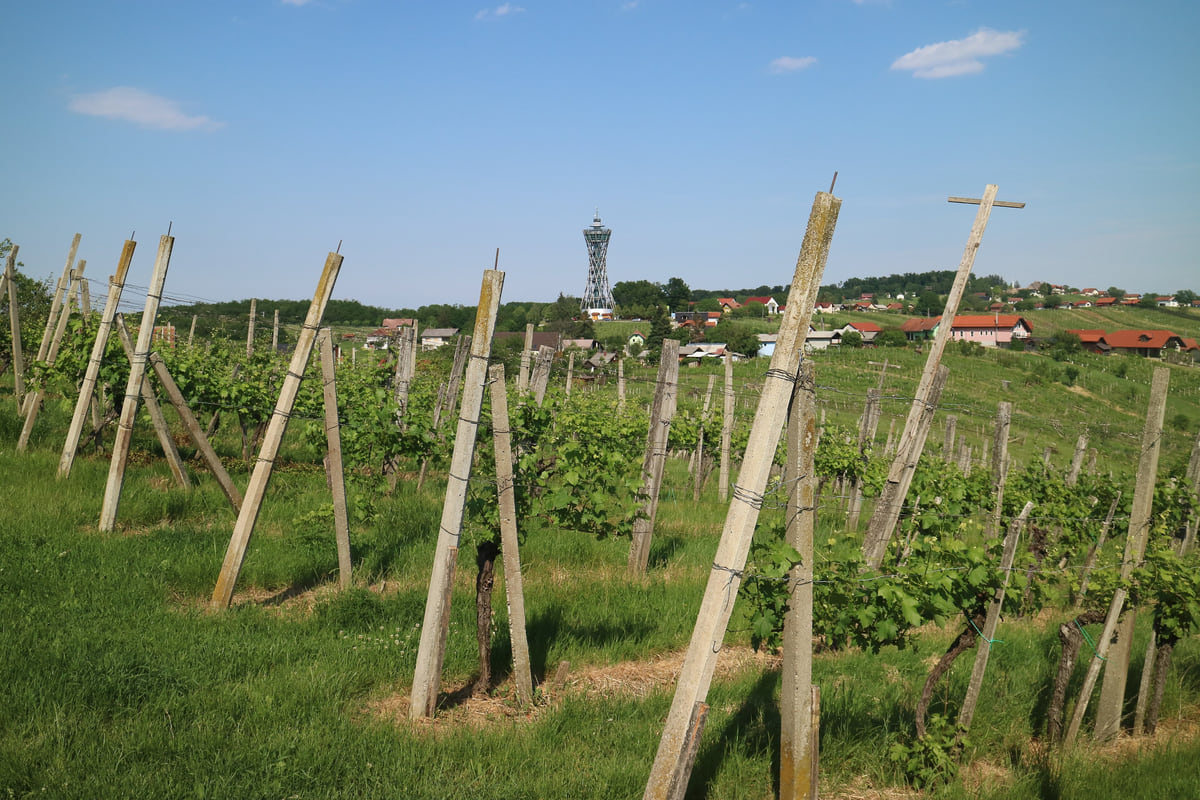
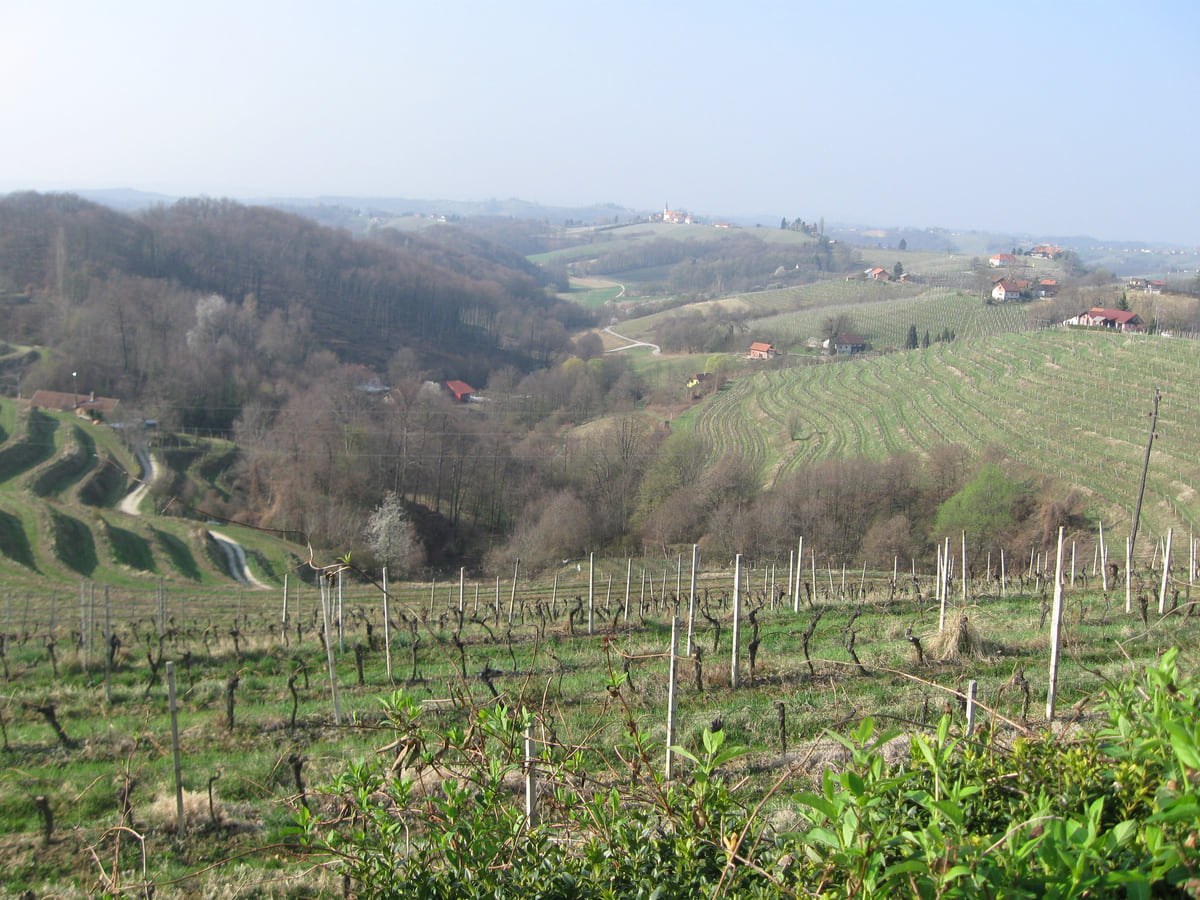
Pomurje has four wine-growing areas. The best known is Jeruzalem, in Prlekija, among the Ljutomer and Ormož hills, with a silver Slovenia Green Destination label. At Gornja Radgona a sparkling wine is made in total darkness, and among the Lendava vineyards stands Vinarium tower, with a viewing deck at 42 m looking over four countries. The tourist board presents it as the tallest tower in Slovenia.
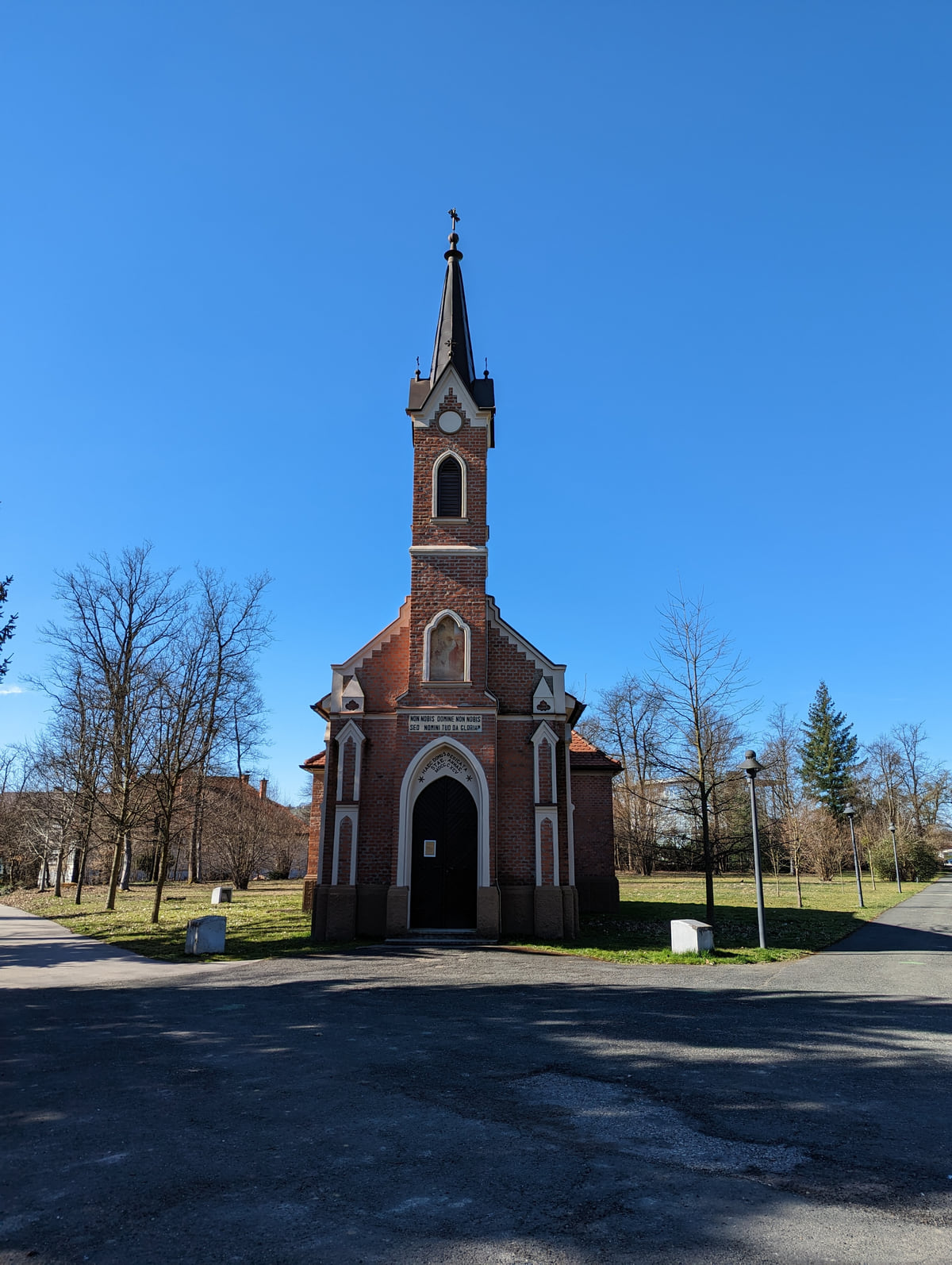
At the table, prekmurska gibanica rules, a layered cake protected as a traditional speciality, alongside pumpkin seed oil and dry-cured hams. And at Bogojina, Plečnik’s church is, for the tourist board, the region’s best-known shrine.
Castles, crafts and the outdoors
Grad isn’t the only castle worth a visit. At Negova, Apollonia, the lovestruck traveller, leads you through the rooms; Murska Sobota castle holds the regional story in the Pomurje Museum, and Lendava castle shows work by notable artists. In Goričko, an underground trail tells the story of the volcano that erupted there three million years ago, with olivine crystals as the treasure at the end.
If you’d rather use your hands, there are pottery workshops in Filovci, Veržej and Ljutomer, and basket weaving with wicker and bast. Dobrovnik’s Tropical Garden holds more than 900 exotic plants, and the adventure park by Lake Bukovnica has five courses and 58 elements up in the trees. Ljutomer is trotting country, with races and a trotter museum, and from Rakičan Manor you can ride out on horseback. For something calmer, the Island of Love has a landing for rafts, and a boat takes you across the Mura to the Biomura educational trail at Mota.
In summer the Sobota Days festival fills Murska Sobota, Lendava holds its Bogračfest food festival, and Ljutomer screens the Grossmann Fantastic Film and Wine Festival.
Given two days, the first would go on Prekmurje, with Bogojina, the Island of Love, Grad and Goričko, and the second between Lendava, Vinarium and the Jeruzalem hills. In the evenings, thermal pools at Moravske Toplice or Radenci. It’s a region made for cycling, with more than 600 km of signposted routes.
The tower and red-roofed wing of Grad Castle in Goričko, seen between tall trees against the light
Vinarium tower in the distance beyond a vineyard in the Lendava hills, with wooden vine stakes in the foreground
Pomurska's busiest municipalities for tourists
Municipality
Population 1 Jan 2026
km²
Arrivals 2025
Moravske Toplice
5,967
144.4
164,739
Radenci
5,064
34.2
40,062
Veržej
1,361
12.0
33,448
Lendava/Lendva
10,088
121.2
32,592
Ljutomer
10,850
107.2
28,381
Murska Sobota
18,317
64.4
11,028
Sveti Jurij ob Ščavnici
2,795
51.3
4,379
Gornja Radgona
8,555
74.6
1,639
SURS, population on 1 January 2026 and arrivals in 2025, checked on 15 October 2026. The region has 27 municipalities; several have no published tourism figures.
Murska Sobota climate
Annual mean
January
July
Annual rainfall
Wettest month
10.5 °C
-0.9 °C
21.3 °C
783 mm
August (114 mm)
SURS, Murska Sobota-Rakičan weather station, 2001 to 2010 average.
Test yourself
Myths and facts about Pomurje
0/3Pick before you peek.
Moravske Toplice gets more tourists than anywhere else in Pomurje.
See the answer
True. It had 164,739 arrivals in 2025, half the region's total, according to SURS.
17 August is a national holiday in Slovenia, but a working day.
See the answer
True. It marks the union of the Prekmurje Slovenes with the nation, according to the government, and isn't a day off.
Pomurje has only one kind of thermal water.
See the answer
False. The tourist board speaks of three, black, mineral and paraffin.
It's the historic area across the River Mura, in Slovenia's far north-east. It makes up most of the Pomurska statistical region, along with part of Prlekija. 17 August is a national holiday marking the union of the Prekmurje Slovenes with the nation.
What is there to see in Pomurje?
The spas at Moravske Toplice, Radenci and Lendava, Vinarium tower, Plečnik's church at Bogojina, Grad Castle and Goričko park, the Jeruzalem hills, the Island of Love on the Mura and the Expano park by Lake Sobota.
Which spas are in Prekmurje?
Terme 3000 and Terme Vivat at Moravske Toplice, Radenci with its mineral water, Terme Lendava with paraffin water, Bioterme Mala Nedelja and the Banovci spa, according to the tourist board.
What food is Prekmurje known for?
Prekmurska gibanica, a layered cake the tourist board treats as a national treasure, protected as a traditional speciality, plus pumpkin seed oil and dry-cured hams.
What languages are spoken in Pomurje?
Slovene, and Hungarian in the areas of the Hungarian community, where municipalities have double names such as Lendava/Lendva, Hodoš/Hodos or Dobrovnik/Dobronak. The tourist board calls it Slovenia's most diverse region for dialects.
What is the main town in Pomurje?
Murska Sobota, with 10,859 people in the town and 18,317 in the municipality on 1 January 2026. It has a castle housing the Pomurje Museum and Lake Sobota.
Questions about Pomurje? Write to me
If your question is not answered here, write to me and I will look it up in the official sources.
Tourism graduate with a master’s in Tourism Management and Planning from the University of Málaga, who has travelled across Europe. He writes every guide from official sources and his own judgement.

 1Murska Sobota 2Pomurje 3Moravske Toplice 4Radenci 5Lendava 6Ljutomer 7Gornja Radgona 8Grad 9Goričko 10Veržej 11Vinarium Tower