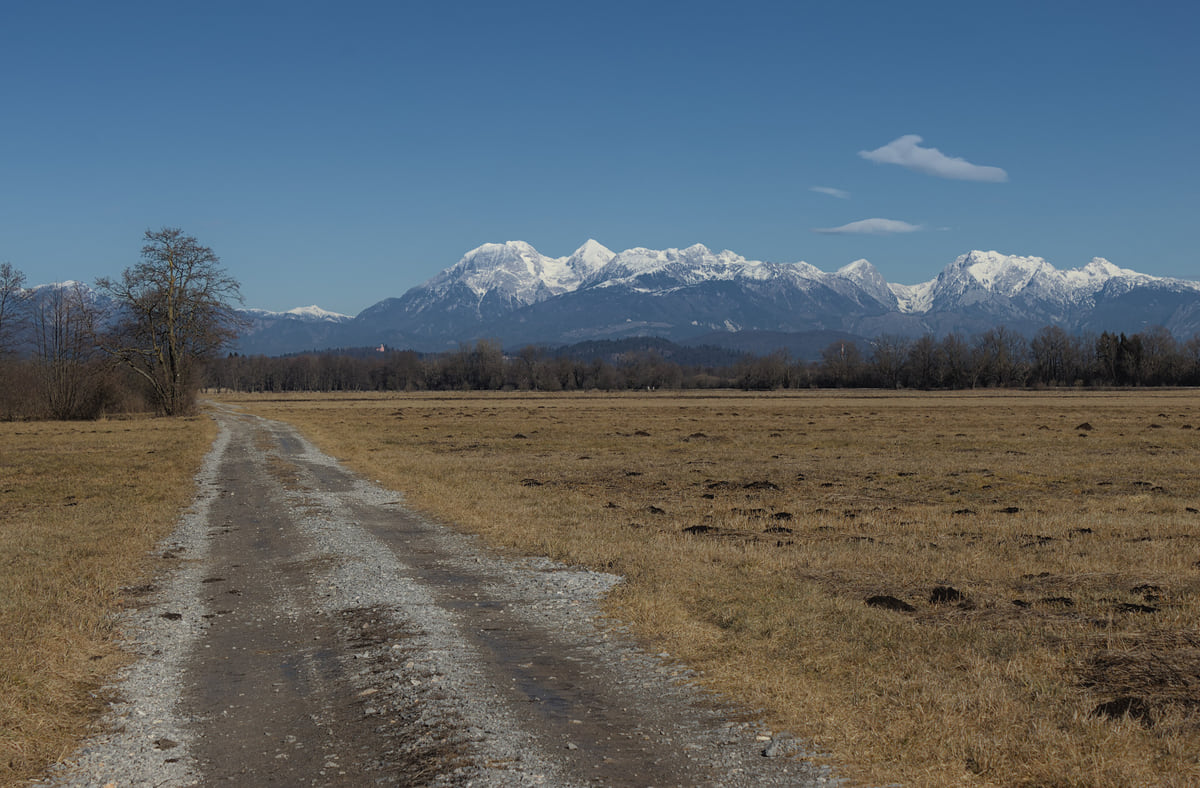
Landscape park in central Slovenia
The Ljubljana Marshes, a prehistoric lake turned into meadows

- Landscape park
- Since 2008
- Natura 2000
- Since 2004
Map
Where Ljubljana Marshes is
The Julian Alps, Triglav and the Soča valley lie to the north-west; Ljubljana sits in the centre; the Karst, its caves and the 47 km of coast are to the south-west, and Maribor, Ptuj and the Prekmurje plains to the east. Every number opens its guide.
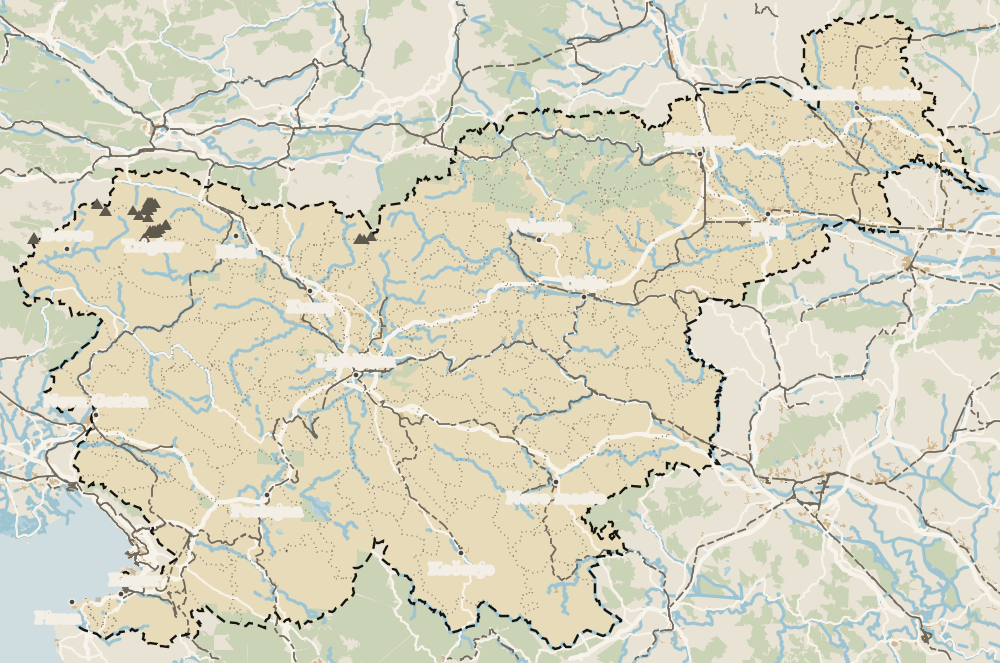 1Ljubljana 2Kamnik 3Domžale 4Grosuplje 5Vrhnika 6Ig 7Medvode 8Logatec 9Mengeš 10Brezovica 11Šmartno pri Litiji 12Ljubljana Marshes
Map data © OpenStreetMap contributors (ODbL)
- 1LjubljanaCapital of Slovenia
- 2KamnikTown in central Slovenia
- 3DomžaleTown in central Slovenia
- 4GrosupljeCentral Slovenia town
- 5VrhnikaCentral Slovenia town
- 6IgCentral Slovenia village
- 7MedvodeCentral Slovenia town
- 8LogatecCentral Slovenia town
- 9MengešCentral Slovenia village
- 10BrezovicaCentral Slovenia municipality
- 11Šmartno pri LitijiCentral Slovenia municipality
- 12Ljubljana MarshesLandscape park in central Slovenia
The Ljubljana Marshes (Ljubljansko barje) are the broad plain of wet meadows south of the capital, between Ljubljana, Ig and Vrhnika, where a lake once lay. Protected as a landscape park since 2008, they're explored by bike or on foot along trails such as Morostig and the Barjanska okna, and they hold two groups of World Heritage pile dwellings and Plečnik's wooden church at Črna vas.
I'd cycle them on a spring or autumn morning, from Plečnik's church at Črna vas towards Ig and Morostig, finishing at the Barjanska okna springs. Take water, a hat and insect repellent, as there's barely any shade.
Before you go to Ljubljana Marshes
The essentials in a few lines
Full read: 2 min
- The Ljubljana Marshes are Slovenia's largest expanse of wet meadows.
- They have been a landscape park since 2008 and Natura 2000 since 2004.
- They hold two groups of World Heritage pile dwellings.
- Črna vas has Plečnik's wooden church of 1937-1938.
Before you go
What the official sites leave out
-
01 Getting there
The Ig pile dwellings
The Ig pile dwellings are among the 111 sites around the Alps listed by UNESCO in 2011. Next to Ig there is a reconstructed village you can visit with a guide.
Ig pile dwellings -
02 Most beautiful
A church on stilts
St Michael's at Črna vas stands on piles because of the soft ground. Plečnik used sewer pipes as columns, and since 2021 the church has been World Heritage along with his works in Ljubljana.
-
03 My tip
No shade, plenty of mosquitoes
The park warns that its trails have almost no shade and that summer brings mosquitoes and horseflies. Parts of some paths flood several times a year.
-
04 Most beautiful
Windows in the marsh
On the 1.7 km Barjanska okna trail you see springs welling up where the gravel fan meets the marsh, with a viewing platform and panels explaining them.
-
05 Getting there
One of 47 parks
The marshes are one of Slovenia's 47 landscape parks, in a country that protects more than a third of its land.
national parks in Slovenia
What I would book for Ljubljana Marshes
A lake that became meadows
The Ljubljana Marshes, Ljubljansko barje in Slovene, are the southern end of the Ljubljana basin. The Slovene Wikipedia puts them at 163 km², almost one per cent of the country, and reckons up to 80 km² can flood each year. The landscape park was created in 2008 and the area joined the Natura 2000 network in 2004. According to the park itself, it is Slovenia’s largest expanse of wet meadows with hedges, copses and water, and its wildlife owes much to late, light mowing.
Inside the park are several protected spots, such as the Goriški mah peat bog, the remains of an old raised bog with its peat layer, Lake Podpeč in the municipality of Brezovica, and the Ljubljanica springs by Vrhnika.
Pile dwellings and a 5,200-year-old wheel
It all began in 1875, when workmen deepening a roadside ditch near Ig hit stakes, pots and bones. Since then more than forty pile-dwelling settlements have been found across more than 150 km² of the marsh, lived in between 4600 and 1500 BC, when a large lake lay here. Two groups of these Ig pile dwellings became World Heritage in 2011, with 109 other sites in six countries around the Alps.
The most famous find is a wooden wheel with its axle, about 5,200 years old, now on show at the City Museum of Ljubljana. Wood, seeds and fibres have survived thanks to the water in the ground, and the park keeps an eye on its level.
Plečnik’s church at Črna vas
At Črna vas, out on the marsh, stands the church of St Michael, known to everyone as Plečnik’s church. The architect drew it at the request of the parish priest of Trnovo, the writer Fran Saleški Finžgar, and it was built in 1937 and 1938. It was meant to be temporary, with a stone base and the rest in timber, to be built higher later, something the war prevented. It stands on piles because of the soft ground, and inside Plečnik used sewer pipes as columns. Since 2021 it has been World Heritage along with the other Plečnik works in Ljubljana.
If you are staying the night, see the best hotel deals in Ljubljana for your dates: the well-placed rooms go fast.
Marsh trails and how to reach them
The park keeps several trails. Morostig, at Ig, runs 1.5 km to the rebuilt stilt village, open only on guided visits. The 1.7 km Barjanska okna trail shows the springs that rise where the gravel fan meets the marsh. The Goriški mah trail starts at Goričica pod Krimom, passes a bird hide and looks for amphibians and rare butterflies.
A bike is best, as the land is flat and distances from Ljubljana are short. By city bus, line 19I runs to Ig. Bring sun cream and insect repellent, as the paths have almost no shade, and bear in mind some stretches flood several times a year. I would ride them in April or May; here is what else spring in Slovenia has to offer.
If you are staying the night, see the best hotel deals in Ljubljana for your dates: the well-placed rooms go fast.
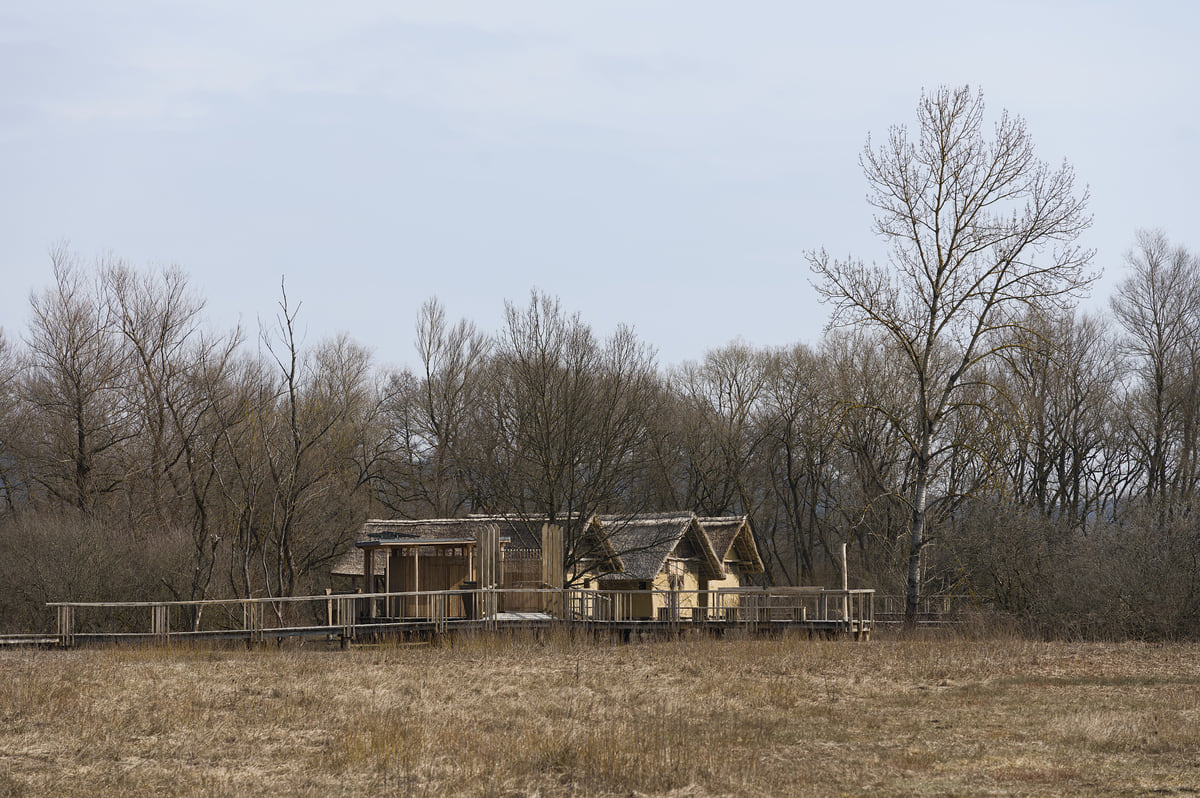
Reconstructed pile dwellings on the Ljubljana Marshes near Ig, home to the UNESCO-listed prehistoric pile dwellings
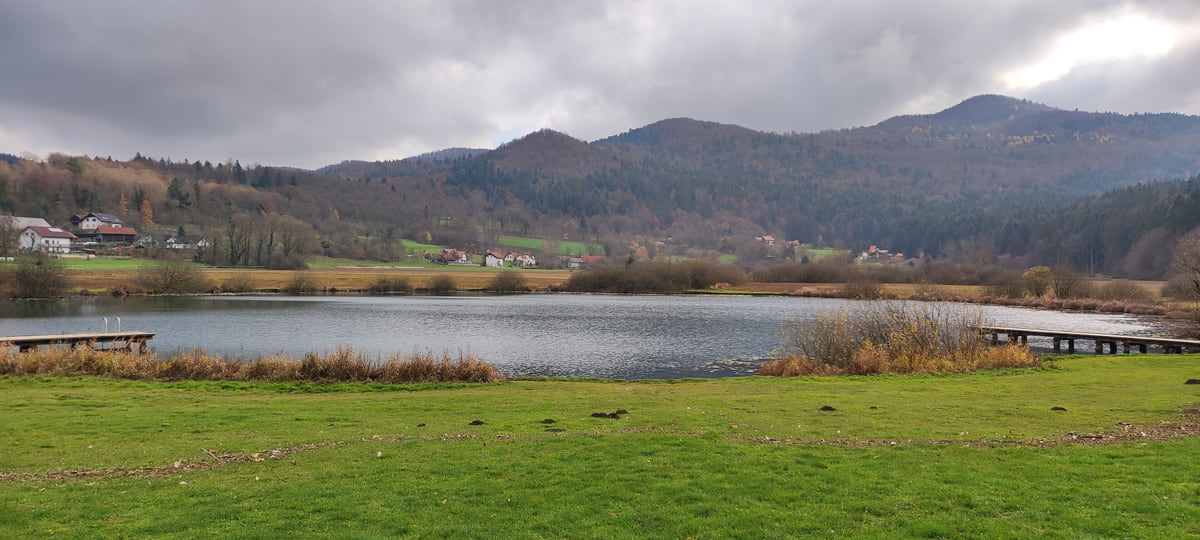
Lake Podpeč, one of the deepest natural lakes in Slovenia, below the hills on the southern edge of the marshes
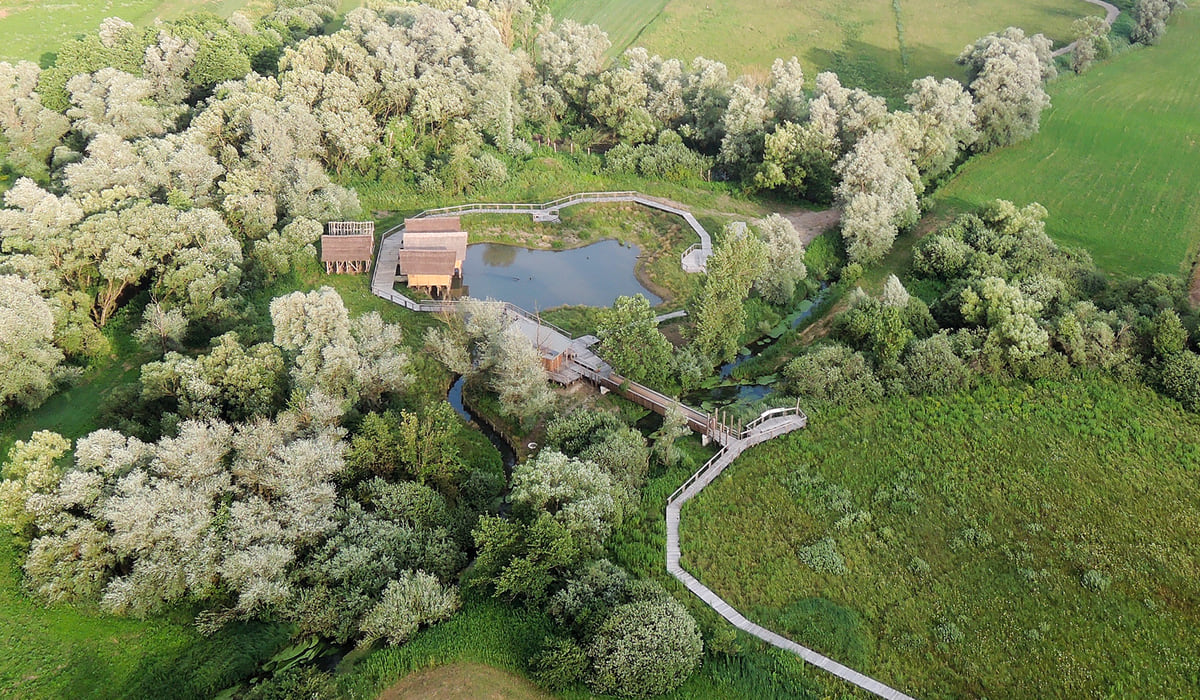
Aerial view of the reconstructed pile-dwelling village at Morostig, with its wooden walkways, in Ig
Ljubljana Marshes trails
| Trail | What you see | How to get there |
|---|---|---|
| Morostig (Ig) | Pile-dwelling landscape and reconstructed village, 1.5 km | City bus 19I |
| Barjanska okna | Marsh springs, 1.7 km | Bus 40 to Podkraj or 19B |
| Pot na Mah (Goričica pod Krimom) | Goriški mah peat bog, butterflies and a bird hide | Car or bike |
| Bevke trail | Nature and heritage of the western marsh | Car or bike |
Ljubljana Marshes Landscape Park, checked on 17 and 19 Oct 2026.
Test yourself
How much do you know about Ljubljana Marshes?
0/3 Pick before you peek.
-
A large lake covered the Ljubljana Marshes in prehistoric times.
See the answer
True. According to the park, a large lake covered the plain between 4600 and 1500 BC, and the pile-dwelling people lived on its shores.
-
Plečnik's church at Črna vas is stone from top to bottom.
See the answer
False. Only the base is stone; the rest is timber, as it was meant to be a temporary church that the war stopped from being enlarged.
-
The first pile dwellings were found in 1875 while a ditch was being dug.
See the answer
True. They turned up in 1875 when the Resnikov graben ditch north of Ig was deepened, and the Carniolan museum under Karl Deschmann was told.
- Landscape park created
- 2008
- Pile-dwelling settlements, more than
- 40
- Age of the wheel and axle in years, about
- 5,200
- Plečnik's church becomes World Heritage
- 2021
0 of 425 Slovenia guides
Your next stamp
- Ig pile dwellings
- Plečnik's Ljubljana
- Ljubljana in two days
- Triple Bridge
- Ljubljana museums
- Bogojina
- Ig
- Plečnik House
- Bogenšperk Castle
- Debeli rtič
- Jeruzalem
- Kolpa River
- Koper
- Lake Cerknica
- Lipica
- Ljubljana
- Ljubljana to Bled
- Mariborsko Pohorje
- Mount Snežnik
- Palace Portorož
- Park of Military History
- Postojna
- Postojna Cave
- Škocjan Caves
- Štanjel
- Tartini Square
- Trbovlje
- Županova jama
- Izola
- Kamnik
- Karst
- Ljubljana to Postojna
- Lovrenc Lakes
- Maribor
- Portorož
- Predjama Castle
- Things to do in Ljubljana
- Travel guide
- Vilenica Cave
- Zagorje ob Savi
- Celje
- Cerknica
- Domžale
- Hrastnik
- Ljubljana in a day
- Ljubljana to Piran
- Piran
- Slovenian Istria
- Strunjan
- Things to do
- Activities
- Ankaran
- Grosuplje
- Litija
- Pivka
- Sečovlje salt pans
- Velenje
- Brežice Castle
- Getting around Ljubljana
- Ilirska Bistrica
- Mežica Mine
- Most beautiful places
- Novo mesto
- Sevnica Castle
- Terme Olimia
- Vrhnika
- Žiče Charterhouse
- Dolenjska
- Prettiest villages
- Ptuj
- Sežana
- Divača
- Medvode
- Murska Sobota
- Posavje
- World Heritage
- Hrpelje-Kozina
- Logatec
- Map
- Mengeš
- Brezovica
- Komen
- Savinjska
- Where is Slovenia
- Bled
- Brežice
- Čatež ob Savi
- Celje Castle
- Coal Mining Museum
- Gorenjska
- Hotels in Piran
- Hrastovlje
- Karawanken Geopark
- Koroška
- Kostanjevica Cave
- Kostel Castle
- Krokar primeval forest
- Kurentovanje
- Lent
- Ljubljana Castle
- Ljubljana Cathedral
- Logar Valley
- Oldest vine in the world
- Olimje
- Otočec
- Regions
- Rimske Toplice
- Rinka Waterfall
- Rogla
- Sava River
- Slovenj Gradec
- Topolšica
- Velika Planina
- Goriška
- Krško
- Lake Bled
- Municipalities
- Podravje
- Prešeren Square
- Ravne na Koroškem
- Restaurants in Piran
- Škocjan Inlet
- Volčji Potok Arboretum
- Bled Island
- Cities
- Mežica
- Pomurje
- Sevnica
- Socerb Castle
- Bled Castle
- Coast and Karst
- Dravograd
- Kostanjevica na Krki
- Population
- Notranjska
- Ojstrica viewpoint
- Radlje ob Dravi
- Size
- Central Slovenia
- Language
- Mislinja
- Slovenska Bistrica
- Vila Bled
- Currency
- Grand Hotel Toplice
- Ormož
- Zasavje
- EU and Schengen
- Hotel Savica Garni
- Hotels in Bled
- Pohorje
- Haloze
- History
- Restaurants in Bled
- Flag and symbols
- Hoče-Slivnica
- Bizeljsko
- Bohinj
- Christmas in Ljubljana
- City Hotel Ljubljana
- Gorjanci
- Kranj
- Krka River
- Laško
- Moravske Toplice
- Ptuj Castle
- Public holidays
- Rajhenburg Castle
- Šentilj
- Slovenia beaches
- Šmartno pri Litiji
- Uršlja Gora
- Brdo Castle
- Independence Day
- Lake Bohinj
- Ljubljana Festival
- Radenci
- Rogaška Slatina
- Day trips from Ljubljana
- Jesenice
- Lendava
- Podčetrtek
- Savica waterfall
- Time zone
- Dobrna
- Facts
- Ljubljana nightlife
- Ljutomer
- Nova Gorica
- Vogel
- Bohinjska Bistrica
- Gornja Radgona
- Ljubljana Old Town
- Slovenia and Croatia
- Solkan
- Zreče
- Grad
- Sabotin
- Slovenia, Italy and Austria
- Slovenske Konjice
- Stara Fužina
- Trnovo
- Goričko
- Holidays and tours
- Hotels in Bohinj
- Škofja Loka
- Vitanje
- Škofja Loka Castle
- Slovenia or Slovakia
- Šoštanj
- Veržej
- Slovenian phrases
- Slovenia in 3 days
- Bela krajina
- Caves in Slovenia
- Črnomelj
- Dragon Bridge
- Gorje
- Hiking
- Hotels in Maribor
- Kozjansko Regional Park
- Kranjska Gora
- Lake Ptuj
- Slovenia in 5 days
- Vinarium Tower
- Where to stay in Ljubljana
- Žalec
- Metlika
- Slovenia castles
- Slovenia in a week
- Slovenian Mountain Trail
- Vintgar Gorge
- Vršič Pass
- Where to eat in Ljubljana
- Best viewpoints in Slovenia
- Central Market
- Juliana Trail
- Lake Jasna
- Road trip
- Semič
- Žirovnica
- Kočevje
- Metelkova
- Motorhome
- Museums in Slovenia
- Naklo
- Soča rafting
- Tržič
- Zelenci
- Jezersko
- Kostel
- Lake Planšar
- Skiing
- Slovenia with kids
- Slovenian Alpine Museum
- Tivoli Park
- Best time to visit
- Cerklje na Gorenjskem
- Cycling
- Dolenjske Toplice
- Ljubljanica river
- Mojstrana
- Šenčur
- Krvavec
- National Gallery
- Parenzana
- Peričnik waterfall
- Šmarješke Toplice
- Weather
- National and University Library
- Paragliding
- Slovenia in winter
- Strmol Castle
- Trebnje
- Vrata valley
- Climbing
- Events
- Martuljek waterfalls
- Žale
- Fly fishing
- In January
- National Museum of Slovenia
- Rateče
- Bovec
- Festival Lent
- Golf
- Hotels in Ptuj
- In February
- Kamnik-Savinja Alps
- Nature parks
- Parking in Ljubljana
- Pekel Cave
- Planica
- Snežnik Castle
- Solčava
- Gornji Grad
- In March
- Kranjska Gora ski resort
- Lakes
- Trenta
- Ziplines
- Alpe Adria Trail
- Hotels in Kranjska Gora
- In April
- Kanin
- Nazarje
- Waterfalls
- In May
- Rivers
- Virje waterfall
- Vransko
- Hotels in Bovec
- In June
- Mountains
- Šentjur
- Dobra Vila Bovec
- In July
- Ljubljana Card
- Mozirje
- Spas
- In August
- Nebesa Chalets
- Rečica ob Savinji
- In September
- Kobarid
- Šmartno ob Paki
- In October
- Kobarid Museum
- Hiša Franko
- In November
- In December
- Radovljica
- Železniki
- In spring
- Museum of Apiculture
- Žiri
- In summer
- Kropa
- Tolmin
- Brezje
- In autumn
- Metaldays
- Tolmin Gorges
- Begunje
- Javorca church
- Slovenia in 10 days
- Most na Soči
- Two weeks in Slovenia
- Idrija
- Ljubljana Marathon
- How to get there
- Idrija mercury mine
- Wild Lake
- Cerkno
- Flights
- Laufarji
- Divje babe
- Franja Partisan Hospital
- Ljubljana Airport
- Ajdovščina
- Nearby airports
- Venice to Ljubljana
- Vipava
- Vipavski Križ
- Zagreb to Ljubljana
- Brda
- Trains to Slovenia
- Getting around
- Šmartno
- Dobrovo Castle
- Trains
- Buses
- Julian Alps
- Car hire
- Triglav National Park
- Driving
- Pokljuka
- Triglav Lakes
- Vignette
- Mount Triglav
- Taxis
- Distances
- Soča Valley
- Soča River
- Trieste to Ljubljana
- Kozjak Waterfall
- Vienna to Ljubljana
- Boka Waterfall
- Budapest to Ljubljana
- Ljubljana to Maribor
- Walk of Peace
- Bled to Bohinj
- Mangart
- Lake Krn
- Prices and budget
- Slovenia on a budget
- Vipava Valley
- Free things to do
- Otlica Natural Window
- Entry requirements
- Rihemberk Castle
- Customs
- Safety
- Scams
- Bears
- Healthcare
- Mobile and roaming
- Plugs
- Packing list
- What to buy
- Hotels
- Campsites
- Farm stays
- Mountain huts
- Food
- Bled cream cake
- Wine
- Potica
- Prekmurska gibanica
- Štruklji
- Carniolan sausage
- Idrija žlikrofi
- Beer
- Tipping
Frequently asked questions
What are the Ljubljana Marshes?
A wet plain south of Ljubljana, the southern end of its basin, where a large lake lay in prehistoric times. Today it is meadows, hedges, woods and ditches, protected as a landscape park since 2008.
What is there to see in the Ljubljana Marshes?
The Ig pile dwellings and their reconstructed village, Plečnik's church at Črna vas, the Barjanska okna springs, the Goriški mah peat bog, Lake Podpeč and the Ljubljanica springs at Vrhnika.
Where is the world's oldest wooden wheel?
The wheel and axle found in the marshes, about 5,200 years old, is on show at the City Museum of Ljubljana, in its permanent exhibition on the city's history.
Can I visit Plečnik's church at Črna vas?
You can see it from outside at any time, on the road through Črna vas. It was built in 1937 and 1938 to Plečnik's plans and has been World Heritage since 2021. To go inside, ask the parish first.
How do I get to the marshes from Ljubljana?
By bike or car from the south of the city. By city bus, line 19I runs to Ig and 19B to the river Iška area; line 40 links Ig with Podkraj.
When is the best time to go?
Spring and autumn. In summer the sun beats down on shadeless paths and the mosquitoes are out in force, and some areas flood every year, especially after autumn rain.

Questions about Ljubljana Marshes? Write to me
If you need something else to finish planning, write to me. I answer myself, no templates.
My email sergiolepone@gmail.com
By
Tourism graduate with a master’s in Tourism Management and Planning from the University of Málaga, who has travelled across Europe. He writes every guide from official sources and his own judgement.
Published on . Updated on . Facts checked on .
Sources
Some links in this guide are affiliate links: if you book through them, the site earns a commission at no extra cost to you. Affiliate disclosure
Photos: This Photo was taken by Miha Peče. Feel free to use my photos, but please mention me as the author. I would much appreciate if you send me an email [email protected] or write on my talk page, for my information. Please do not upload an edited image here without consulting me. I would like to make corrections only at my own source to ensure that the changes improve the image and are preserved.Otherwise you may upload an edited image with a new name. Please use one of the templates derivative or extract. (CC BY-SA 4.0); This Photo was taken by Miha Peče. Feel free to use my photos, but please mention me as the author. I would much appreciate if you send me an email [email protected] or write on my talk page, for my information. Please do not upload an edited image here without consulting me. I would like to make corrections only at my own source to ensure that the changes improve the image and are preserved.Otherwise you may upload an edited image with a new name. Please use one of the templates derivative or extract. (CC BY-SA 4.0); Ajznponar (CC BY-SA 4.0); KAP Jasa (CC BY-SA 4.0), via Wikimedia Commons.