The Slovenian coast runs for 47 km and, with the Karst, forms the Obalno-kraška region: 8 municipalities, 1,043 km² and 120,092 residents on 1 January 2026. Below are Piran, Izola, Koper and Ankaran; above, the Karst plateau with the Škocjan Caves, the Lipica stud farm and Štanjel. In 2025 the region recorded 1,132,389 tourist arrivals.
I'd base myself in Piran and do the Karst as day trips. The coast is short and quick to cover, but the Karst, with Škocjan, Lipica and Štanjel, needs at least two unhurried days.
Sergio LeponeMy advice for Coast and Karst
Coast and Karst: the quick answer
Full read: 3 min
Obalno-kraška is a statistical region of 8 municipalities, 1,043 km² and 120,092 residents.
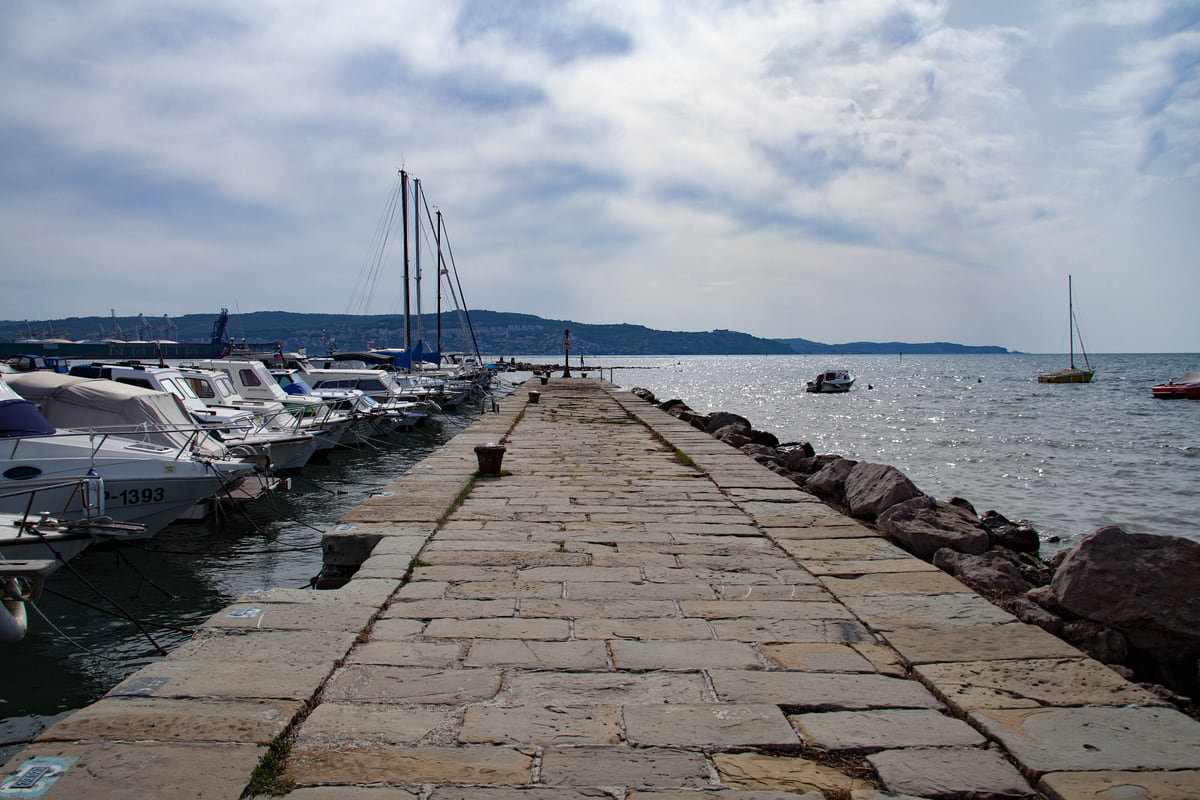
It holds Slovenia's 47 km of coast, with Piran, Izola, Koper, Portorož and Ankaran.
The Karst side has the Škocjan Caves (UNESCO), Lipica and Štanjel.
It had 1,132,389 tourist arrivals in 2025, more than half of them in Piran.
My ranking, scored
What I would not miss on the coast and in the Karst
My own marks out of 10, weighing what is unique about each place and what it adds to a few days in the region. Opinion, not an official rating.
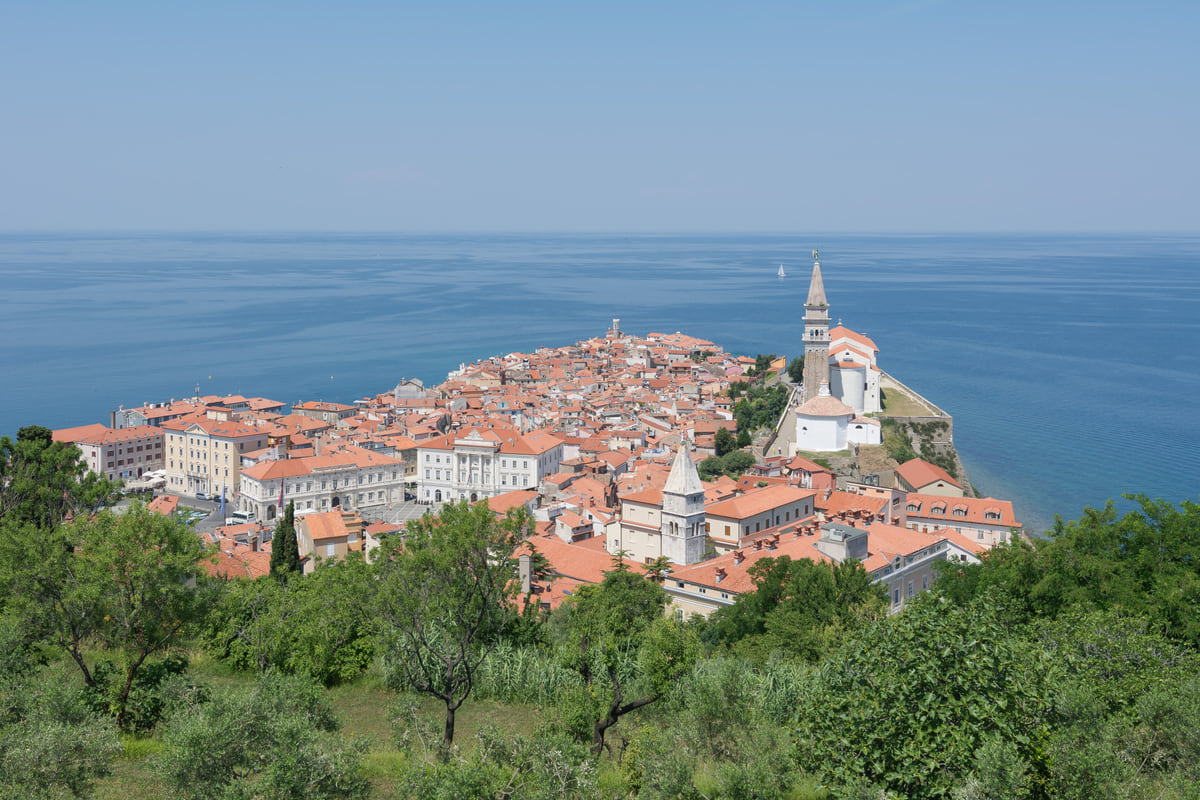
Tartini Square, the Venetian house with its «Lassa pur dir» legend, St George's Cathedral above the rooftops and stretches of protected medieval wall. It drew 631,821 arrivals in 2025, the most in the region.
The Škocjan Caves in Divača have been World Heritage since 1986, with passages up to 150 m high carved by the Reka river. The most dramatic sight in the region.
The Karst makes teran, a red wine from terra rossa soil, wind-dried ham and cheese. At an osmica, a farm wine bar that opens for a few days a year under a sprig of ivy, you try it all at the producer's table.
The tourist board lists an Arriva bus between Koper and Trieste from Monday to Saturday. Useful if you fly into Trieste and want to reach the Slovenian coast without a hire car.
The route of the old Trieste to Poreč railway is now a 32 km waymarked trail along the Slovenian coast, with the Valeta tunnel and a run towards the salt pans.
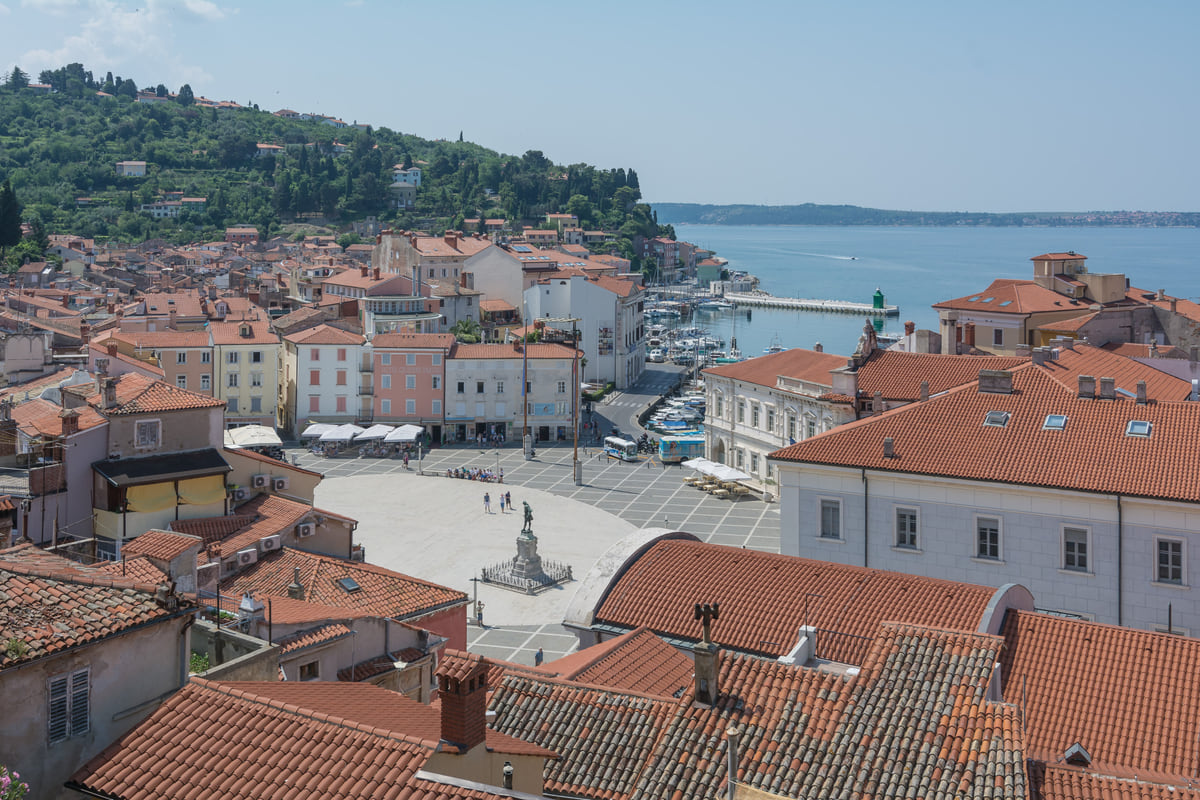
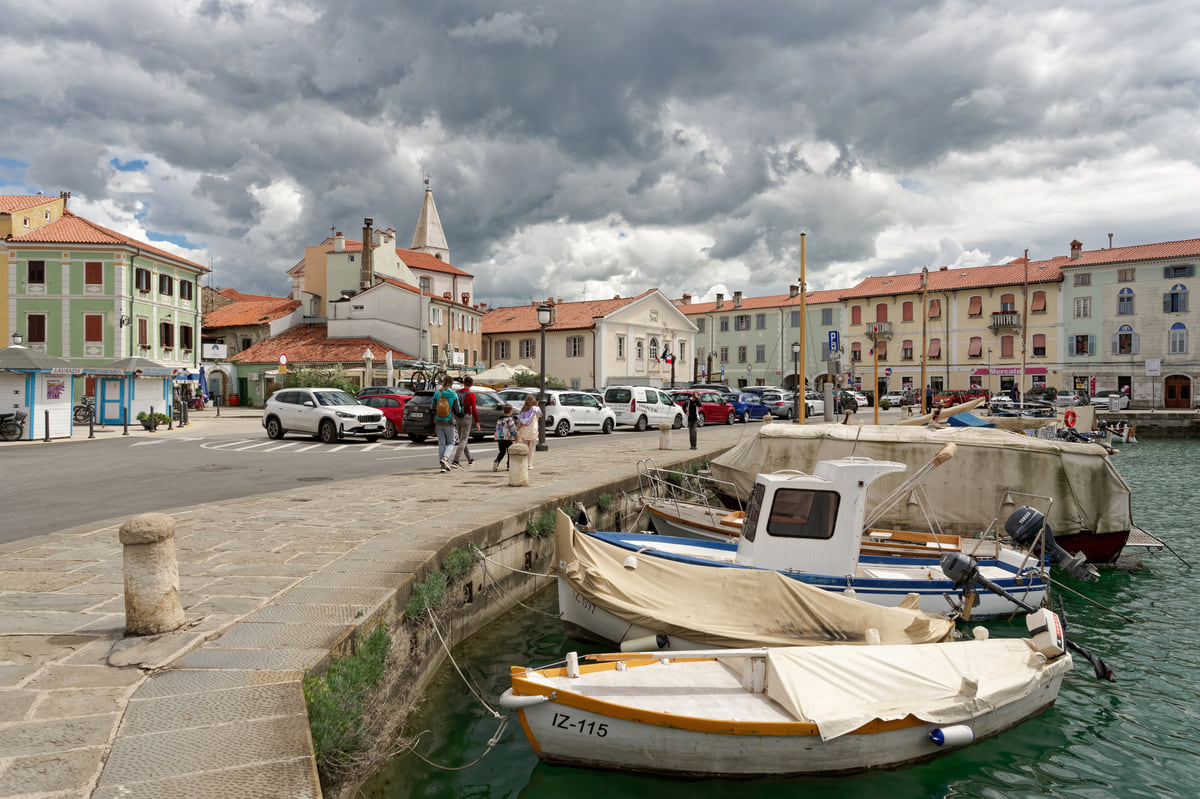
The coast is shared between Ankaran, Koper, Izola and Piran, all four with official Slovene and Italian names. Piran is the one on the postcards, with Tartini Square, named after the violinist Giuseppe Tartini who was born there, the Venetian house of the «Lassa pur dir» legend and St George’s Cathedral above the old town. The municipality had 631,821 arrivals in 2025, second only to Ljubljana, and includes Portorož, Strunjan and the Sečovlje salt pans, founded in 804.
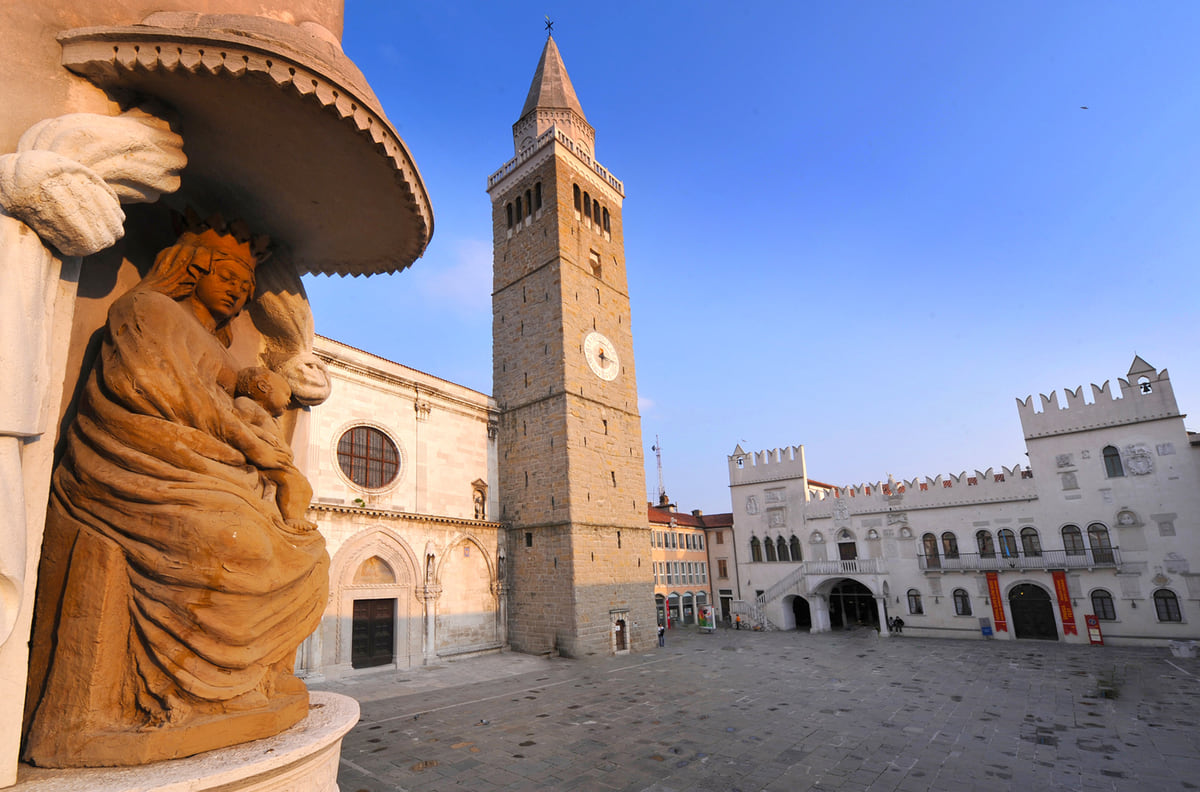
Koper is the real town, with 26,579 people, the country’s main port and an old centre built around Tito Square, the Praetorian Palace and a 54 m bell tower from the 12th century. Izola is the fishing town, with eight beaches in 5 km, and Ankaran, the smallest at 8.1 km² and a single settlement, opens the coast with the Debeli rtič park.
How to split your days
With five days I would give two to the coast and three to the Karst. On the coast, one day for Piran and the salt pans and one for Koper, Izola and Strunjan. In the Karst, one day for Škocjan and Lipica, one for Štanjel and the wineries, and one for inland Istria, with Hrastovlje and its Dance of the Dead. Short on time, keep Piran and Škocjan, and save the rest for a second, longer visit.
What the Karst has that the coast lacks
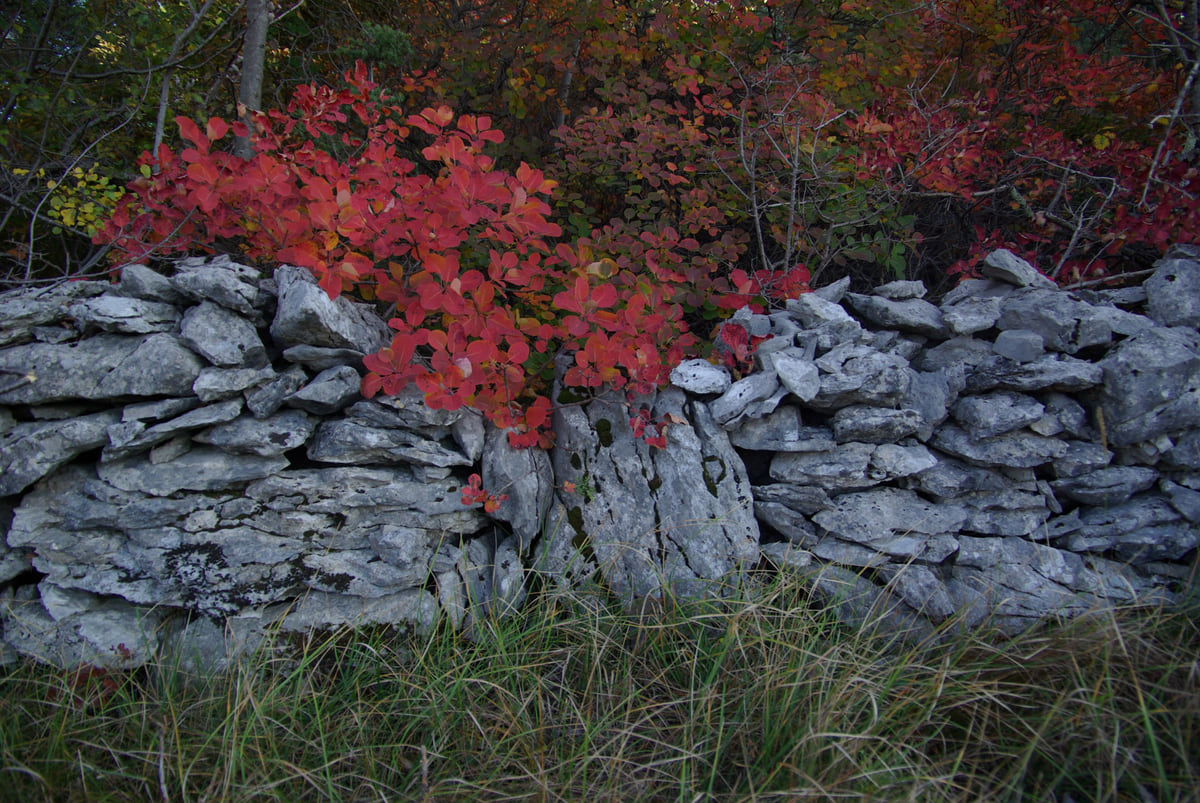
Geologists everywhere borrowed the word karst from the Karst, and climbing up from the sea you quickly understand why. Rivers vanish underground, sinkholes pit the fields, villages are built of stone and the bora wind shapes both the landscape and the ham. The Škocjan Caves, in Divača, have been on the World Heritage List since 1986 and UNESCO describes them as an underground canyon of exceptional size, cut by a river. Vilenica Cave, in Sežana, is close by.
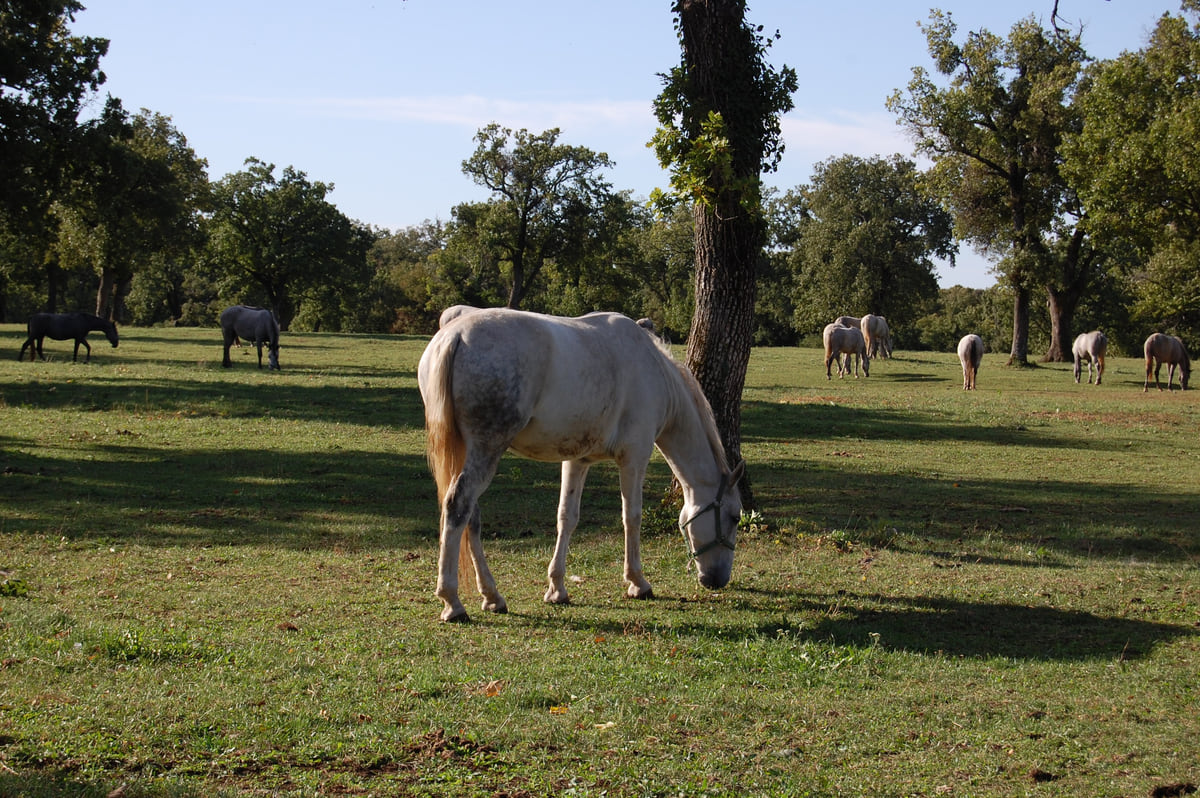
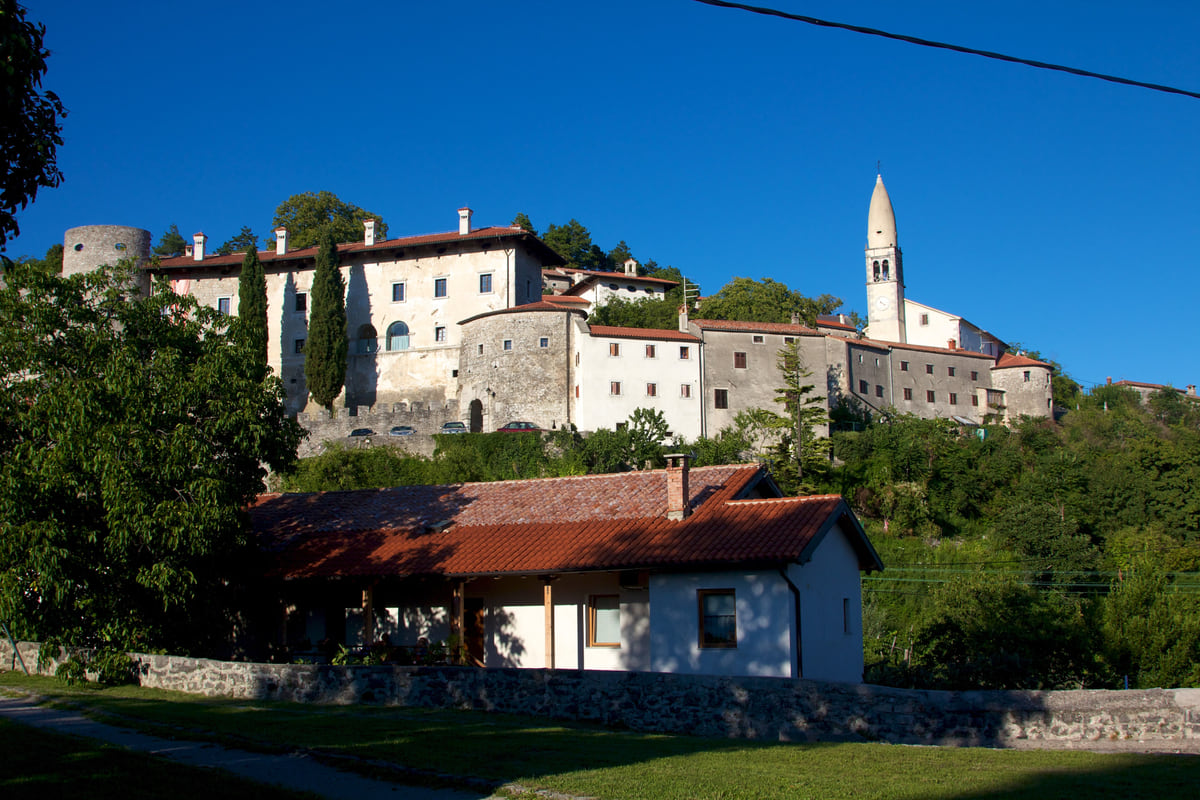
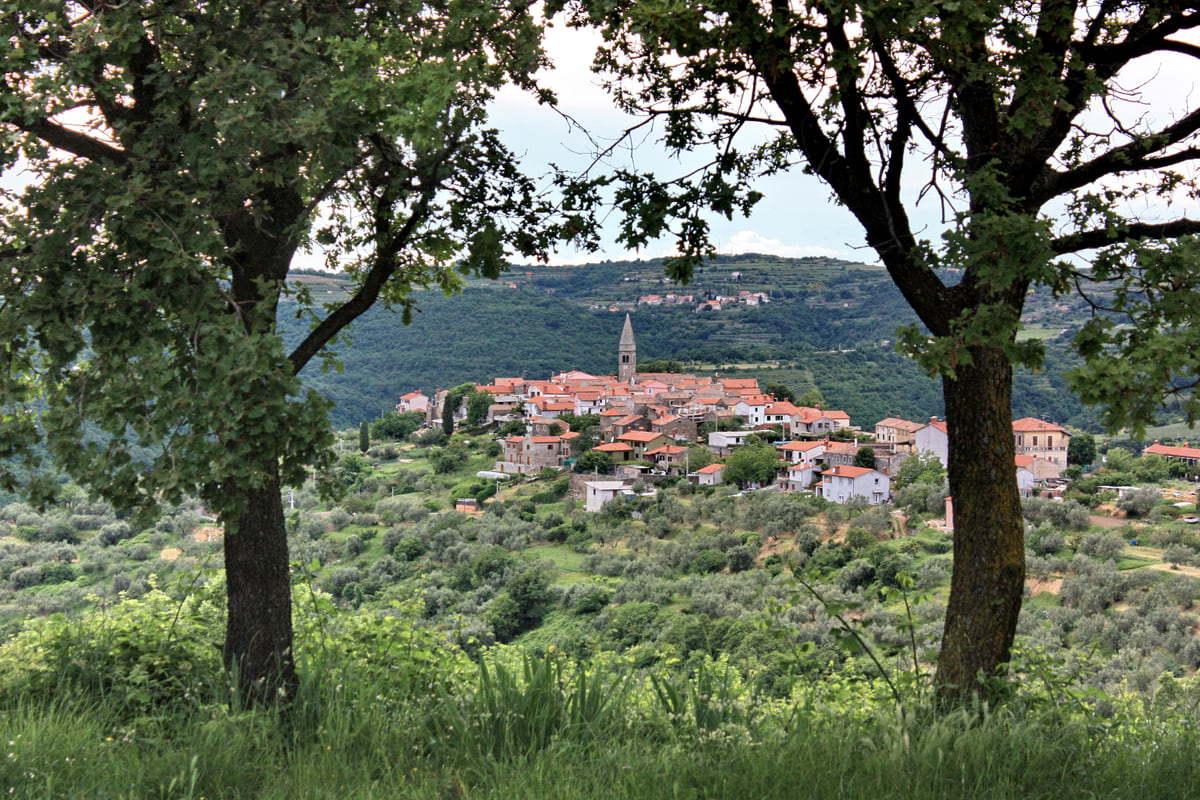
At Lipica, in the municipality of Sežana, the stud farm founded in 1580 is the birthplace of the Lipizzaner, with more than 300 horses, a museum and a classical riding school. And in Komen municipality, Štanjel is a medieval stone village with a castle, where the architect Maks Fabiani left his mark.
Between the coast and the Karst lies a strip that most visitors cross on the motorway without stopping, which is a shame. The Karst edge above Koper, Kraški rob, is a climbing area with more than 800 routes, the Osp wall being the best known. Inland from Piran, Padna is a protected Istrian hamlet, and the Dragonja valley and the Šavrin hills are olive country, with farms such as Gramona pressing their own oil. In Koper’s hinterland, the pentagonal tower at Kubed has a giants’ trail and Marezige a wine and olive oil fountain.
Further east, Hrpelje-Kozina leads into Brkini, terraced orchard hills known for plum dumplings and plum brandy. It is the Slovenia I would look for to eat well away from the crowds, and it gets its own page, Slovenian Istria.
Food and wine
On the coast it is fish, with Piran sea bass baked in salt and Izola’s brodet. In the Karst, teran, the red wine of the red earth, bora-cured pršut and cheese. Slovenian Istria makes malvazija and refošk, and the tourist board says Slovenia’s biggest wine barrel belongs to Vinakoper.
The region sits between Trieste and Istria. The tourist board mentions an Arriva bus linking Koper with Trieste every day except Sunday and, in summer, plenty of coaches from Ljubljana down to the sea. For the Karst, with its small villages and scattered caves, a car saves a great deal of time. On motorways you will need DARS’s electronic vignette, compulsory for vehicles up to 3,500 kg.
The 8 municipalities of Obalno-kraška
Municipality
Population (1-1-2026)
km²
Arrivals 2025
Piran (Pirano)
18,206
43.5
631,821
Izola (Isola)
16,447
28.5
165,033
Koper (Capodistria)
54,795
303.4
129,603
Ankaran (Ancarano)
3,444
8.1
93,564
Sežana
13,669
217.4
73,116
Hrpelje-Kozina
5,451
194.8
20,543
Divača
4,604
145.1
10,542
Komen
3,476
102.6
8,167
SURS (SiStat): population and area on 1-1-2026 and tourist arrivals in 2025, checked on 04-10-2026.
Tito Square in Koper with the cathedral bell tower and the Praetorian Palace, and a stone sculpture in the foreground
White and dark Lipizzaner horses grazing in a tree-dotted pasture at the Lipica stud farm in the Karst
The stone village of Štanjel on its hill, with the castle, cypresses and the pointed bell tower under a blue sky
Test yourself
What people often get wrong about Coast and Karst
0/4Pick before you peek.
Piran is the municipality with the most tourist arrivals in the region.
See the answer
True. It had 631,821 arrivals in 2025 according to SURS, second only to Ljubljana nationally.
Ankaran is the largest coastal municipality by area.
See the answer
False. It is the smallest, at 8.1 km² with a single settlement. The largest in the region is Koper, at 303.4 km².
The Lipica stud farm was founded in 1580.
See the answer
True. So says the tourist board, which describes it as the birthplace of the Lipizzaner horse.
Slovenia's statistical regions have their own regional governments.
See the answer
False. They do not. The government explains that the constitution provides for regions but, for lack of political consensus, they have not yet been set up.
Piran, with Tartini Square and St George's Cathedral; Koper, with Tito Square and the Praetorian Palace; Izola, a fishing town with eight beaches; the Sečovlje salt pans and the Strunjan cliff. Three days covers it comfortably.
How long is Slovenia's coastline?
47 km, according to the government. One tourist board page says just over 42 km, but I go with the official government figure.
What is the Karst?
The limestone plateau between the coast and Ljubljana that gave its name to karst landscapes worldwide. It has caves such as Škocjan and Vilenica, stone villages, the Lipica stud farm and its own wine, teran.
Where should I stay on the Slovenian coast?
Piran for the old-town atmosphere, or Portorož for a beach hotel with spa. Izola is the quiet option and Koper the practical one, with more everyday services.
Which is the largest town on the coast?
Koper, with 26,579 people in the town and 54,795 in the municipality on 1 January 2026, according to SURS. It is the country's main port.
Is Italian spoken on the Slovenian coast?
It is a bilingual area. The coastal municipalities have official Slovene and Italian names, Koper/Capodistria, Izola/Isola, Piran/Pirano and Ankaran/Ancarano, and Italian is an official language there alongside Slovene.
Tourism graduate with a master’s in Tourism Management and Planning from the University of Málaga, who has travelled across Europe. He writes every guide from official sources and his own judgement.