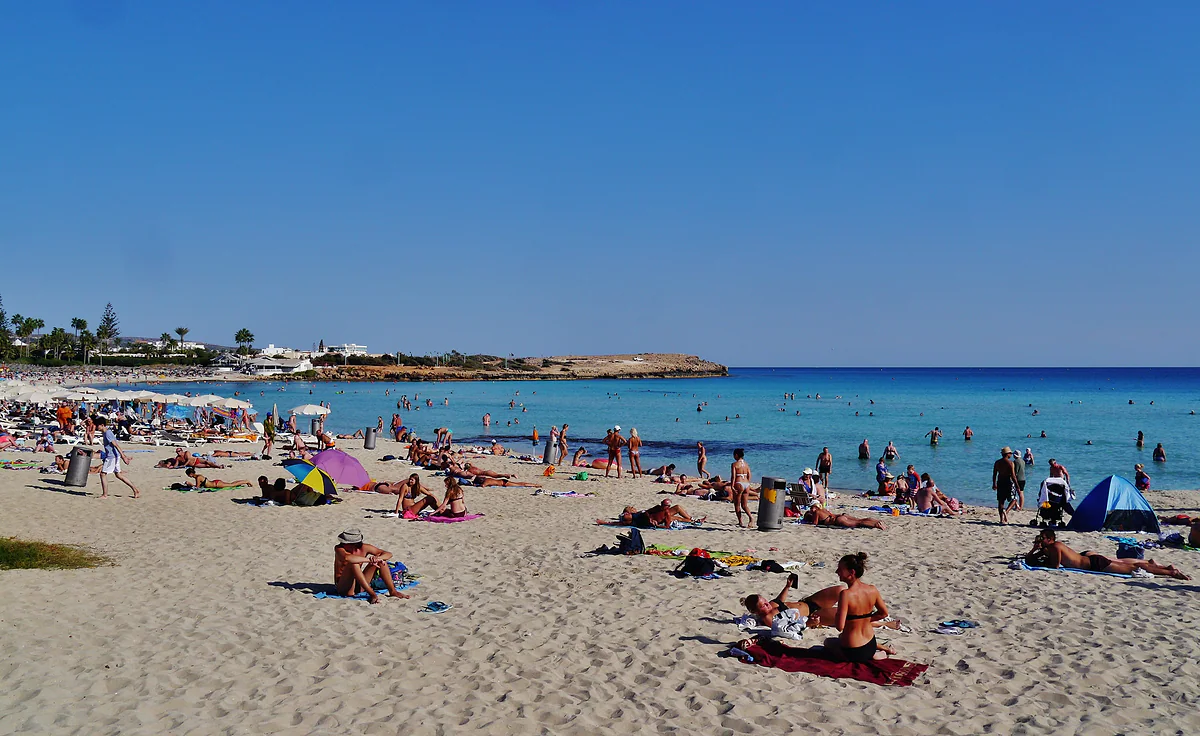
Packing, thought through
What to pack for Cyprus, season by season
What you pack for Cyprus depends on the month and on your plans for the mountains. On the coast, July and August average highs of around 33°C and January about 17°C, while in the Troodos January highs barely reach 7°C. Always bring a valid passport, your GHIC and travel insurance, and something to cover shoulders and knees for monasteries. UK plugs fit as they are.
In 30 seconds
Full read: 3 min
- Coastal summers average 31 to 37°C highs; winters are mild at about 17°C.
- In the Troodos, January highs stay below 7°C.
- Bring your passport, GHIC and travel insurance; UK plugs fit.
- Cover shoulders and knees for monasteries.
My rule for Cyprus is a beach bag plus one warm layer, even in summer. If you go up into the Troodos or visit a monastery, that long-sleeved shirt and pair of long trousers will save your day.

Before you go
What I would keep in mind
-
01 My tip
Shoulders and knees covered
Orthodox monasteries ask for modest dress, with shoulders and knees covered. A large scarf and light trousers in the car solve it even in August.
monasteries in Cyprus -
02 Getting there
Leave the adaptor at home
Cyprus uses the UK Type G three-pin plug at 240V, so British chargers and hairdryers plug straight in.
plugs in Cyprus -
03 Watch out
Your passport is not a deposit
Gov.uk warns that rental companies often ask for your passport as a deposit, which is illegal. Never hand it over.
car hire in Cyprus -
04 Money
Some cash for taxis
Spain's Foreign Office warns that some services, taxis included, don't take cards. Pack a few small notes.
Cyprus currency
What I would book
Packing for Cyprus looks easy, sun cream and swimwear, and most of the time it is. But the island has a mountain of almost 2,000 metres that gets snow in January, monasteries you can’t walk into in a vest top and a summer that’s properly hot. A little thought saves buying at airport prices what you left on the bed. Here’s the list, by essentials, season and plan, written for someone flying out of a UK airport.
I’ve kept it deliberately short. The things that genuinely can’t be replaced once you land are documents, prescriptions and your GHIC, so those come first; everything else is about being comfortable in the heat, the mountains and the churches.
The essentials
Your passport. Gov.uk’s rule for Cyprus is a passport under ten years old on arrival with at least three months left after your flight home. No visa is needed for up to 90 days, your time on the island doesn’t count against the Schengen allowance, and the EES doesn’t apply. It’s all in Cyprus entry requirements.
Your GHIC or EHIC, plus travel insurance. Gov.uk is clear that the card covers medically necessary state healthcare and isn’t a substitute for insurance. If you’ll drive, your UK photocard licence works in Cyprus, according to gov.uk. And no plug adaptor, because the island uses the same three-pin plug as home, as I explain in plugs in Cyprus.
What to wear, month by month
The thermometer decides, and I have World Meteorological Organization figures for four stations. On the coast, summer is long and hot, with average July highs of about 33°C in Larnaca and nearly 31°C in Paphos. Nicosia, inland, reaches 37.5°C. For those months think cotton or linen, a hat, sunglasses and high-factor cream. The government’s own publications boast of more than 300 sunny days a year, and you’ll believe it.
Spring and autumn are my favourite. April and October give the coast highs between 22 and 29°C and fresh evenings, so a hoodie or light jacket does. In winter the coast stays mild, around 17°C in January, but it rains, roughly 12 days a month in Larnaca and Paphos, so pack a light waterproof.
The mountains are another world. In Prodromos, in the Troodos, the January average high is 6.9°C and the low 1°C. If you’re going skiing or just to see the snow, bring a proper coat, gloves and shoes with grip. Even in July the nights up there drop to around 18°C. For a season-by-season view, read the best time to visit Cyprus.
To sleep close to everything, search places to stay in Platres on Expedia and filter by area before price.
For monasteries and churches
Monasteries ask for modest clothing with shoulders and knees covered, and the painted churches of the Troodos are still used for worship, so I’d dress the same way there. I keep light long trousers or a large scarf in the car, which works as a sarong or a shawl. That way you don’t plan the day around your clothes. More in monasteries in Cyprus.
For walking and the sea
For a trail in the Troodos or Akamas, closed shoes with good grip, plenty of water and something to eat, because there may be nowhere to buy anything between villages. With wildfire risk high between April and October, as gov.uk warns, keep stoves and barbecues to designated areas. For the beach, water shoes help in the rocky coves.
If you are short on time, see the best tours in Platres and pick one that fits your day.
With a baby
Each airline handles pushchairs its own way, and Hermes Airports suggests telling your airline before you fly and at check-in to agree where you’ll get it back. Both airports have baby-changing rooms in every toilet block and some rooms with sockets for breast pumps. I’d add a baby carrier, because old quarters and mountain villages have cobbles and slopes where a buggy struggles. Ideas for days out are in Cyprus with kids.
What not to pack
Anything that could be mistaken for drugs. Gov.uk stresses that Cyprus enforces zero tolerance, laughing gas and cannabis included. If you take prescription medicines, I’d carry the prescription and keep them in their original packaging. And one hire-car warning, just in case. Never leave your passport as a deposit, which gov.uk says is illegal.
Where the bus does not go, a car does: compare car hire in Limassol before you arrive rather than at the desk.
To sleep close to everything, search places to stay in Platres on Booking.com and filter by area before price.
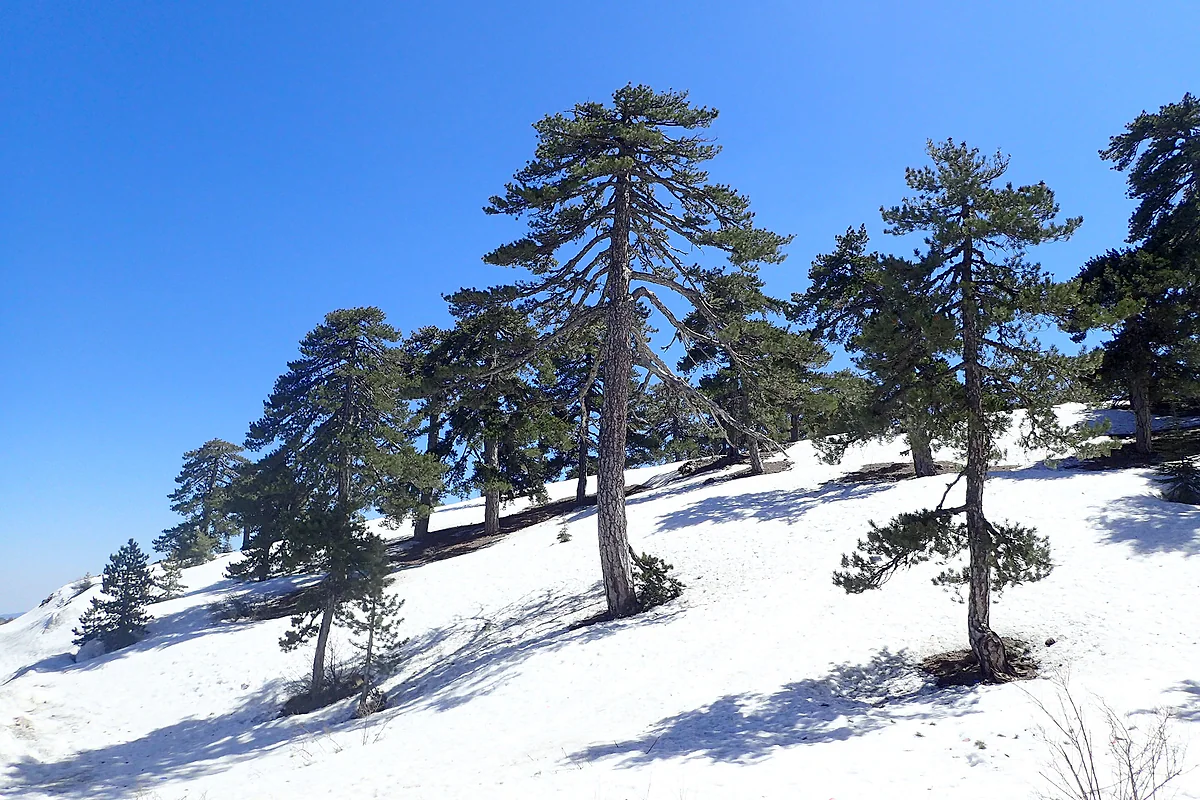
Snow among the black pines of the Troodos Mountains in winter, under a clear blue sky in central Cyprus
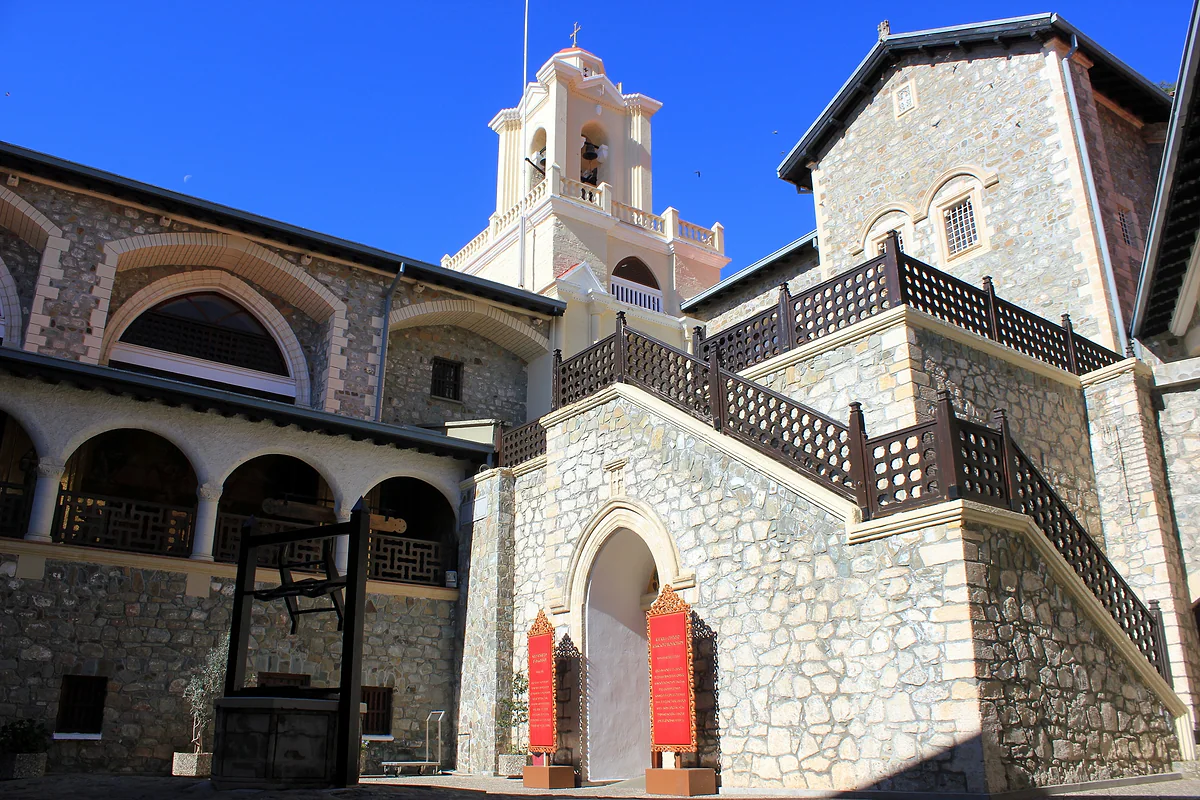
The inner courtyard of Kykkos Monastery, with arcaded galleries, a stone staircase and the bell tower under a deep blue sky
Average highs and lows to pack for (°C)
| Month | Larnaca | Nicosia | Paphos | Prodromos (Troodos) |
|---|---|---|---|---|
| January | 17.4 / 8.0 | 15.7 / 5.8 | 17.7 / 9.4 | 6.9 / 1.0 |
| April | 23.0 / 12.0 | 24.3 / 10.9 | 21.7 / 12.7 | 15.7 / 6.7 |
| July | 33.2 / 22.6 | 37.5 / 22.7 | 30.6 / 21.6 | 28.6 / 18.6 |
| October | 28.3 / 17.4 | 28.8 / 15.9 | 26.8 / 17.8 | 19.8 / 11.1 |
World Meteorological Organization city data (2002-2011), checked on 3 October 2026.
My basic list
| What | Why |
|---|---|
| Passport | Under 10 years old with 3 months' validity after you leave |
| GHIC or EHIC and travel insurance | Medically necessary state care only; insurance covers the rest |
| Photocard driving licence | Valid for driving in Cyprus, says gov.uk |
| Sun cream, hat and water | Long, hot summers |
| Long trousers or a scarf | Monasteries and churches |
| Proper walking shoes | Troodos and Akamas trails |
| A warm layer | The mountains are another climate |
Test yourself
True or false?
0/3 Pick before you peek.
-
British travellers need an adaptor for Cyprus.
See the answer
False. Cyprus uses the UK Type G three-pin plug, according to the Limassol Tourism Board.
-
Average January highs in the Troodos are above 15°C.
See the answer
False. The WMO gives Prodromos an average January high of 6.9°C.
-
Time in Cyprus counts towards your Schengen 90 days.
See the answer
False. Gov.uk says Cyprus isn't in the Schengen area, so it doesn't count.
- Nicosia's July average high (WMO)
- 37.5°C
- Prodromos's January average high
- 6.9°C
- Sunny days a year, says the government
- 300
0 of 421 Cyprus guides
Your next stamp
- Cyprus in spring
- Cyprus in winter
- Cyprus in January
- Weather
- Cyprus in summer
- Cyprus in April
- Sea temperature
- Cyprus in autumn
- Almyra Hotel
- Anassa Hotel
- Anastasia Beach
- Aphrodite Hills Resort
- Apostolos Andreas
- Bellapais Abbey
- Cap St Georges
- Church of St Lazarus
- Columbia Beach Resort
- Commandaria
- Coral Beach Hotel
- Cypriot food
- Dome Beach
- Four Seasons Limassol
- Golden Bay
- Grecian Park
- Hilton Nicosia
- Kourion
- Kyrenia Castle
- Larnaca
- Lefkara lace
- Limassol
- Limassol Carnival
- Meze
- Omodos
- Panagia Angeloktisti
- Places to visit
- Selimiye Mosque
- Soli
- St Barnabas Monastery
- Wine routes
- Atlantica Miramare
- Büyük Han
- Cheap eats
- Finikoudes
- Halloumi
- Kantara Castle
- Kataklysmos
- Limassol Castle
- Narcissos
- Nissi Beach Resort
- Olympic Lagoon Paphos
- Othello Tower
- Sanctuary of Apollo Hylates
- Things to do
- Vouni
- Vouni Palace
- Alion Beach
- Cypriot desserts
- Elias Beach
- Golden Coast
- Koilani
- Kolossi Castle
- Lala Mustafa Pasha Mosque
- Larnaca Castle
- Leonardo Laura Beach
- Limassol old town
- Limassol Wine Festival
- Most beautiful places
- Souvla
- St Hilarion Castle
- Arsos
- Buffavento Castle
- Crystal Springs
- Cypriot wine
- Easter in Cyprus
- Episkopi
- Kition
- Kleftiko
- Limanaki Beach
- Molos promenade
- Pafos Aphrodite Festival
- Pagona
- Prettiest villages
- St Raphael Resort
- Adams Beach
- Akrotiri peninsula
- Alasia Hotel
- Bellapais
- Elysium Hotel
- Green Monday
- Independence Day
- Limassol Marina
- Pierides Museum
- Sheftalia
- Sunrise Pearl
- UNESCO World Heritage
- Vasa Koilaniou
- Akrotiri salt lake
- Amathus Beach
- Christmas
- Grecian Bay
- Larnaca Archaeological Museum
- Limassol old port
- Lofou
- Map
- Venus Beach Hotel
- Vrissiana
- Asterias Beach
- Capo Bay
- Cypriot coffee
- Cyprus in February
- Kamares Aqueduct
- Kefalos Beach
- Lania
- Limassol Archaeological Museum
- Parklane
- St Nicholas of the Cats
- Where is Cyprus
- Alexander the Great
- Carob Mill
- Cyprus in March
- Districts
- Hala Sultan Tekke
- Lady's Mile
- Tsokkos Gardens
- Zivania
- Beer
- Cavo Maris
- Germasogeia
- King Evelthon
- Larnaca Salt Lake
- Pissouri
- Towns and villages
- Amathus
- Anogyra
- Athena Beach
- Cyprus in May
- Mackenzie beach
- Population
- Archaeological sites
- Cyprus in June
- King Jason
- Limassol beaches
- Size
- Zenobia wreck
- Aliathon Resort
- Castles in Cyprus
- Cyprus in July
- Governor's Beach
- Languages
- Larnaca beaches
- Annabelle Hotel
- Cyprus in August
- Monasteries in Cyprus
- Name
- Azia Resort
- Cyprus in September
- Museums in Cyprus
- Capital Coast Resort
- Cyprus in October
- Pyla
- Cyprus in November
- Kiti
- Cyprus in December
- Lefkara
- Choirokoitia
- Tochni
- Flag
- How to get there
- Kalavasos
- Krasochoria
- Salamis
- Aphrodite
- Flights
- Karpas Peninsula
- Stavrovouni Monastery
- Kornos
- Larnaca Airport
- Limassol District
- Larnaca district
- Paphos Airport
- Pyrga
- Airport transfers
- Athienou
- Ferry
- Odou
- Cruises
- Kato Drys
- Getting around
- Vavla
- Buses
- Zygi
- Taxis
- Agios Irakleidios
- Car hire
- Paphos district
- Driving
- Paphos
- Kato Paphos
- Parking
- Cycling
- Paphos old town (Ktima)
- Paphos Archaeological Park
- Road trip
- Distances
- Tombs of the Kings
- Agia Kyriaki and St Paul's Pillar
- Paphos Byzantine Museum
- Paphos beaches
- Geroskipou
- Cyprus Wine Museum
- Greek or Turkish?
- Peyia (Pegeia)
- Coral Bay
- History
- Sea caves, Peyia
- The division
- Agios Georgios, Peyia
- Political system
- Akamas peninsula
- Religion
- Blue Lagoon, Akamas
- Public holidays
- Baths of Aphrodite
- Time
- Currency and payments
- Lara beach
- Avakas Gorge
- EU and Schengen
- Entry requirements
- Polis Chrysochous
- Facts
- Latchi
- Neo Chorio
- Aphrodite's Rock
- Palaepaphos (Kouklia)
- Paphos Castle
- Paphos Archaeological Museum
- Agia Solomoni Catacomb
- Kathikas
- Drouseia
- Ineia
- Diarizos Valley
- Pano Panagia
- The north
- Where to eat
- Where to stay
- Chrysorrogiatissa Monastery
- Crossing to the north
- Hotels in Ayia Napa
- Agios Neophytos Monastery
- Green Line
- Hotels in Protaras
- British bases
- Hotels in Limassol
- Tala
- Ercan airport
- Hotels in Larnaca
- Lempa
- Hotels in Paphos
- Hotels in the north
- Pano Arodes
- Hotels in Coral Bay
- Kritou Terra
- Kyrenia district
- Hotels in Polis and Latchi
- Kyrenia
- Lysos
- Hotels in Nicosia
- Lapithos
- Pomos
- Cedar Valley
- Hotels in the Troodos
- Ayia Napa
- Best time to visit
- Famagusta district
- Luxury hotels
- North Nicosia
- Agrotourism
- All-inclusive hotels
- Famagusta
- Thalassa Museum
- Adults-only hotels
- Apartments
- Ayia Napa Monastery
- Varosha
- Ayia Napa Sculpture Park
- Family hotels
- Morphou
- Boutique hotels
- Nissi Beach
- Beachfront hotels
- Events
- Makronissos
- Ayia Napa sea caves
- Cheap hotels
- Love Bridge
- Villas
- Ayia Napa beaches
- Campsites
- Cape Greco
- Safety
- Konnos Bay
- Scams and pitfalls
- Cyclops Cave
- Healthcare
- Mobile and roaming
- Free things to do
- What to buy
- With a dog
- Accessible Cyprus
- Plugs
- Tipping
- Protaras
- Tourist information
- Fig Tree Bay
- Prices and budget
- Profitis Ilias Church
- Cyprus on a budget
- Protaras beaches
- Shopping
- Paralimni
- With kids
- Deryneia
- For couples
- Kokkinochoria
- Weddings
- Nightlife
- Sotira
- Liopetri
- Package holidays
- Day trips
- Frenaros
- Nicosia district
- Avgorou
- Boat trips
- Nicosia
- Jeep safari
- Venetian walls
- Famagusta Gate
- Ledra Street
- Laiki Geitonia
- Cyprus Museum
- Byzantine Museum, Nicosia
- St John's Cathedral
- Archbishop's Palace
- 3 days
- Museums in Nicosia
- 5 days
- Chrysaliniotissa
- Leventis Museum
- One week
- 10 days
- Leventis Gallery
- Kornesios house
- Two weeks
- National Struggle Museum
- Ömeriye Mosque
- Faneromeni Church
- Shacolas observatory
- Tamassos
- Idalion
- Machairas Monastery
- Fikardou
- Lythrodontas
- Tilliria
- Kato Pyrgos
- Troodos Mountains
- Mount Olympus
- Troodos Square
- Skiing in Cyprus
- Troodos Geopark
- Painted churches of Troodos
- Kykkos Monastery
- Makarios's tomb
- Trooditissa Monastery
- Platres
- Prodromos
- Foini
- Treis Elies
- Marathasa valley
- Solea valley
- Agios Nikolaos tis Stegis
- Panagia Asinou
- Panagia Podithou
- Archangelos Michael, Pedoulas
- Panagia tou Moutoulla
- Agios Ioannis Lampadistis
- Kalopanayiotis
- Pedoulas
- Moutoullas
- Kakopetria
- Galata
- Evrychou
- Pitsilia
- Stavros tou Agiasmati
- Panagia tou Araka
- Timios Stavros, Pelendri
- Transfiguration church, Palaichori
- Palaichori
- Askas
- Lagoudera
- Polystypos
- Alona
- Agros
- Kyperounta
- Louvaras
- Hiking in Cyprus
- Artemis Trail
- Atalante Trail
- Persephone Trail
- Teisia tis Madaris
- Waterfalls in Cyprus
- Caledonia Waterfall
- Nature parks in Cyprus
- Viewpoints in Cyprus
- Cyprus beaches
- Diving in Cyprus
- Water sports in Cyprus
- Water parks in Cyprus
- Golf in Cyprus
Frequently asked questions
What should I pack for Cyprus in summer?
Light clothes, swimwear, a hat and high-factor sun cream, because the July average high is 33°C in Larnaca and 37.5°C in Nicosia, according to the WMO. Add long trousers or a scarf for monasteries.
What should I wear in Cyprus in winter?
Layers. On the coast the January average high is around 17°C with about 12 rainy days, while in Prodromos in the Troodos it's under 7°C and snow is common. Take a waterproof, and a proper coat if you're going up.
What documents do I need for Cyprus from the UK?
A passport less than 10 years old with at least 3 months' validity after your departure date, according to gov.uk. You don't need a visa for stays of up to 90 days, and Cyprus doesn't count towards the Schengen 90 days.
Do I need a plug adaptor for Cyprus?
Not from the UK. Cyprus uses the same Type G three-pin plug at 240V.
What should I wear in Cyprus in May?
Summer clothes by day and a layer for the evening. The WMO gives May average highs of 24.8°C in Paphos and 29.6°C in Nicosia, with nights around 15°C.
Can I take my medication to Cyprus?
Yes, but check anything containing controlled substances. Gov.uk notes that the legal status of some medicines differs between countries, and Cyprus has zero tolerance towards illegal drugs, cannabis included.
By
Tourism graduate with a master’s in Tourism Management and Planning from the University of Málaga, who has travelled across Europe. He writes every guide from official sources and his own judgement.
Published on . Facts checked on .
Sources
Some links in this guide are affiliate links: if you book through them, the site earns a commission at no extra cost to you. Affiliate disclosure
Photos: Zairon (CC BY-SA 4.0); Krzysztof Ziarnek, Kenraiz (CC BY-SA 4.0); Julian Nyča (CC BY-SA 3.0), via Wikimedia Commons.