Fun facts, every one sourced
Twelve facts about Cyprus I can actually back up
Cyprus is the third-largest island in the Mediterranean, has no permanent rivers and drives on the left. Its cheese, halloumi, has had EU protected status since 2021, and in its capital a UN strip narrows to less than 20 metres. Here are twelve facts about Cyprus, every one with an official source.
In 30 seconds
Full read: 3 min
- Cyprus is the third-largest Mediterranean island and has no permanent rivers.
- Halloumi has had EU protected status since 2021.
- In Nicosia the UN zone narrows to under 20 metres.
- Pyla is the only village where both communities live together.
- There are three World Heritage properties and eight intangible heritage elements.
If you only remember one fact, make it Pyla. It's the only village on the island where Greek Cypriots and Turkish Cypriots live side by side, and it says a lot about Cyprus.

Before you go
What I would keep in mind
-
01 Most beautiful
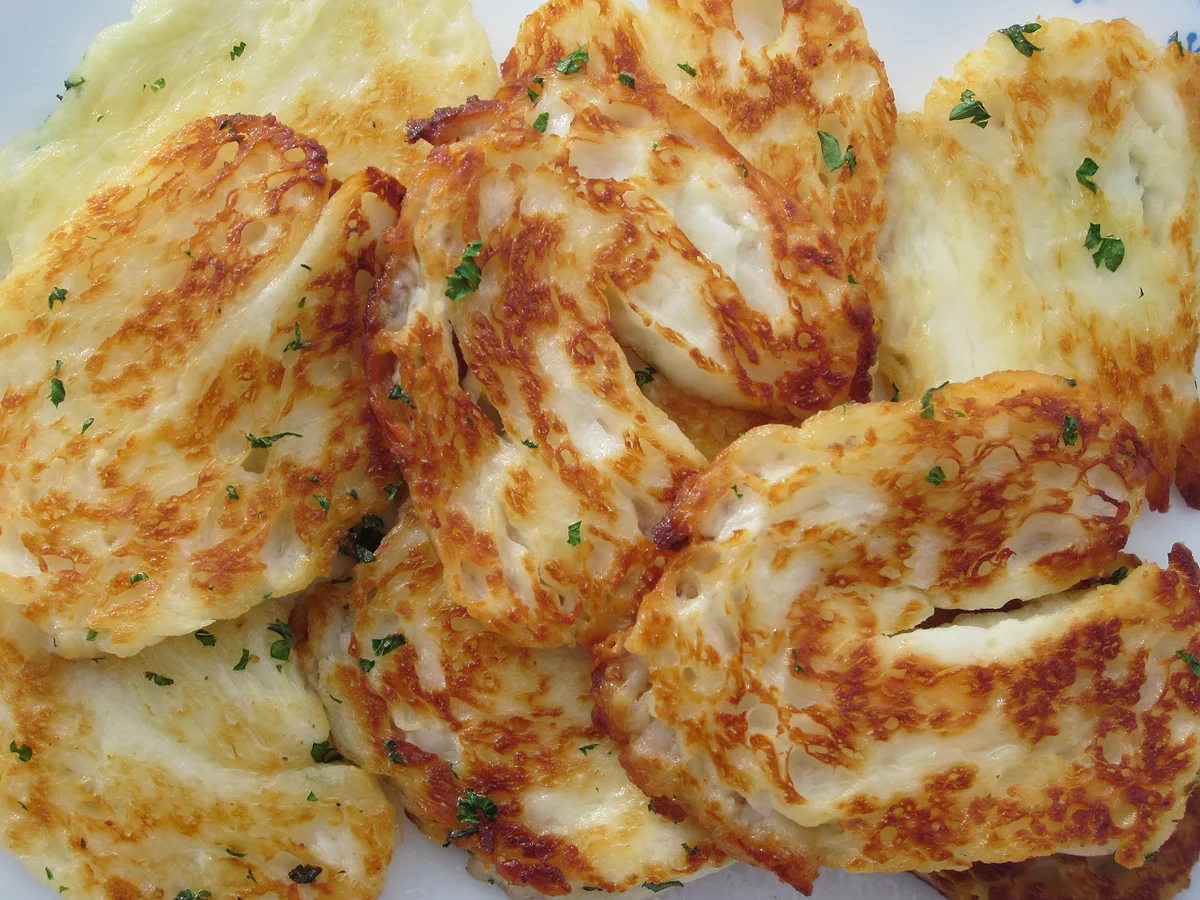
A cheese with papers
The EU registered halloumi as a PDO in 2021, with the whole island as its production area, and the regulation cites records going back to 1554.
things to do in Cyprus -
02 Getting there
An English queen crowned in Limassol
The Limassol tourism board says Richard the Lionheart married Berengaria of Navarre there in 1191, and she was crowned Queen of England in the town.
history of Cyprus -
03 My tip
They drive on the left
Gov.uk and the Spanish foreign ministry both say so. For British drivers it's one thing less to worry about.
driving in Cyprus -
04 Most beautiful
A poetry duel in verse
Tsiattista, a form of poetic duelling, has been on UNESCO's intangible heritage list since 2011.
languages in Cyprus
What I would book
The lists of Cyprus facts doing the rounds online are full of things nobody has checked. I’ve made mine with one rule, nothing goes in unless an official source backs it. That leaves twelve, and a few of them should surprise you. For the story told in order, see the history of Cyprus. The halloumi one also helps when choosing souvenirs from Cyprus.
An island without rivers
Only two Mediterranean islands are bigger or more populous than Cyprus, says the Spanish foreign ministry, and the same profile adds a detail that genuinely surprised me. There are no permanent rivers. Instead you get two ranges with a plain between them, and Mount Olympus rising to 1,953 m. How big the island is end to end is in how big is Cyprus.
Halloumi has papers
The island’s most famous cheese has protected designation of origin status. The EU registered the name «Χαλλούμι» (Halloumi), and «Hellim» in Turkish, in 2021, with the whole surface of Cyprus as its production area. The regulation cites references to it being made on the island as far back as 1554. For me that’s the perfect excuse to order it at every meal.
Once your dates are set, check which hotels are still free in Limassol before prices climb.
An English queen crowned in Limassol
This is my favourite. In 1191, the Limassol tourism board says, Richard the Lionheart held his wedding to Berengaria of Navarre in the town, and the bride was crowned Queen of England on the spot. A Navarrese princess crowned an English queen on an island in the eastern Mediterranean.
On the left, like at home
Cypriots drive on the left, as both gov.uk and the Spanish foreign ministry point out. The sources don’t say why, but it fits with the British administration, which the Limassol tourism board dates from 1878 to 1960. If you’re hiring a car, read driving in Cyprus first. The British legacy shows on the wall too, with the three-pin socket covered in plugs in Cyprus.
If you would rather have a local show you round, book a guided tour in Limassol and choose by the reviews.
The UN in the middle of the capital
The UN strip runs some 180 km across Cyprus and, in the old quarter of Nicosia, shrinks to under 20 metres. UNFICYP, the force that patrols it, arrived in 1964, and the UN counts it among its longest-running peacekeeping missions. And within it sits Pyla, where, the UN says, the two communities still share one village, uniquely on the island.
Ten thousand Cypriots on British bases
The Sovereign Base Areas at Akrotiri and Dhekelia aren’t part of the Republic, but they aren’t just barracks either. Around 10,000 Cypriots live inside, plus some 3,800 British personnel, civilians and families, and roughly 60% of the land is in private hands, according to the bases’ own administration.
A car frees you from timetables: search car hire in Limassol on DiscoverCars and compare companies.
Compulsory voting, and seats without a vote
Voting in elections to the House of Representatives is compulsory, the House says. And three representatives sit in the chamber, for the Armenians, Latins and Maronites, with a voice but no vote. More in the political system of Cyprus.
More heritage than you’d think
Cyprus has three World Heritage properties, Paphos, the Troodos painted churches and Choirokoitia, and eleven more on the tentative list. On the intangible heritage list it has eight elements, from Lefkara lace in 2009 to Commandaria wine in 2025, by way of tsiattista, a poetic duel in verse.
Once your dates are set, check which hotels are still free in Limassol before prices climb.
Independence celebrated in October
The last one. Cyprus became independent at midnight on 15-16 August 1960, according to the House, yet the Independence Day on the official holiday list is 1 October. I haven’t found the reason in any official source, so I’ll keep my guesses to myself. Every holiday is in public holidays in Cyprus. The flag dates from that same year, and why it carries a map of the island is explained in the Cyprus flag. According to myth, Aphrodite rose from the sea beside Aphrodite’s Rock, between Paphos and Limassol.
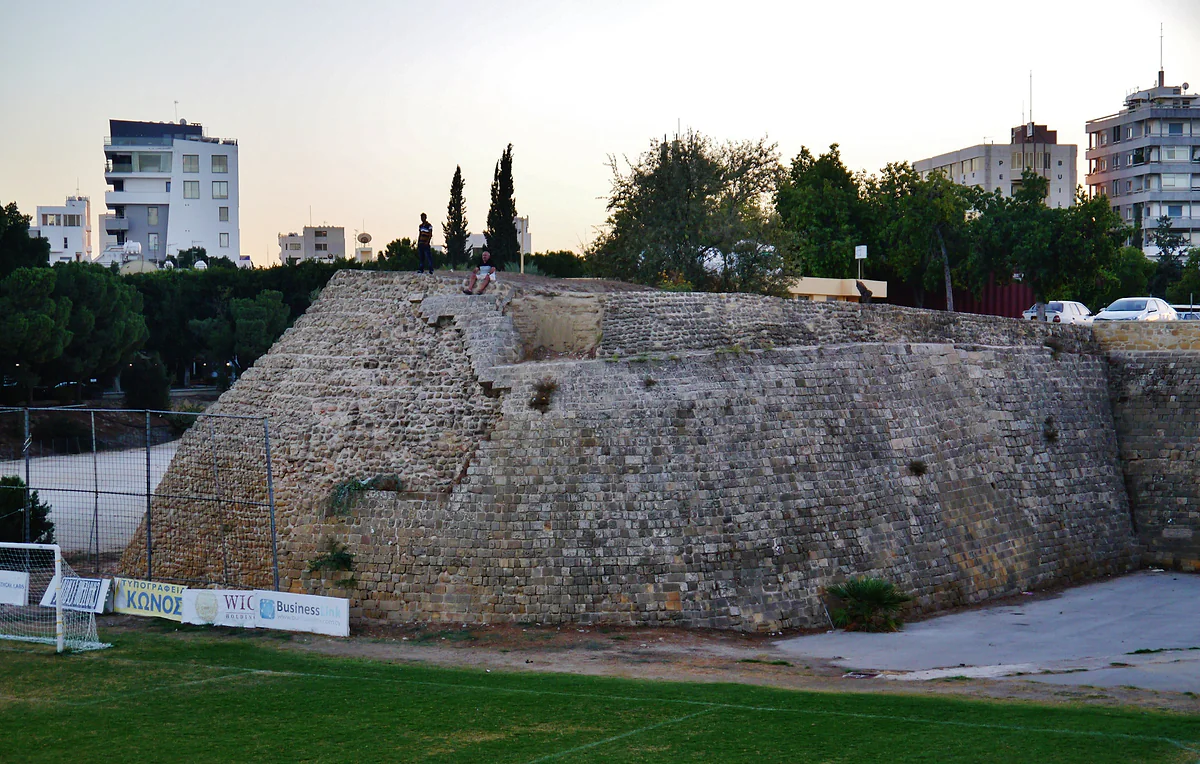
One of the eleven stone bastions of the Venetian walls of Nicosia, its moat now turned into a sports ground
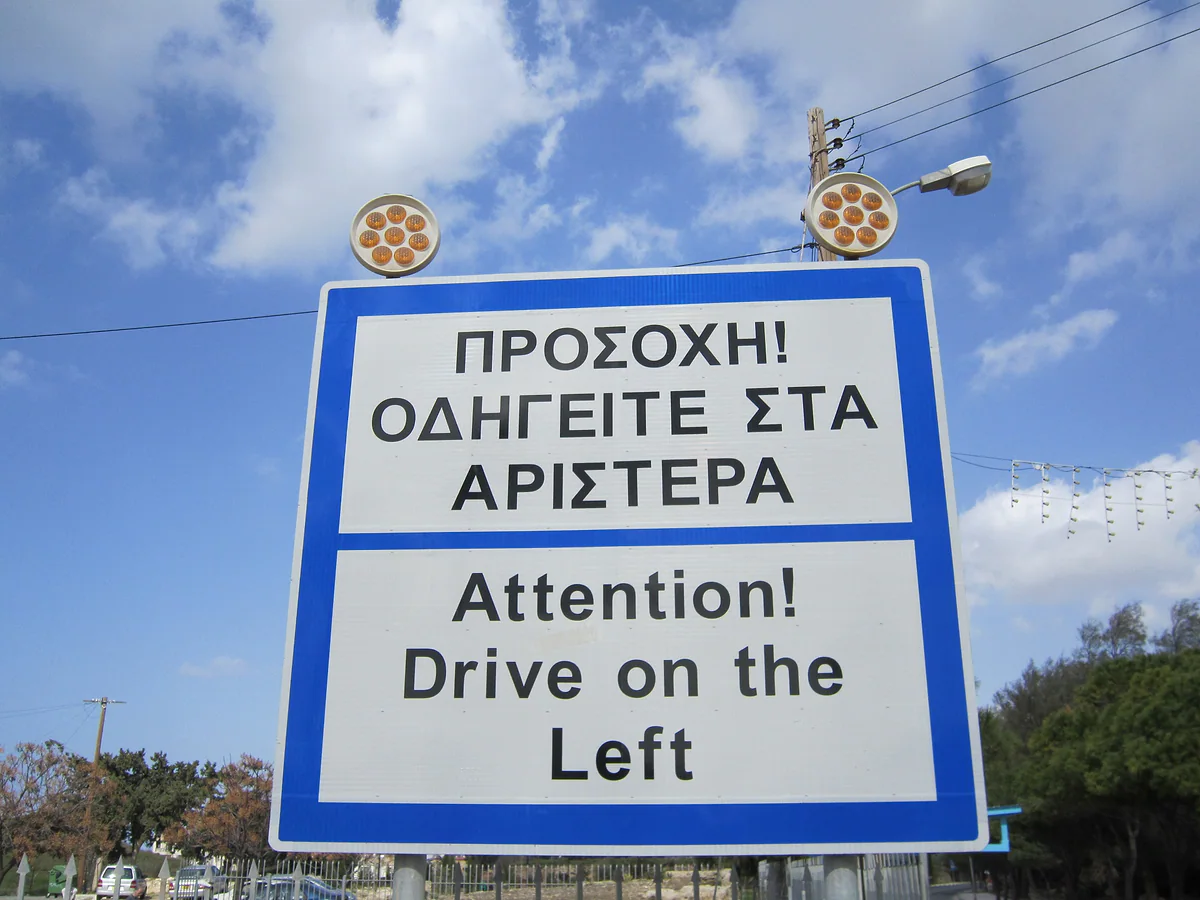
A bilingual Greek and English road sign warning drivers that traffic in Cyprus keeps to the left
Twelve facts and their source
| Fact | Source |
|---|---|
| Third-largest Mediterranean island by size and by population | Spanish foreign ministry, SBA Administration |
| No permanent rivers | Spanish foreign ministry |
| Halloumi has been an EU PDO since 2021 | Implementing Regulation (EU) 2021/591 |
| Traffic drives on the left | Gov.uk, Spanish foreign ministry |
| In Nicosia the UN zone is under 20 metres wide in one stretch | UN |
| Pyla is the only village where both communities live together | UN |
| UNFICYP is one of the UN's longest-running peacekeeping missions | UN |
| About 10,000 Cypriots live inside the British bases | SBA Administration |
| Voting in parliamentary elections is compulsory | House of Representatives |
| Three minorities have a non-voting member in the House | House of Representatives |
| Three World Heritage properties and eight intangible heritage elements | UNESCO |
| Independence came on 16 August, but the holiday is 1 October | House of Representatives, European Medicines Agency |
Checked on 4 October 2026.
Test yourself
True or false?
0/3 Pick before you peek.
-
Cyprus has rivers that flow all year.
See the answer
False. The Spanish foreign ministry says there are no permanent rivers.
-
Halloumi has protected designation of origin status.
See the answer
True. The EU registered it in 2021 under Implementing Regulation 2021/591.
-
Voting in Cypriot parliamentary elections is optional.
See the answer
False. The House of Representatives says voting is compulsory.
- Largest Mediterranean island
- 3rd
- Earliest halloumi record cited by the EU
- 1554
- Narrowest UN zone in Nicosia
- 20 m
- Intangible heritage elements
- 8
0 of 421 Cyprus guides
Your next stamp
- Map
- The north
- UNESCO World Heritage
- Green Line
- Greek or Turkish?
- History
- Cypriot food
- Almyra Hotel
- Anassa Hotel
- Anastasia Beach
- Aphrodite Hills Resort
- Apostolos Andreas
- Bellapais Abbey
- Cap St Georges
- Church of St Lazarus
- Columbia Beach Resort
- Commandaria
- Coral Beach Hotel
- Dome Beach
- Four Seasons Limassol
- Golden Bay
- Grecian Park
- Hilton Nicosia
- Kourion
- Kyrenia Castle
- Larnaca
- Lefkara lace
- Limassol
- Limassol Carnival
- Meze
- Omodos
- Panagia Angeloktisti
- Places to visit
- Selimiye Mosque
- Soli
- St Barnabas Monastery
- Weather
- Wine routes
- Atlantica Miramare
- Büyük Han
- Cheap eats
- Cyprus in winter
- Finikoudes
- Halloumi
- Kantara Castle
- Kataklysmos
- Limassol Castle
- Narcissos
- Nissi Beach Resort
- Olympic Lagoon Paphos
- Othello Tower
- Sanctuary of Apollo Hylates
- Sea temperature
- Things to do
- Vouni
- Vouni Palace
- Alion Beach
- Cypriot desserts
- Cyprus in spring
- Elias Beach
- Golden Coast
- Koilani
- Kolossi Castle
- Lala Mustafa Pasha Mosque
- Larnaca Castle
- Leonardo Laura Beach
- Limassol old town
- Limassol Wine Festival
- Most beautiful places
- Souvla
- St Hilarion Castle
- Arsos
- Buffavento Castle
- Crystal Springs
- Cypriot wine
- Cyprus in summer
- Easter in Cyprus
- Episkopi
- Kition
- Kleftiko
- Limanaki Beach
- Molos promenade
- Pafos Aphrodite Festival
- Pagona
- Prettiest villages
- St Raphael Resort
- Adams Beach
- Akrotiri peninsula
- Alasia Hotel
- Bellapais
- Cyprus in autumn
- Elysium Hotel
- Green Monday
- Independence Day
- Limassol Marina
- Pierides Museum
- Sheftalia
- Sunrise Pearl
- Vasa Koilaniou
- Akrotiri salt lake
- Amathus Beach
- Christmas
- Cyprus in January
- Grecian Bay
- Larnaca Archaeological Museum
- Limassol old port
- Lofou
- Venus Beach Hotel
- Vrissiana
- Asterias Beach
- Capo Bay
- Cypriot coffee
- Cyprus in February
- Kamares Aqueduct
- Kefalos Beach
- Lania
- Limassol Archaeological Museum
- Parklane
- St Nicholas of the Cats
- Where is Cyprus
- Alexander the Great
- Carob Mill
- Cyprus in March
- Districts
- Hala Sultan Tekke
- Lady's Mile
- Tsokkos Gardens
- Zivania
- Beer
- Cavo Maris
- Cyprus in April
- Germasogeia
- King Evelthon
- Larnaca Salt Lake
- Pissouri
- Towns and villages
- Amathus
- Anogyra
- Athena Beach
- Cyprus in May
- Mackenzie beach
- Population
- Archaeological sites
- Cyprus in June
- King Jason
- Limassol beaches
- Size
- Zenobia wreck
- Aliathon Resort
- Castles in Cyprus
- Cyprus in July
- Governor's Beach
- Languages
- Larnaca beaches
- Annabelle Hotel
- Cyprus in August
- Monasteries in Cyprus
- Name
- Azia Resort
- Cyprus in September
- Museums in Cyprus
- Capital Coast Resort
- Cyprus in October
- Pyla
- Cyprus in November
- Kiti
- Cyprus in December
- Lefkara
- Choirokoitia
- Tochni
- Flag
- How to get there
- Kalavasos
- Krasochoria
- Salamis
- Aphrodite
- Flights
- Karpas Peninsula
- Stavrovouni Monastery
- Kornos
- Larnaca Airport
- Limassol District
- Larnaca district
- Paphos Airport
- Pyrga
- Airport transfers
- Athienou
- Ferry
- Odou
- Cruises
- Kato Drys
- Getting around
- Vavla
- Buses
- Zygi
- Taxis
- Agios Irakleidios
- Car hire
- Paphos district
- Driving
- Paphos
- Kato Paphos
- Parking
- Cycling
- Paphos old town (Ktima)
- Paphos Archaeological Park
- Road trip
- Distances
- Tombs of the Kings
- Agia Kyriaki and St Paul's Pillar
- Paphos Byzantine Museum
- Paphos beaches
- Geroskipou
- Cyprus Wine Museum
- Peyia (Pegeia)
- Coral Bay
- Sea caves, Peyia
- The division
- Agios Georgios, Peyia
- Political system
- Akamas peninsula
- Religion
- Blue Lagoon, Akamas
- Public holidays
- Baths of Aphrodite
- Time
- Currency and payments
- Lara beach
- Avakas Gorge
- EU and Schengen
- Entry requirements
- Polis Chrysochous
- Latchi
- Neo Chorio
- Aphrodite's Rock
- Palaepaphos (Kouklia)
- Paphos Castle
- Paphos Archaeological Museum
- Agia Solomoni Catacomb
- Kathikas
- Drouseia
- Ineia
- Diarizos Valley
- Pano Panagia
- Where to eat
- Where to stay
- Chrysorrogiatissa Monastery
- Crossing to the north
- Hotels in Ayia Napa
- Agios Neophytos Monastery
- Hotels in Protaras
- British bases
- Hotels in Limassol
- Tala
- Ercan airport
- Hotels in Larnaca
- Lempa
- Hotels in Paphos
- Hotels in the north
- Pano Arodes
- Hotels in Coral Bay
- Kritou Terra
- Kyrenia district
- Hotels in Polis and Latchi
- Kyrenia
- Lysos
- Hotels in Nicosia
- Lapithos
- Pomos
- Cedar Valley
- Hotels in the Troodos
- Ayia Napa
- Best time to visit
- Famagusta district
- Luxury hotels
- North Nicosia
- Agrotourism
- All-inclusive hotels
- Famagusta
- Thalassa Museum
- Adults-only hotels
- Apartments
- Ayia Napa Monastery
- Varosha
- Ayia Napa Sculpture Park
- Family hotels
- Morphou
- Boutique hotels
- Nissi Beach
- Beachfront hotels
- Events
- Makronissos
- Ayia Napa sea caves
- Cheap hotels
- Love Bridge
- Villas
- Ayia Napa beaches
- Campsites
- Cape Greco
- Safety
- Konnos Bay
- Scams and pitfalls
- Cyclops Cave
- Healthcare
- Mobile and roaming
- Free things to do
- What to buy
- With a dog
- Accessible Cyprus
- Plugs
- Tipping
- Protaras
- Tourist information
- Fig Tree Bay
- Packing list
- Prices and budget
- Profitis Ilias Church
- Cyprus on a budget
- Protaras beaches
- Shopping
- Paralimni
- With kids
- Deryneia
- For couples
- Kokkinochoria
- Weddings
- Nightlife
- Sotira
- Liopetri
- Package holidays
- Day trips
- Frenaros
- Nicosia district
- Avgorou
- Boat trips
- Nicosia
- Jeep safari
- Venetian walls
- Famagusta Gate
- Ledra Street
- Laiki Geitonia
- Cyprus Museum
- Byzantine Museum, Nicosia
- St John's Cathedral
- Archbishop's Palace
- 3 days
- Museums in Nicosia
- 5 days
- Chrysaliniotissa
- Leventis Museum
- One week
- 10 days
- Leventis Gallery
- Kornesios house
- Two weeks
- National Struggle Museum
- Ömeriye Mosque
- Faneromeni Church
- Shacolas observatory
- Tamassos
- Idalion
- Machairas Monastery
- Fikardou
- Lythrodontas
- Tilliria
- Kato Pyrgos
- Troodos Mountains
- Mount Olympus
- Troodos Square
- Skiing in Cyprus
- Troodos Geopark
- Painted churches of Troodos
- Kykkos Monastery
- Makarios's tomb
- Trooditissa Monastery
- Platres
- Prodromos
- Foini
- Treis Elies
- Marathasa valley
- Solea valley
- Agios Nikolaos tis Stegis
- Panagia Asinou
- Panagia Podithou
- Archangelos Michael, Pedoulas
- Panagia tou Moutoulla
- Agios Ioannis Lampadistis
- Kalopanayiotis
- Pedoulas
- Moutoullas
- Kakopetria
- Galata
- Evrychou
- Pitsilia
- Stavros tou Agiasmati
- Panagia tou Araka
- Timios Stavros, Pelendri
- Transfiguration church, Palaichori
- Palaichori
- Askas
- Lagoudera
- Polystypos
- Alona
- Agros
- Kyperounta
- Louvaras
- Hiking in Cyprus
- Artemis Trail
- Atalante Trail
- Persephone Trail
- Teisia tis Madaris
- Waterfalls in Cyprus
- Caledonia Waterfall
- Nature parks in Cyprus
- Viewpoints in Cyprus
- Cyprus beaches
- Diving in Cyprus
- Water sports in Cyprus
- Water parks in Cyprus
- Golf in Cyprus
Frequently asked questions
What is Cyprus famous for?
Among other things, for halloumi, an EU protected cheese since 2021, for its World Heritage sites at Paphos, Choirokoitia and the Troodos painted churches, and for a capital split by a UN buffer zone.
Does Cyprus have rivers?
It has no permanent rivers, according to the Spanish foreign ministry. The relief is two mountain ranges divided by a central plain, with Mount Olympus at 1,953 m.
Where does halloumi come from?
Cyprus. The EU registered it in 2021 as a protected designation of origin, with the whole island as its production area.
Why do they drive on the left in Cyprus?
The official sources I use only say that they do. The obvious link is the British administration, which the Limassol tourism board dates from 1878 to 1960.
How many UNESCO sites does Cyprus have?
Three World Heritage properties, Paphos, the Troodos painted churches and Choirokoitia, plus eight intangible heritage elements, including Lefkara lace and Commandaria.
By
Tourism graduate with a master’s in Tourism Management and Planning from the University of Málaga, who has travelled across Europe. He writes every guide from official sources and his own judgement.
Published on . Facts checked on .
Sources
- Spanish foreign ministry, Cyprus country profile (in Spanish)
- EUR-Lex, Implementing Regulation (EU) 2021/591 on halloumi
- UN, UNFICYP, about the buffer zone
- Sovereign Base Areas Administration, background
- House of Representatives, election and composition
- UNESCO, intangible heritage of Cyprus
- Limassol Tourism Board, the city
Some links in this guide are affiliate links: if you book through them, the site earns a commission at no extra cost to you. Affiliate disclosure
Photos: Hmioannou (CC BY 3.0); Zairon (CC BY-SA 4.0); Dickelbers (CC BY-SA 3.0), via Wikimedia Commons.