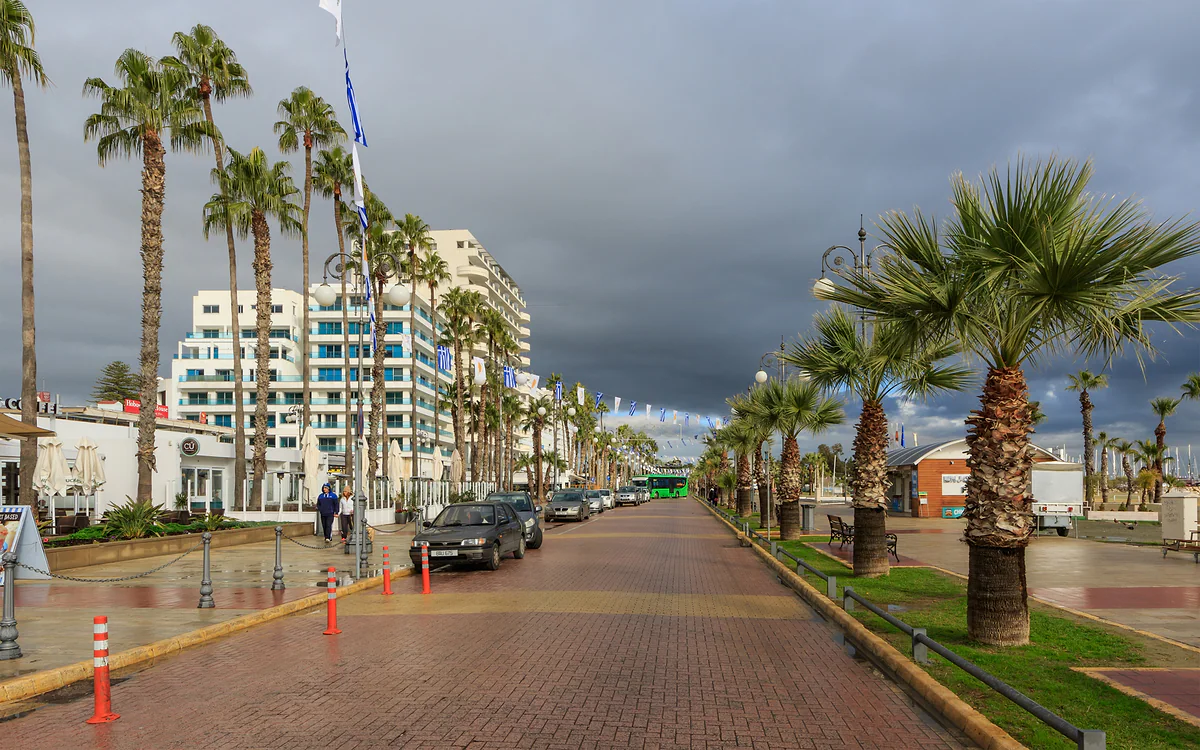
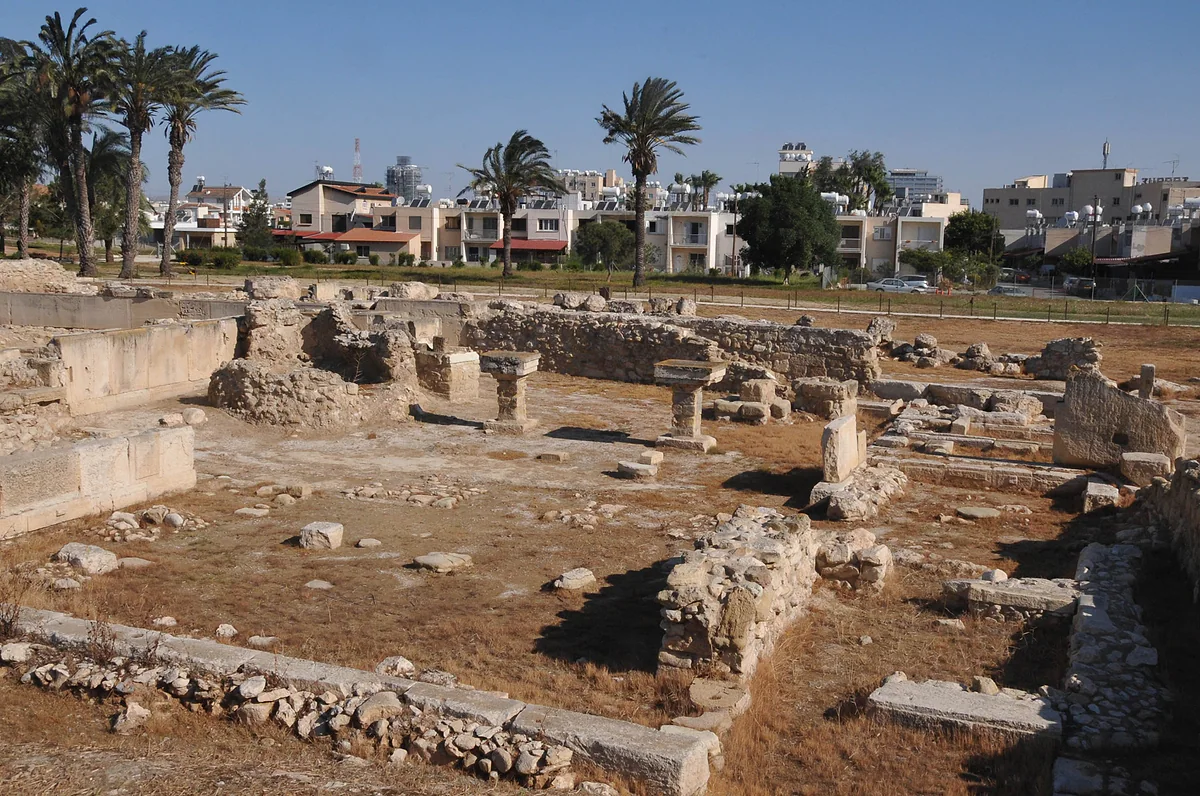
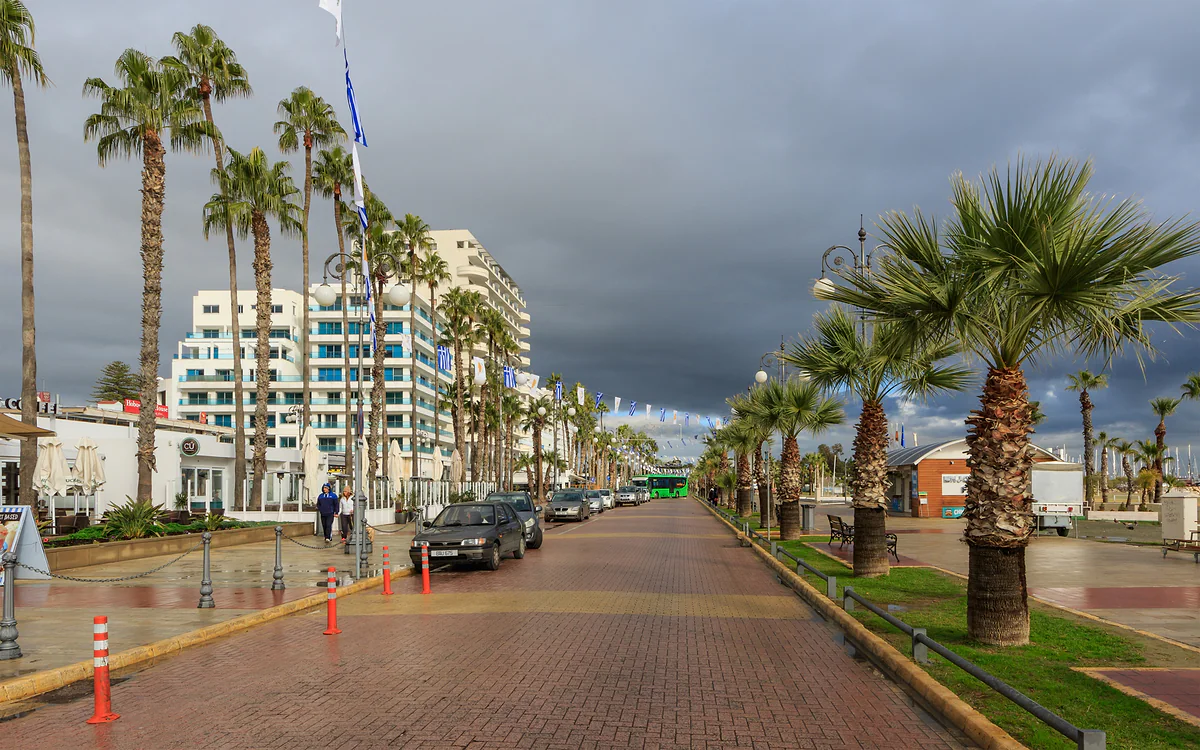
Larnaca is the city on Cyprus's south-east coast where most flights land, with the airport about 5 km from the centre as the crow flies. Its municipality had 52,046 residents in 2021. People come for the church of St Lazarus, the palm-lined Finikoudes promenade, the medieval fort, the ruins of Kition, its museums and the salt lake where flamingos spend the winter.
In 30 seconds
Full read: 3 min
Larnaca is the city of Cyprus's main airport.
St Lazarus, Finikoudes, the fort and Kition are in the centre.
The salt lake gets flamingos from November to March.
There's a free guided walk on Wednesdays at 10:00.
I'd give Larnaca a whole day, not just the night of your flight. In the morning, the free Wednesday walk or St Lazarus and the museums; in the afternoon, the salt lake and a stroll down to Mackenzie.
Sergio LeponeMy advice
Before you go
What I would keep in mind
01 To save money
A free guided walk
Every Wednesday at 10:00 a free walking tour of the centre sets off, sponsored by the municipality and lasting two and a half to three hours. No booking needed.
02 Most beautiful
Winter flamingos
From roughly November to March, thousands of flamingos stop at the salt lake, about 2 km from the centre. Wading in to get closer is forbidden.
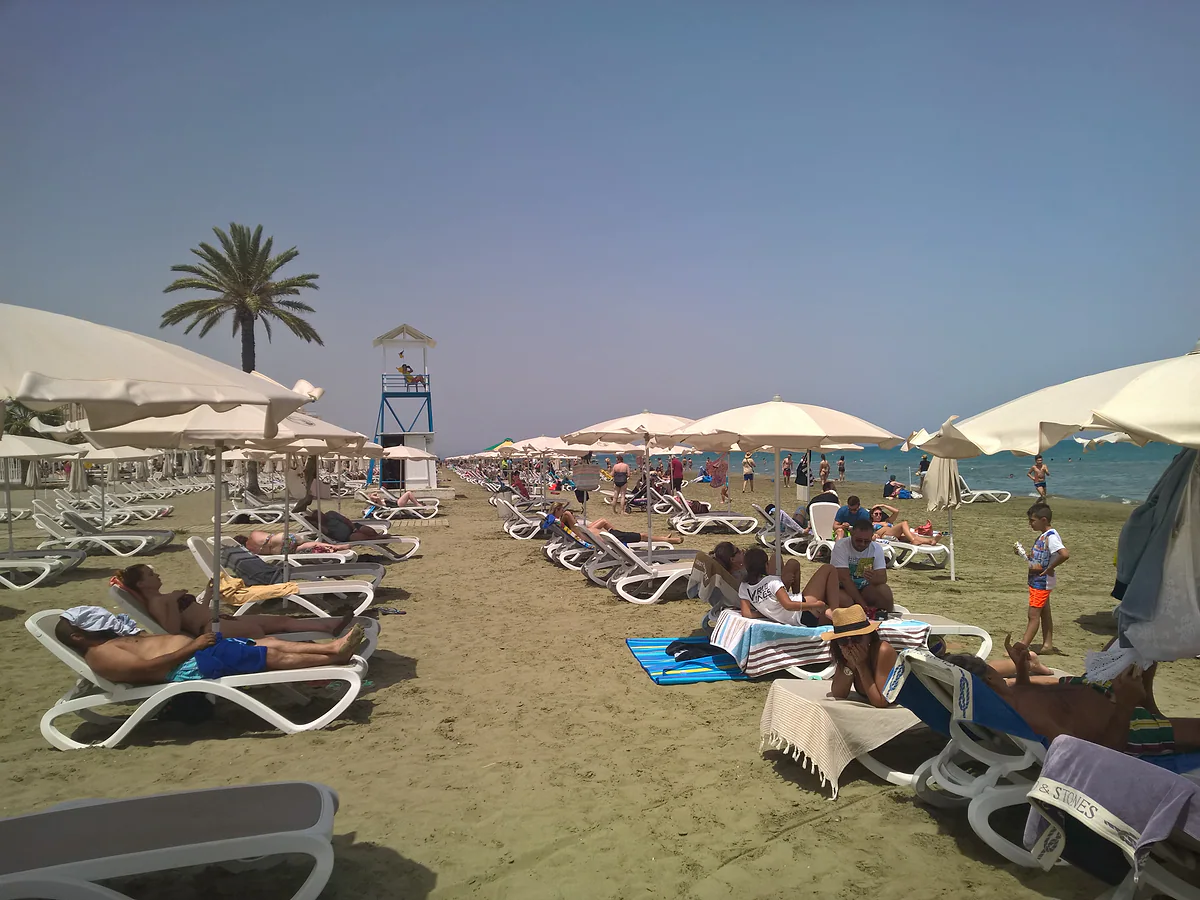
End at Mackenzie beach, the city's trendiest strip of bars and restaurants, with planes passing close by.
Times are a guide, based on the official opening hours checked for this guide.
Plenty of people pass through Larnaca without seeing it, from plane to car and car to somewhere else. It’s a pity, because this is a compact, friendly city with one of the most important Byzantine churches in Cyprus, good museums and a lake full of flamingos in winter a few minutes from the centre.
A very old city
The Larnaca Tourism Board is proud that the area has been continuously inhabited for some 10,000 years, and the municipality speaks of 4,000 years as a city. By the 13th century BC it was already called Kition, and Mycenaeans, Phoenicians, Persians and Ptolemies all passed through. Zeno of Kition, the philosopher who founded Stoicism, was born in the city around 334 BC, and today three statues of him stand in its streets.
The current name has an odd story. According to the board, in Frankish times one quarter was called «Larnacas», the tombs, and the Franks confused it with «L’arnica», a plant that covered the area. Under the Ottomans, Larnaca was the island’s main port and the city of foreign consuls. In 1974 it took in thousands of people displaced from the north and lost its Turkish Cypriot residents, and soon after the new airport was built here. In the 2021 census the municipality had 52,046 residents.
My money-saving tip is the free Wednesday walk. It leaves the tourist office on Vasileos Pavlou Square at 10:00, is sponsored by the municipality and lasts two and a half to three hours. It takes in the colonial buildings, the promenade statues, the fort, the Kebir mosque, the artisans’ quarter, St Lazarus and the municipal market. The office itself is closed for renovation and working from another building for now, though the walk still starts from the usual spot.
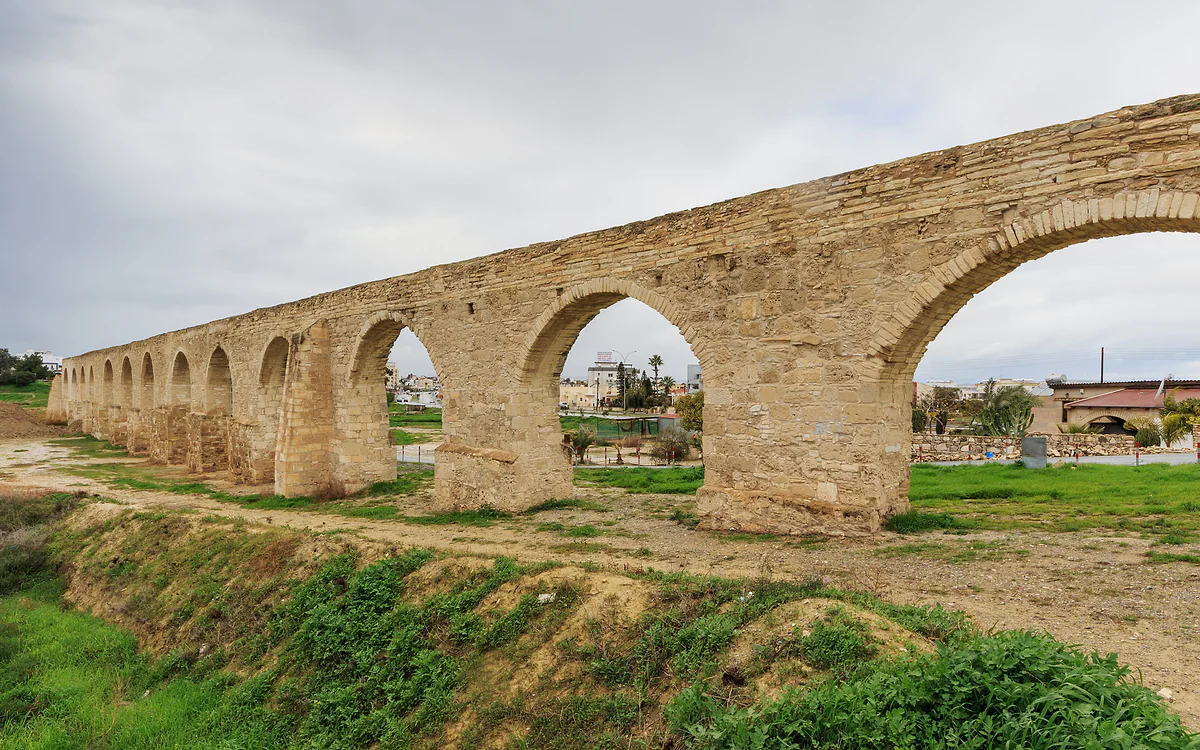
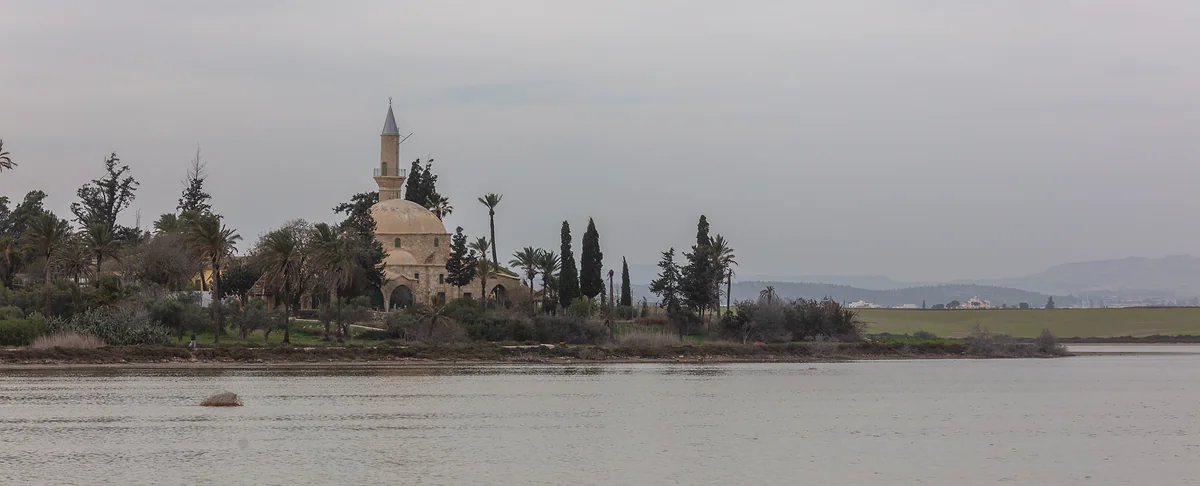
About 2 km from the centre begins the Larnaca Salt Lake, a group of four lakes where thousands of flamingos stop between November and March. A 4 km trail runs from the Kamares aqueduct, and on its western shore rises Hala Sultan Tekke, the mosque with the mausoleum of Umm Haram.
Kataklysmos
The city’s big festival is Kataklysmos, which celebrates Pentecost and is on UNESCO’s intangible heritage list. It falls 50 days after Orthodox Easter, in late May or early June. For a week the Finikoudes promenade fills with stalls, concerts on two stages, shadow puppet theatre and games in the water, and it’s customary to soak whoever least expects it.
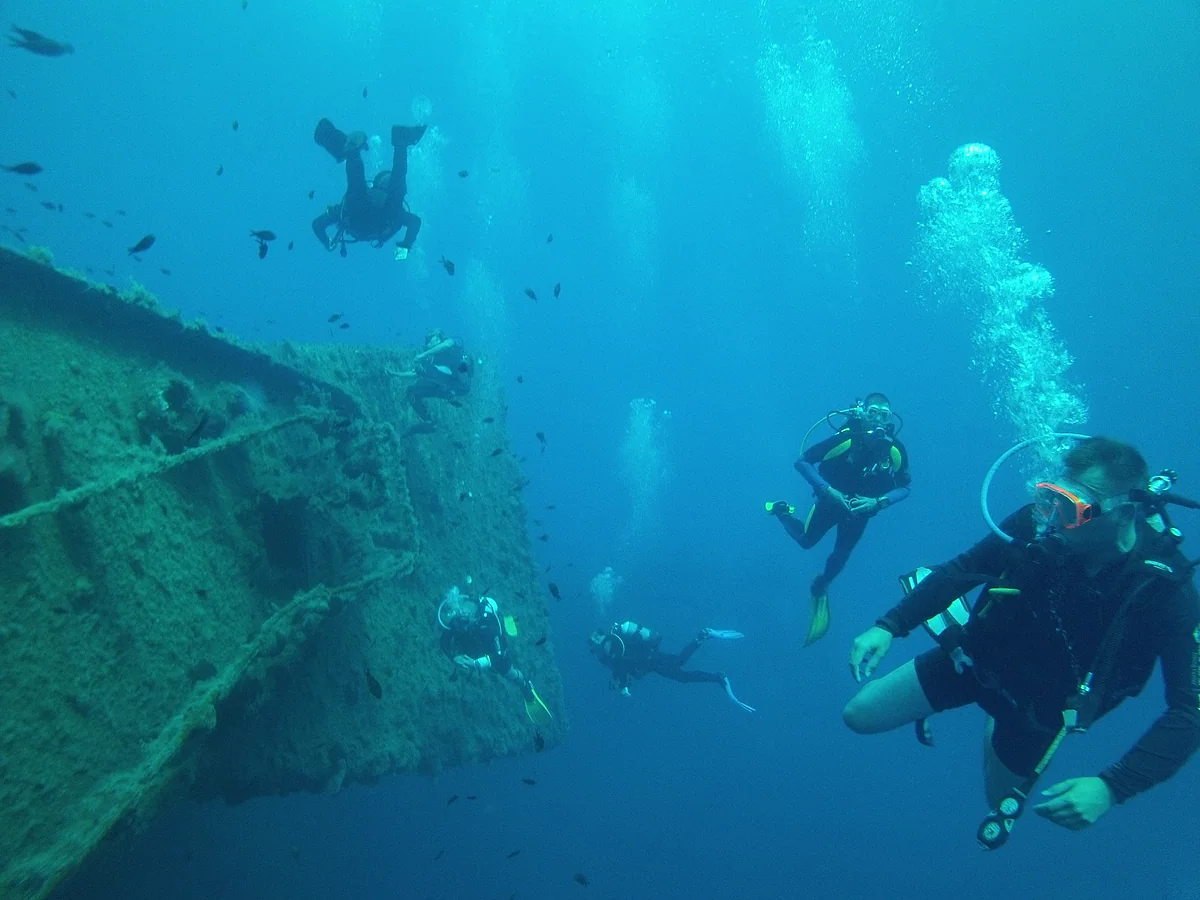
The airport is about 5 km from the centre as the crow flies, so a taxi makes sense. Everything about it is in Larnaca Airport, and hotels by area are in where to stay in Larnaca. For trips to Lefkara, Choirokoitia or Stavrovouni Monastery, see Larnaca district, and for the beaches, Larnaca beaches. If you dive, the Zenobia wreck lies off the city, and about 12 km to the north-east is Pyla, the village where the two communities live together.
Where the bus does not go, a car does: compare car hire in Larnaca before you arrive rather than at the desk.
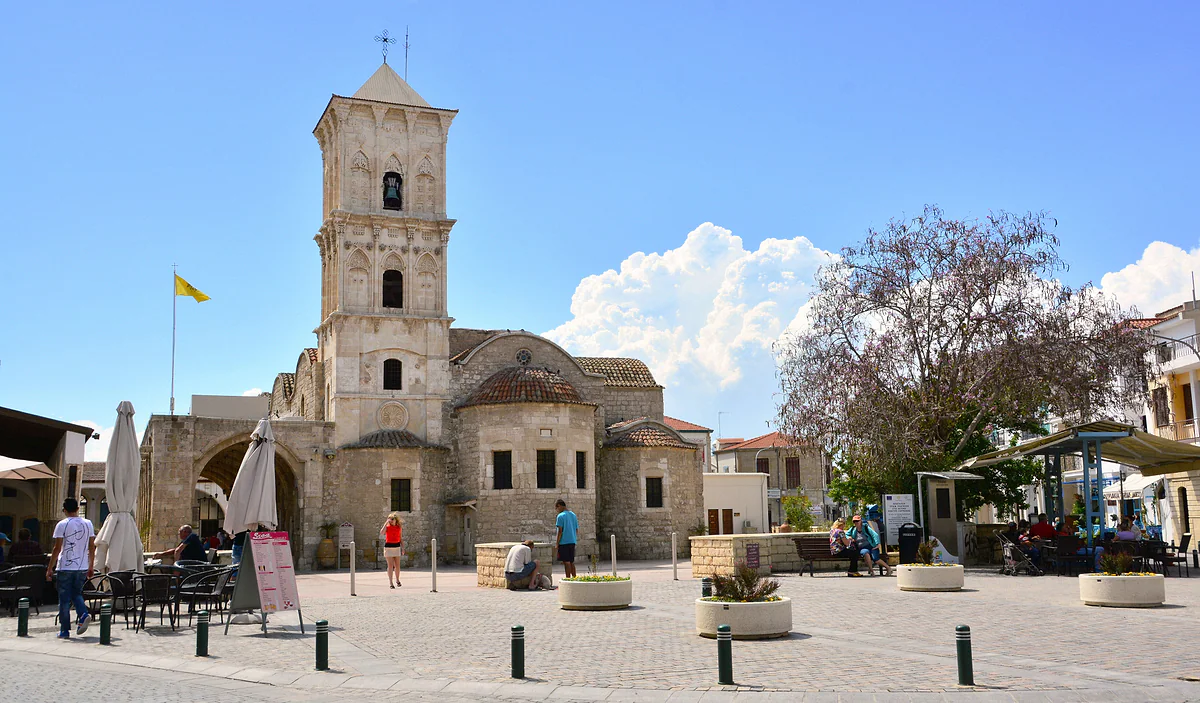
The stone church of Saint Lazarus in Larnaca, with its tall bell tower and domes, seen from the square with café terraces
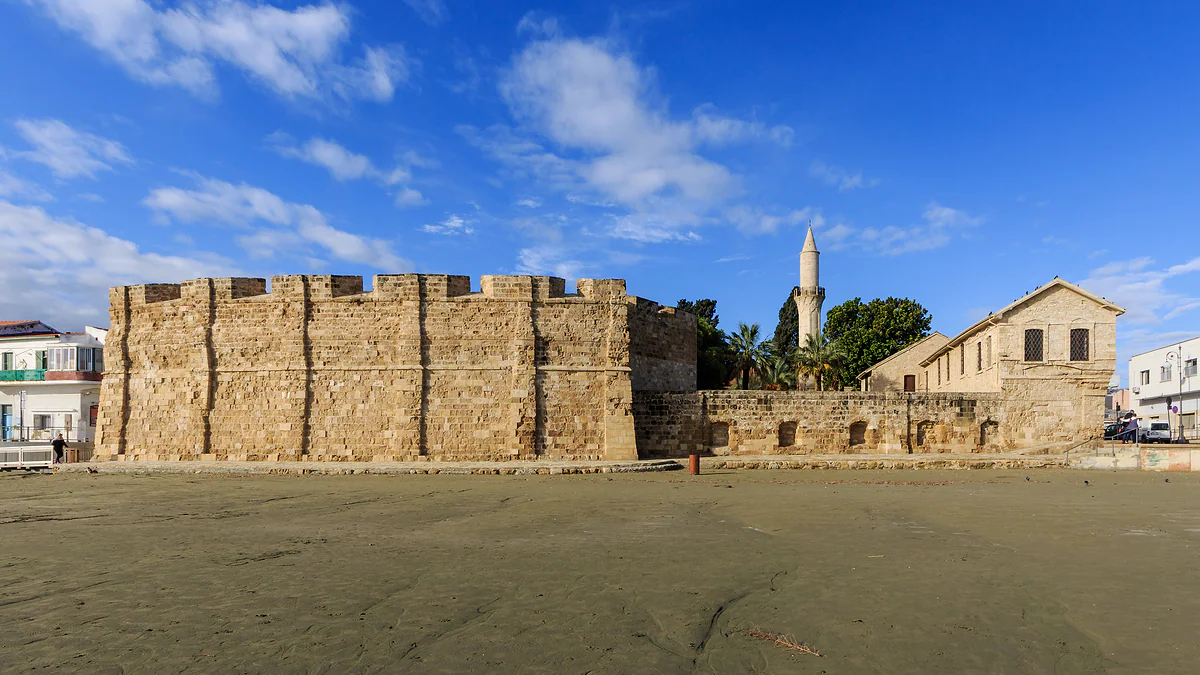
Larnaca's medieval fort, with massive crenellated stone walls, and the minaret of the Kebir mosque rising behind it
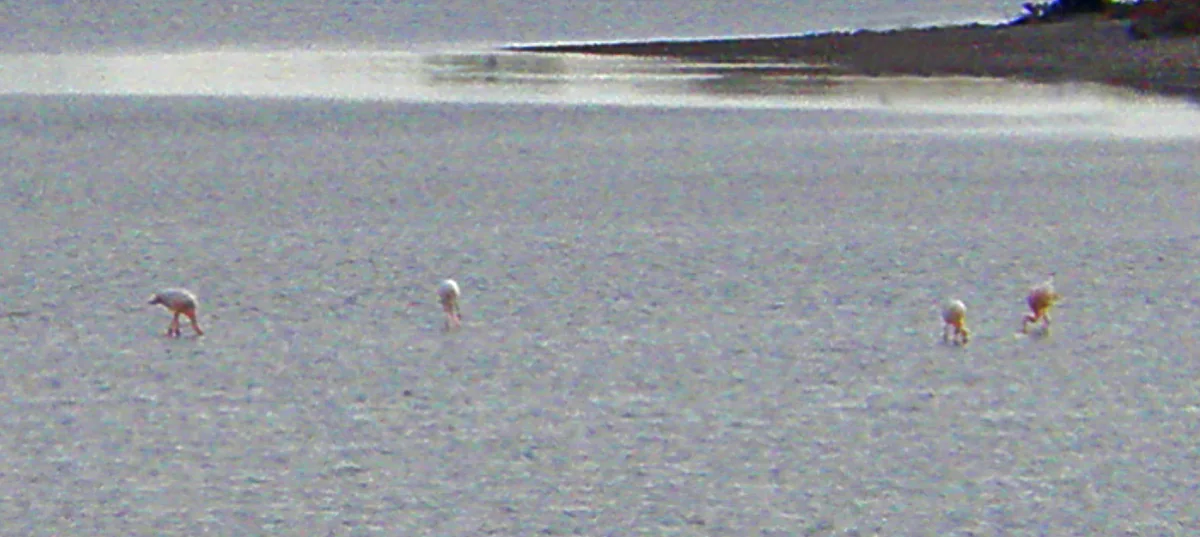
Pink flamingos wading through the shallow water of Larnaca Salt Lake, with the far shore visible in the distance
Opening hours and prices in Larnaca
Place
Hours
Price
St Lazarus (church)
Daily 08:00-18:30 (1 Mar to 31 Oct)
Free
St Lazarus Byzantine Museum
08:30-12:30 and 15:00-17:30; closed Sundays and Wednesday and Saturday afternoons
€1
Medieval fort
Mon-Fri 08:00-17:00 in winter
€2.50
Kition
Mon-Fri 08:30-16:00 in winter
€2.50
Pierides Museum
Mon-Thu 09:00-16:00; Fri-Sat 09:00-13:00
€3
Archaeological Museum
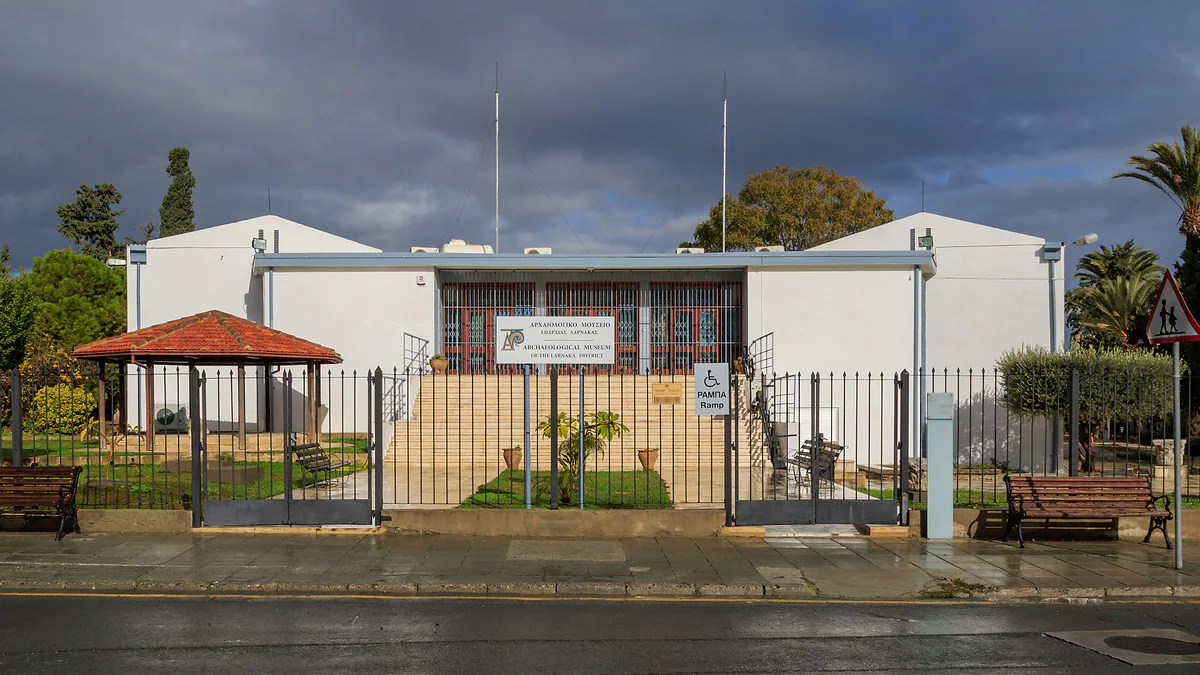
Tue-Sun 09:00-16:30
Free
Hala Sultan Tekke
08:30-17:00 in winter, 08:30-19:30 in summer
Free
Larnaca Tourism Board, read on 4 October 2026. Hours change without notice; check before you go.
Test yourself
True or false?
0/3Pick before you peek.
Larnaca's name comes from a Frankish mix-up.
See the answer
True. The board says «Larnacas», the quarter of the tombs, was confused with «L'arnica», a plant, which gave the modern name.
The Wednesday guided walk costs €10.
See the answer
False. It's free, sponsored by the municipality, and leaves the tourist office at 10:00. Entry fees to sights are extra.
The flamingos are at the salt lake in summer.
See the answer
False. They arrive with the first rains, usually in November, and stay until March, according to the tourist board.
Municipal residents in 2021
52,046
To the airport as the crow flies
5 km
Salt lakes
2.2 km²
St Lazarus church
9th c.
Map
Where Larnaca is
The grey strip with green dashes across the island is the UN buffer zone, the Green Line; to the north is the part of the island not under the control of the Government of the Republic. The Troodos fill the centre and west. Every number opens its guide.
The church of St Lazarus, the Pierides Museum, the Finikoudes promenade with the fort at its end, the salt lake and the Hala Sultan Tekke mosque, and sunset at Mackenzie beach.
How far is Larnaca airport from the city?
About 5 km from the centre as the crow flies, according to OpenStreetMap coordinates. That's why a taxi is the easiest option.
When are there flamingos in Larnaca?
According to the tourist board, they arrive with the first rains, usually in November, and stay until March. When the water is high there can be tens of thousands.
What is Larnaca's Kataklysmos?
The city's biggest and oldest festival, celebrating Pentecost and on UNESCO's intangible heritage list. It falls 50 days after Orthodox Easter, in late May or early June.
How many people live in Larnaca?
The municipality had 52,046 residents in the 2021 census, and the district 155,765.
Tourism graduate with a master’s in Tourism Management and Planning from the University of Málaga, who has travelled across Europe. He writes every guide from official sources and his own judgement.

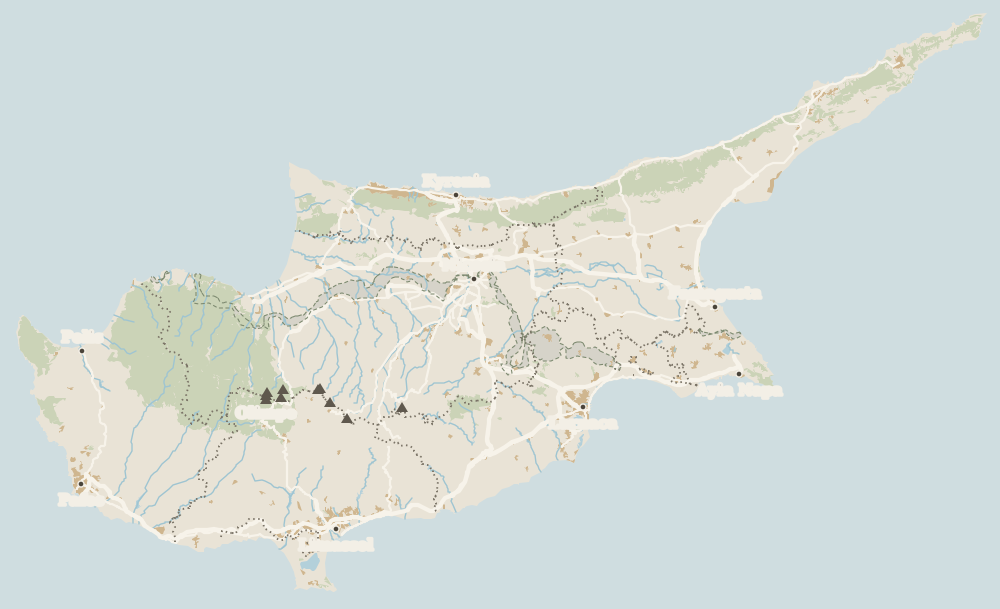 1Larnaca 2Pyla 3Kiti 4Lefkara 5Choirokoitia 6Tochni 7Kalavasos 8Stavrovouni Monastery 9Kornos 10Larnaca district 11Pyrga 12Athienou 13Odou 14Kato Drys 15Vavla 16Zygi