UNESCO World Heritage, Paphos site II
Palaepaphos, the sanctuary of Aphrodite at Kouklia

- Ticket
- €4.50 with the museum
The sanctuary of Aphrodite at Kouklia, Palaepaphos or Old Paphos, lies about 14 km east of Paphos. It was built in the 12th century BC, used until Roman times and is now a World Heritage Site. The €4.50 ticket includes the museum, in a 13th-century manor house that once ran the local sugar production, and it opens daily from 8:30.
Is it worth it?
It depends
It depends what you expect. The ruins are low-key, but for €4.50 the museum and the weight of Aphrodite's sanctuary justify it, especially on the way to the rock.
Who I would recommend it to
Yes, if…
- Anyone heading to Aphrodite's Rock
- Anyone interested in the cult of Aphrodite
Better not, if…
- Anyone after mosaics like those in Kato Paphos
- Anyone short of time in Paphos
I'd come to Palaepaphos knowing it's the place more than the stones that impresses. I'd see the museum first, to understand the conical stone, then carry on to Aphrodite's Rock on the same bus route.
Palaepaphos (Kouklia): the quick answer
Full read: 2 min
- Palaepaphos is Old Paphos, in the village of Kouklia, 14 km from Paphos.
- The sanctuary of Aphrodite dates from the 12th century BC and is World Heritage.
- The €4.50 ticket includes the museum in the manor house.
- Route 631 stops there on its way to Aphrodite's Rock.
Notebook
My notes on Palaepaphos (Kouklia)
-
01 Most beautiful
The stone that was the goddess
The sanctuary venerated a conical stone that represented Aphrodite until Roman times, according to the Pafos tourism board.
-
02 To save money
Two visits, one ticket
The €4.50 site ticket includes the Palaipafos museum, in the manor house at Kouklia.
-
03 Getting there
On the Aphrodite's Rock bus route
Route 631 stops at the Kouklia site on its way to Petra tou Romiou, about 7 km further on.
Aphrodite's Rock -
04 My tip
Winter hours from 16 September
From 16 September to 15 April it closes at 17:00; the rest of the year at 19:30. It opens every day at 8:30.
What I would book ahead
Palaepaphos is where Aphrodite was worshipped for more than a thousand years. Today it’s a field of stones beside a village, and it takes a little imagination, but it’s the half of the goddess’s myth you can actually stand on. Here’s what you’ll see, what it costs and how to get there. For the surrounding area, see Paphos district.
What to see at the sanctuary of Aphrodite
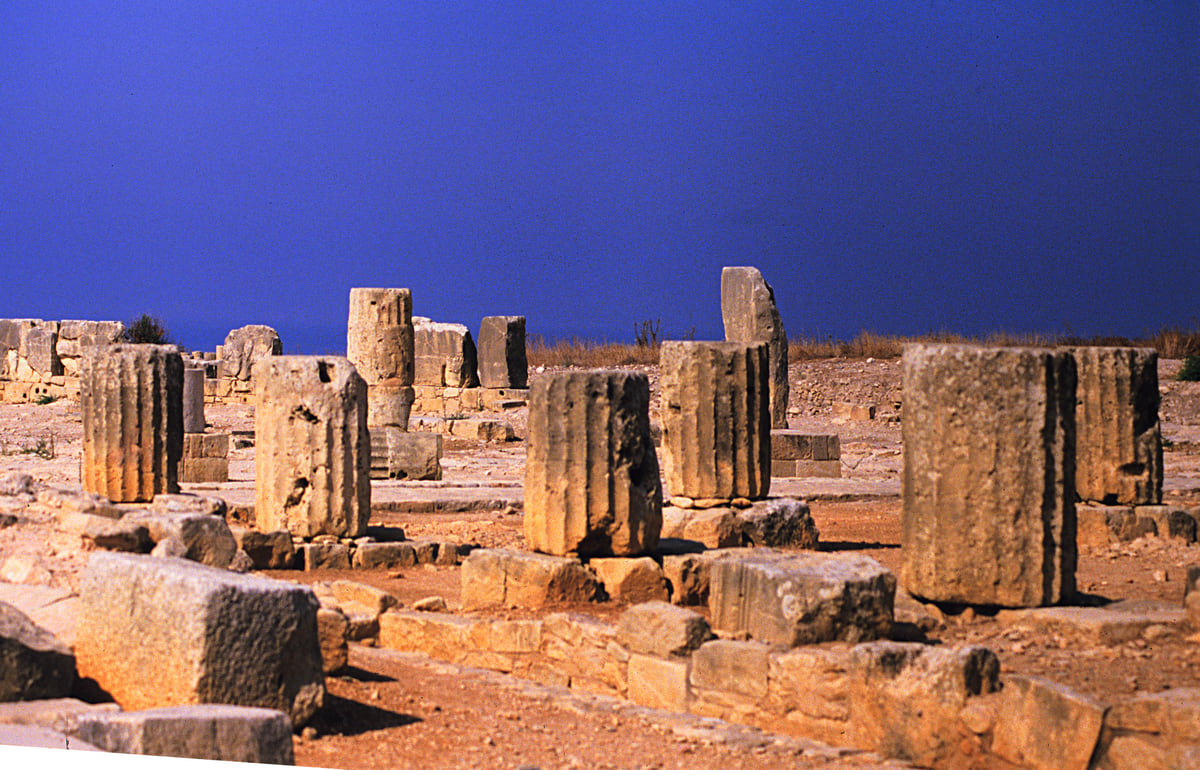
The Pafos tourism board presents it as one of the most important ancient sites linked to the goddess. The site is extensive and its key piece is the conical stone that represented Aphrodite until Roman times. There are also the remains of a Roman temple, a second sanctuary and a Roman house. The huge blocks of the oldest part still lie scattered across the plain.
The museum in the manor house
The manor house at Kouklia is, according to the tourism board, one of the finest surviving examples of Frankish architecture in Cyprus. It was the centre of the local feudal estate, which also ran sugar production, and dates from the 13th century. Today it houses the Palaipafos museum, with finds from the sanctuary, the ancient city and the cemetery, and it’s used as a venue for music festivals. Other finds from the sanctuary, such as sculptures dedicated to the goddess, are in the Paphos Archaeological Museum.
A few metres from the temple stands the church of Panagia Odigitria. The tourism board says it was built with stones from the ruins of the sanctuary and stands just 10 to 15 m from the goddess’s temple.
If you are staying the night, see the best hotel deals in Paphos for your dates: the well-placed rooms go fast.
Opening hours, price and getting there
Site and museum open daily at 8:30, closing at 17:00 between 16 September and 15 April and at 19:30 for the rest of the year. The ticket costs €4.50 and covers both. The site is partly accessible by wheelchair, following the staff’s guidance, as the accessible route isn’t marked. The museum’s phone number is 26 432 180.
Pafos Buses route 631 leaves Paphos harbour, stops at the Kouklia site and carries on to Aphrodite’s Rock. The 630 leaves Karavela station and also stops at the site. For somewhere to stay, the easiest base is Paphos, and if you want something closer, Aphrodite Hills is covered in hotels in Paphos.
What is Palaepaphos?
Palaepaphos, or Palaipafos, means Old Paphos. UNESCO includes it in the Paphos World Heritage property as site II, in the village of Kouklia, while site I covers the Tombs of the Kings and Nea Paphos. Its listing dates the Mycenaean sanctuary here to the 12th century BC, says it remained in use until Roman times, and that Cyprus had been a place of worship of pre-Hellenic fertility deities since the Neolithic. Why the whole island is tied to the goddess is explained in Aphrodite in Cyprus.
Kouklia had 1,211 residents in the 2021 census and lies about 14 km east of Paphos, according to the tourism board. From here you head into the Diarizos Valley by way of Nikokleia and its 18th-century mill.
So you do not lose the morning at the ticket office, browse tickets and tours in Palaepaphos (Kouklia) on GetYourGuide.
If you would rather go at your own pace, see the car hire deals in Paphos: the earlier you book, the more cars are left to choose from.
If you are staying the night, see the best hotel deals in Paphos for your dates: the well-placed rooms go fast.
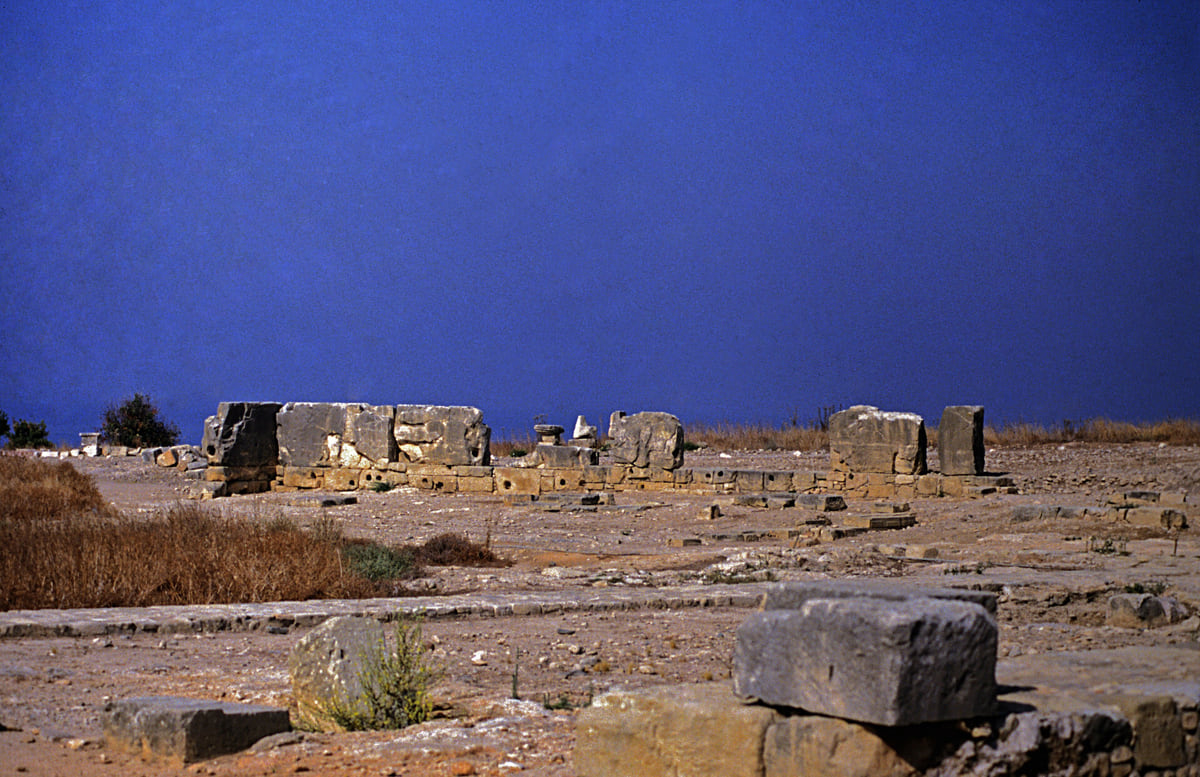
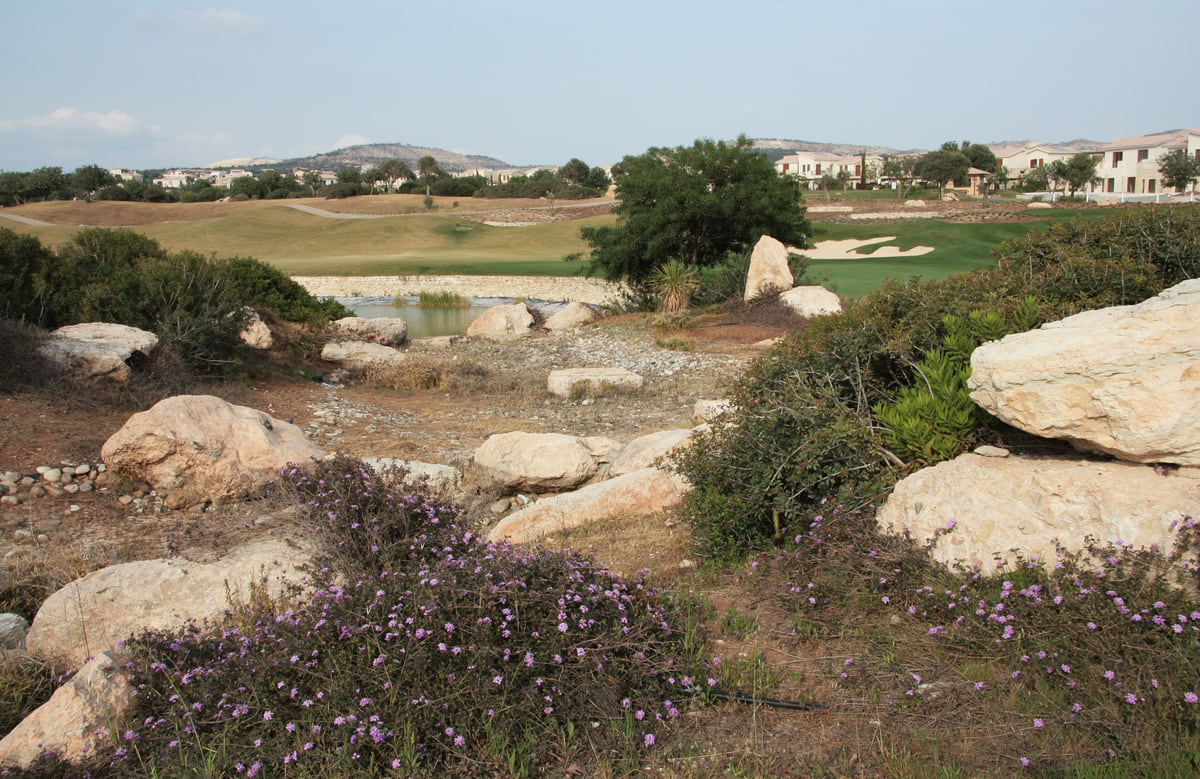
The huge ashlar blocks of the oldest part of Aphrodite's sanctuary at Palaepaphos, scattered across the plain at Kouklia, Cyprus
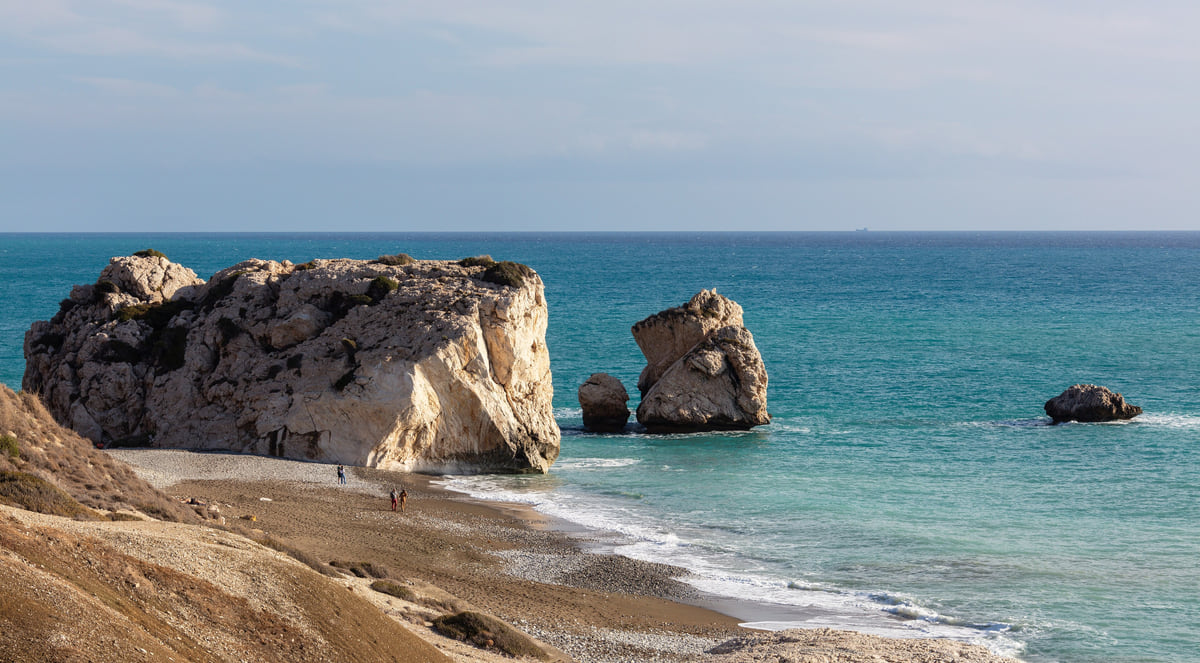
Aphrodite's Rock (Petra tou Romiou) on the south coast of Cyprus, with a turquoise sea and the beach below
What to see at Palaepaphos and Kouklia
| Place | What it is |
|---|---|
| Sanctuary of Aphrodite | 12th century BC, with the goddess's conical stone, a Roman temple and a second sanctuary |
| Roman house | Remains of a Roman-era home within the site |
| Manor house and museum | 13th-century Frankish building with finds from the sanctuary, the city and the cemetery |
| Panagia Odigitria | Church 10-15 m from the temple of Aphrodite, built with its stones |
Pafos Regional Board of Tourism, checked on 4 October 2026.
Test yourself
Myths and facts about Palaepaphos (Kouklia)
0/3 Pick before you peek.
-
A classical statue of Aphrodite was worshipped at the Palaepaphos sanctuary.
See the answer
False. The goddess was represented by a conical stone until Roman times, according to the Pafos tourism board.
-
The Palaipafos museum is in a medieval building.
See the answer
True. It occupies a 13th-century Frankish manor house, once the centre of an estate that produced sugar.
-
Palaepaphos and Kato Paphos form a single World Heritage property.
See the answer
True. UNESCO lists them together as Paphos, with Kato Paphos as site I and Kouklia as site II.
Map
Where Palaepaphos (Kouklia) is
The grey strip with green dashes across the island is the UN buffer zone, the Green Line; to the north is the part of the island not under the control of the Government of the Republic. The Troodos fill the centre and west. Every number opens its guide.
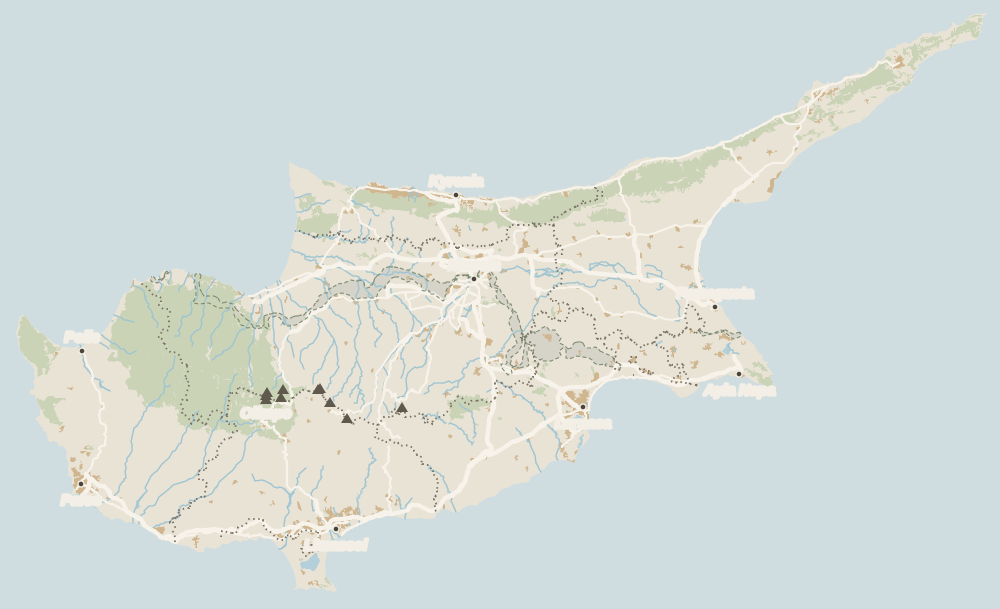 1Paphos district 2Paphos 3Geroskipou 4Peyia (Pegeia) 5Akamas peninsula 6Polis Chrysochous 7Latchi 8Aphrodite's Rock 9Palaepaphos (Kouklia) 10Kathikas 11Drouseia 12Ineia 13Diarizos Valley 14Pano Panagia 15Agios Neophytos Monastery 16Tala 17Lempa 18Kritou Terra 19Lysos 20Pomos 21Cedar Valley
Map data © OpenStreetMap contributors (ODbL)
- 1Paphos districtOne of Cyprus's six districts
- 2PaphosMain town of Paphos district
- 3GeroskipouSeat of Ierokipia municipality
- 4Peyia (Pegeia)Akamas municipality, Paphos district
- 5Akamas peninsulaNatura 2000, Paphos district
- 6Polis ChrysochousThe hub of north-west Paphos district
- 7LatchiPolis Chrysochous, Paphos district
- 8Aphrodite's RockSouth coast of Paphos district
- 9Palaepaphos (Kouklia)UNESCO World Heritage, Paphos site II
- 10KathikasLaona plateau, Paphos district
- 11DrouseiaLaona plateau, Paphos district
- 12IneiaLaona plateau, Paphos district
- 13Diarizos ValleyPaphos district
- 14Pano PanagiaPaphos hills, Paphos district
- 15Agios Neophytos MonasteryNear Tala, 10 km from Paphos
- 16TalaPaphos hills, 11 km from town
- 17LempaNorth coast of Paphos, near Chlorakas
- 18Kritou TerraLaona plateau, above Chrysochou Bay
- 19LysosPaphos hills, east of Polis
- 20PomosNorth-west coast of Paphos district
- 21Cedar ValleyPaphos forest, no bus
What to see
What there is in Palaepaphos (Kouklia)
- Date of the sanctuary
- 12th c. BC
- Ticket with the museum
- €4.50
- Date of the manor house
- 13th c.
- Kouklia residents in 2021
- 1,211
0 of 424 Cyprus guides
Your next stamp
- Aphrodite
- Aphrodite Hills Resort
- Paphos Byzantine Museum
- Geroskipou
- Paphos Archaeological Museum
- Paphos
- Aphrodite's Rock
- Paphos Archaeological Park
- Almyra Hotel
- Anassa Hotel
- Anastasia Beach
- Apostolos Andreas
- Bellapais Abbey
- Cap St Georges
- Church of St Lazarus
- Columbia Beach Resort
- Commandaria
- Coral Beach Hotel
- Cypriot food
- Dome Beach
- Four Seasons Limassol
- Golden Bay
- Grecian Park
- Hilton Nicosia
- Kourion
- Kyrenia Castle
- Larnaca
- Lefkara lace
- Limassol
- Limassol Carnival
- Meze
- Omodos
- Panagia Angeloktisti
- Places to visit
- Selimiye Mosque
- Soli
- St Barnabas Monastery
- Weather
- Wine routes
- Atlantica Miramare
- Büyük Han
- Cheap eats
- Cyprus in winter
- Finikoudes
- Halloumi
- Kantara Castle
- Kataklysmos
- Limassol Castle
- Narcissos
- Nissi Beach Resort
- Olympic Lagoon Paphos
- Othello Tower
- Sanctuary of Apollo Hylates
- Sea temperature
- Things to do
- Vouni
- Vouni Palace
- Alion Beach
- Cypriot desserts
- Cyprus in spring
- Elias Beach
- Golden Coast
- Koilani
- Kolossi Castle
- Lala Mustafa Pasha Mosque
- Larnaca Castle
- Leonardo Laura Beach
- Limassol old town
- Limassol Wine Festival
- Most beautiful places
- Souvla
- St Hilarion Castle
- Arsos
- Buffavento Castle
- Crystal Springs
- Cypriot wine
- Cyprus in summer
- Easter in Cyprus
- Episkopi
- Kition
- Kleftiko
- Limanaki Beach
- Molos promenade
- Pafos Aphrodite Festival
- Pagona
- Prettiest villages
- St Raphael Resort
- Adams Beach
- Akrotiri peninsula
- Alasia Hotel
- Bellapais
- Cyprus in autumn
- Elysium Hotel
- Green Monday
- Independence Day
- Limassol Marina
- Pierides Museum
- Sheftalia
- Sunrise Pearl
- UNESCO World Heritage
- Vasa Koilaniou
- Akrotiri salt lake
- Amathus Beach
- Christmas
- Cyprus in January
- Grecian Bay
- Larnaca Archaeological Museum
- Limassol old port
- Lofou
- Map
- Venus Beach Hotel
- Vrissiana
- Asterias Beach
- Capo Bay
- Cypriot coffee
- Cyprus in February
- Kamares Aqueduct
- Kefalos Beach
- Lania
- Limassol Archaeological Museum
- Parklane
- St Nicholas of the Cats
- Where is Cyprus
- Alexander the Great
- Carob Mill
- Cyprus in March
- Districts
- Hala Sultan Tekke
- Lady's Mile
- Tsokkos Gardens
- Zivania
- Beer
- Cavo Maris
- Cyprus in April
- Germasogeia
- King Evelthon
- Larnaca Salt Lake
- Pissouri
- Towns and villages
- Amathus
- Anogyra
- Athena Beach
- Cyprus in May
- Mackenzie beach
- Population
- Archaeological sites
- Cyprus in June
- King Jason
- Limassol beaches
- Size
- Zenobia wreck
- Aliathon Resort
- Castles in Cyprus
- Cyprus in July
- Governor's Beach
- Languages
- Larnaca beaches
- Annabelle Hotel
- Cyprus in August
- Monasteries in Cyprus
- Name
- Azia Resort
- Cyprus in September
- Museums in Cyprus
- Capital Coast Resort
- Cyprus in October
- Pyla
- Cyprus in November
- Kiti
- Cyprus in December
- Lefkara
- Choirokoitia
- Tochni
- Flag
- How to get there
- Kalavasos
- Krasochoria
- Salamis
- Flights
- Karpas Peninsula
- Stavrovouni Monastery
- Kornos
- Larnaca Airport
- Limassol District
- Larnaca district
- Paphos Airport
- Pyrga
- Airport transfers
- Athienou
- Ferry
- Odou
- Cruises
- Kato Drys
- Getting around
- Vavla
- Buses
- Zygi
- Psematismenos
- Taxis
- Agios Irakleidios
- Car hire
- Paphos district
- Driving
- Kato Paphos
- Parking
- Cycling
- Paphos old town (Ktima)
- Road trip
- Distances
- Tombs of the Kings
- Agia Kyriaki and St Paul's Pillar
- Paphos beaches
- Cyprus Wine Museum
- Greek or Turkish?
- Peyia (Pegeia)
- Coral Bay
- History
- Sea caves, Peyia
- The division
- Agios Georgios, Peyia
- Political system
- Akamas peninsula
- Religion
- Blue Lagoon, Akamas
- Public holidays
- Baths of Aphrodite
- Time
- Currency and payments
- Lara beach
- Avakas Gorge
- EU and Schengen
- Entry requirements
- Polis Chrysochous
- Facts
- Latchi
- Neo Chorio
- Paphos Castle
- Agia Solomoni Catacomb
- Kathikas
- Drouseia
- Ineia
- Diarizos Valley
- Pano Panagia
- The north
- Where to eat
- Where to stay
- Chrysorrogiatissa Monastery
- Crossing to the north
- Hotels in Ayia Napa
- Agios Neophytos Monastery
- Green Line
- Hotels in Protaras
- British bases
- Hotels in Limassol
- Tala
- Ercan airport
- Hotels in Larnaca
- Lempa
- Hotels in Paphos
- Hotels in the north
- Pano Arodes
- Hotels in Coral Bay
- Kritou Terra
- Kyrenia district
- Hotels in Polis and Latchi
- Kyrenia
- Lysos
- Hotels in Nicosia
- Lapithos
- Pomos
- Cedar Valley
- Hotels in the Troodos
- Ayia Napa
- Best time to visit
- Famagusta district
- Luxury hotels
- North Nicosia
- Agrotourism
- All-inclusive hotels
- Famagusta
- Thalassa Museum
- Adults-only hotels
- Apartments
- Ayia Napa Monastery
- Varosha
- Ayia Napa Sculpture Park
- Family hotels
- Morphou
- Boutique hotels
- Nissi Beach
- Beachfront hotels
- Casinos in Cyprus
- Events
- Makronissos
- Ayia Napa sea caves
- Cheap hotels
- Love Bridge
- Villas
- Ayia Napa beaches
- Campsites
- Cape Greco
- Safety
- Konnos Bay
- Scams and pitfalls
- Cyclops Cave
- Healthcare
- Mobile and roaming
- Free things to do
- What to buy
- With a dog
- Accessible Cyprus
- Plugs
- Tipping
- Protaras
- Tourist information
- Fig Tree Bay
- Packing list
- Prices and budget
- Profitis Ilias Church
- Cyprus on a budget
- Protaras beaches
- Shopping
- Paralimni
- With kids
- Deryneia
- For couples
- Kokkinochoria
- Weddings
- Nightlife
- Sotira
- Liopetri
- Package holidays
- Day trips
- Frenaros
- Nicosia district
- Avgorou
- Boat trips
- Nicosia
- Jeep safari
- Venetian walls
- Famagusta Gate
- Ledra Street
- Laiki Geitonia
- Cyprus Museum
- Byzantine Museum, Nicosia
- St John's Cathedral
- Archbishop's Palace
- 3 days
- Museums in Nicosia
- 5 days
- Chrysaliniotissa
- Leventis Museum
- One week
- 10 days
- Leventis Gallery
- Kornesios house
- Two weeks
- National Struggle Museum
- Ömeriye Mosque
- Faneromeni Church
- Shacolas observatory
- Tamassos
- Idalion
- Machairas Monastery
- Fikardou
- Lythrodontas
- Tilliria
- Kato Pyrgos
- Troodos Mountains
- Mount Olympus
- Troodos Square
- Skiing in Cyprus
- Troodos Geopark
- Painted churches of Troodos
- Kykkos Monastery
- Makarios's tomb
- Trooditissa Monastery
- Platres
- Prodromos
- Foini
- Treis Elies
- Marathasa valley
- Solea valley
- Agios Nikolaos tis Stegis
- Panagia Asinou
- Panagia Podithou
- Archangelos Michael, Pedoulas
- Panagia tou Moutoulla
- Agios Ioannis Lampadistis
- Kalopanayiotis
- Pedoulas
- Moutoullas
- Kakopetria
- Galata
- Evrychou
- Pitsilia
- Stavros tou Agiasmati
- Panagia tou Araka
- Timios Stavros, Pelendri
- Transfiguration church, Palaichori
- Palaichori
- Askas
- Lagoudera
- Polystypos
- Alona
- Agros
- Kyperounta
- Louvaras
- Hiking in Cyprus
- Artemis Trail
- Atalante Trail
- Persephone Trail
- Teisia tis Madaris
- Waterfalls in Cyprus
- Caledonia Waterfall
- Nature parks in Cyprus
- Viewpoints in Cyprus
- Cyprus beaches
- Diving in Cyprus
- Water sports in Cyprus
- Water parks in Cyprus
- Golf in Cyprus
- Mazotos Camel Park
Frequently asked questions
Where is Palaepaphos?
In the village of Kouklia, about 14 km east of Paphos, in the south of the district. Aphrodite's Rock is about 7 km further east.
What are the opening hours of the sanctuary of Aphrodite at Kouklia?
It opens every day at 8:30. From 16 September to 15 April it closes at 17:00, and from 16 April to 15 September at 19:30.
How much does Palaepaphos cost?
€4.50, including the Palaipafos museum, according to the Pafos tourism board. Hours and prices may change without notice.
What is Palaepaphos?
Old Paphos, one of the two sites of the Paphos World Heritage property. According to UNESCO, the Mycenaeans built the temple of Aphrodite there in the 12th century BC and it stayed in use until Roman times.
How do you get from Paphos to Kouklia by bus?
On route 631 from Paphos harbour, which stops at the site, or the 630 from Karavela station, which continues to Pissouri.

Questions about Palaepaphos (Kouklia)? Write to me
If your question is not answered here, write to me and I will look it up in the official sources.
My email sergiolepone@gmail.com
By
Tourism graduate with a master’s in Tourism Management and Planning from the University of Málaga, who has travelled across Europe. He writes every guide from official sources and his own judgement.
Published on . Updated on . Facts checked on .
Sources
Some links in this guide are affiliate links: if you book through them, the site earns a commission at no extra cost to you. Affiliate disclosure
Photos: Rüdiger Stehn from Kiel, Deutschland (CC BY-SA 2.0); Rüdiger Stehn from Kiel, Deutschland (CC BY-SA 2.0); Diego Delso (CC BY-SA 4.0), via Wikimedia Commons.