Ayia Napa is the big beach town of south-east Cyprus, with 4,716 residents in 2021, which fills with visitors every summer. It's famous for nightlife, but it also has a medieval monastery on the square, a fishing harbour, a sea museum and, to the east, the Cape Greco park. Its best-known beaches are Nissi and Makronissos, and buses link it with Protaras and Paralimni.
In 30 seconds
Full read: 3 min
Ayia Napa is the big beach town of south-east Cyprus.
It has a medieval monastery on the square and a sea museum.
Cape Greco and its sea caves are right next door.
OSEA buses link it with Protaras and Paralimni for €2.
I'd stay in Ayia Napa even if I wasn't going out at night, but away from the square, towards Nissi or Makronissos. See the monastery and the harbour first thing, and Cape Greco late in the day, once the heat eases.
Sergio LeponeMy advice
Before you go
What I would keep in mind
01 Most beautiful
A monastery in the middle of the square
Ayia Napa's medieval monastery, with its cave, well and marble fountain, sits in the town centre and is its most important monument, according to Visit Famagusta.
02 To save money
A €6 day ticket
OSEA buses cost €2 per daytime trip and €3 at night, and a one-day ticket, valid on night routes too, costs €6.
03 Getting there
To Cape Greco by bus
OSEA routes 101 and 102 link Ayia Napa with the sea caves, Cape Greco, Konnos, Protaras and Paralimni.
Route 201 loops through the west, from the square to Nissi, Landa, Makronissos and the marina, and route 202 covers the east, out to Ammos tou Kambouri and the Love Bridge.
Ayia Napa is known as the party capital, and in summer the square lives up to it. Closing times and the warnings worth heeding on a night out are in Cyprus nightlife. But stop there and you miss a medieval monastery, a charming fishing harbour and a coast of cliffs and caves that ranks among the best in Cyprus. Below are the sights and the ways of getting about. The wider area is covered in Famagusta district.
A town born of a monastery
Ayia Napa had 4,716 residents in the 2021 census and is one of the towns in the Government-controlled part of Famagusta district. Visit Famagusta, the regional tourism website, explains that the name comes from the monastery. Ayia means holy and napa is said to be an old word for a wooded valley, as the area was once covered in forest. Legend has it that a hunter found an icon of the Virgin in a cave.
The same website says almost nobody lived near the monastery until the late 18th century, and that the town is part of the Kokkinochoria, the red soil villages. Protaras is about 8 km away.
What to see in Ayia Napa
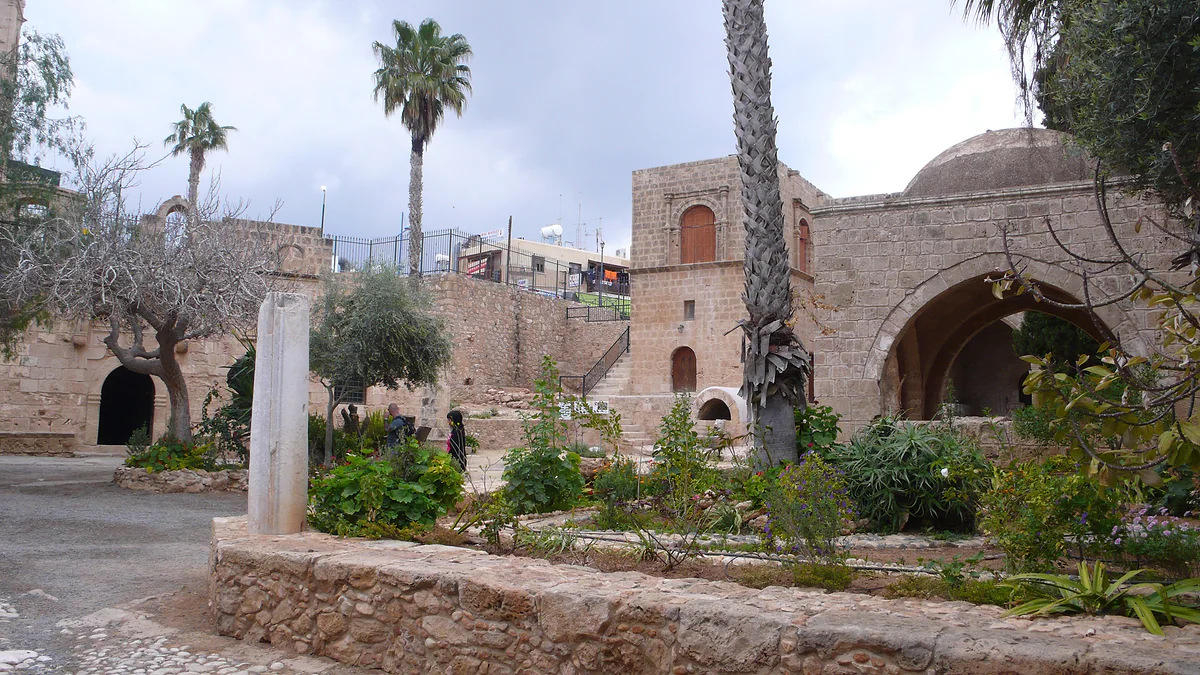
Ayia Napa monastery is its most important monument, in the centre beside the square. Its cave, hiding place and well point to a Christian community since Byzantine times, and the bulk of the building you see is 15th-century work from the Venetian era. It inspired a poem by Giorgos Seferis.
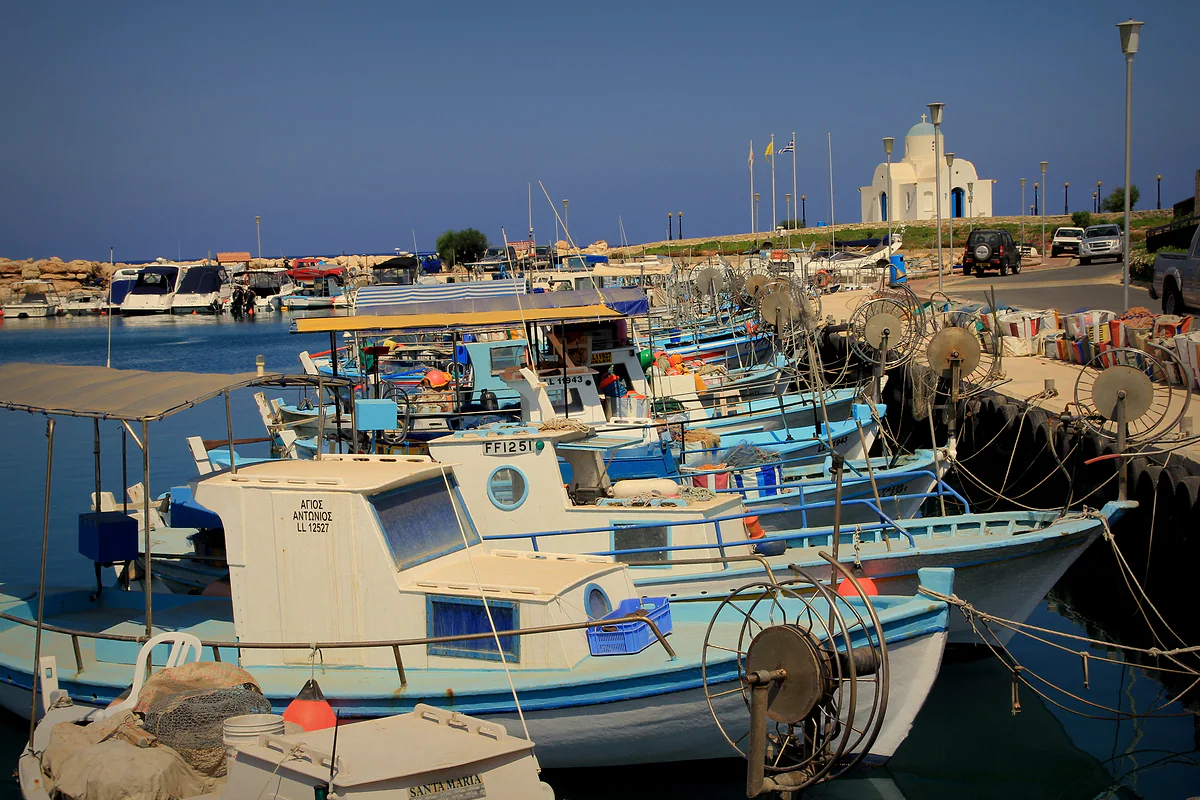
The harbour was a quiet bay with a few boats until work began on its first breakwater in the early 1970s. Today it holds fishing boats, speedboats and excursion boats, an open-air theatre, cafés, fish taverns and paths out to two lighthouses, with the chapel of Agios Georgios beside it. The marina to the west, between Agia Thekla and Makronissos, takes up to 600 yachts, according to Visit Famagusta.
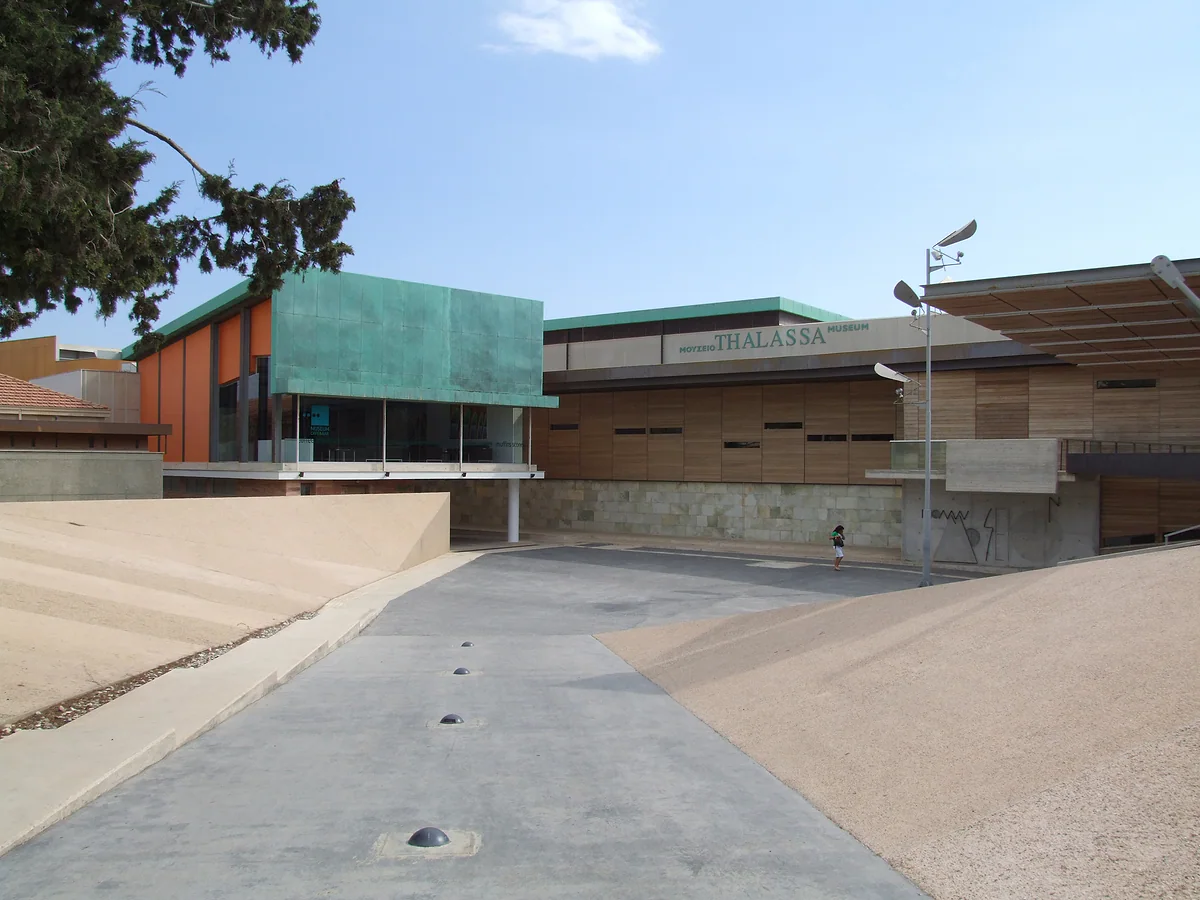
Close to the centre are the Thalassa Museum, the municipal sea museum, and the old aqueduct that brought water to the monastery. To the east, the hilltop chapel of Agios Epifanios looks over Paliochori, a Byzantine village destroyed in the Arab raids; its feast day is 12 May.
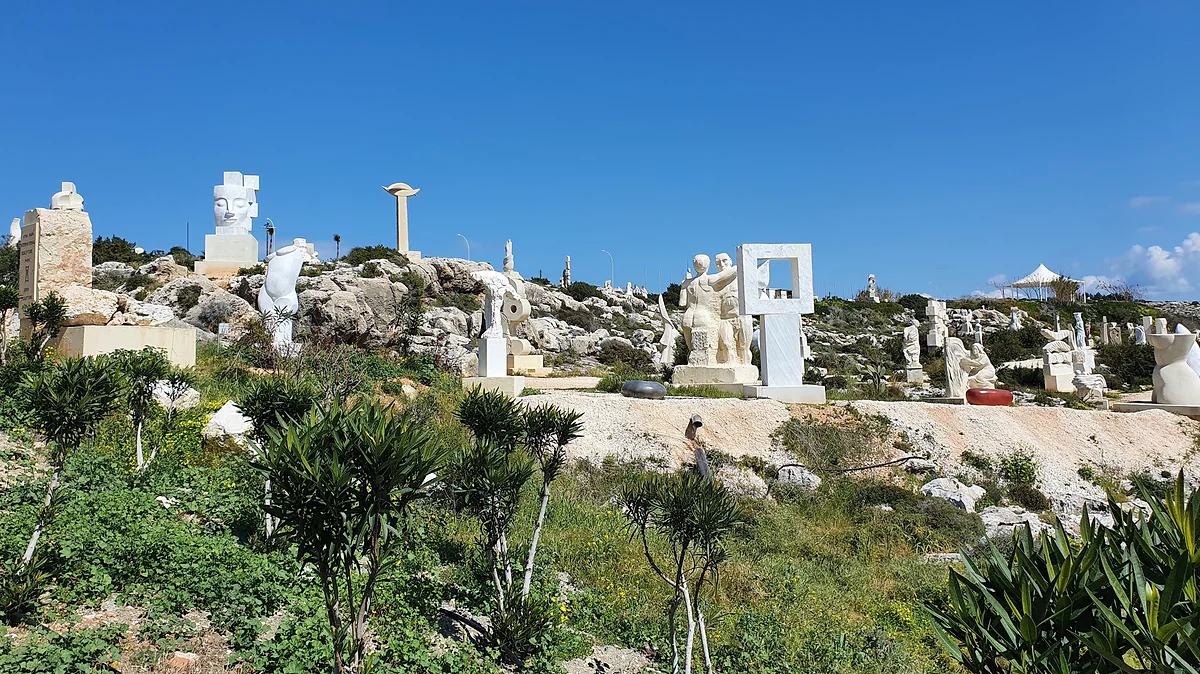
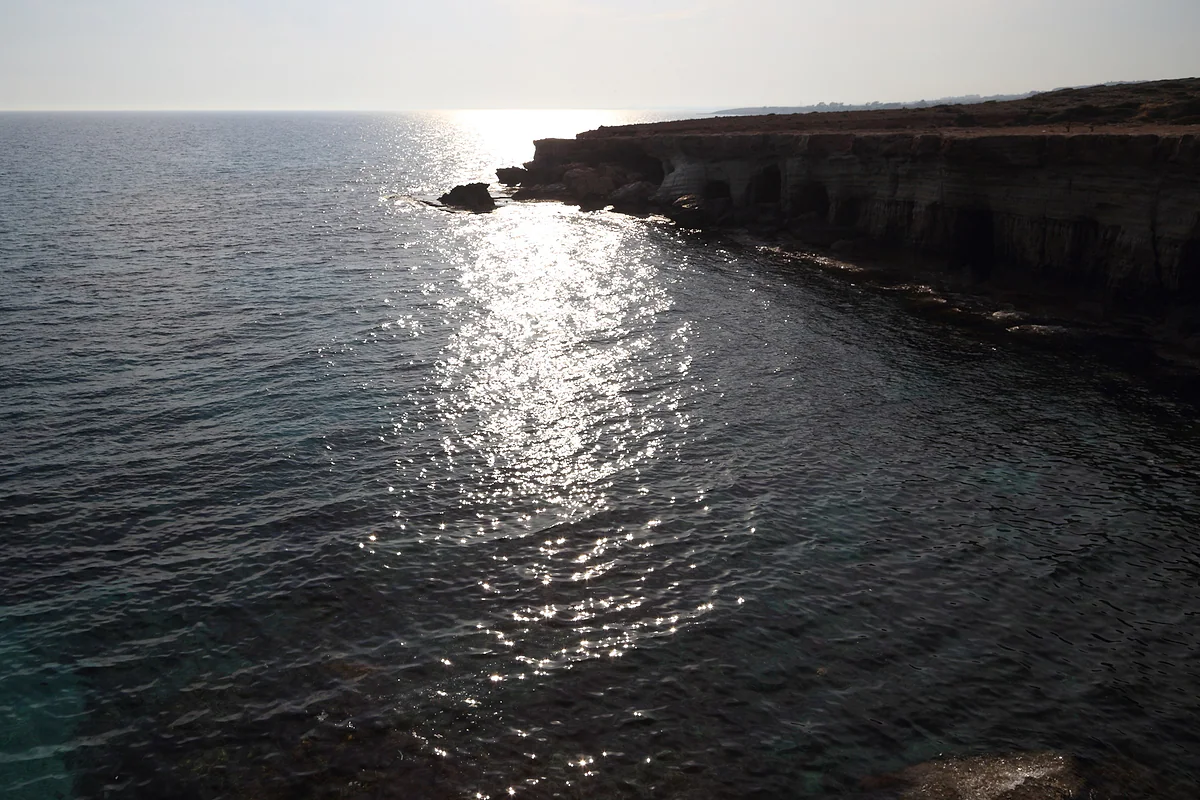
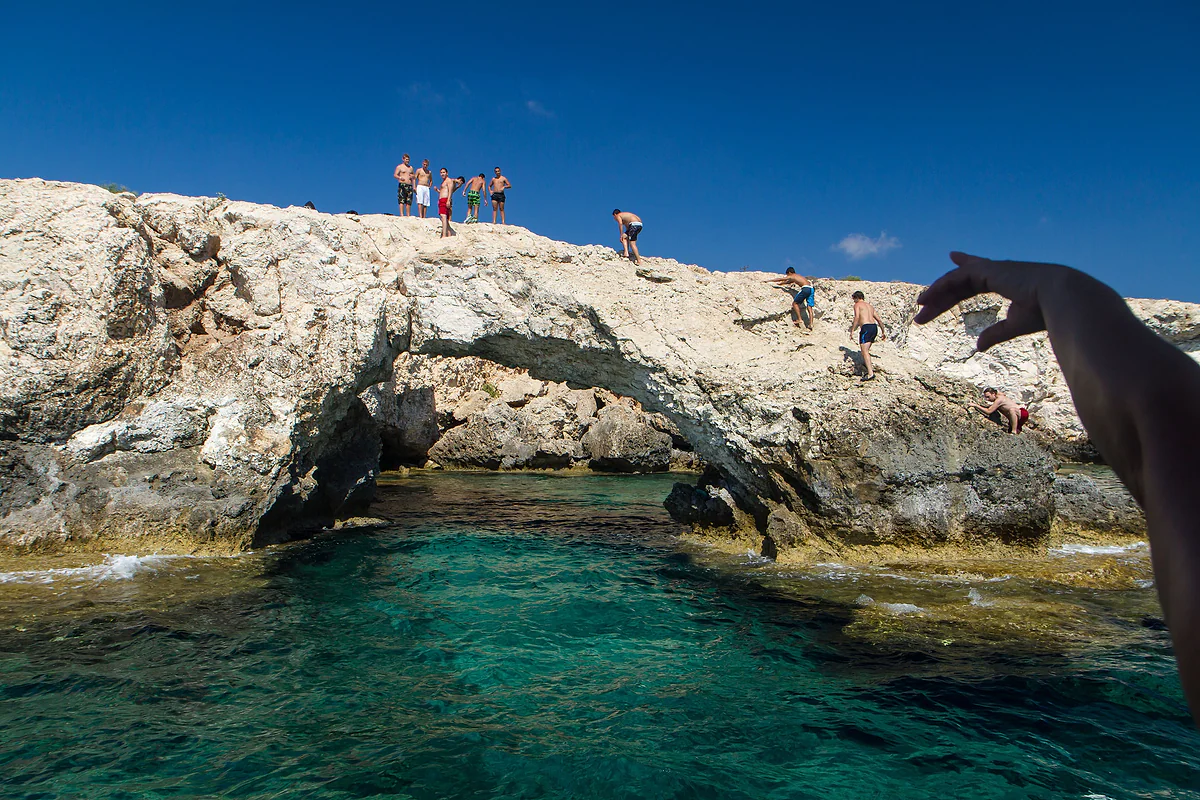
Following the shore east you come to the Ayia Napa sculpture park, with work by artists from around the world, the Love Bridge, a natural rock arch, and the Ayia Napa sea caves, which locals call palatia, the palaces. Beyond them begins Cape Greco, a forest park protected since 1993.
About 200 m offshore lies MUSAN, an underwater sculpture museum with more than 90 works by Jason deCaires Taylor, opened in 2021 and designed for diving or snorkelling at depths of 8 to 10 m.
The beaches
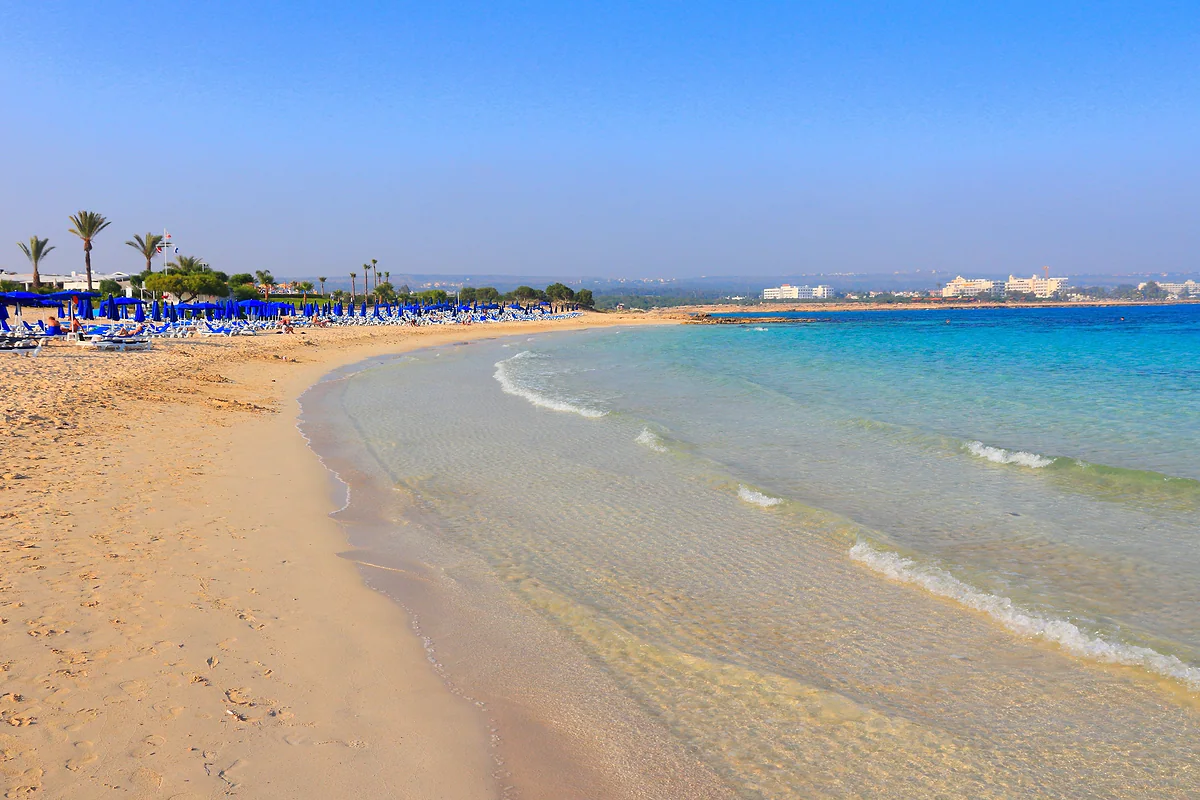
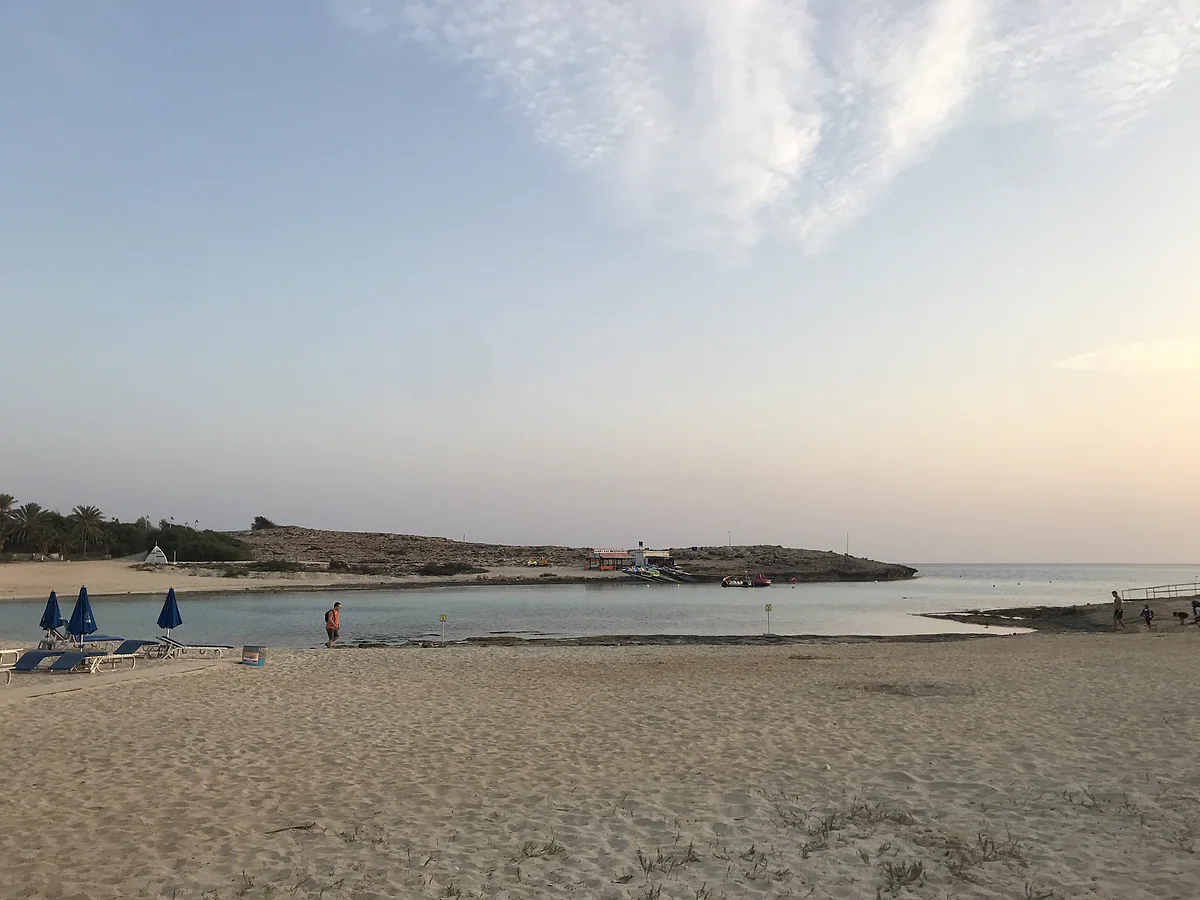
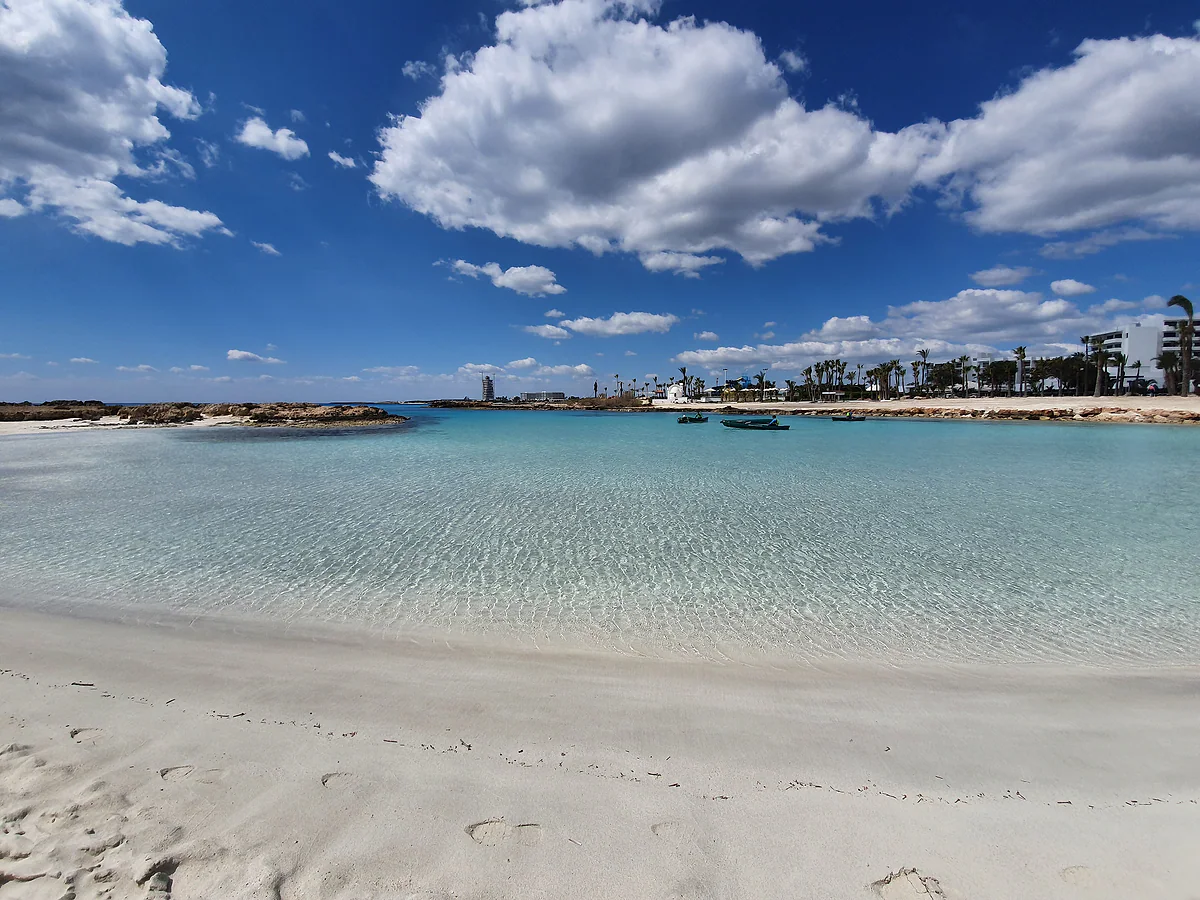
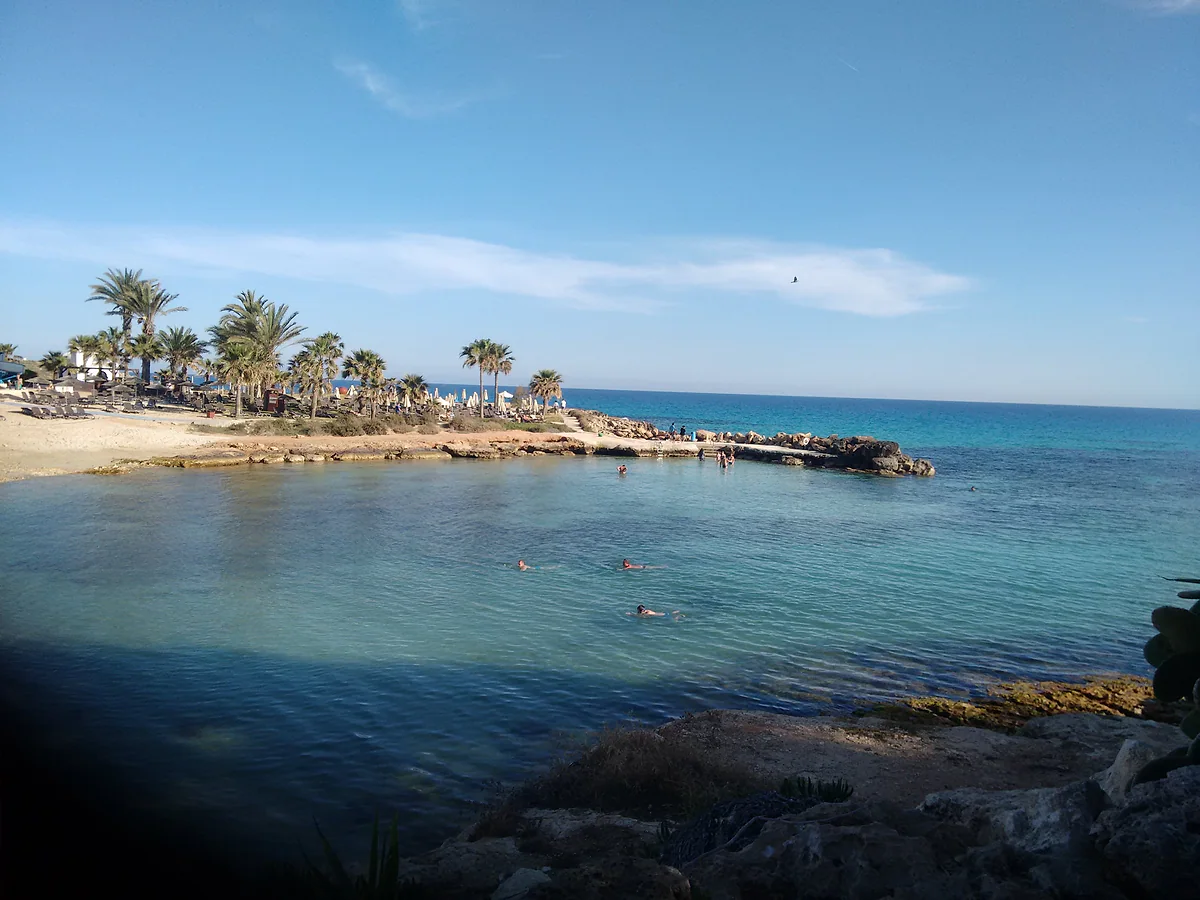
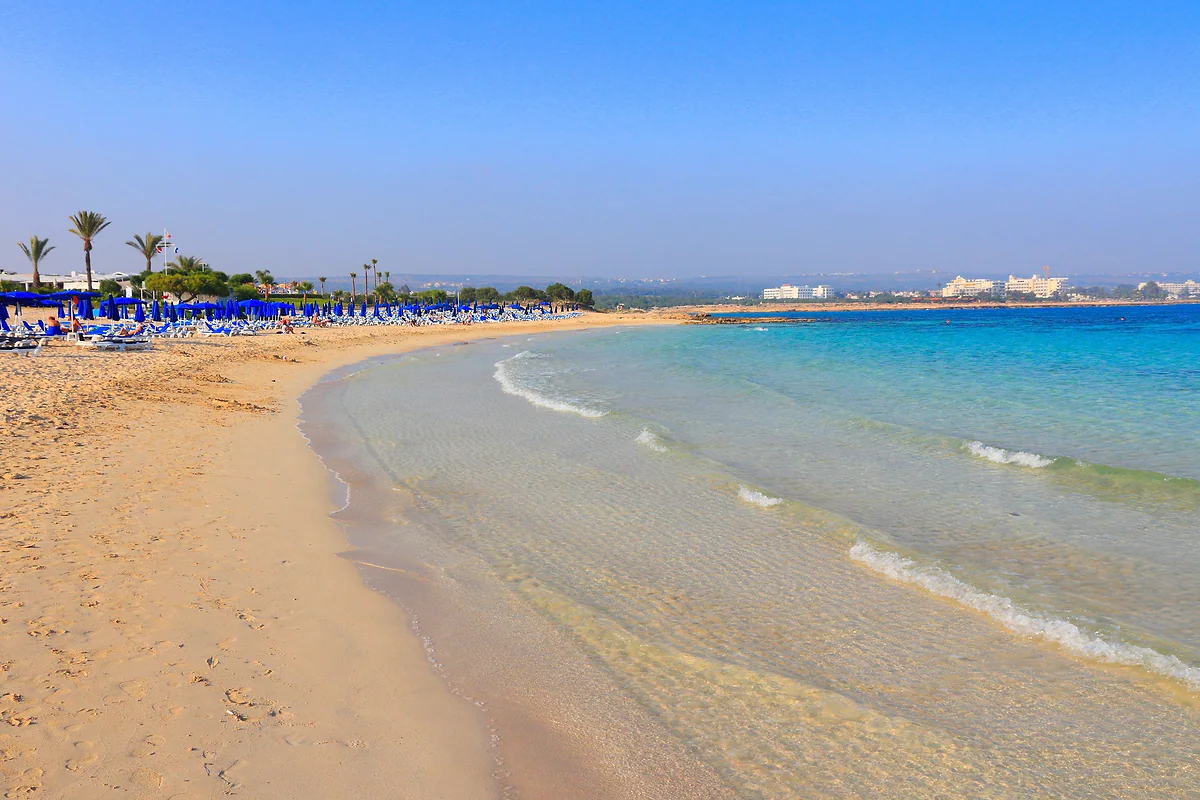
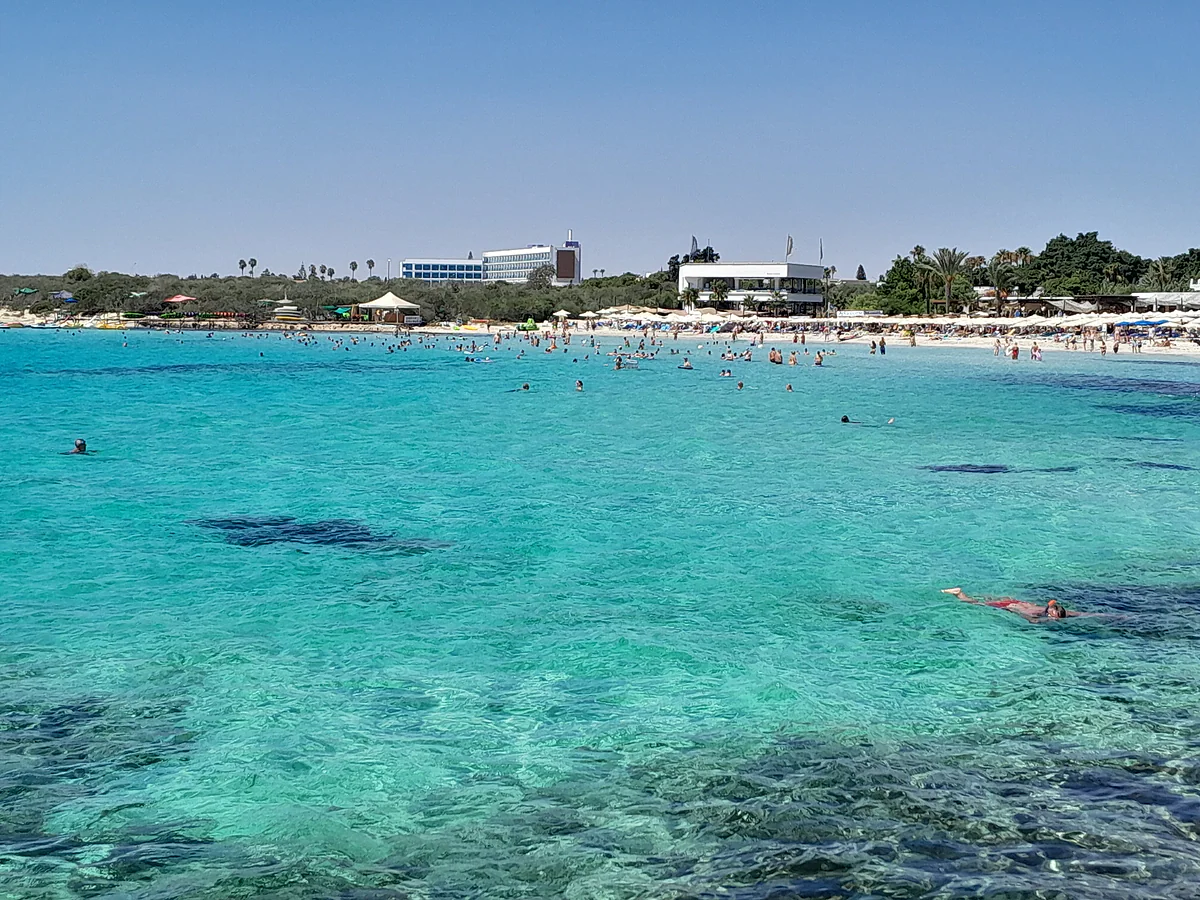
The best known are to the west. Nissi Beach, with its islet joined to the sand, Landa, Makronissos, with its ancient cemetery, and Agia Thekla, beside its chapel. East of the harbour, Pantachou is the town’s longest beach, running 1.2 km to Glyki Nero. I go through them all in Ayia Napa beaches.
The district’s buses are run by OSEA. Route 201 loops round the west of town, stopping at the square, MUSAN, Nissi, Landa, Makronissos, the marina and the waterpark, and route 202 covers the east, with the stadium, Ammos tou Kambouri, the Love Bridge and the Thalassa Museum. Routes 101 and 102 run from Ayia Napa to Paralimni via the sea caves, Cape Greco, Konnos Bay and Protaras. A trip costs €2 by day and €3 at night, and a one-day ticket €6. The published timetables run from 25 May to 31 October 2026.
For a bed, the official register lists 132 places to stay, which I go through in hotels in Ayia Napa. According to Visit Famagusta, over two thousand couples marry each year between this coast and Protaras, and the paperwork is in getting married in Cyprus. The Deputy Ministry’s information office is in town, and its phone number sits alongside the others in tourist information in Cyprus.
The courtyard of Ayia Napa monastery, with its garden, palm trees, golden stone walls and the fountain dome behind, in the centre of town
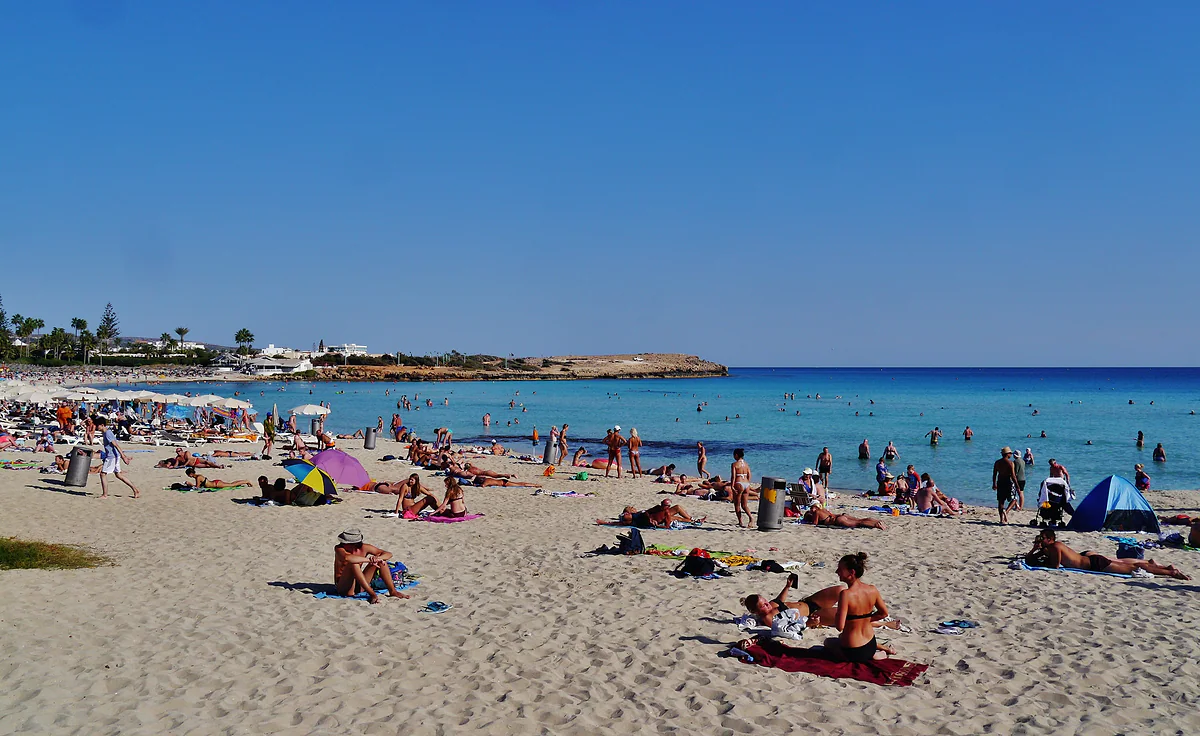
Bathers on the sand at Nissi Beach, Ayia Napa, on a summer day with the sea calm and clear
What to see in Ayia Napa
Place
What it is
Medieval monastery
On the square; cave, well, marble fountain and a huge sycamore
Harbour
Fishing and excursion boats, a promenade and two lighthouses
Thalassa Museum
Municipal sea museum, with the Kyrenia ship replica
Sculpture park
20,000 m² of open-air sculpture by the sea
Agios Epifanios
Chapel with a view over old Paliochori
MUSAN
Underwater sculpture museum about 200 m offshore
Visit Famagusta and the Thalassa Museum, checked on 4 October 2026.
Test yourself
True or false?
0/3Pick before you peek.
Ayia Napa monastery is on the edge of town.
See the answer
False. It stands in the centre, next to the square, according to Visit Famagusta.
The Thalassa Museum has a replica of the Kyrenia ship.
See the answer
True. A full-size replica of this Classical-era ship from around 400 BC.
You need a car to get from Ayia Napa to Cape Greco.
See the answer
False. OSEA routes 101 and 102 stop at the sea caves and Cape Greco.
Residents in 2021
4,716
Sculpture park
20,000 m²
Daytime single ticket
€2
To Protaras
8 km
Map
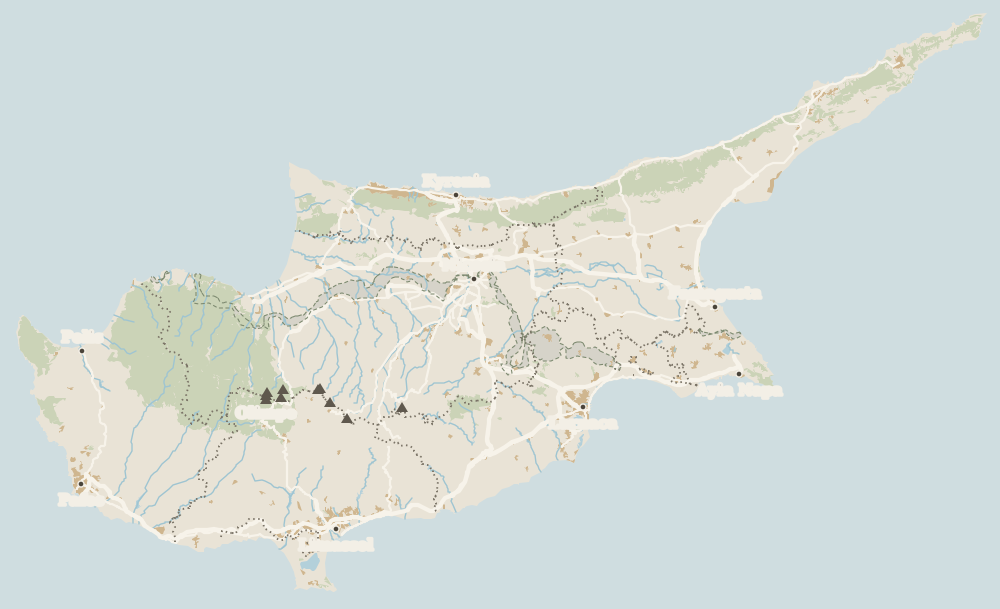
Where Ayia Napa is
The grey strip with green dashes across the island is the UN buffer zone, the Green Line; to the north is the part of the island not under the control of the Government of the Republic. The Troodos fill the centre and west. Every number opens its guide.
On the south-east coast of Cyprus, in the Government-controlled part of Famagusta district, next to Cape Greco and about 8 km from Protaras, according to Visit Famagusta.
What is there to see in Ayia Napa?
The medieval monastery on the square, the harbour, the Thalassa sea museum, the sculpture park, the Love Bridge, the sea caves and the Cape Greco park. And, of course, beaches such as Nissi and Makronissos.
Where does the name Ayia Napa come from?
Visit Famagusta explains that it comes from the monastery. Ayia means holy and napa is said to be an old word for a wooded valley; legend says a hunter found an icon of the Virgin there.
How do you get around Ayia Napa by bus?
With OSEA, the district bus company. Routes 201 and 202 loop round the west and east of town, and routes 101 and 102 run to Cape Greco, Protaras and Paralimni. A daytime trip costs €2.
Is Ayia Napa only for partying?
No. The square by the monastery is the centre of the nightlife, but the town has monuments, museums, a fishing harbour and one of the island's finest natural areas, Cape Greco.
Tourism graduate with a master’s in Tourism Management and Planning from the University of Málaga, who has travelled across Europe. He writes every guide from official sources and his own judgement.

 1Salamis 2Karpas Peninsula 3Ayia Napa 4Famagusta district 5Famagusta 6Cape Greco 7Protaras 8Paralimni 9Deryneia 10Kokkinochoria