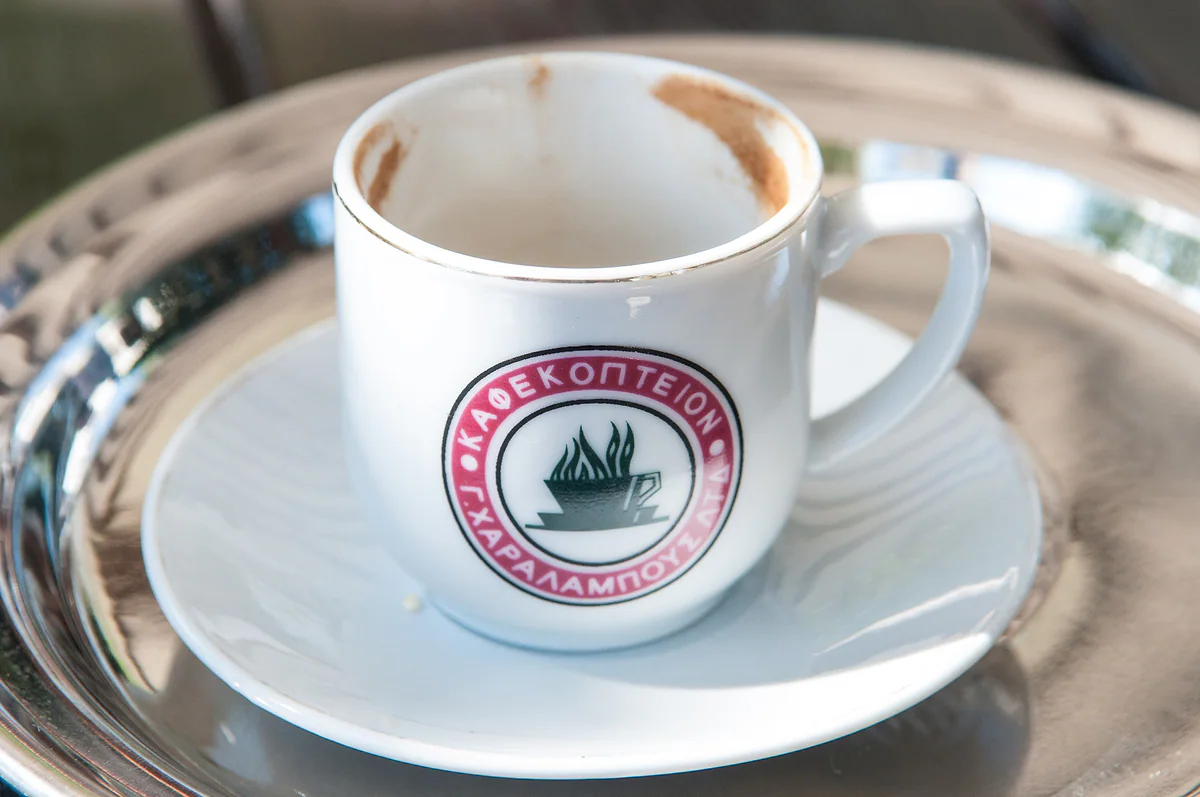
Eating and drinking in Cyprus
Cypriot coffee, from the mbriki to the cup
Cypriot coffee is made with very finely ground fresh coffee in a long-handled pot, the mbriki, using one heaped teaspoon per cup and adding the sugar while the water is cold. You order it sketo (no sugar), metrio (half a teaspoon) or glykis (a full one); it comes with a glass of cold water and you leave the grounds.
In 30 seconds
Full read: 3 min
- Cypriot coffee is brewed in a long-handled pot called a mbriki.
- It takes one heaped teaspoon of very fine coffee per cup.
- You choose the sugar when ordering, sketo, metrio or glykis.
- It comes with cold water, and the grounds stay in the cup.
Order it metrio the first time, because sketo can be a shock and glykis drowns the coffee. And drink it sitting down, slowly, the way the island does, never standing at a counter.

Before you go
What I would keep in mind
-
01 My tip
Choose the sugar when you order
The sugar goes into the pot with the cold water, before it boils, so it can't be added afterwards. Say sketo, metrio or glykis when you order.
languages in Cyprus -
02 Watch out
Don't drink the grounds
The thick layer left at the bottom of the cup isn't meant to be drunk, says the Famagusta tourism board. Stop there, even if it looks like a finger's worth.
Cypriot food -
03 Most beautiful
The village kafeneio
The traditional coffee shop served roasted coffee, loukoumia, almond soumada, tea and lemonade, according to the Cyprus Food Virtual Museum.
prettiest villages in Cyprus
What I would book
In Cyprus, coffee isn’t a quick break, it’s an excuse to sit down. Cypriot coffee comes in a small cup, is sipped slowly and arrives with its glass of water, and ordering it properly is one of the first things I’d learn before flying out. Here’s how it’s made, how to ask for it and where the habit comes from, using what the Famagusta tourism board and the Cyprus Food Virtual Museum publish. For everything else on the table, see Cypriot food.
A copper pot and a heaped teaspoon
The Famagusta tourism board explains it in detail. Cypriot coffee is very different from European coffees because it’s brewed in small, long-handled pots called mbriki, traditionally copper, with a wide base, a narrow neck and an overhanging lip. It uses freshly and very finely ground coffee, one heaped teaspoon per cup, and the sugar goes in at the start, while the water is still cold. The pot is then heated on the hob, or on a tray of hot sand that spreads the heat evenly.
Once the sugar has dissolved, the coffee is brought to the boil and a creamy froth, the kaimaki, forms on top. The froth starts moving from the edges towards the middle, the coffee rises, and that’s the moment the pot comes off the heat. It’s served in small porcelain cups. It’s strong, meant to be sipped slowly, and the thick layer at the bottom stays in the cup.
How do you order Cypriot coffee?
By saying how much sugar you want, because there’s no fixing it afterwards. Sketo is no sugar, metrio half a teaspoon and glykis a full teaspoon. I’d start with metrio, which lets you taste the coffee without the full bitter hit. If you’d like a few more words of the local language, there’s languages in Cyprus, but these three will see you right in any café.
It always comes with a glass of cold water. The Famagusta board adds that it’s served literally everywhere on the island and is the perfect companion to board games and long, unhurried chats.
To sleep close to everything, search places to stay in Nicosia on Expedia and filter by area before price.
The kafeneio, the village coffee shop
The Cyprus Food Virtual Museum records what the traditional kafeneio used to serve. Alongside roasted coffee there were loukoumia, soumada, an almond cordial, tea and lemonade. The beans were ground and roasted over charcoal made from carob or golden oak, Cyprus’s national tree, because it burned for longer. The same museum notes that owners washed glasses in vinegar, and those used by tuberculosis patients in pure alcohol.
That’s the world I’d go looking for in the squares of the prettiest villages in Cyprus, where sitting down with a coffee and watching the day go by makes the most sense.
An import with a history
That coffee came from abroad is clear from a lovely detail of 1884 kept by the Cyprus Food Virtual Museum, from the newspaper «The Voice of Cyprus» of 27 July that year. Rio coffee from Brazil sold for 13.25 to 13.50 piastres an oka, a local unit of weight, and Austrian sugar for 5.75 to 6 piastres. One Cypriot pound was 20 shillings and a shilling 9 piastres. I don’t have official prices for a cup in a café today, so I won’t quote any.
If you are short on time, see the best tours in Nicosia and pick one that fits your day.
If coffee isn’t your thing
The same Famagusta board suggests two traditional drinks I’d order at least once. Airani, a cold drink of live yoghurt and mint that’s very refreshing on a hot day, and soumada, made from almonds, which it describes served hot and comforting. With so much fruit on the island, it adds, fresh juices are another option. In midsummer, between a scalding coffee and a cold airani at lunchtime, I know which I’d pick.
How and where I’d have it
Sitting down, in the morning or after lunch, with its glass of water and no eye on the clock. In town, in the old-town cafés of Nicosia, and beyond, in any village square. If you want something sweet with it, Geroskipou loukoumi and spoon sweets are the best match, and you’ll find them in Cypriot desserts.
Where the bus does not go, a car does: compare car hire in Nicosia before you arrive rather than at the desk.
To sleep close to everything, search places to stay in Nicosia on Booking.com and filter by area before price.
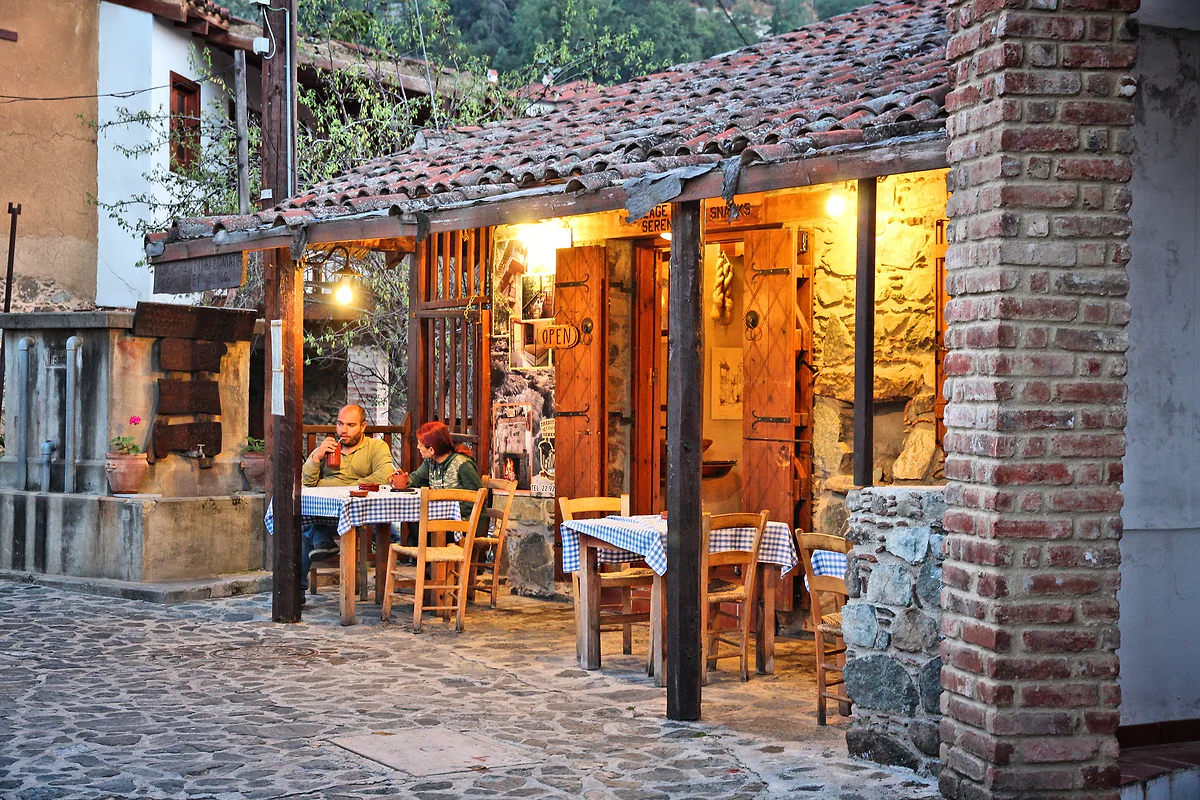
A traditional tavern in Moutoullas with a terrace under a small tiled roof, stone walls and lights on at dusk
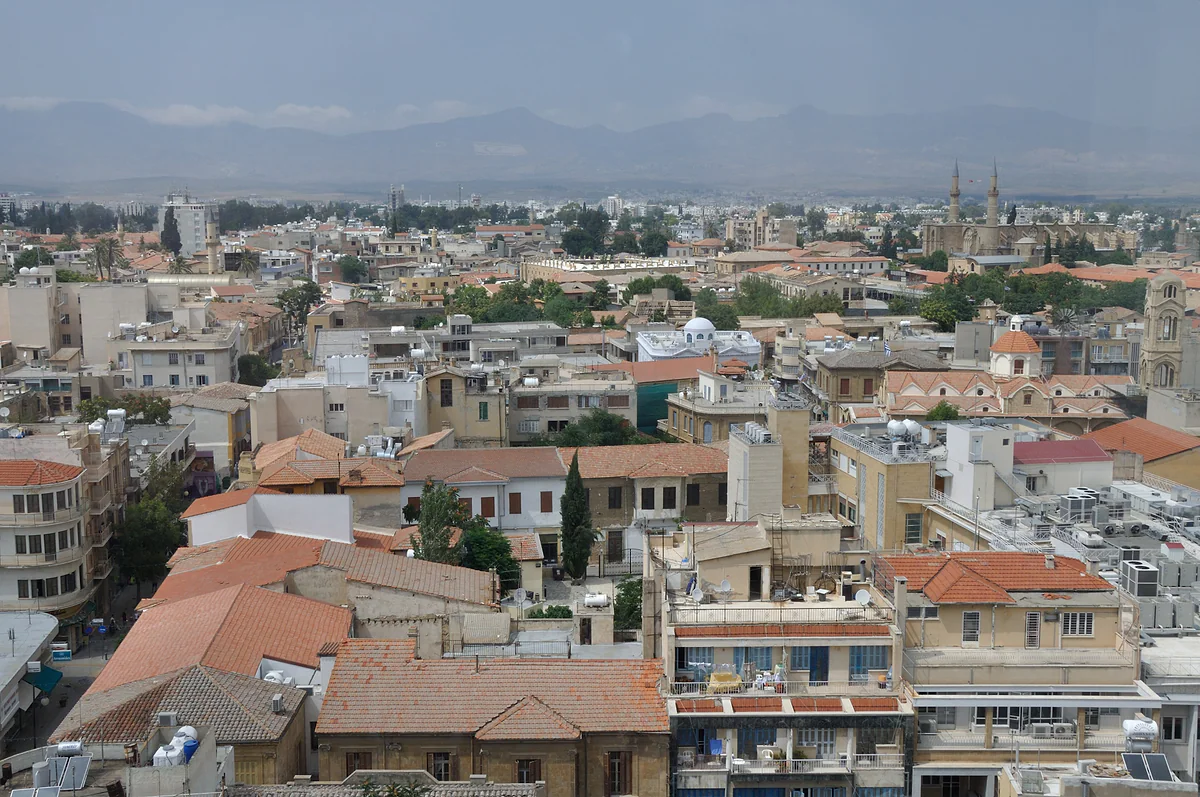
The rooftops of Nicosia's old town from above, with low houses, bell towers and mountains on the horizon
How to order Cypriot coffee
| Ask for | Sugar per cup | Who it suits |
|---|---|---|
| Sketo | None | Anyone who wants it as it comes, strong and bitter |
| Metrio | Half a teaspoon | The one I'd suggest to start with |
| Glykis | A full teaspoon | Those with a sweet tooth |
Famagusta regional tourism board, checked 4 October 2026. The last column is my opinion.
Test yourself
True or false?
0/3 Pick before you peek.
-
Sugar is stirred into Cypriot coffee at the end, in the cup.
See the answer
False. It goes into the pot with the cold water, before heating, according to the Famagusta tourism board.
-
Metrio means with half a teaspoon of sugar.
See the answer
True. Sketo is no sugar, metrio half a teaspoon and glykis a full one.
-
You're supposed to drain the cup, grounds and all.
See the answer
False. The thick layer at the bottom isn't drunk.
- Heaped teaspoon of coffee per cup
- 1
- Sugar levels, sketo, metrio, glykis
- 3
- Year of a recorded Rio coffee price
- 1884
0 of 421 Cyprus guides
Your next stamp
- Meze
- Where to eat
- Cypriot food
- Beer
- Cypriot desserts
- Souvla
- Cypriot wine
- Kleftiko
- Almyra Hotel
- Anassa Hotel
- Anastasia Beach
- Aphrodite Hills Resort
- Apostolos Andreas
- Bellapais Abbey
- Cap St Georges
- Church of St Lazarus
- Columbia Beach Resort
- Commandaria
- Coral Beach Hotel
- Dome Beach
- Four Seasons Limassol
- Golden Bay
- Grecian Park
- Hilton Nicosia
- Kourion
- Kyrenia Castle
- Larnaca
- Lefkara lace
- Limassol
- Limassol Carnival
- Omodos
- Panagia Angeloktisti
- Places to visit
- Selimiye Mosque
- Soli
- St Barnabas Monastery
- Weather
- Wine routes
- Atlantica Miramare
- Büyük Han
- Cheap eats
- Cyprus in winter
- Finikoudes
- Halloumi
- Kantara Castle
- Kataklysmos
- Limassol Castle
- Narcissos
- Nissi Beach Resort
- Olympic Lagoon Paphos
- Othello Tower
- Sanctuary of Apollo Hylates
- Sea temperature
- Things to do
- Vouni
- Vouni Palace
- Alion Beach
- Cyprus in spring
- Elias Beach
- Golden Coast
- Koilani
- Kolossi Castle
- Lala Mustafa Pasha Mosque
- Larnaca Castle
- Leonardo Laura Beach
- Limassol old town
- Limassol Wine Festival
- Most beautiful places
- St Hilarion Castle
- Arsos
- Buffavento Castle
- Crystal Springs
- Cyprus in summer
- Easter in Cyprus
- Episkopi
- Kition
- Limanaki Beach
- Molos promenade
- Pafos Aphrodite Festival
- Pagona
- Prettiest villages
- St Raphael Resort
- Adams Beach
- Akrotiri peninsula
- Alasia Hotel
- Bellapais
- Cyprus in autumn
- Elysium Hotel
- Green Monday
- Independence Day
- Limassol Marina
- Pierides Museum
- Sheftalia
- Sunrise Pearl
- UNESCO World Heritage
- Vasa Koilaniou
- Akrotiri salt lake
- Amathus Beach
- Christmas
- Cyprus in January
- Grecian Bay
- Larnaca Archaeological Museum
- Limassol old port
- Lofou
- Map
- Venus Beach Hotel
- Vrissiana
- Asterias Beach
- Capo Bay
- Cyprus in February
- Kamares Aqueduct
- Kefalos Beach
- Lania
- Limassol Archaeological Museum
- Parklane
- St Nicholas of the Cats
- Where is Cyprus
- Alexander the Great
- Carob Mill
- Cyprus in March
- Districts
- Hala Sultan Tekke
- Lady's Mile
- Tsokkos Gardens
- Zivania
- Cavo Maris
- Cyprus in April
- Germasogeia
- King Evelthon
- Larnaca Salt Lake
- Pissouri
- Towns and villages
- Amathus
- Anogyra
- Athena Beach
- Cyprus in May
- Mackenzie beach
- Population
- Archaeological sites
- Cyprus in June
- King Jason
- Limassol beaches
- Size
- Zenobia wreck
- Aliathon Resort
- Castles in Cyprus
- Cyprus in July
- Governor's Beach
- Languages
- Larnaca beaches
- Annabelle Hotel
- Cyprus in August
- Monasteries in Cyprus
- Name
- Azia Resort
- Cyprus in September
- Museums in Cyprus
- Capital Coast Resort
- Cyprus in October
- Pyla
- Cyprus in November
- Kiti
- Cyprus in December
- Lefkara
- Choirokoitia
- Tochni
- Flag
- How to get there
- Kalavasos
- Krasochoria
- Salamis
- Aphrodite
- Flights
- Karpas Peninsula
- Stavrovouni Monastery
- Kornos
- Larnaca Airport
- Limassol District
- Larnaca district
- Paphos Airport
- Pyrga
- Airport transfers
- Athienou
- Ferry
- Odou
- Cruises
- Kato Drys
- Getting around
- Vavla
- Buses
- Zygi
- Taxis
- Agios Irakleidios
- Car hire
- Paphos district
- Driving
- Paphos
- Kato Paphos
- Parking
- Cycling
- Paphos old town (Ktima)
- Paphos Archaeological Park
- Road trip
- Distances
- Tombs of the Kings
- Agia Kyriaki and St Paul's Pillar
- Paphos Byzantine Museum
- Paphos beaches
- Geroskipou
- Cyprus Wine Museum
- Greek or Turkish?
- Peyia (Pegeia)
- Coral Bay
- History
- Sea caves, Peyia
- The division
- Agios Georgios, Peyia
- Political system
- Akamas peninsula
- Religion
- Blue Lagoon, Akamas
- Public holidays
- Baths of Aphrodite
- Time
- Currency and payments
- Lara beach
- Avakas Gorge
- EU and Schengen
- Entry requirements
- Polis Chrysochous
- Facts
- Latchi
- Neo Chorio
- Aphrodite's Rock
- Palaepaphos (Kouklia)
- Paphos Castle
- Paphos Archaeological Museum
- Agia Solomoni Catacomb
- Kathikas
- Drouseia
- Ineia
- Diarizos Valley
- Pano Panagia
- The north
- Where to stay
- Chrysorrogiatissa Monastery
- Crossing to the north
- Hotels in Ayia Napa
- Agios Neophytos Monastery
- Green Line
- Hotels in Protaras
- British bases
- Hotels in Limassol
- Tala
- Ercan airport
- Hotels in Larnaca
- Lempa
- Hotels in Paphos
- Hotels in the north
- Pano Arodes
- Hotels in Coral Bay
- Kritou Terra
- Kyrenia district
- Hotels in Polis and Latchi
- Kyrenia
- Lysos
- Hotels in Nicosia
- Lapithos
- Pomos
- Cedar Valley
- Hotels in the Troodos
- Ayia Napa
- Best time to visit
- Famagusta district
- Luxury hotels
- North Nicosia
- Agrotourism
- All-inclusive hotels
- Famagusta
- Thalassa Museum
- Adults-only hotels
- Apartments
- Ayia Napa Monastery
- Varosha
- Ayia Napa Sculpture Park
- Family hotels
- Morphou
- Boutique hotels
- Nissi Beach
- Beachfront hotels
- Events
- Makronissos
- Ayia Napa sea caves
- Cheap hotels
- Love Bridge
- Villas
- Ayia Napa beaches
- Campsites
- Cape Greco
- Safety
- Konnos Bay
- Scams and pitfalls
- Cyclops Cave
- Healthcare
- Mobile and roaming
- Free things to do
- What to buy
- With a dog
- Accessible Cyprus
- Plugs
- Tipping
- Protaras
- Tourist information
- Fig Tree Bay
- Packing list
- Prices and budget
- Profitis Ilias Church
- Cyprus on a budget
- Protaras beaches
- Shopping
- Paralimni
- With kids
- Deryneia
- For couples
- Kokkinochoria
- Weddings
- Nightlife
- Sotira
- Liopetri
- Package holidays
- Day trips
- Frenaros
- Nicosia district
- Avgorou
- Boat trips
- Nicosia
- Jeep safari
- Venetian walls
- Famagusta Gate
- Ledra Street
- Laiki Geitonia
- Cyprus Museum
- Byzantine Museum, Nicosia
- St John's Cathedral
- Archbishop's Palace
- 3 days
- Museums in Nicosia
- 5 days
- Chrysaliniotissa
- Leventis Museum
- One week
- 10 days
- Leventis Gallery
- Kornesios house
- Two weeks
- National Struggle Museum
- Ömeriye Mosque
- Faneromeni Church
- Shacolas observatory
- Tamassos
- Idalion
- Machairas Monastery
- Fikardou
- Lythrodontas
- Tilliria
- Kato Pyrgos
- Troodos Mountains
- Mount Olympus
- Troodos Square
- Skiing in Cyprus
- Troodos Geopark
- Painted churches of Troodos
- Kykkos Monastery
- Makarios's tomb
- Trooditissa Monastery
- Platres
- Prodromos
- Foini
- Treis Elies
- Marathasa valley
- Solea valley
- Agios Nikolaos tis Stegis
- Panagia Asinou
- Panagia Podithou
- Archangelos Michael, Pedoulas
- Panagia tou Moutoulla
- Agios Ioannis Lampadistis
- Kalopanayiotis
- Pedoulas
- Moutoullas
- Kakopetria
- Galata
- Evrychou
- Pitsilia
- Stavros tou Agiasmati
- Panagia tou Araka
- Timios Stavros, Pelendri
- Transfiguration church, Palaichori
- Palaichori
- Askas
- Lagoudera
- Polystypos
- Alona
- Agros
- Kyperounta
- Louvaras
- Hiking in Cyprus
- Artemis Trail
- Atalante Trail
- Persephone Trail
- Teisia tis Madaris
- Waterfalls in Cyprus
- Caledonia Waterfall
- Nature parks in Cyprus
- Viewpoints in Cyprus
- Cyprus beaches
- Diving in Cyprus
- Water sports in Cyprus
- Water parks in Cyprus
- Golf in Cyprus
Frequently asked questions
How is Cypriot coffee made?
One heaped teaspoon of very fine coffee per cup goes into the mbriki with cold water and the sugar. It's heated until the foam, the kaimaki, rises, and taken off before it boils over.
What do sketo, metrio and glykis mean?
They're the sugar levels. Sketo is no sugar, metrio half a teaspoon and glykis a full teaspoon, according to the Famagusta tourism board.
What is kaimaki?
The creamy froth that forms on top as the coffee comes to the boil in the mbriki. When it starts moving from the edges to the centre, the pot comes off the heat.
Why does it come with a glass of water?
It's the custom. The Famagusta tourism board says Cypriot coffee is always served with a glass of cold water.
Do you drink the grounds in Cypriot coffee?
No. The thick layer at the bottom of the cup is left, according to the same tourism board.
Is Cypriot coffee the same as Turkish or Greek coffee?
The sources I've used describe it simply as Cypriot coffee and don't compare it, so I won't either. What's clear is how it's made, in a mbriki and unfiltered.
By
Tourism graduate with a master’s in Tourism Management and Planning from the University of Málaga, who has travelled across Europe. He writes every guide from official sources and his own judgement.
Published on . Facts checked on .
Sources
Some links in this guide are affiliate links: if you book through them, the site earns a commission at no extra cost to you. Affiliate disclosure
Photos: Michal Osmenda from Brussels, Belgium (CC BY 2.0); Marek Ślusarczyk (Tupungato) Photo portfolio (CC BY 3.0); Hansueli Krapf This file was uploaded with Commonist. (CC BY-SA 3.0), via Wikimedia Commons.