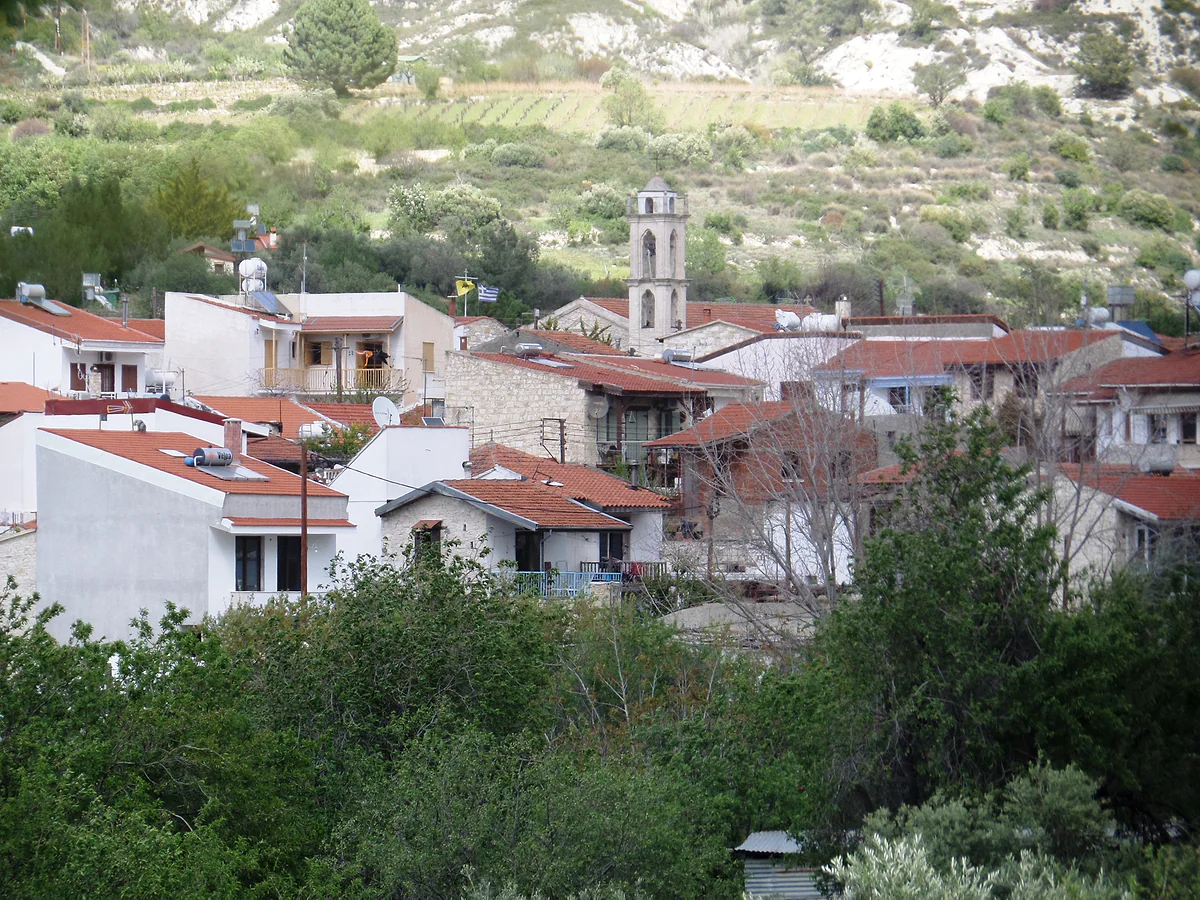
The Krasochoria («wine villages») are the winemaking villages of Limassol district, on the southern slopes of the Troodos at roughly 750 to 810 m. Omodos, Vouni, Koilani, Arsos, Vasa Koilaniou and Lofou lie within 10 km of each other and about 20 to 30 km from Limassol as the crow flies, with family wineries, old wine presses and cobbled lanes.
In 30 seconds
Full read: 4 min
The Krasochoria are Limassol's wine villages.
They sit on the southern Troodos slopes at about 750-810 m.
Omodos is the best known; Vouni and Vasa are the quietest.
Family wineries offer tastings, some by appointment.
I'd spend a night in a traditional house in Omodos or Lofou and give the next day to two or three villages at an easy pace. If you're tasting wine, let someone else drive or book a guided visit.
Sergio LeponeMy advice
Before you go
What I would keep in mind
01 Most beautiful
Stone villages among the vines
Cobbled lanes, long stone houses, courtyards with clay jars and old wine presses. The tourist board describes Vouni as an open-air museum of rural life.
The board publishes rough opening hours for some wineries, such as Ayia Mavri in Koilani, Tuesday to Sunday from 11:00 to 16:00. Others only take bookings.
Omodos is about 2 km from Vasa, 3.5 from Vouni and Arsos and under 5 from Koilani, all as the crow flies. By car, three villages fit into a relaxed day.
To my mind, the Krasochoria are the best way to see a different Cyprus less than an hour from the beach. They’re small stone villages clinging to the southern slopes of the Troodos, where wine has always been made at home in clay jars and where many families still live off the vines.
What the Krasochoria are
The name literally means «wine villages», and the Limassol Tourism Board uses it for the wine-growing area in the west of the district. Describing Vouni, the board places it «in the Krasochoria region» at 800 m and notes that until the 1990s it was third for vineyard area, behind Pachna and Omodos.
The villages are tightly packed. From Omodos it’s about 2 km as the crow flies to Vasa Koilaniou, around 3.5 to Vouni and to Arsos, and just under 5 to Koilani. Lofou lies a little further east, some 7 km from Omodos. All of them are roughly 20 to 30 km from central Limassol in a straight line, and longer by road, because you climb on bends.
The villages, one by one
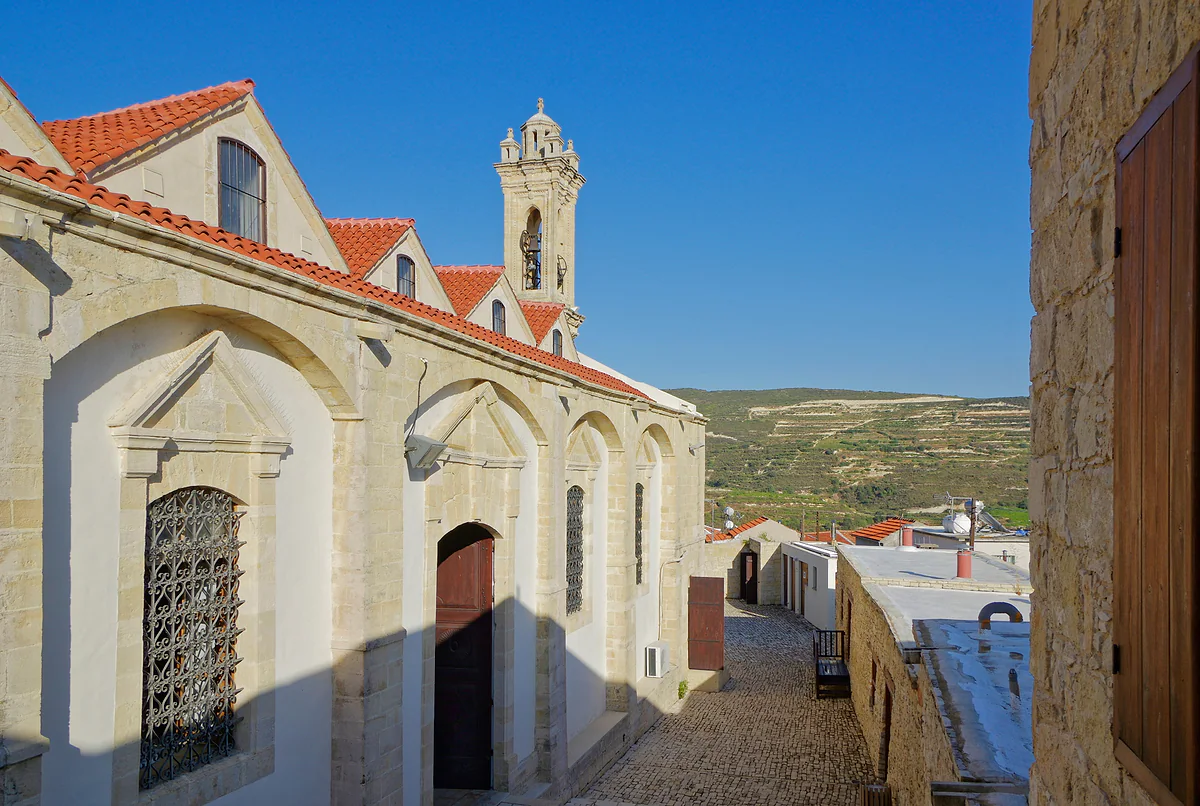
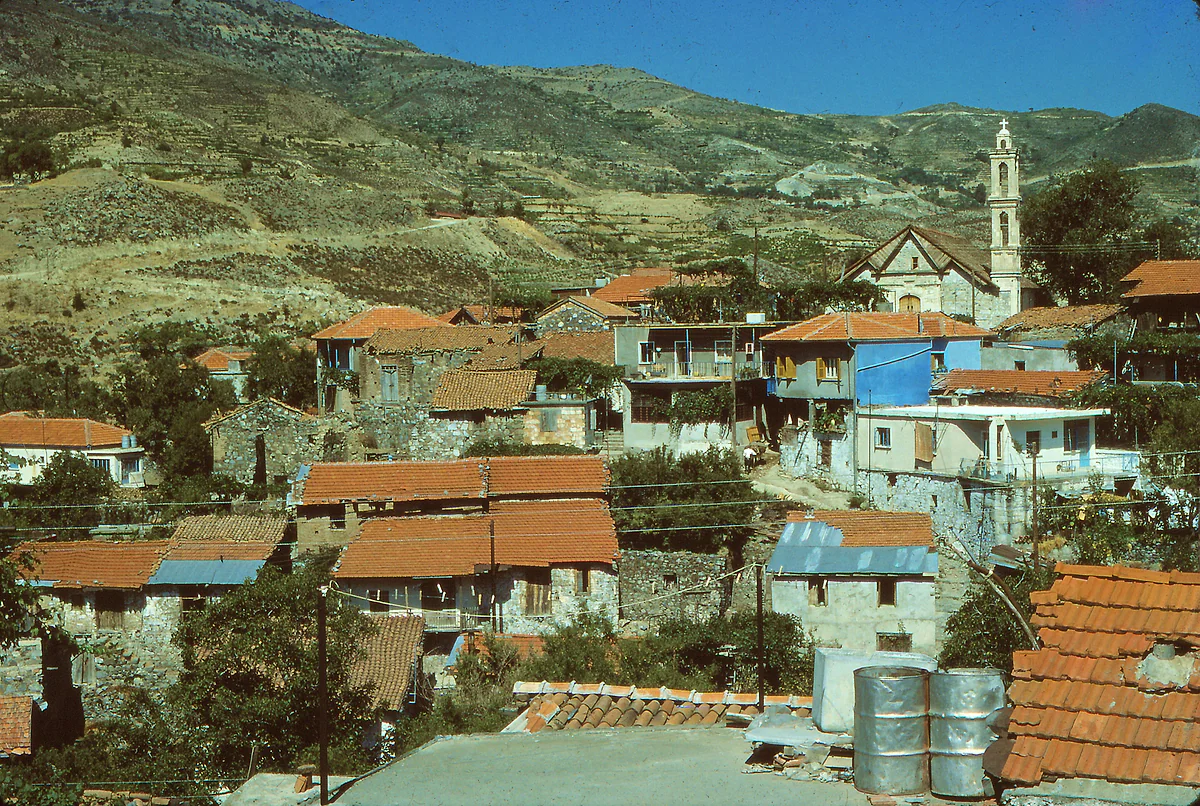
Omodos is the most visited, and rightly so. The square before the Holy Cross monastery, the medieval wine press and the lanes of sweet and wine shops make it the gateway to the area. Vouni is the opposite, a quiet place the board calls an open-air museum of rural life, with wooden doors, large windows and inner courtyards.
Koilani has an ecclesiastical museum, run as a branch of the Byzantine Museum of Limassol, and a viticulture museum, plus the Ayia Mavri winery. Arsos keeps the 12th-century Byzantine church of St Philip and a folk art museum in an 18th-century house. Vasa Koilaniou has, about 300 m out of the village, the church of St George with 15th-century frescoes. And Lofou, with just 79 residents in 2021, is built like an amphitheatre over the hills, and its name comes from the Greek word for hill.
The board also quotes the traveller A. Gaudry, who ranked the dark wines of Omodos, Vasa and Arsos above any others on the island. Don’t treat it as a tasting note, but it explains the area’s reputation.
The Limassol Tourism Board keeps a list of wineries with practical details. In Koilani, the Ayia Mavri winery welcomes visitors from Tuesday to Sunday between 11:00 and 16:00. Just outside Omodos, Ktima Gerolemo, founded in 1987, is usually open every day between 10:00 and 15:30, though the board itself advises checking ahead. Linos winery is in Omodos too, generally open from morning until early evening. In Vasa, Argyrides receives visitors by reservation only, and in Pachna, Monolithos usually opens Wednesday to Sunday. Before heading up, the Cyprus Wine Museum in Erimi presents itself as the starting point for the Limassol routes.
My advice is to book at least one guided visit and leave the rest to chance. And bear in mind that Cyprus drives on the left, as you’d expect, and the roads between villages are narrow and winding, so whoever’s driving shouldn’t be tasting. The other routes, Paphos’s included, are in Cyprus wine routes, and if you’d rather pedal, Limassol’s board publishes rides that I gather in cycling in Cyprus.
Grapes in the frame
In September 2026 the tourist board announced five photo spots on the theme «The Grape», installed in Omodos, Mandria, Koilani, Pachna and Lofou. Each features a grape designed for the project by the artist Georgios Mourouzis. If you like a souvenir photo, it’s a good excuse to call at villages you might not have had on your list.
It’s worth keeping the two areas apart. Eastwards, along the Kouris valley, lies Commandaria country, home of the island’s sweet wine, with Lania among the prettiest. They’re about 10 km from Omodos as the crow flies and can be combined, but they make a separate route. Over the ridge, in Paphos district, the Diarizos Valley has a wine route of its own.
Where to stay and getting around
The Deputy Ministry of Tourism’s official 2026 hill resorts list counts ten traditional houses in Lofou and seven in Omodos, among the villages with the most of this kind. I think it’s the ideal way to experience the area, because in the evening, once the coach groups leave, the villages change. A night here is also one of my ideas for romantic Cyprus.
To get around, you’ll want a car. I have no official information on buses between the villages, and the wineries and viewpoints are spread out. From Limassol the climb is on mountain roads, slower than the map suggests, and if you’re coming from the west coast, Kolossi Castle is on the way. The rest of the district is in Limassol district. Higher up, in the mountains proper, Platres has more hotels, with Foini nearby and, towards Pitsilia, Louvaras. Above the villages rise the Troodos Mountains.
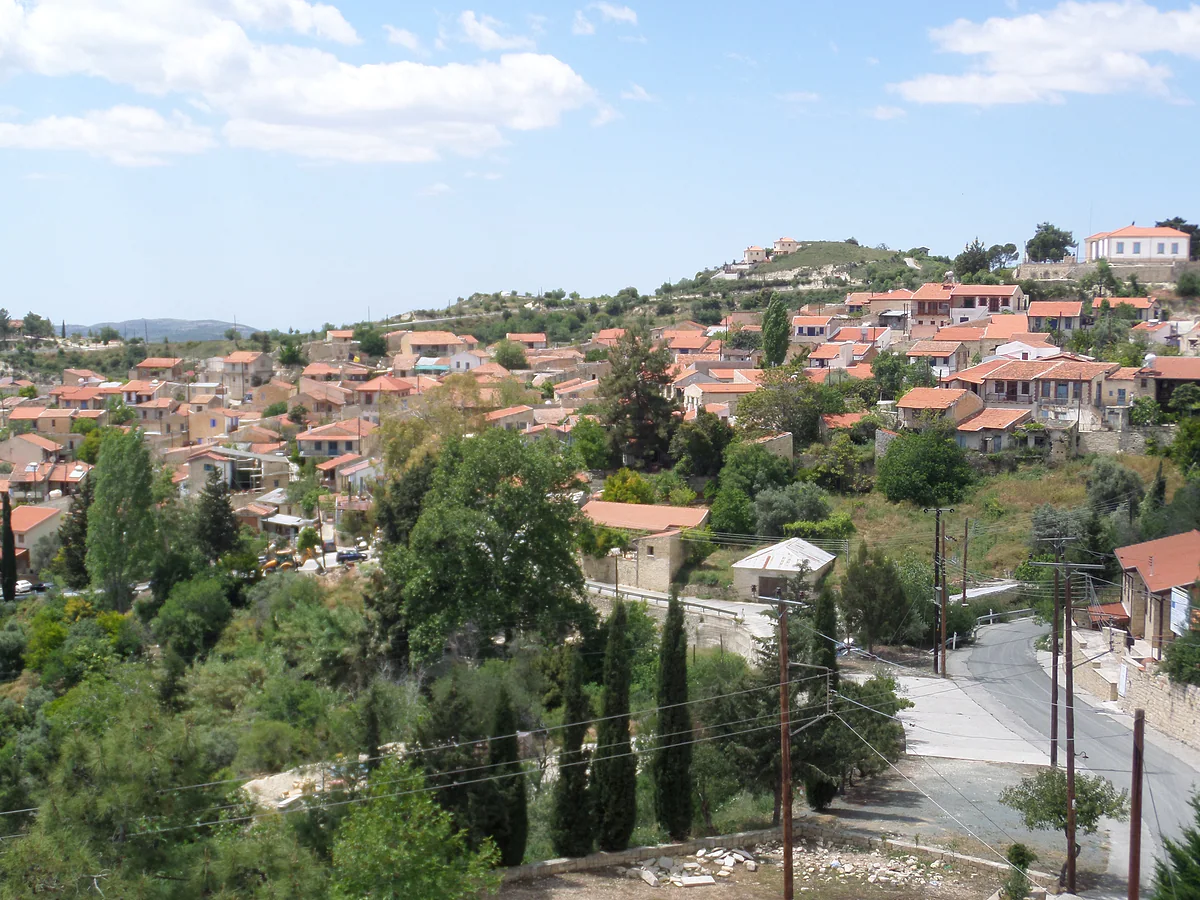
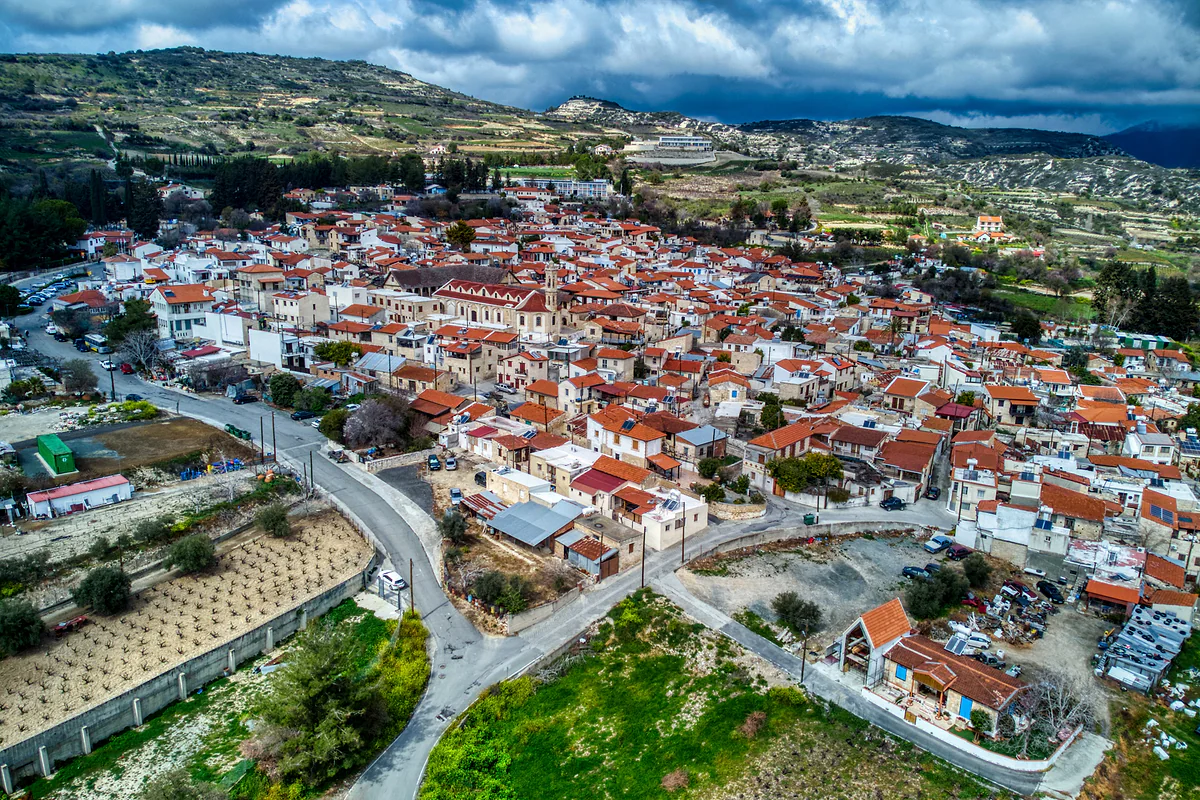
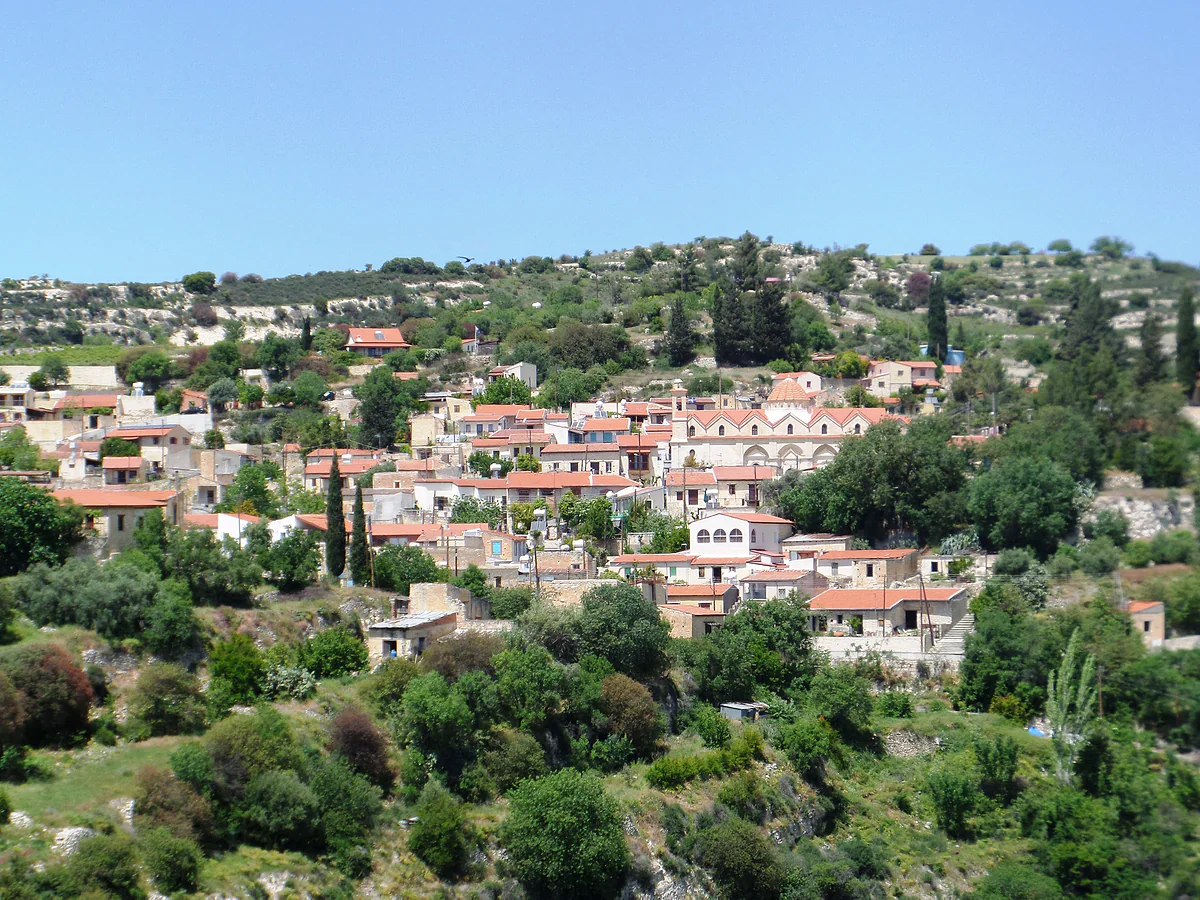
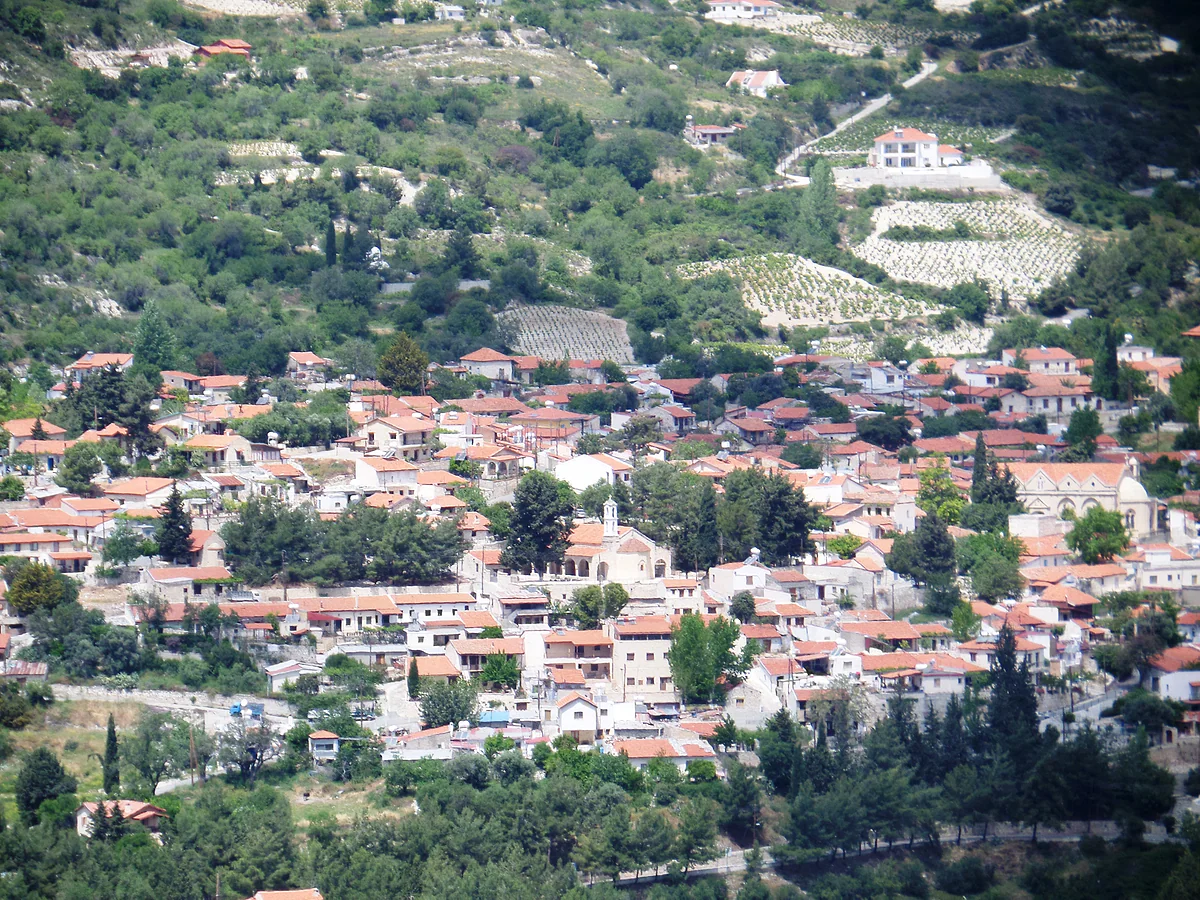
Vasa Koilaniou on its slope, pale stone houses and red roofs among cypresses, orchards and vines of the Krasochoria
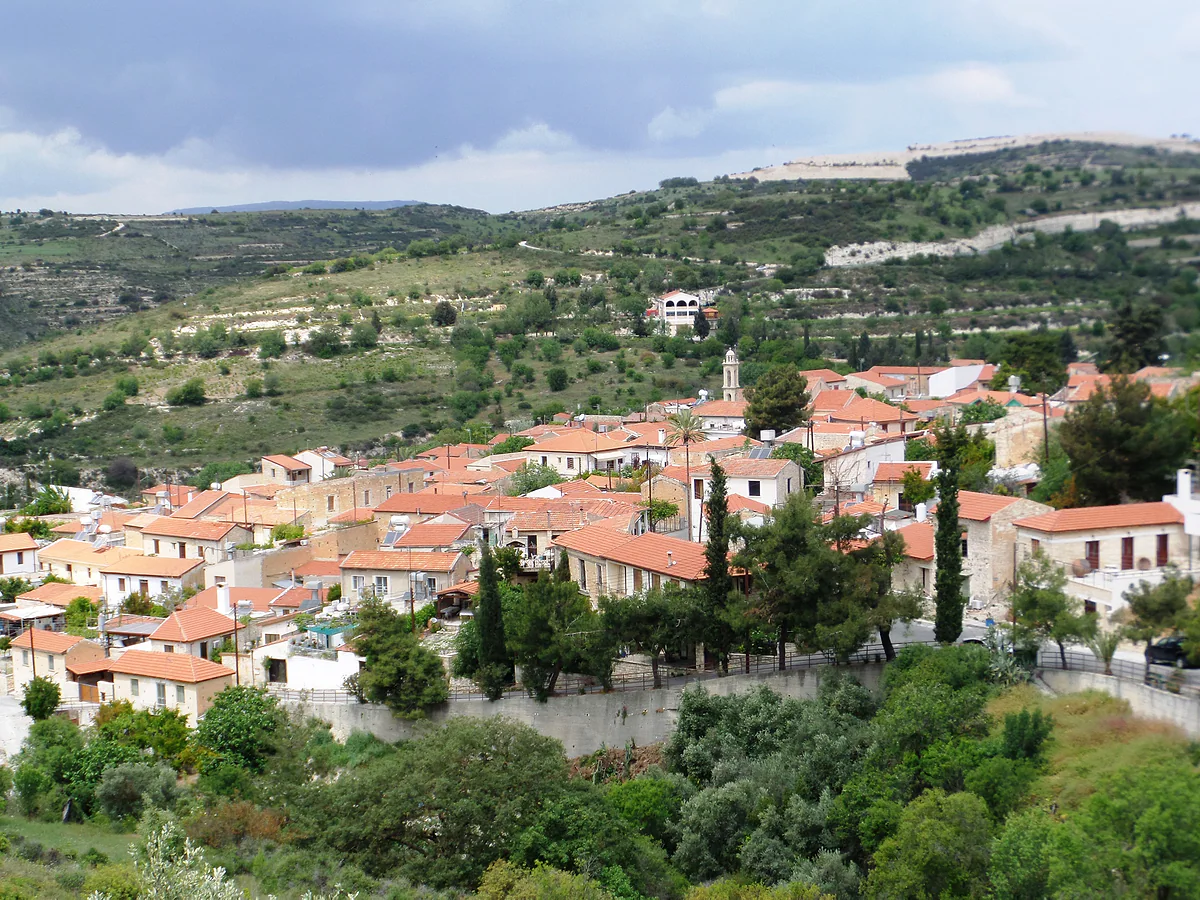
Koilani in the bottom of its valley, a village of white houses and red roofs beneath slopes terraced with vineyards
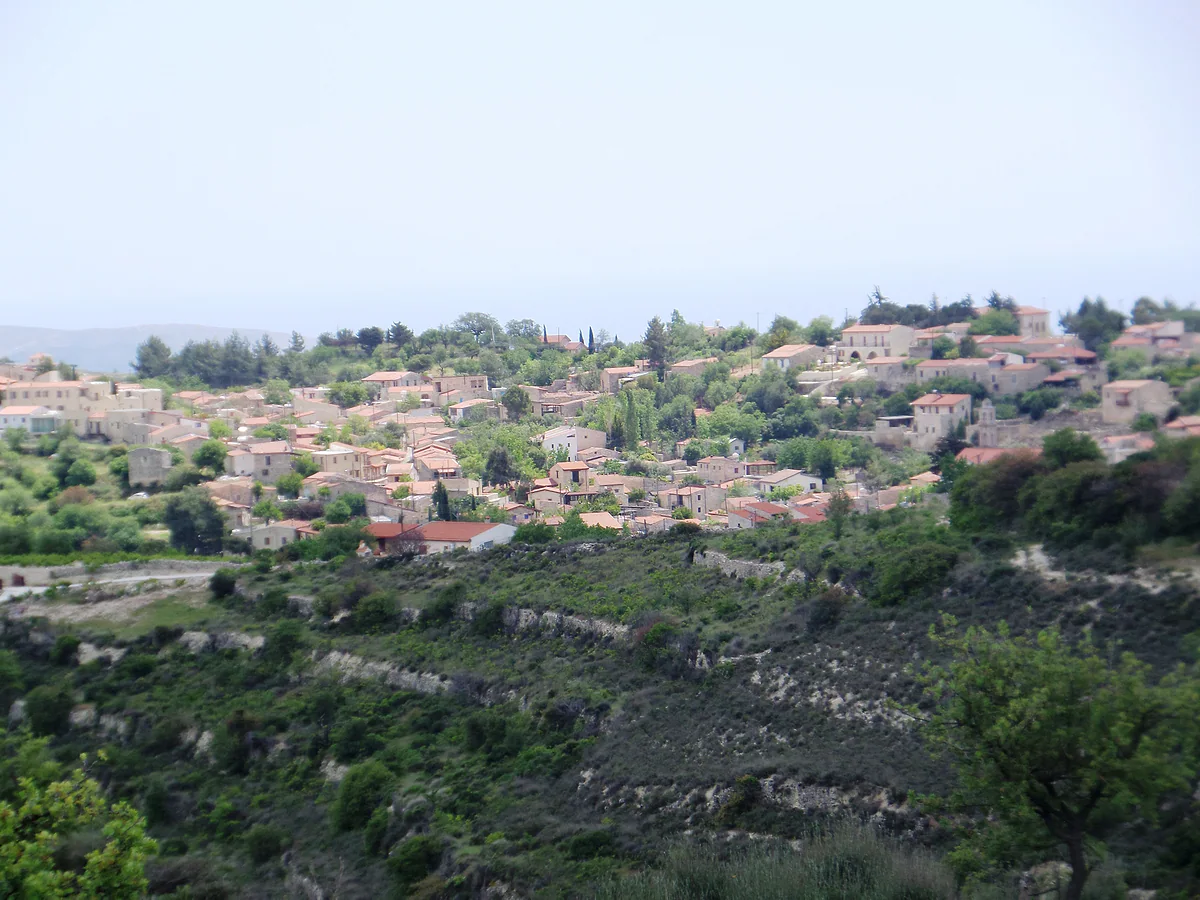
Laneia, one of the wine villages of Limassol district, with red-roofed houses and its church among vine slopes
The wine villages at a glance
Village
Residents (2021)
What I'd see
Omodos
339
Holy Cross monastery, the square and the medieval wine press
Vouni
155
Traditional houses and the church of St John the Baptist
Koilani
177
Ecclesiastical and wine museums, Ayia Mavri winery
Arsos
179
12th-century church of St Philip and the folk art museum
Vasa Koilaniou
168
Church of St George with 15th-century frescoes
Lofou
79
A village built like an amphitheatre on the hill
Residents from CYSTAT's 2021 census; everything else from the Limassol Tourism Board, read on 4 October 2026.
Test yourself
True or false?
0/3Pick before you peek.
The Krasochoria are on the Limassol coast.
See the answer
False. They're inland, on the southern slopes of the Troodos, at about 750-810 m according to the tourist board.
In 2026, grape-themed photo spots were installed in five wine villages.
See the answer
True. The tourist board placed them in Omodos, Mandria, Koilani, Pachna and Lofou, each with a grape designed by the artist Georgios Mourouzis.
Lofou is the wine village with the most residents.
See the answer
False. Lofou had 79 residents in the 2021 census; Omodos, with 339, is the largest of the six.
Wine villages with their own page
6
Average altitude of Omodos
810 m
«The Grape» photo spots in 2026
5
Map
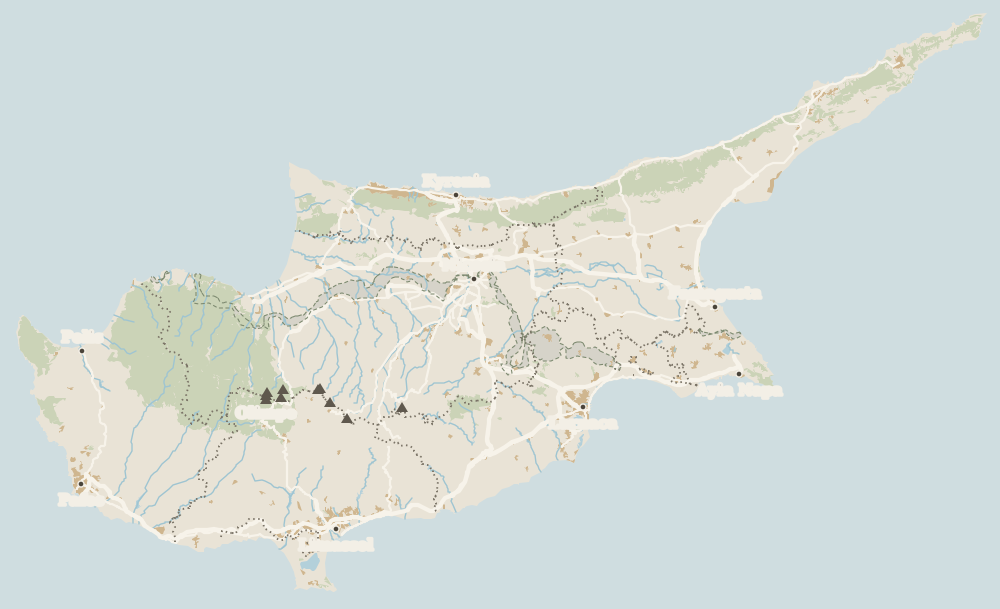
Where Krasochoria is
The grey strip with green dashes across the island is the UN buffer zone, the Green Line; to the north is the part of the island not under the control of the Government of the Republic. The Troodos fill the centre and west. Every number opens its guide.
It's the Greek name for the wine villages of Limassol district, on the southern slopes of the Troodos. The tourist board uses the term for the area around Vouni, Omodos, Koilani and their neighbours.
Which is the prettiest wine village in Limassol?
For me, Omodos, for the square in front of the Holy Cross monastery and the medieval wine press. If you want somewhere quieter, Vouni and Vasa Koilaniou have fewer shops and emptier lanes.
How far are the wine villages from Limassol?
About 20 to 30 km from the town centre as the crow flies, depending on the village. Lofou is the closest and Arsos the furthest.
Can you visit wineries in the Krasochoria?
Yes. The Limassol Tourism Board lists family wineries in Koilani, Omodos, Vasa and Pachna, with tastings and tours. Some have set hours and others ask you to book.
Is it the same as the Commandaria area?
Not quite. Commandaria, Cyprus's sweet wine, has its villages further east in the Kouris valley, such as Lania, Silikou and Monagri.
Tourism graduate with a master’s in Tourism Management and Planning from the University of Málaga, who has travelled across Europe. He writes every guide from official sources and his own judgement.

 1Kourion 2Limassol 3Kolossi Castle 4Episkopi 5Akrotiri peninsula 6Germasogeia 7Pissouri 8Amathus 9Anogyra 10Governor's Beach 11Krasochoria 12Limassol District 13Cyprus Wine Museum