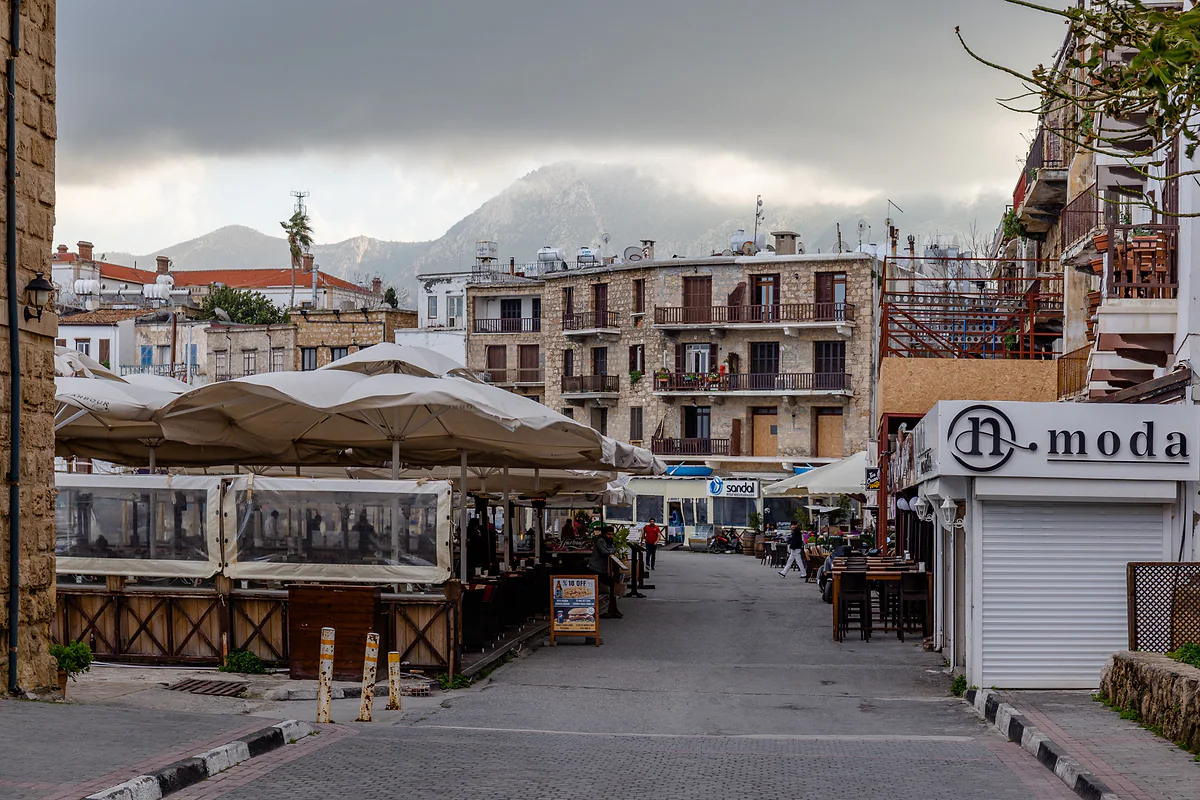
The northern part of the island
The north of Cyprus, explained before you cross
Northern Cyprus is the part of the island the Republic's government hasn't controlled since 1974, about 3,355 km² according to the Spanish foreign ministry. An entity recognised only by Turkey was declared there in 1983. You visit by crossing from the south at the Green Line crossing points, and it's worth knowing that currency, insurance and consular help all change.
In 30 seconds
Full read: 4 min
- The north hasn't been under the Republic's control since 1974.
- The entity declared there in 1983 is recognised only by Turkey.
- You cross from the south at nine crossing points with your passport.
- The currency is the Turkish lira, but euros are widely accepted.
- Consular help is limited, and time there counts towards your 90 days.
I'd do the north as a day trip from the south, crossing on foot at Ledra Street for a first look. If you take a car, buy insurance at the crossing and never hand your passport to anyone.

Before you go
What I would keep in mind
-
01 My tip
Always enter through the south
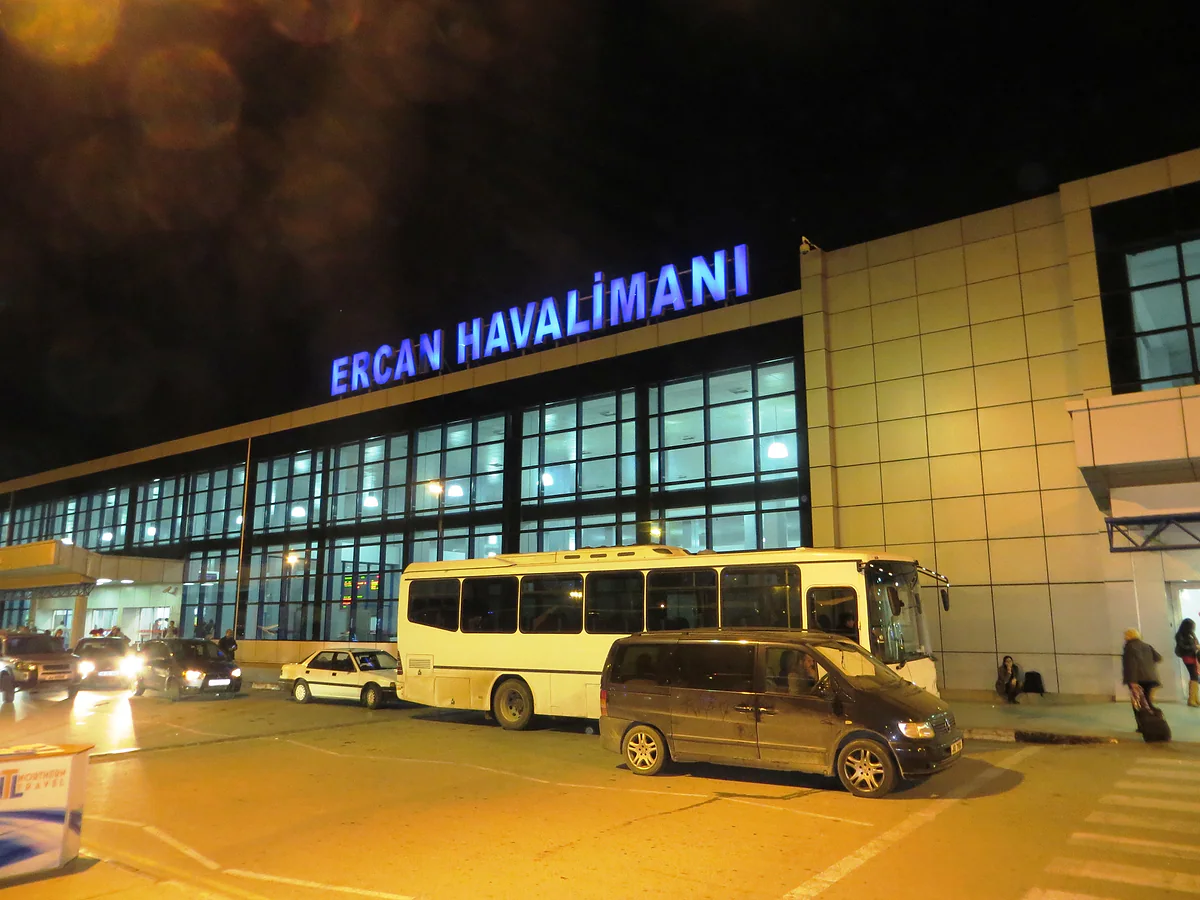
Gov.uk says that if you enter the Republic through the north, for example via Ercan airport, the authorities will treat it as illegal entry.
Ercan airport -
02 Money
Euros yes, cards with care
The currency is the Turkish lira, but most places accept euros. The Spanish foreign ministry warns of card charges higher than the bill.
Cyprus currency -
03 Watch out
Limited consular help
Gov.uk says the FCDO can only give limited support in the north, and that the authorities there don't share information about British nationals with the High Commission.
is Cyprus in the EU and Schengen -
04 Getting there
Shopping limits on the way back
Gov.uk notes the Republic enforces a 40-cigarette limit per person, and the Green Line rules also cap goods at 260 euros and a litre of alcohol.
crossing to northern Cyprus
What I would book
The north of Cyprus is the other half of the island’s story, and plenty of British visitors see it on a day out from the south. Here’s what it is, how you get there, what changes when you cross and what gov.uk advises, in the language the UN and the EU use. The full story, in facts, is in the Cyprus problem. Check that your travel insurance covers the north too, as I explain in healthcare in Cyprus.
What the north is
From summer 1974 onwards the Republic hasn’t governed the north, some 3,355 km² going by the Spanish foreign ministry. Proclaimed in 1983, the entity calling itself the ‘Turkish Republic of Northern Cyprus’ is recognised by Turkey alone and was ruled invalid by the UN Security Council, with London refusing recognition too. For the UN, the EU and the UK there’s a single Cyprus, the Republic.
Nobody knows the population exactly. The Spanish foreign ministry talks of estimates around 350,000, with some 80,000 in north Nicosia, in the absence of reliable statistics. Kyrenia district lies entirely in the north, and parts of Nicosia, Famagusta and Larnaca districts do too, including towns such as Morphou.
How to get there
You visit the north by crossing from the south. There are nine open crossing points, according to the UN, three in Nicosia, two in the British base at Dhekelia and the rest spread west and east. Any of them will do, according to gov.uk, but the two Ledra crossings are foot traffic only. Each crossing is covered in crossing to northern Cyprus.
Never arrive on the island via the north, though. Landing at Ercan or sailing into a northern port is illegal entry in the Republic’s eyes, with fines or refusal at the border to follow. More in Ercan airport.
To sleep close to everything, search places to stay in Nicosia on Expedia and filter by area before price.
What changes on the other side
Several things at once. Lira is the currency, euros are usually fine, and cards are a risk after reports of charges well beyond the bill. A hire car from the south usually needs extra insurance to go north, which you can buy at some crossings.
Gov.uk is frank that British consular help there is limited, and days spent north of the line count towards your Republic allowance. So I’d check my travel insurance covers the north before going, and if you’re thinking of staying over, read hotels in northern Cyprus first.
Safety and military areas
Gov.uk advises against taking photographs near military buildings, warning that you could be arrested, and the Spanish foreign ministry adds that some military zones in the north aren’t properly signposted. In the buffer zone itself there are still minefields, so stick to the official crossings.
If you are short on time, see the best tours in Nicosia and pick one that fits your day.
What there is in the north
I’ll be careful here. The official sources I can cite say little about what to see on the other side, so I’m not giving opening times, prices or descriptions I can’t check. What is documented is the past of its towns. The Union of Cyprus Municipalities records Famagusta as one of the island’s six towns and capital of its district, with Enkomi and Salamis in its area, notes Kyrenia’s very ancient origins, and places Lapithos, one of the ten ancient kingdoms, 14 km from Kyrenia. See Kyrenia and Kyrenia district.
Using what Britannica, the Technical Committee on Cultural Heritage and the archaeological missions do publish, I’ve written a page for each sight in the north, always without opening times or prices. The Kyrenia range has three fortresses on its peaks, Kantara Castle at the eastern end, St Hilarion Castle above the town and, between the two, Buffavento Castle. Down by the harbour, Kyrenia Castle holds a Greek merchant ship that sank around 295 BC, and up the slope sits the village of Bellapais with Bellapais Abbey, a Gothic ruin.
On the east coast, about 7 km from Famagusta, lie the ruins of Salamis, with St Barnabas Monastery two and a half kilometres away. Inside Famagusta’s walls, Othello Tower reopened in July 2015 after EU-funded works, and the Lala Mustafa Pasha Mosque, once St Nicholas Cathedral, has been a mosque since 1571. To the north-east, the Karpas Peninsula ends at Apostolos Andreas Monastery, restored between 2014 and 2016 with money from both communities. And at the far western end, by Morphou Bay, the ancient city of Soli and Vouni Palace fit into a single outing.
Varosha, the former resort quarter of Famagusta, needs a note of its own. The Security Council wants it under UN administration and criticised the partial reopening announced in 2021. Which parts are open to visitors isn’t covered by any citable official source, so it stays off my list of sights.
Where the bus does not go, a car does: compare car hire in Nicosia before you arrive rather than at the desk.
To sleep close to everything, search places to stay in Nicosia on Booking.com and filter by area before price.
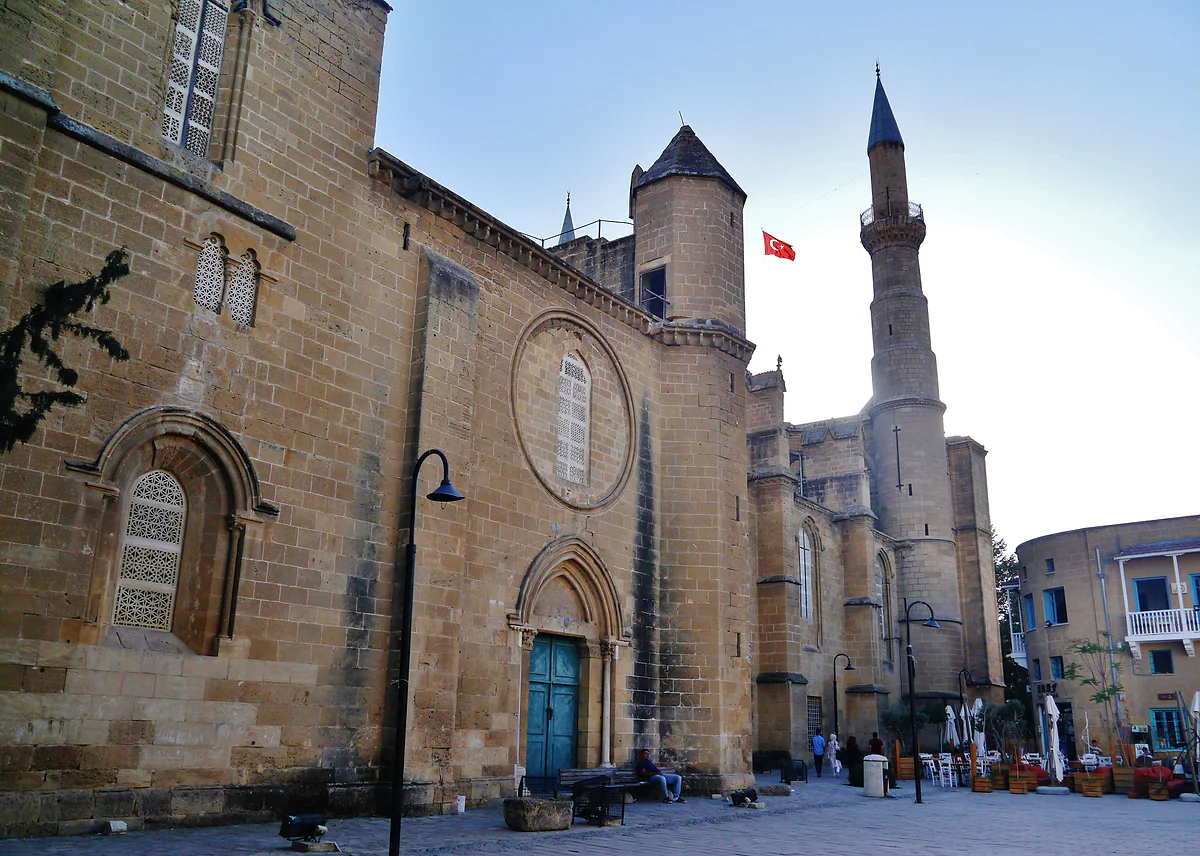
The Selimiye Mosque in North Nicosia, formerly the Gothic Cathedral of St Sophia, with buttresses and a minaret
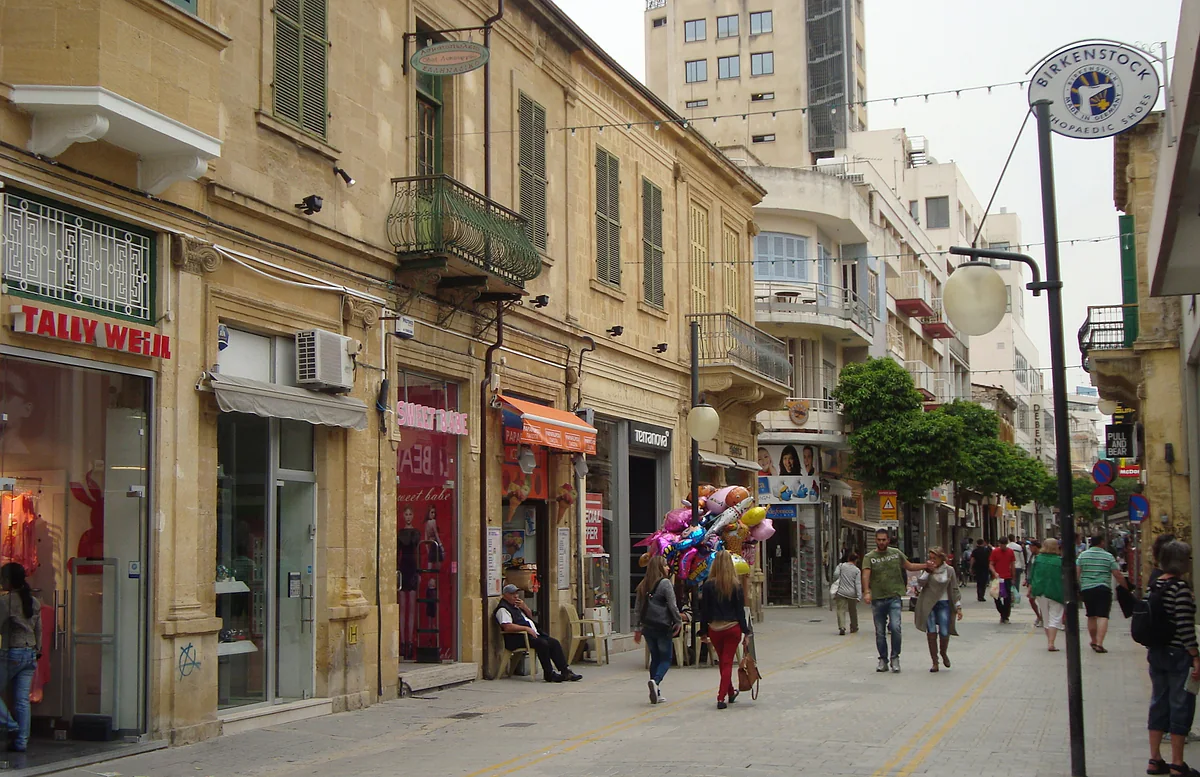
Ledra Street in Nicosia in the afternoon, pedestrianised and lined with shops and old buildings with balconies
What changes when you cross north
| Topic | In the north | Source |
|---|---|---|
| Currency | Turkish lira; euros accepted in most places | Spanish foreign ministry |
| Car insurance | Republic cover often doesn't apply; buy it at some crossings | Gov.uk |
| Consular help | Limited | Gov.uk |
| Your 90 days | Time in the north counts towards them | Gov.uk |
| Court orders | British court orders aren't acted on | Gov.uk |
| EU law | Suspended | Regulation (EC) 866/2004 |
Checked on 4 October 2026.
Test yourself
True or false?
0/3 Pick before you peek.
-
The UN recognises the state declared in northern Cyprus.
See the answer
False. The Security Council declared it invalid in resolution 541 in 1983; only Turkey recognises it.
-
Days spent in the north count towards your 90 days in the Republic.
See the answer
True. Gov.uk says the Republic's authorities count them towards the 90-day total.
-
You can pay in euros in the north.
See the answer
True. The currency is the Turkish lira, but most places accept euros, according to the Spanish foreign ministry.
- Area, per the Spanish MFA
- 3,355 km²
- Crossing points with the south
- 9
- Cigarettes you can bring back
- 40
- Outside government control since
- 1974
What to see
What to see in The north
0 of 421 Cyprus guides
Your next stamp
- Crossing to the north
- Greek or Turkish?
- Hotels in the north
- Currency and payments
- How to get there
- EU and Schengen
- Where is Cyprus
- Almyra Hotel
- Anassa Hotel
- Anastasia Beach
- Aphrodite Hills Resort
- Apostolos Andreas
- Bellapais Abbey
- Cap St Georges
- Church of St Lazarus
- Columbia Beach Resort
- Commandaria
- Coral Beach Hotel
- Cypriot food
- Dome Beach
- Four Seasons Limassol
- Golden Bay
- Grecian Park
- Hilton Nicosia
- Kourion
- Kyrenia Castle
- Larnaca
- Lefkara lace
- Limassol
- Limassol Carnival
- Meze
- Omodos
- Panagia Angeloktisti
- Places to visit
- Selimiye Mosque
- Soli
- St Barnabas Monastery
- Weather
- Wine routes
- Atlantica Miramare
- Büyük Han
- Cheap eats
- Cyprus in winter
- Finikoudes
- Halloumi
- Kantara Castle
- Kataklysmos
- Limassol Castle
- Narcissos
- Nissi Beach Resort
- Olympic Lagoon Paphos
- Othello Tower
- Sanctuary of Apollo Hylates
- Sea temperature
- Things to do
- Vouni
- Vouni Palace
- Alion Beach
- Cypriot desserts
- Cyprus in spring
- Elias Beach
- Golden Coast
- Koilani
- Kolossi Castle
- Lala Mustafa Pasha Mosque
- Larnaca Castle
- Leonardo Laura Beach
- Limassol old town
- Limassol Wine Festival
- Most beautiful places
- Souvla
- St Hilarion Castle
- Arsos
- Buffavento Castle
- Crystal Springs
- Cypriot wine
- Cyprus in summer
- Easter in Cyprus
- Episkopi
- Kition
- Kleftiko
- Limanaki Beach
- Molos promenade
- Pafos Aphrodite Festival
- Pagona
- Prettiest villages
- St Raphael Resort
- Adams Beach
- Akrotiri peninsula
- Alasia Hotel
- Bellapais
- Cyprus in autumn
- Elysium Hotel
- Green Monday
- Independence Day
- Limassol Marina
- Pierides Museum
- Sheftalia
- Sunrise Pearl
- UNESCO World Heritage
- Vasa Koilaniou
- Akrotiri salt lake
- Amathus Beach
- Christmas
- Cyprus in January
- Grecian Bay
- Larnaca Archaeological Museum
- Limassol old port
- Lofou
- Map
- Venus Beach Hotel
- Vrissiana
- Asterias Beach
- Capo Bay
- Cypriot coffee
- Cyprus in February
- Kamares Aqueduct
- Kefalos Beach
- Lania
- Limassol Archaeological Museum
- Parklane
- St Nicholas of the Cats
- Alexander the Great
- Carob Mill
- Cyprus in March
- Districts
- Hala Sultan Tekke
- Lady's Mile
- Tsokkos Gardens
- Zivania
- Beer
- Cavo Maris
- Cyprus in April
- Germasogeia
- King Evelthon
- Larnaca Salt Lake
- Pissouri
- Towns and villages
- Amathus
- Anogyra
- Athena Beach
- Cyprus in May
- Mackenzie beach
- Population
- Archaeological sites
- Cyprus in June
- King Jason
- Limassol beaches
- Size
- Zenobia wreck
- Aliathon Resort
- Castles in Cyprus
- Cyprus in July
- Governor's Beach
- Languages
- Larnaca beaches
- Annabelle Hotel
- Cyprus in August
- Monasteries in Cyprus
- Name
- Azia Resort
- Cyprus in September
- Museums in Cyprus
- Capital Coast Resort
- Cyprus in October
- Pyla
- Cyprus in November
- Kiti
- Cyprus in December
- Lefkara
- Choirokoitia
- Tochni
- Flag
- Kalavasos
- Krasochoria
- Salamis
- Aphrodite
- Flights
- Karpas Peninsula
- Stavrovouni Monastery
- Kornos
- Larnaca Airport
- Limassol District
- Larnaca district
- Paphos Airport
- Pyrga
- Airport transfers
- Athienou
- Ferry
- Odou
- Cruises
- Kato Drys
- Getting around
- Vavla
- Buses
- Zygi
- Taxis
- Agios Irakleidios
- Car hire
- Paphos district
- Driving
- Paphos
- Kato Paphos
- Parking
- Cycling
- Paphos old town (Ktima)
- Paphos Archaeological Park
- Road trip
- Distances
- Tombs of the Kings
- Agia Kyriaki and St Paul's Pillar
- Paphos Byzantine Museum
- Paphos beaches
- Geroskipou
- Cyprus Wine Museum
- Peyia (Pegeia)
- Coral Bay
- History
- Sea caves, Peyia
- The division
- Agios Georgios, Peyia
- Political system
- Akamas peninsula
- Religion
- Blue Lagoon, Akamas
- Public holidays
- Baths of Aphrodite
- Time
- Lara beach
- Avakas Gorge
- Entry requirements
- Polis Chrysochous
- Facts
- Latchi
- Neo Chorio
- Aphrodite's Rock
- Palaepaphos (Kouklia)
- Paphos Castle
- Paphos Archaeological Museum
- Agia Solomoni Catacomb
- Kathikas
- Drouseia
- Ineia
- Diarizos Valley
- Pano Panagia
- Where to eat
- Where to stay
- Chrysorrogiatissa Monastery
- Hotels in Ayia Napa
- Agios Neophytos Monastery
- Green Line
- Hotels in Protaras
- British bases
- Hotels in Limassol
- Tala
- Ercan airport
- Hotels in Larnaca
- Lempa
- Hotels in Paphos
- Pano Arodes
- Hotels in Coral Bay
- Kritou Terra
- Kyrenia district
- Hotels in Polis and Latchi
- Kyrenia
- Lysos
- Hotels in Nicosia
- Lapithos
- Pomos
- Cedar Valley
- Hotels in the Troodos
- Ayia Napa
- Best time to visit
- Famagusta district
- Luxury hotels
- North Nicosia
- Agrotourism
- All-inclusive hotels
- Famagusta
- Thalassa Museum
- Adults-only hotels
- Apartments
- Ayia Napa Monastery
- Varosha
- Ayia Napa Sculpture Park
- Family hotels
- Morphou
- Boutique hotels
- Nissi Beach
- Beachfront hotels
- Events
- Makronissos
- Ayia Napa sea caves
- Cheap hotels
- Love Bridge
- Villas
- Ayia Napa beaches
- Campsites
- Cape Greco
- Safety
- Konnos Bay
- Scams and pitfalls
- Cyclops Cave
- Healthcare
- Mobile and roaming
- Free things to do
- What to buy
- With a dog
- Accessible Cyprus
- Plugs
- Tipping
- Protaras
- Tourist information
- Fig Tree Bay
- Packing list
- Prices and budget
- Profitis Ilias Church
- Cyprus on a budget
- Protaras beaches
- Shopping
- Paralimni
- With kids
- Deryneia
- For couples
- Kokkinochoria
- Weddings
- Nightlife
- Sotira
- Liopetri
- Package holidays
- Day trips
- Frenaros
- Nicosia district
- Avgorou
- Boat trips
- Nicosia
- Jeep safari
- Venetian walls
- Famagusta Gate
- Ledra Street
- Laiki Geitonia
- Cyprus Museum
- Byzantine Museum, Nicosia
- St John's Cathedral
- Archbishop's Palace
- 3 days
- Museums in Nicosia
- 5 days
- Chrysaliniotissa
- Leventis Museum
- One week
- 10 days
- Leventis Gallery
- Kornesios house
- Two weeks
- National Struggle Museum
- Ömeriye Mosque
- Faneromeni Church
- Shacolas observatory
- Tamassos
- Idalion
- Machairas Monastery
- Fikardou
- Lythrodontas
- Tilliria
- Kato Pyrgos
- Troodos Mountains
- Mount Olympus
- Troodos Square
- Skiing in Cyprus
- Troodos Geopark
- Painted churches of Troodos
- Kykkos Monastery
- Makarios's tomb
- Trooditissa Monastery
- Platres
- Prodromos
- Foini
- Treis Elies
- Marathasa valley
- Solea valley
- Agios Nikolaos tis Stegis
- Panagia Asinou
- Panagia Podithou
- Archangelos Michael, Pedoulas
- Panagia tou Moutoulla
- Agios Ioannis Lampadistis
- Kalopanayiotis
- Pedoulas
- Moutoullas
- Kakopetria
- Galata
- Evrychou
- Pitsilia
- Stavros tou Agiasmati
- Panagia tou Araka
- Timios Stavros, Pelendri
- Transfiguration church, Palaichori
- Palaichori
- Askas
- Lagoudera
- Polystypos
- Alona
- Agros
- Kyperounta
- Louvaras
- Hiking in Cyprus
- Artemis Trail
- Atalante Trail
- Persephone Trail
- Teisia tis Madaris
- Waterfalls in Cyprus
- Caledonia Waterfall
- Nature parks in Cyprus
- Viewpoints in Cyprus
- Cyprus beaches
- Diving in Cyprus
- Water sports in Cyprus
- Water parks in Cyprus
- Golf in Cyprus
Frequently asked questions
What is Northern Cyprus?
It's the northern part of the island, which hasn't been under the Republic's effective control since 1974. A so-called 'Turkish Republic of Northern Cyprus' was declared there in 1983 and only Turkey recognises it. Gov.uk says the British government doesn't.
Can you visit Northern Cyprus?
Yes, by crossing from the south at one of the nine Green Line crossing points with your passport. Gov.uk says you can use any of them to move between north and south.
What currency is used in Northern Cyprus?
The Turkish lira, although the Spanish foreign ministry says most places accept euros.
Is Northern Cyprus safe to visit?
People visit without trouble, but gov.uk warns against photographing military areas and says consular help is limited in the north. Keep to the crossings, as there are still minefields in the buffer zone.
Can I fly straight to Northern Cyprus?
Gov.uk says entering through the north, such as via Ercan airport, is treated by the Republic as illegal entry, with possible fines and refusal of entry or exit. Fly into Larnaca or Paphos instead.
By
Tourism graduate with a master’s in Tourism Management and Planning from the University of Málaga, who has travelled across Europe. He writes every guide from official sources and his own judgement.
Published on . Facts checked on .
Sources
Some links in this guide are affiliate links: if you book through them, the site earns a commission at no extra cost to you. Affiliate disclosure
Photos: Michal Klajban (CC BY-SA 4.0); Zairon (CC BY-SA 4.0); NicosiaKypros (CC BY-SA 3.0), via Wikimedia Commons.