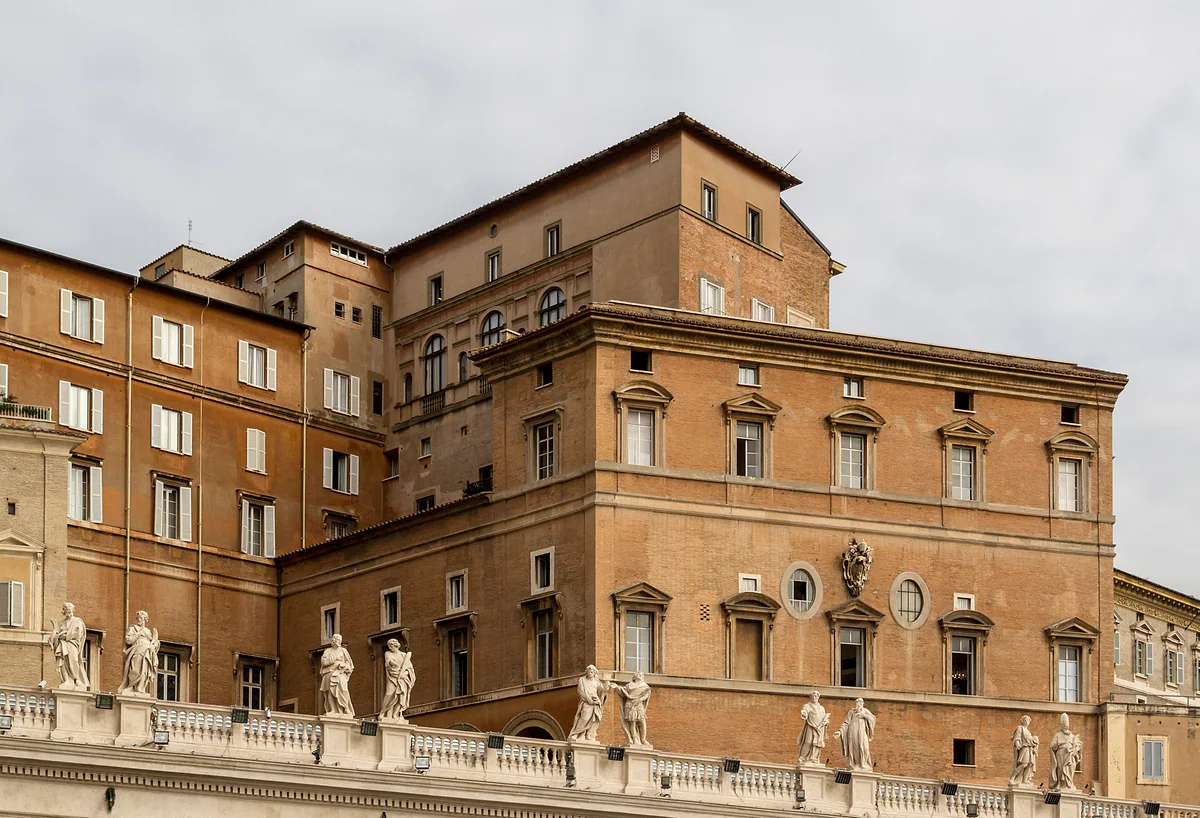
184 countries deal with one of them, not the other
The Holy See and Vatican City, two different things with one pope
The Holy See is the sovereign government of the Catholic Church, and Vatican City State is the 0.44 km² territory that serves as its base. Each has its own international legal personality and both share one head, the pope. The embassies of 184 countries are accredited to the Holy See, which is also the one holding observer status at the UN since 1964.
In 30 seconds
Full read: 3 min
- The Holy See is the sovereign government of the Catholic Church; Vatican City is its 0.44 km² territory.
- Each has its own international legal personality, and both are headed by the pope.
- Diplomatic relations, with 184 states, belong to the Holy See, as does the UN observer seat since 1964.
- The state, by contrast, signed the euro agreement and belongs to the Universal Postal Union and the ITU.
- Lateran, St Mary Major, St Paul's and Castel Gandolfo belong to the Holy See but aren't state territory.
My way of putting it is simple. The Holy See is who's in charge and the Vatican is where. That's all a visitor really needs, but grasping it saves a lot of confusion, from why Rome has embassies that aren't to Italy to why St John Lateran belongs to the Holy See without being in the Vatican.

Before you go
What I would keep in mind
-
01 My tip
Embassies to the Holy See are in Rome
The Vatican has no room for embassies. Of the missions accredited to the Holy See, 93 are based in Rome, on Italian soil.
Is Vatican City a country? -
02 Most beautiful
Lateran belongs to the Holy See, not the Vatican
The basilicas of St John Lateran, St Mary Major and St Paul's are owned by the Holy See with immunities, but they stand in Rome. They aren't state territory.
Vatican City history -
03 Money
The state signed up to the euro, not the Holy See
The monetary agreement with the European Union, which lets it use the euro and mint coins, belongs to Vatican City State, which isn't an EU member.
Vatican City currency -
04 My tip
Two kinds of Vatican passport
The Holy See issues diplomatic and service passports, the state issues ordinary ones to its citizens. They share the code VAT. None of it involves tourists.
passport for the Vatican
My priorities
Unmissable
- Hang on to the key idea, the Holy See is who and the Vatican is where
- Understand why the Vatican counts as a country
If you have time
I would skip
- Looking for embassies inside the Vatican, when they're in Rome
- Assuming Lateran or St Mary Major are the Vatican because they belong to the Holy See
My ranking, scored
Who's who, in six concrete cases
This isn't a quality score but a clarity one. Out of 10, how obvious it is in each case that the Holy See, not the state, is the actor. It sorts them from clearest to murkiest.
0 of 6 seen
-
The seat at the UN
The Holy See holds it as Permanent Observer since 6 April 1964. It doesn't vote, and its rights were set by resolution 58/314 in 2004.
9.8 out of 10
-
Embassies
184 states, plus the EU and the Order of Malta, have diplomatic relations with the Holy See, according to its note of 9 January 2026.
9.5 out of 10
-
UNESCO, FAO and the IAEA
The Holy See is an observer at UNESCO and the FAO and a member of the IAEA and UN Tourism. Church diplomacy, not territorial.
8.8 out of 10
-
Post, telecoms and intellectual property
Here the actor is Vatican City State, a member of the Universal Postal Union, the ITU and WIPO.
8.2 out of 10
-
The euro
The 2009 monetary agreement with the EU belongs to the state, which may mint a limited number of coins.
7.8 out of 10
-
Passports
Both issue them. The Holy See, diplomatic and service passports; the state, the ordinary one. The most tangled case.
6.5 out of 10
When we talk about the Vatican we usually blur two things that aren’t the same. One is the Holy See, the government of the Catholic Church. The other is Vatican City State, the 0.44 km² territory beside the Tiber. They share a head and get used as synonyms, but they don’t do the same jobs. Here it is with examples a traveller will actually come across.
Who’s in charge, and where
The shortest way to say it is this. The Holy See is who, and the Vatican is where. The Holy See is the sovereign organ of the Catholic Church, with the pope at its head, and it existed for centuries before there was a state. Vatican City State was created by the Lateran Pacts of 1929 to give the Holy See a territory of its own, tiny but its own, guaranteeing its independence.
The Governorate’s website puts it plainly. Both the Holy See and the state have their own recognised international legal personality, and the pope heads both. Representing the state abroad, diplomatic relations and treaties are exercised by the pope through the Secretariat of State. How that division came about is in my guide to Vatican history.
Who do countries send ambassadors to?
The Holy See. According to the Press Office note of 9 January 2026, 184 states have diplomatic relations with it, plus the European Union and the Sovereign Military Order of Malta. Since embassies won’t fit into 0.44 km², 93 of those missions are based in Rome, on Italian soil.
The United Nations works the same way. The one in the room is the Holy See, a Permanent Observer since 6 April 1964. It doesn’t vote, and its rights of participation were set by the General Assembly in resolution 58/314 of 1 July 2004. The Holy See is also an observer at UNESCO and the FAO and a member of the IAEA and UN Tourism.
So what does the state do?
It runs the territory and its services. It’s Vatican City State, not the Holy See, that belongs to the Universal Postal Union, the International Telecommunication Union and the World Intellectual Property Organization. That’s why Vatican stamps and post are the state’s business.
It’s also the state that signed the 2009 pact with the European Union allowing it the euro and a limited coinage, despite not being in the EU. I go into it on money and payments in the Vatican.
Passports, where the two overlap
This is where they cross over. Diplomatic and service passports come from the Holy See; the ordinary electronic one comes from the state and only its citizens get it. They share one international code, VAT. None of this affects you as a visitor, because there are no passport checks to enter the square, the basilica or the Museums. What you should carry is covered on the page about passports and the Vatican.
Holy See property that isn’t the Vatican
This is the bit that confuses travellers most. Under the Lateran Treaty the Holy See owns Rome’s three other great papal basilicas and the palace at Castel Gandolfo, among other buildings. They enjoy immunities, but they’re in Italy and aren’t state territory. The same goes for many Holy See offices in buildings on Via della Conciliazione, Piazza Pio XII or Piazza di Spagna, the so-called extraterritorial zones.
So when you visit Castel Gandolfo, you’re on Holy See property but you haven’t left Italy. And that’s why Pope Francis’s tomb, in Santa Maria Maggiore, isn’t in the Vatican even though it’s in a papal basilica.
What it means for your trip
For sightseeing, the distinction changes nothing practical. But understanding it saves confusion. If you’re after an embassy, it’s in Rome. If you walk into a papal basilica in the city centre, you haven’t crossed a border. And if someone tells you the Vatican sits at the UN, you can politely point out that it’s the Holy See. For the country’s other vital statistics, population, size and government, see my page on whether the Vatican is a country.
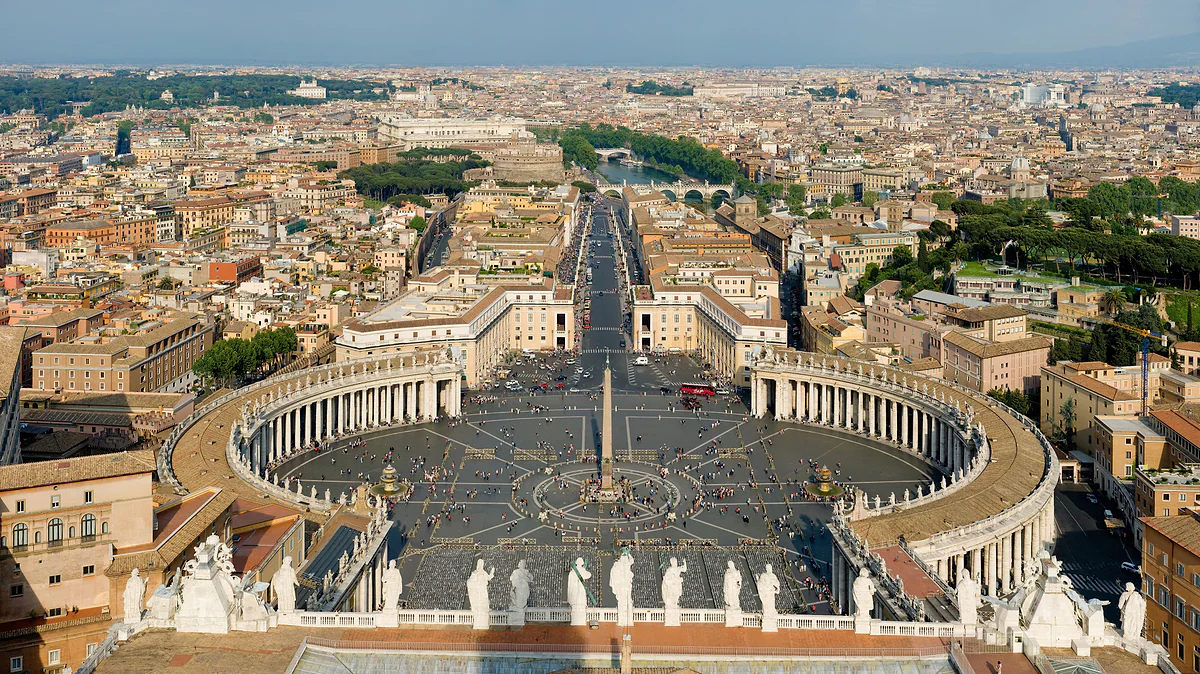
St Peter's Square seen from the basilica dome, with Bernini's colonnade, the central obelisk and Via della Conciliazione leading towards Rome.
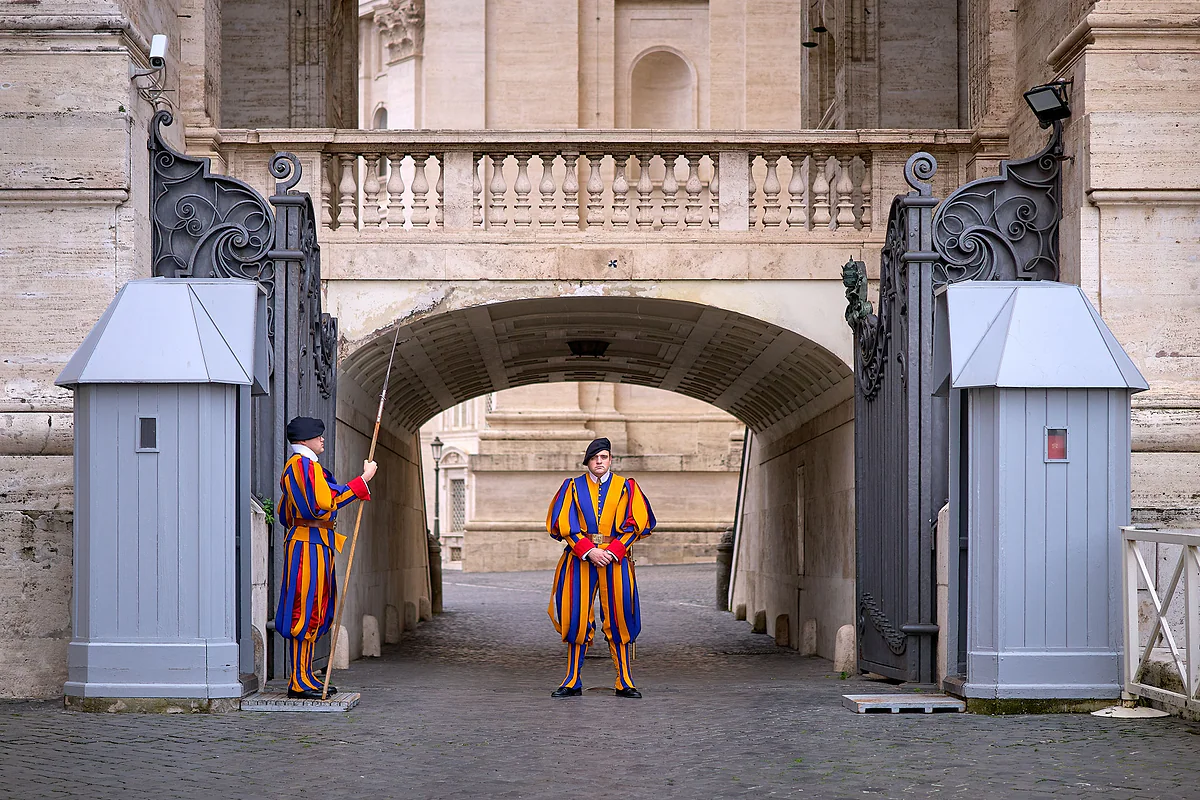
Two Swiss Guards in blue, yellow and red striped uniforms guard the Arch of the Bells, beside their sentry boxes.
Holy See versus Vatican City State
| Aspect | Holy See | Vatican City State |
|---|---|---|
| What it is | Sovereign organ of the Catholic Church | A 0.44 km² territory in Rome |
| Since when | Long before the state | Lateran Pacts, 1929 |
| Head | The pope | The pope |
| Diplomatic relations | With 184 states, the EU and the Order of Malta | Exercised by the pope through the Secretariat of State |
| United Nations | Permanent Observer since 1964 | No |
| International bodies | Observer at UNESCO and FAO, member of IAEA and UN Tourism | Member of the UPU, ITU and WIPO |
| Passports | Diplomatic and service | Ordinary, for citizens only |
From the Governorate (vaticanstate.va), the Holy See Press Office (09-01-2026), the mission to the UN and the Lateran Treaty.
Test yourself
True or false?
0/4 Pick before you peek.
-
The Holy See and Vatican City State are exactly the same thing.
See the answer
False. They have separate international legal personalities, even though they share a head. The state's website says so explicitly.
-
The Holy See votes in the UN General Assembly.
See the answer
False. It has been a Permanent Observer since 1964 and doesn't vote. Resolution 58/314 of 2004 sets its rights.
-
The Basilica of St John Lateran belongs to the Holy See.
See the answer
True. The Lateran Treaty recognises its ownership, with immunities, but it's in Rome and isn't state territory.
-
Vatican City State is a member of the Universal Postal Union.
See the answer
True. Yes, according to the Governorate, as it is of the ITU and WIPO. At the UN, though, it's the Holy See.
- States with diplomatic relations with the Holy See
- 184
- Accredited missions based in Rome
- 93
- Year the Holy See became a UN observer
- 1964
- Area of Vatican City State
- 0.44 km²
0 of 88 Vatican City guides
Your next stamp
- Is it a country?
- Facts
- Flag
- Map
- Scams to avoid
- History
- How to visit
- Sistine Chapel
- Things to do
- One day
- Tickets
- Two days
- Vatican Museums
- St Peter's Basilica
- St Peter's Square
- St Peter's Dome
- Vatican Necropolis
- Vatican Gardens
- Swiss Guard
- Seeing the Pope
- Castel Gandolfo
- Where to eat
- Free and cheap
- Apostolic Palace
- Getting there
- Money and payments
- Exclusive experiences
- Papal audience
- Angelus
- Who painted it
- Where the Pope lives
- Where to stay
- Dress code
- Facts
- Opening hours
- Post office and stamps
- Vatican Grottoes
- Pietà
- Baldachin
- Ceiling
- Chair of St Peter
- Last Judgement
- Raphael Rooms
- Architecture and architects
- Gallery of Maps
- Holy Door
- Library and Archives
- Bramante Staircase
- Facade and balcony
- Mass at St Peter's
- Pio Clementino Museum
- Papal blessing
- Vatican Pinacoteca
- Catacombs
- Gallery of Tapestries
- Gallery of the Candelabra
- Egyptian and Etruscan Museums
- Obelisk
- Vatican Museums map
- Bernini's colonnade
- How long you need
- Night opening
- Chiaramonti and Braccio Nuovo
- Christmas
- Anima Mundi Museum
- Easter
- Carriage Pavilion
- Gift shops and souvenirs
- With kids
- Best time to visit
- Courtyard of the Pine Cone
- Photography
- Train station
- Accessible travel
- Vatican Observatory
- Borgia Apartment
- Modern art collection
- Papal Palace
- Barberini Gardens
- Getting there
- Lake Albano
- Police and army
- Passport
- Pharmacy, shop and petrol
- What Vatican means
- Papal tombs
- List of popes
Frequently asked questions
What's the difference between the Holy See and Vatican City?
The Holy See is the sovereign government of the Catholic Church, and Vatican City State is the small territory that has served as its base since 1929. Each has its own international legal personality, and both have the same head, the pope.
Are the Holy See and the Vatican the same thing?
No, though people use them interchangeably. The state's own website recognises them as separate international persons. In practice the Holy See handles diplomacy and the state runs the territory, with the pope at the head of both.
Is the Holy See in the United Nations?
Yes, as a Permanent Observer since 6 April 1964. It doesn't vote. General Assembly resolution 58/314 of 1 July 2004 sets out its rights of participation.
How many countries have relations with the Holy See?
184 states, plus the European Union and the Sovereign Order of Malta, according to the Press Office note of 9 January 2026. Ninety-three of the accredited missions are based in Rome.
Who governs the Holy See?
The pope, who represents it to other states and concludes treaties through the Secretariat of State. The same pope is head of Vatican City State.
Why are there Holy See buildings outside the Vatican?
Because the Lateran Treaty recognises the Holy See's ownership of the basilicas of St John Lateran, St Mary Major and St Paul's, the palace at Castel Gandolfo and other properties, with immunities. They're on Italian soil, not state territory.
By
Tourism graduate with a master’s in Tourism Management and Planning from the University of Málaga, who has travelled across Europe. He writes every guide from official sources and his own judgement.
Published on . Facts checked on .
Sources
Photos: Dietmar Rabich (CC BY-SA 4.0); Diliff (CC BY-SA 3.0); Radek Kucharski (CC BY 4.0), via Wikimedia Commons.