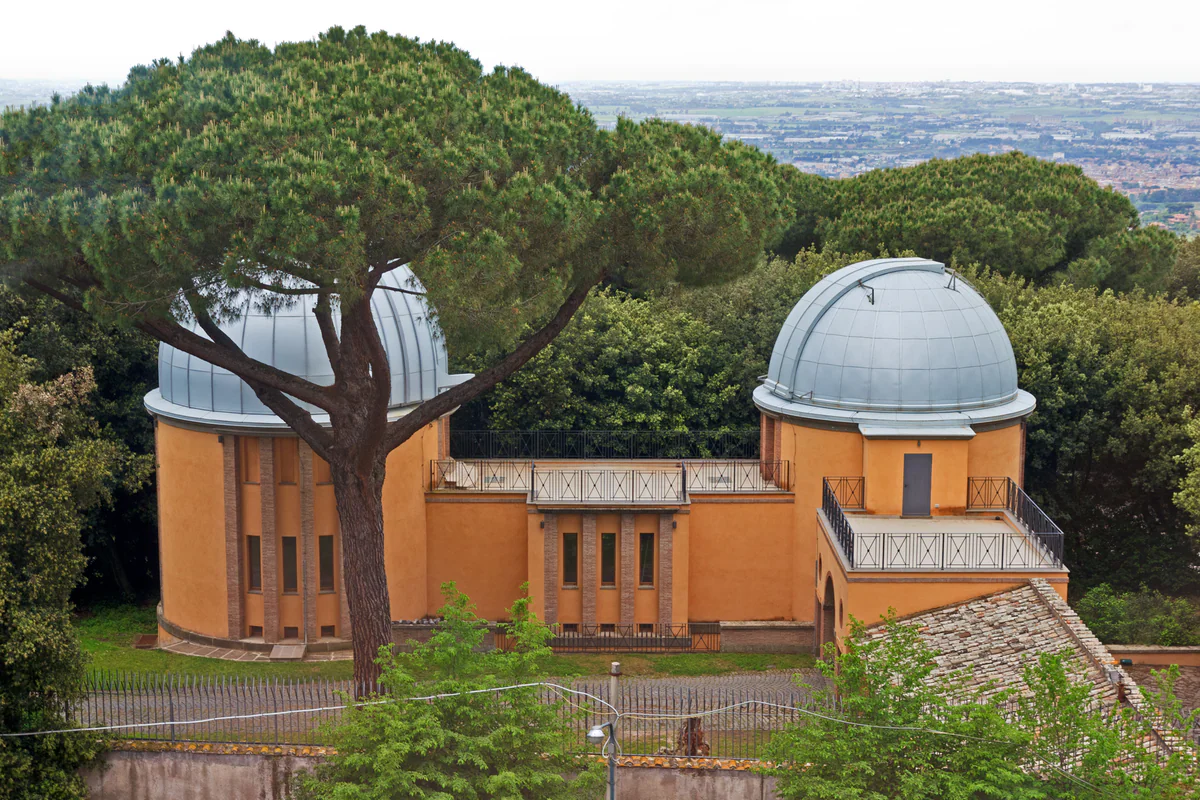
The pope's telescopes for €8, no stargazing
The Vatican Observatory, from the Tower of the Winds to Castel Gandolfo
The Vatican Observatory, the Specola Vaticana, was founded by Leo XIII in 1888 in the Tower of the Winds and moved to Castel Gandolfo in the mid-1930s to escape Rome's light. Its historic domes are sold through the Vatican Museums ticket office, €8 for about 45 minutes. Its main telescope today, the VATT, is on Mount Graham in Arizona.
In 30 seconds
Full read: 3 min
- Leo XIII founded the Vatican Observatory in 1888, with its instruments in the Tower of the Winds.
- It moved to Castel Gandolfo in the mid-1930s because of light pollution in Rome.
- The Astronomical Domes of the Papal Palace can be visited for €8 in about 45 minutes.
- The Specola is sold only to private groups, €250 for 75 minutes; no visit involves stargazing.
- Its current telescope, the VATT, is on Mount Graham in Arizona, at about 3,200 metres.
I think the Vatican Observatory is one of the Church's least-known stories, and the Astronomical Domes, at €8, one of the best add-ons to a day at Castel Gandolfo. Just don't go expecting to look at stars. It's a daytime visit to historic telescopes.

Before you go
What I would keep in mind
-
01 To save money
The Astronomical Domes cost €8
The historic telescopes above the Papal Palace are €8 (€6 reduced) for about 45 minutes. And with a Specola booking, the Papal Palace drops from €12 to €8.
Papal Palace of Castel Gandolfo -
02 Watch out
It isn't a night under the stars
Neither the domes nor the Specola are observing sessions. They're historical daytime tours. If someone sells you a stargazing night at the Vatican Observatory, be wary.
Vatican scams and tourist traps to avoid in 2026 -
03 Worth the splurge
The Specola, for a group
The astronomical museum area, observatory and Antiquarium are only sold to private groups, €250 per group of up to 25, lasting about 75 minutes.
Private Vatican tours and what's worth paying for -
04 Getting there
Regional train from Termini
Castel Gandolfo has a station on the FL4 regional line from Roma Termini. Mind you, the station sits below the town and you have to walk up.
getting to Castel Gandolfo
My priorities
Unmissable
- Book the Astronomical Domes on the official Museums ticket site
- Pair it with the Papal Palace, which drops to €8 with the booking
If you have time
I would skip
- Going expecting to look at the stars, since the visits are historical and by day
- Climbing the domes with vertigo, claustrophobia or limited mobility
What I would book
My ranking, scored
Ways to see the Vatican Observatory
My own scores out of 10. They weigh what you see, what it costs and how easy it is for an independent traveller. Everything is by day, with no astronomical observing.
0 of 4 seen
-
Astronomical Domes of the Papal Palace
The historic telescopes in the domes on top of the Apostolic Palace of Castel Gandolfo. Cheap and short, but not wheelchair-accessible and not advised with vertigo.
8.8 out of 10
-
Pair it with the Papal Palace
With a Specola booking, the Papal Palace and Secret Garden drop to €8. For me that's how to fill the morning.
8.4 out of 10
-
Specola Vaticana for groups
Museum area, observatory and Antiquarium in the Papal Gardens. Very thorough, but for private groups only.
7.5 out of 10
-
The VATT in Arizona
The Observatory's current telescope, on Mount Graham, is visited through Eastern Arizona College. Only if your travels take you there.
4.0 out of 10
That the Vatican has an astronomical observatory surprises almost everyone, and that you can visit it even more so. The Specola Vaticana is getting on for 140 years old, and its historic domes at Castel Gandolfo can be seen for €8. Here’s its story, what you can and can’t visit, and the truth about that telescope with the eye-catching name.
Why the Vatican looks at the sky
The tradition goes back a long way. The Observatory’s own website links it to the Gregorian reform of the calendar and to the scientific work of the Jesuits at the Roman College. When the Roman College observatory was lost in 1879, Leo XIII set up a new one in 1888 and entrusted it to the Jesuit Francesco Denza. The instruments went into the Tower of the Winds, inside the Vatican, and in 1891 a large astrograph was installed on the Leonine Tower for the ‘Carte du Ciel’, an international project to photograph the sky.
Under Johan Hagen, director from 1906, it completed an astrographic catalogue of 481,215 stars. That figure tells you how serious it was. This wasn’t a palace curiosity but front-line science. Astronomy was already in St Peter’s Square, incidentally, since 1817, with the meridian line another Vatican astronomer laid beside the obelisk.
From Rome to Castel Gandolfo, and on to Arizona
The problem was light. As light pollution grew in Rome, Pius XI moved the Observatory to Castel Gandolfo. The Observatory’s site dates the move to 1932-1935, the state’s to 1934, so I’d say the mid-1930s. New telescopes and a spectroscopy laboratory went in, and during the Second World War Castel Gandolfo sheltered thousands of displaced people.
Then came a Schmidt telescope in 1957 and a computing centre in 1965. But by the 1970s Castel Gandolfo was too bright as well, and under Fr George Coyne the Observatory began working with the University of Arizona. The result was the VATT, the Vatican Advanced Technology Telescope, on Mount Graham, at about 3,200 metres.
Can you visit the Vatican Observatory?
Yes, its historic sites, through the Vatican Museums. The scientific offices, at Piazza Pia 5 in Albano Laziale, don’t take individual visitors. The official ticket site sells two things.
The simpler one is the Astronomical Domes, the old telescopes perched on the palace roof. It costs €8 (€6 reduced) and takes about 45 minutes. It isn’t accessible by wheelchair or pushchair, and isn’t advised with vertigo, claustrophobia, heart problems or during pregnancy. The second is the Specola Vaticana, with the astronomical museum area, the observatory and the Antiquarium, sold only to private groups of up to 25, for €250 and about 75 minutes.
An important warning, to save disappointment. Neither is for stargazing. They’re historical visits, by day.
About the ‘Lucifer’ telescope
It’s one of the odder Vatican searches. Here’s the situation. The Observatory’s official website presents the VATT in Arizona as its telescope and doesn’t mention any telescope called Lucifer. I’d rather not repeat a story the source doesn’t support. If the VATT interests you, it can be visited through Eastern Arizona College’s Discovery Park Campus, according to the Observatory itself.
How I’d fit it into a day at Castel Gandolfo
My plan would be this. FL4 regional train from Termini, the walk up into town, the Astronomical Domes and the Papal Palace, which drops from €12 to €8 with a Specola booking. In the afternoon, the Barberini Gardens or a stroll to the lake. Everything else, hours, calendar and getting there, is in my guide to Castel Gandolfo.
Who it suits, and who it doesn’t
The Astronomical Domes aren’t for everyone. They’re not accessible by wheelchair or pushchair, and the ticket office advises against them with mobility or heart problems, claustrophobia or vertigo, and during pregnancy. If you’re travelling with someone in that position, the Papal Palace and the Barberini Gardens by minibus make a better plan.
And one calendar point. The Museums’ calendar shows the Papal Palace shut every Tuesday between August and December 2026, plus All Saints’ Day and the two Christmas days. As the domes sit on top of the palace, I wouldn’t plan the trip for a Tuesday.
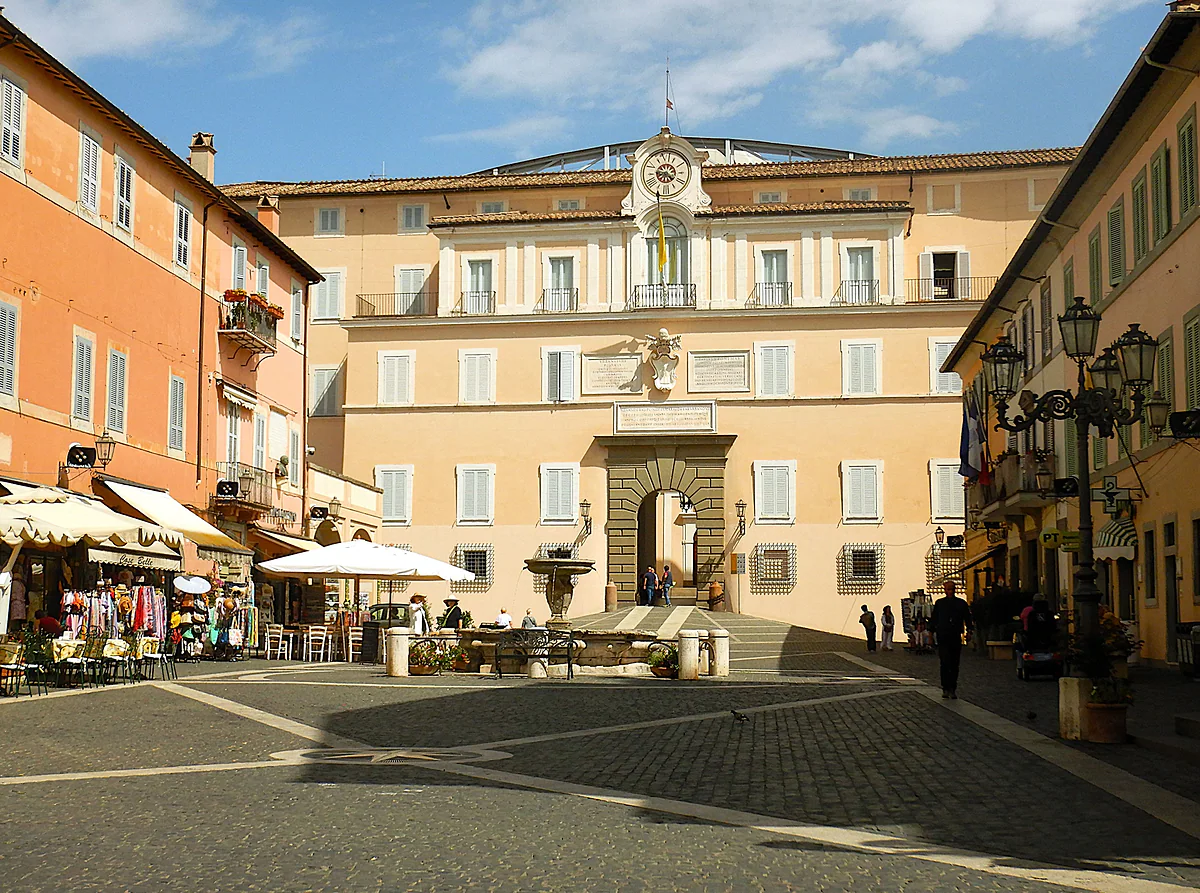
The Papal Palace of Castel Gandolfo at the end of Piazza della Libertà, with its clock, rusticated doorway and café terraces on either side.
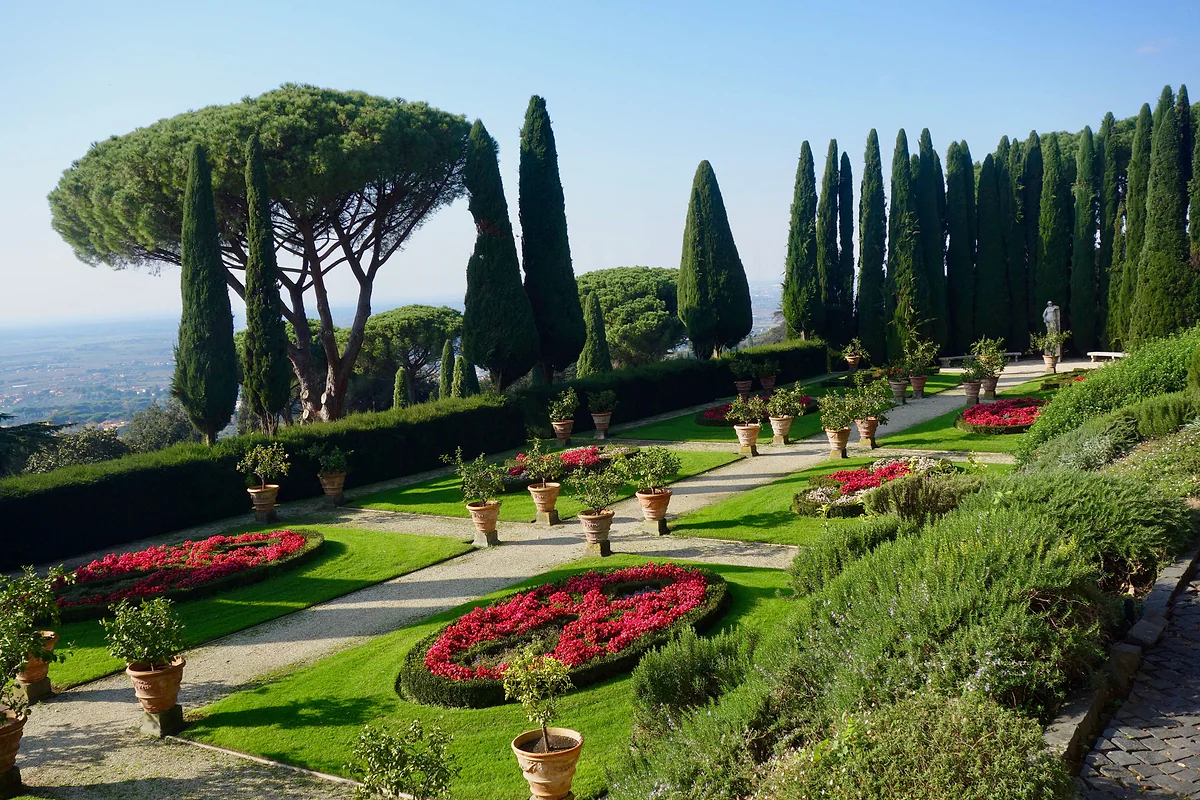
Beds of red flowers, potted lemon trees, cypresses and umbrella pines in the Villa Barberini gardens, with the plain stretching towards the sea.
Observatory visits on the official ticket site
| Visit | Price | Length | What's included |
|---|---|---|---|
| Astronomical Domes of the Papal Palace | €8 (€6 reduced) | About 45 min | Historic telescopes above the palace |
| Specola Vaticana, groups of 1 to 25 | €250 per group | About 75 min | Astronomical museum area, observatory and Antiquarium |
Vatican Museums official ticket site (tickets.museivaticani.va). The domes aren't accessible by wheelchair or with a pushchair and aren't advised with vertigo, claustrophobia, heart problems or in pregnancy.
From the Vatican to Arizona
| Year | What happened |
|---|---|
| 1888 | Leo XIII founds the Observatory under the Jesuit Francesco Denza, in the Tower of the Winds |
| 1891 | Astrograph on the Leonine Tower for the 'Carte du Ciel' |
| From 1906 | Under Johan Hagen, an astrographic catalogue of 481,215 stars |
| 1932-1935 | Move to Castel Gandolfo because of Rome's light pollution |
| 1957 and 1965 | Schmidt telescope and computing centre |
| From 1980 | Partnership with the University of Arizona and the VATT on Mount Graham, at about 3,200 m |
Vatican Observatory official website (vaticanobservatory.va). The state website dates the move to 1934.
Test yourself
True or false?
0/4 Pick before you peek.
-
The Vatican Observatory is inside Vatican City.
See the answer
False. It started in the Vatican's Tower of the Winds, but since the 1930s it's been at Castel Gandolfo, with its big telescope in Arizona.
-
You can look through the telescopes at the night sky on the Astronomical Domes tour.
See the answer
False. It's a daytime historical visit to the telescopes, not an observing session.
-
The Vatican Observatory has a telescope in the United States.
See the answer
True. The VATT is on Mount Graham in Arizona, the result of working with the University of Arizona since 1980.
-
The Specola produced a catalogue of nearly half a million stars.
See the answer
True. Under Johan Hagen, director from 1906, it completed an astrographic catalogue of 481,215 stars.
- Year Leo XIII founded the Observatory
- 1888
- Stars in the Specola's astrographic catalogue
- 481,215
- Entry to the Astronomical Domes
- €8
- Approximate altitude of the VATT in Arizona
- 3,200 m
0 of 88 Vatican City guides
Your next stamp
- Castel Gandolfo
- Train station
- Two days
- Opening hours
- One day
- St Peter's Square
- Best time to visit
- Sistine Chapel
- Things to do
- Tickets
- Vatican Museums
- St Peter's Basilica
- St Peter's Dome
- Vatican Necropolis
- Vatican Gardens
- Swiss Guard
- Seeing the Pope
- How to visit
- Where to eat
- Free and cheap
- Apostolic Palace
- Scams to avoid
- Getting there
- Money and payments
- Exclusive experiences
- Papal audience
- Angelus
- Who painted it
- Where the Pope lives
- Where to stay
- Dress code
- Facts
- Map
- Flag
- Post office and stamps
- Is it a country?
- Vatican Grottoes
- History
- Pietà
- Baldachin
- Ceiling
- Chair of St Peter
- Last Judgement
- Raphael Rooms
- Architecture and architects
- Gallery of Maps
- Holy Door
- Library and Archives
- Bramante Staircase
- Facade and balcony
- Mass at St Peter's
- Pio Clementino Museum
- Papal blessing
- Vatican Pinacoteca
- Catacombs
- Gallery of Tapestries
- Gallery of the Candelabra
- Egyptian and Etruscan Museums
- Obelisk
- Vatican Museums map
- Bernini's colonnade
- How long you need
- Night opening
- Chiaramonti and Braccio Nuovo
- Christmas
- Anima Mundi Museum
- Easter
- Carriage Pavilion
- Gift shops and souvenirs
- With kids
- Courtyard of the Pine Cone
- Photography
- Accessible travel
- Borgia Apartment
- Modern art collection
- Papal Palace
- Barberini Gardens
- Facts
- Getting there
- Holy See
- Lake Albano
- Police and army
- Passport
- Pharmacy, shop and petrol
- What Vatican means
- Papal tombs
- List of popes
Frequently asked questions
Where is the Vatican Observatory?
It's based at Castel Gandolfo, in the Papal Gardens, with offices at Piazza Pia 5 in Albano Laziale. It moved there from the Vatican in the mid-1930s. Its main research telescope, the VATT, is on Mount Graham in Arizona.
Can you visit the Vatican Observatory?
Yes, its historic sites, through the Vatican Museums. The Astronomical Domes of the Papal Palace cost €8 and take about 45 minutes, and the Specola is sold to private groups for €250. There are no individual visits to the scientific offices.
Does the Vatican have a telescope called Lucifer?
The Observatory's official site presents the VATT, the Vatican Advanced Technology Telescope on Mount Graham in Arizona, as its telescope, and doesn't mention any telescope called Lucifer. So I won't repeat that story.
Can you stargaze at the Vatican Observatory?
Not on the visits on sale. Both the Astronomical Domes and the Specola are historical daytime tours, not observing sessions.
Why does the Vatican have an observatory?
Because of a tradition going back to the Gregorian reform of the calendar and the Jesuits of the Roman College. After losing the Roman College observatory in 1879, Leo XIII founded a new one in 1888.
Why did the Observatory leave Rome?
Light pollution. Under Pius XI it moved to Castel Gandolfo, and by the 1970s even there was too bright, so since 1980 it has worked with the University of Arizona.
By
Tourism graduate with a master’s in Tourism Management and Planning from the University of Málaga, who has travelled across Europe. He writes every guide from official sources and his own judgement.
Published on . Facts checked on .
Sources
Photos: H. Raab (User:Vesta) (CC BY-SA 4.0); Albarubescens (CC BY-SA 4.0); Sonse (CC BY 2.0), via Wikimedia Commons.